


 Africana55 Radio

This website uses cookies so that we can provide you with the best user experience possible. Cookie information is stored in your browser and performs functions such as recognising you when you return to our website and helping our team to understand which sections of the website you find most interesting and useful.
The year is ending with tens of thousands of travellers out of position after the temporary closure of the Channel Tunnel on 30 December. More widely, what are the prospects for travellers with or without a car? These are the key concerns.
Rail
Tens of thousands of passengers who were expecting to travel on Eurostar yesterday are waking up on New Year’s Eve where they did not expect to be. Thirty trains linking London with Paris, Brussels and Amsterdam were cancelled on Tuesday 30 December. Passengers have been told to rebook, but it appears that many have simply abandoned their New Year journeys.
Problems began in the early hours of Tuesday morning with a power failure in one of the tunnel bores between Folkestone and Calais. There is a well-rehearsed response to this, which is single line working: a sequence of services, comprising LeShuttle car-carrying trains, freight trains and Eurostar passenger services, travels in one direction. When they are all through, trains travel in the opposite direction. It slows everything up, but people and goods get through eventually.
But then a LeShuttle train broke down, and everything seized up. Initially Eurostar dispatched trains towards the Channel Tunnel hoping the blockage would be removed. But by late morning the train company was sending them back to where they started, and urged passengers not to try to travel. Trains resumed around 4pm, but by that time many people had given up.
On New Year’s Eve, Eurostar passengers at London St Pancras International are being told: “Due to a problem in the Eurotunnel, our trains are likely to be subject to severe delays. Sorry for the inconvenience caused.”
LeShuttle, the car-carrying operation between Folkestone and Calais, has resumed with long delays. On Wednesday morning Eurotunnel, which runs the car-carrying operation, says: “Following a power supply issue, our teams are working hard to restore our service as quickly as possible. We apologise and thank customers for their patience.”
Passengers are being told: “Delay of approximately six hours to booked time, please check in as planned.”
Within the UK, most rail services have been restored after the Christmas shutdown. But some problems may disrupt trains, especially on CrossCountry services. The network connects England, Wales and Scotland through its hub at Birmingham New Street. Some trains have been cancelled or curtailed due to staff shortage over the past few days.
In South Yorkshire, National Rail warns: “Theft of signalling cables between Doncaster and Sheffield means trains must run at a reduced speed on all lines.”
Widespread Network Rail engineering work is underway. Some key stations and lines will close, putting pressure on other routes.

No trains will run to or from the main London Liverpool Street station – the busiest in Britain – until 2 January. The exception is the Elizabeth line, which will enable travellers to reach Stratford station – where many links, including the Stansted Express, will start and end.
One of the UK’s other busiest stations, London Waterloo, has reopened with reduced service after four days of engineering work.
The West Coast Main Line, which connects London Euston with the West Midlands, northwest England, north Wales and southern Scotland, will be closed on the key stretch from Milton Keynes and Rugby up to and including 4 January.
A key junction at Hanslope, south of Rugby, is being replaced. Rail replacement bus services will operate. In addition, Chiltern Railway from London Marylebone to Birmingham, the East Coast Main Line north from London King’s Cross and the East Midlands line from London St Pancras will take the strain.
Further north, the West Coast Main Line between Preston and Carlisle will close from New Year’s Eve to 15 January inclusive. A shuttle service will connect the two cities via the scenic Settle-Carlisle Railway.
No trains will run on the main line between Leeds and York until the start of services on 3 January.
New Year’s Eve will be quiet, with New Year’s Day seeing fewer travellers still – though in Scotland, almost no trains will run on 1 January.
Crowds will build back on Friday 2 January, with the final weekend of the festive season on Saturday 3 and Sunday 4 January seeing large numbers of travellers – many of them displaced to other lines by Network Rail engineering work.
Road
The AA predicts that New Year’s Day will be the quietest festive travel day, but in the build up during 31 December some prospective key locations for congestion are:
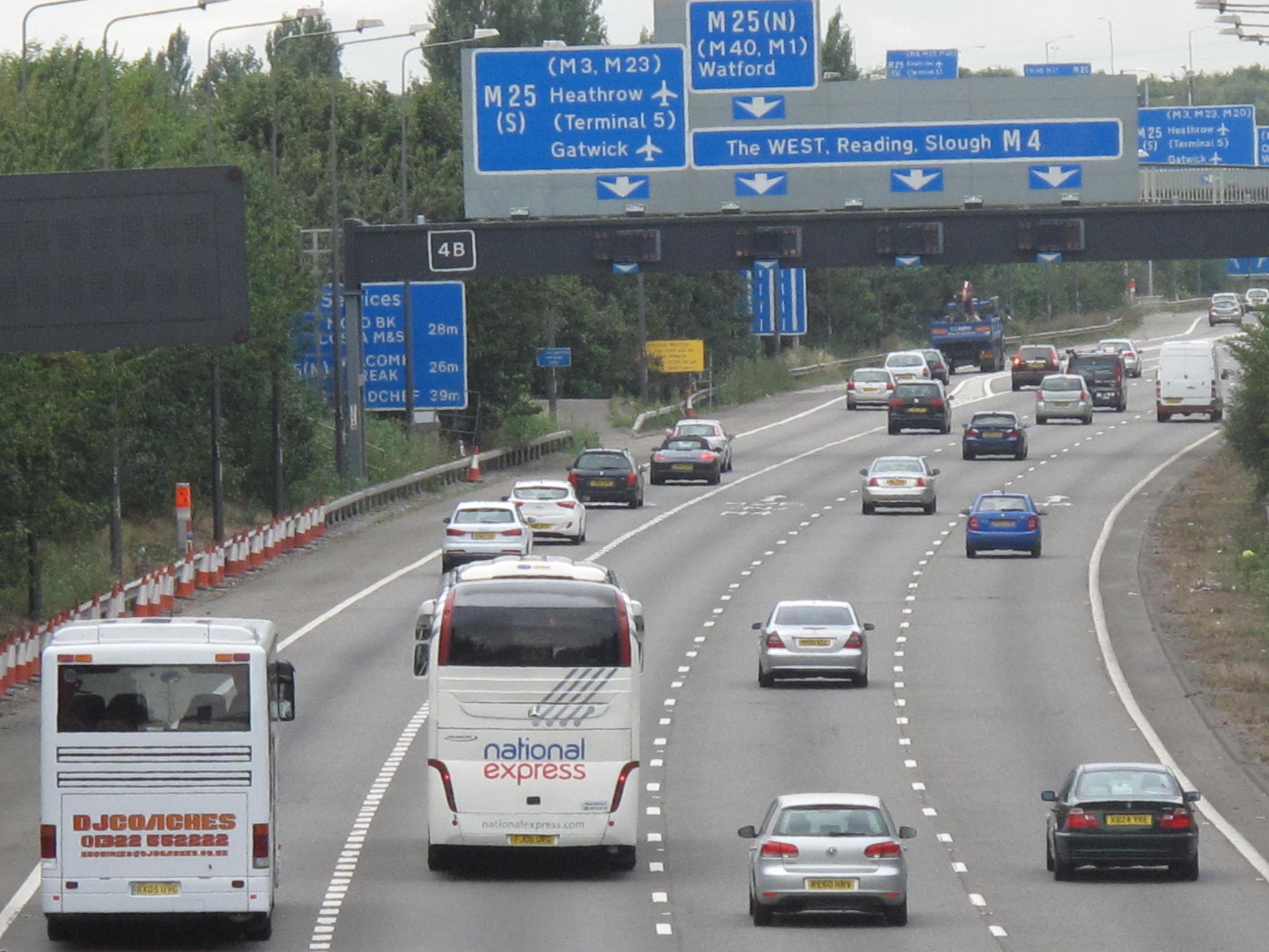
- M25, particularly between the M4 at Heathrow and the M1, plus near Bluewater in Kent
- M4 from M5 junction near Bristol to Cardiff
- M5 south of Bristol and also close to the M6 junction in the West Midlands
- M6 through the West Midlands from the M42 junction to Wolverhampton
- M60 around Manchester, near the Trafford Centre and between junction 7 (Altrincham) and the M62 junction
In addition, the M27 in Hampshire is closed between junctions 9 and 11 until 4am on 4 January.
Ferry
Sailings are running normally between the Port of Dover, Calais and Dunkirk. The port is urging drivers not to arrive more than two hours before their scheduled departure.
Unlike aviation, there is no penalty for missing a ferry at Dover due to congestion; you will simply be rebooked free of charge. “If you missed your ferry, please don’t worry,” the port is telling motorists. “You’ll be put on the next available sailing.”
Caledonian MacBrayne ferries in western Scotland are mainly running normally, with cancellations between Ardrossan and Brodick on the isle of Arran.
No CalMac vessels will operate on New Year’s Day, and some services on 2 January are “request only”.
Air
Currently, the main problems affecting travellers to and from the eastern parts of North America. Extreme wintry weather has caused thousands of flights to be grounded since Christmas Day. Domestic links have been worst affected, but some services between the US, Canada and London Heathrow are cancelled or heavily delayed.
Air Canada is warning that “snow, freezing rain, and strong wind conditions” are causing disruption across the east of the nation – particularly at the main hub, Toronto Pearson, as well as Montreal, Ottawa and Halifax.
Many onward links to other airports in North America are cancelled.
Under air passengers’ rights rules, travellers booked on UK airlines whose flights are cancelled are entitled to be flown to their destination as soon as possible on any carrier, and to be provided with meals and hotels until they get there. Those with tickets on US and Canadian airlines who are returning from North America have no such protection.

During the 17 days of the festive spell from 19 December to 4 January, aviation analysts at Cirium report 42,046 flights are scheduled to depart from UK airports with a total of 7.8 million seats. That is an average of more than 100 takeoffs per hour, with almost 20,000 seats.
Departures are up 2 per cent compared with the festive period in 2024, and available departing seats are up 4 per cent year on year.
London Heathrow has the highest number of flights, with one in five departures being from the UK’s busiest hub. It is expecting its busiest festive spell to date, as are Birmingham and Manchester airports.
The top destinations from many airports are:
- Alicante
- Amsterdam
- Dubai
- Dublin
- Geneva
- Paris CDG
- Tenerife
This article is kept updated with the latest information.
Read more: Rail passenger offered £10k compensation for 18-minute train delay