


 Africana55 Radio

This website uses cookies so that we can provide you with the best user experience possible. Cookie information is stored in your browser and performs functions such as recognising you when you return to our website and helping our team to understand which sections of the website you find most interesting and useful.
The sound of a captain over a cruise ship tannoy will be familiar to many passengers but it is rarely a female voice.
That is no surprise, given that fewer than three per cent of cruise ship captains are female, according to industry data.
It can take decades to become a captain and some of the disparity can be attributed to maritime academies only opening to women from the mid 1970s.
The first female cruise ship captain was only appointed as recently as 2007 when Karin Stahre-Janson took the helm on Royal Caribbean’s Monarch of the Seas.
This was followed by Brit Sara Breton with P&O Cruises in 2010.
One of the best-known female cruise ship captains is Kate McCue. She became the first female American captain as commanding officer for Celebrity Summit in 2015, leaving in 2025. She will be the inaugural captain of Four Seasons l, which launches later this year.
But I’ve been on 37 cruises over the past decade and while I have come across entertainers, cruise directors and restaurant managers who are women, I am yet to meet a female cruise ship captain.
This is despite cruise lines doing more to appeal to female passengers, such as women-only sailings and wellness retreats.
Ahead of International Women’s Day, I met three female cruise ship captains and a high-level expedition leader to find out what motivated them to hit the high seas and what barriers remain for other women.
‘I was told the sea was not for women’
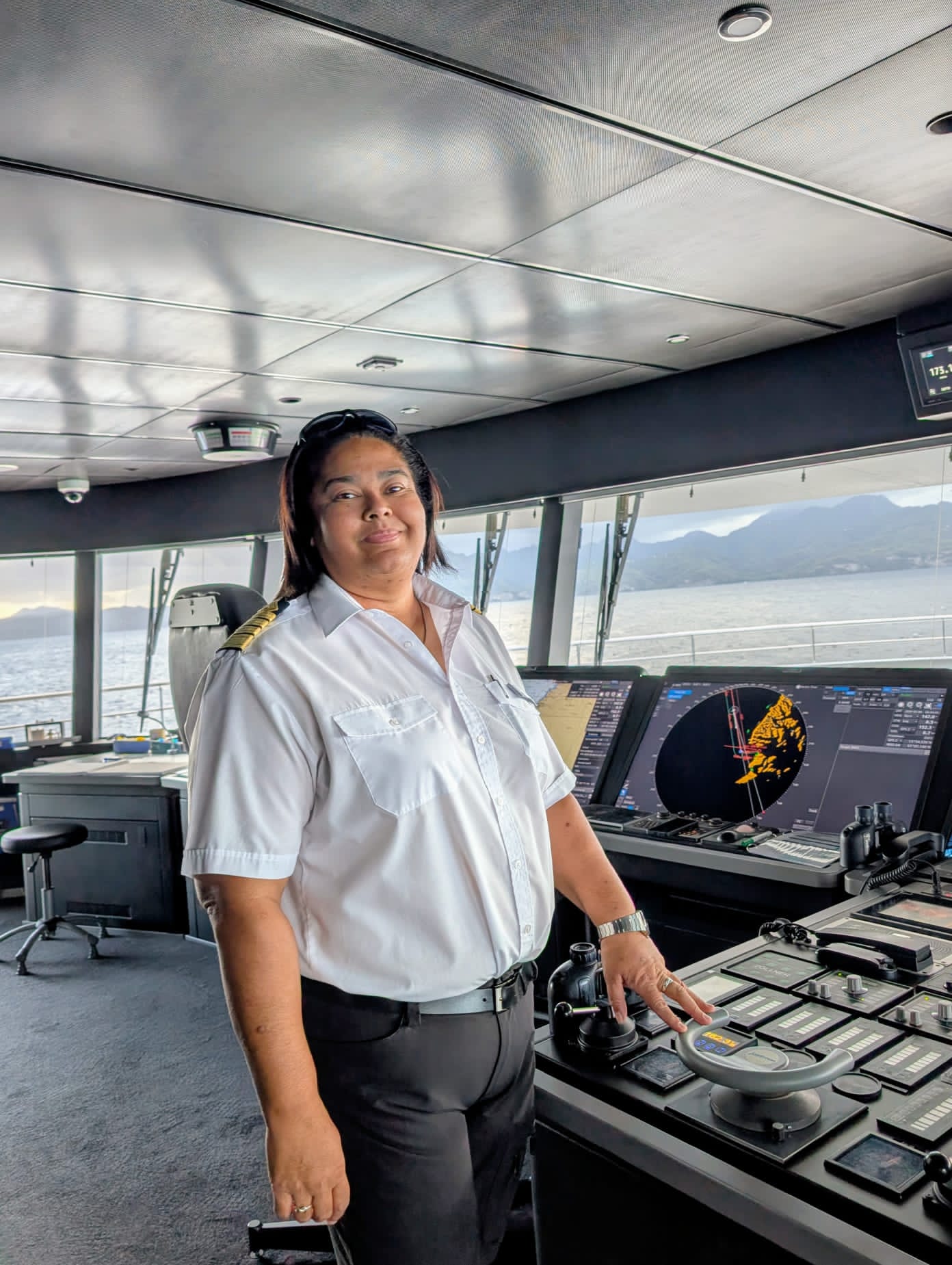
Belinda Bennett – Emerald Sakara
Read more: Disney Wish is coming to the UK in 2027 – here is what to expect
Belinda Bennett became the first black female cruise ship captain when she took the helm at Wind Star in 2016, a ship in luxury cruise brand Windstar’s fleet.
She was born on the remote Atlantic island of St Helena, where, during her youth in the 1980s, there was no airport – ships were the only way to leave.
She took her first marine cadet job at 17 on RMS St Helena, with the aim of seeing the world.
It took 21 years for her to become a captain, something she attributes to old-fashioned attitudes towards women.
She said: “I know I didn't get my promotion as quickly as I am very vocal and not afraid to challenge.
“That was something that blocked my promotions previously.”
Belinda, who is now captain aboard Emerald Sakara, says her journey wasn’t easy and required being tough.
She said: “Back when I started training, it was more male dominated.
“I went through being told that ‘the sea was not for women.’ I was determined to prove people wrong.”
Belinda says these attitudes will have deterred women from maritime positions but she says the “dinosaur mentality" is dying out.
“Newer generations are more accepting that women have a place in the workplace, shoreside or sea.
“You still have to be strong minded and have a strong character to become a captain. It is still male dominated but more women are coming through.
“The ratio is still too low though.”
Belinda says it can be hard to leave family and friends behind at home, making it hard to sustain relationships.
She says: “If you are determined, you have to work for it, be patient and have to think about whether you want a family and how it will work around your busy job.
“Sometimes my relatives back home send me messages to ask if I am alive.
“Your family has to understand that here will be some days where you don't have time to answer messages as soon as they are sent
“It is a lot of sacrifice, if you want it you will work.”
‘Mentorship is important to encourage female captains’
Inger Klein Thorhauge – Cunard’s Queen Anne
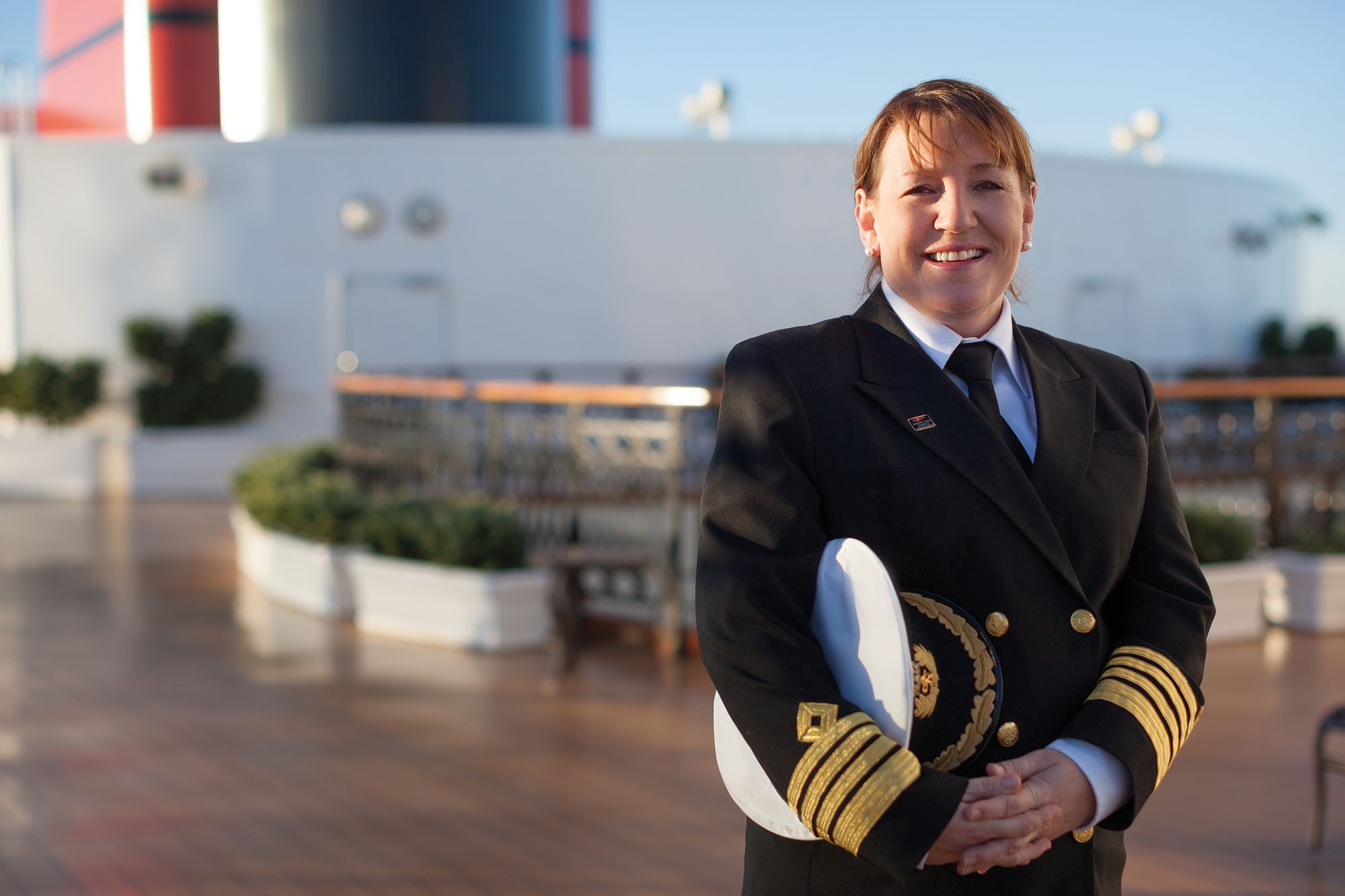
Inger Klein Thorhauge became Cunard’s first female cruise ship captain when she took charge of the bridge aboard Queen Victoria in 2010. She is now in charge on the cruise line’s newest ship, Queen Anne.
Born in the Faroe Islands, she grew up in a family with strong maritime roots.
Her dad was a chief engineer on a fishing trawler and her grandfather worked in the fishing trade.
She said: “If I had not grown up in a maritime family, I might not have thought of becoming a captain as an option. When you do not see people like yourself in certain roles, it can be harder to imagine yourself there.
“Things are changing and that is very positive. More women are joining the industry and there is greater awareness of the opportunities available. But progress takes time. Becoming a captain requires many years of experience, so change does not happen quickly.”
After getting her Master's Licence to operate a vessel 1994, Inger started work as a deck officer with Cunard in 1997 and says her experience rising through the ranks has been positive.
She’s hopeful that her experience might inspire others, too.
She said: “When people see women in senior roles at sea, it helps make the path feel more real and possible. I take that responsibility seriously and I hope that by simply doing my job well, I can show that this career is open to anyone who is willing to work for it.
“Mentorship is key. Having someone you can talk to, ask questions and learn from makes a real difference.”
‘Cruise ship life isn’t for everybody’
Serena Melani - Explora Journeys

Serena Melani holds the title of the first Italian female cruise ship captain, a role she first took with Regent Seven Seas in 2016 before joining Explora Journeys in 2022 and has taken the helm on its first two ships, Explora I and Explora II.
Born in Livorno, she studied at the Nautical Technical School before gaining experience as bridge officer on board different types of cargo and cruise ships.
She said: “When I first stepped on board 36 years ago, I remained the only woman on board for several years. It took me 26 years to reach the highest rank as a master unlimited licensed captain.”
But despite the challenges, she said: “Today I am also sharing that knowledge with new generations of officers, including men.
“Some gender bias can still exist, but it has evolved over time. It is no longer loud; it is often more subtle and sometimes part of the general mindset. It is something I continue to work on – not only for myself, but especially for the women who will come after us.”
Serena says there are positive changes, adding: “Explora Journeys is doing more to encourage women early in their careers to be part of the maritime industry. In the UK and Italy, we operate a successful cadet programme that strongly encourages female candidates, and the company takes extra care to ensure they are supported.”
‘Men treated us like second class citizens on board’
Karin Strand – HX Expeditions
.jpg)
Read more: The 15 best cruise deals for 2026, hand-picked by an expert
While it may be rare to meet a female cruise ship captain, there are women in other senior roles.
For example, Laura Hodges Bethge is president of Celebrity Cruises and Christine Duffy is president of Carnival Cruise Line.
Another senior figure is Karin Strand, vice president of expedition development for HX.
She is in charge of curating the expedition cruise line’s tours in regions such as Scandinavia and Antarctica.
Karin has been with HX for more than 25 years, starting as an expedition leader on its ships.
She said: “Women had to be tough and work in an environment where men treated us as second class citizens.
“There were few women when I started as expedition cruising is physically demanding.
“You need to know about engines and diesel filers and how to manoeuvre a zodiac [an inflatable boat].
“A lot of women were not previously interested in these roles or weren’t encouraged.”
Karin suggests attitudes have changed as people like her have moved shoreside and are helping more women to consider roles on cruise ships.
She said: “The barriers aren’t there anymore.
“I have found that women make better expedition leaders than men as they have way better control and empathy that passengers appreciate.”
Karin suggests that recruitment and careers advice are key factors in encouraging more women to take on roles such as expedition leaders and captains.
She said: “There are still stereotypes in the way we bring up girls.
“I wish the sky was higher and people shouldn’t be pigeon-holed.”
The Cruise Lines International Association (CLIA) highlighted in a statement that the cruise industry employs the largest representation of women seafarers worldwide.
CLIA said: “The Mission to Seafarers cites that more than 90 per cent of female seafarers work within the cruise industry, highlighting the breadth of opportunities for women within the sector.
“In fact, cruise lines lead in opportunities both on board and onshore and enables career transitions between the two. From the navigation bridge to the boardroom, the cruise industry recognises that gender diversity is critical, encouraging teamwork and creativity from a range of perspectives.”