


 Africana55 Radio

This website uses cookies so that we can provide you with the best user experience possible. Cookie information is stored in your browser and performs functions such as recognising you when you return to our website and helping our team to understand which sections of the website you find most interesting and useful.
A sharp snap above me is followed by a rush of rustling leaves as something crashes through the canopy. I crane my neck, trying to catch a glimpse, but the dense laurel forest – its imposing branches and moss-draped vines knitted together – swallows whatever broke the silence. My guide, Rafael Martínez, straightens up from beneath the ravine’s overhang. “Probably just a branch,” he says, half-relieved. Giant, prehistoric ferns brush my ankles and bring me back to earth, though this subtropical forest feels unlike anywhere I’ve walked before. Towering laurels cling to the 80-metre high cliffs, their lichen-coated volcanic walls casting the ravine into a cool, musty shade prompting me to quietly curse dressing for the summer on an island full of surprises.
Often overlooked, La Palma is one of the most-westerly and youngest Canary Islands, having only erupted out of the Atlantic 1.7million years ago. With some of the steepest terrain on the planet, it packs in habitats from misty laurel forests to arid lava fields, a natural richness that has earned the entire island Unesco Biosphere Reserve status. Having seen neighbouring islands buckle from overtourism, I’ve come to see how La Palma is choosing a different path; one that strengthens community life, protects its natural beauty and thrives on the rhythms of everyday life.
I find those rhythms most alive in Santa Cruz de la Palma’s central market, where the morning air is a mix of freshly caught fish and just-sliced coriander. Housed in an intimate 19th-century building, its whitewashed walls and glass skylight echo with chatter as stallholders arrange pyramids of locally-picked fruits such as papayas and prickly pear.
Baskets of almonds sit beside shrivelled pimienta palmera – the island’s small, fiery chilli pepper used in mojo picón sauce served with grilled meats. Catching my interest, the stallholder smiles and says: “We grow many things, local food is very important for the island to be strong.” I’m surprised when Rafael tells me that, “our economy is based more on agriculture than tourism, mostly bananas”.
Drawn to a refrigerator of cheese wheels, I’m offered queso palmero, made from unpasteurised goats’ milk. Slightly smokey, with a firm halloumi-like bite, the stallholder tells me, “it tastes better with mojo verde”.
Read more: The Canary Island you might not have thought of for wine – and running
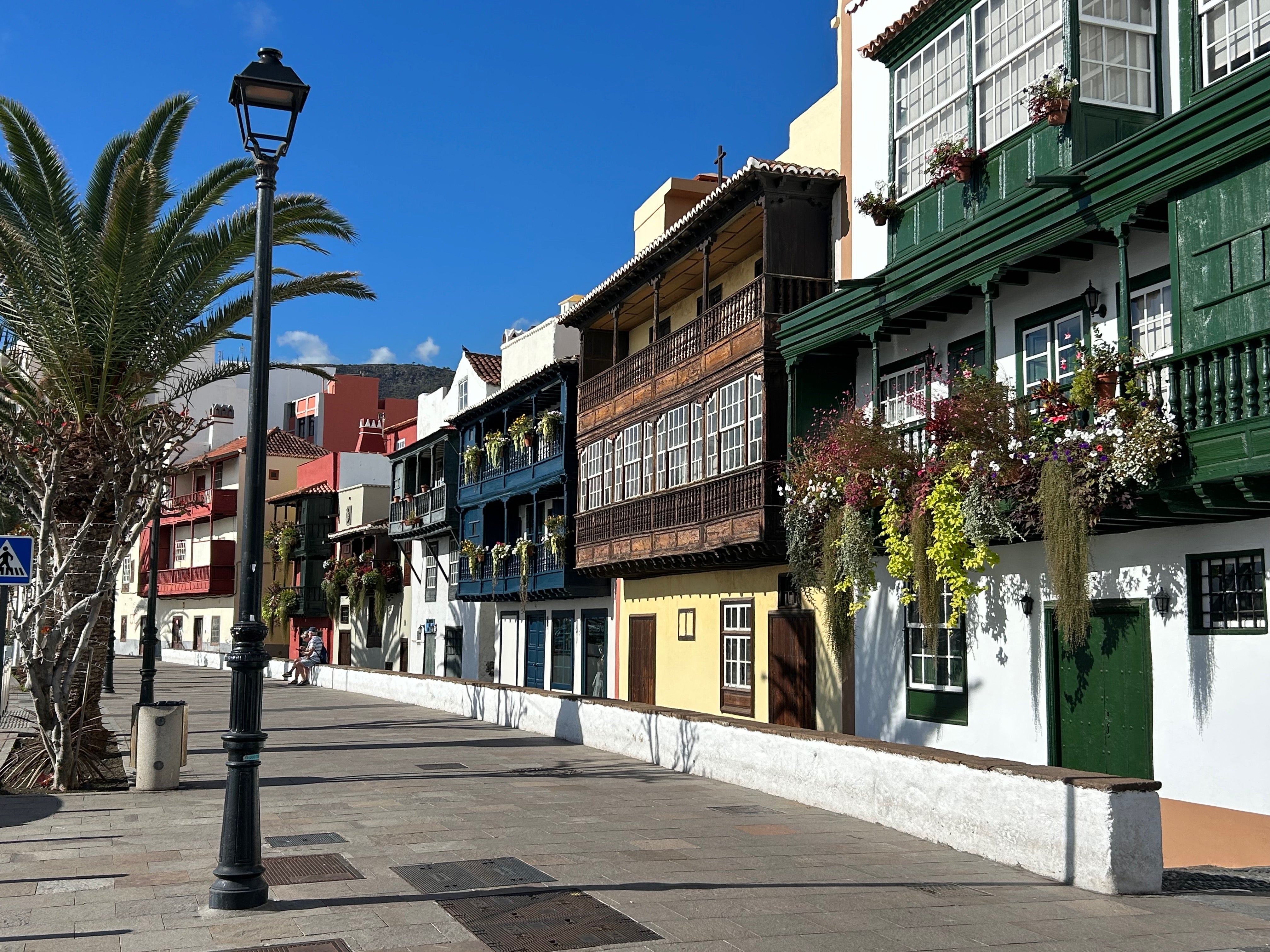
Outside, everyday life spills onto the cobbled streets of La Palma’s historical capital. Along Avenida Marítima, intricately-carved, wooden balconies decorate stone houses, some dating back to the 16th century, shortly after the first Spanish conquistadors settled. The town is a charming labyrinth, its steps and corners mirroring the mountains that provide the perfect backdrop.
Driving north along the hairpin coastal roads out of Santa Cruz, cacti and succulents cling to steep ravine walls, as the road winds past banana fields and stone terraces shaped by generations of farmers. Rafael is keen to show how the island’s market ingredients come together, so we stop for lunch in the small village of San Andrés.
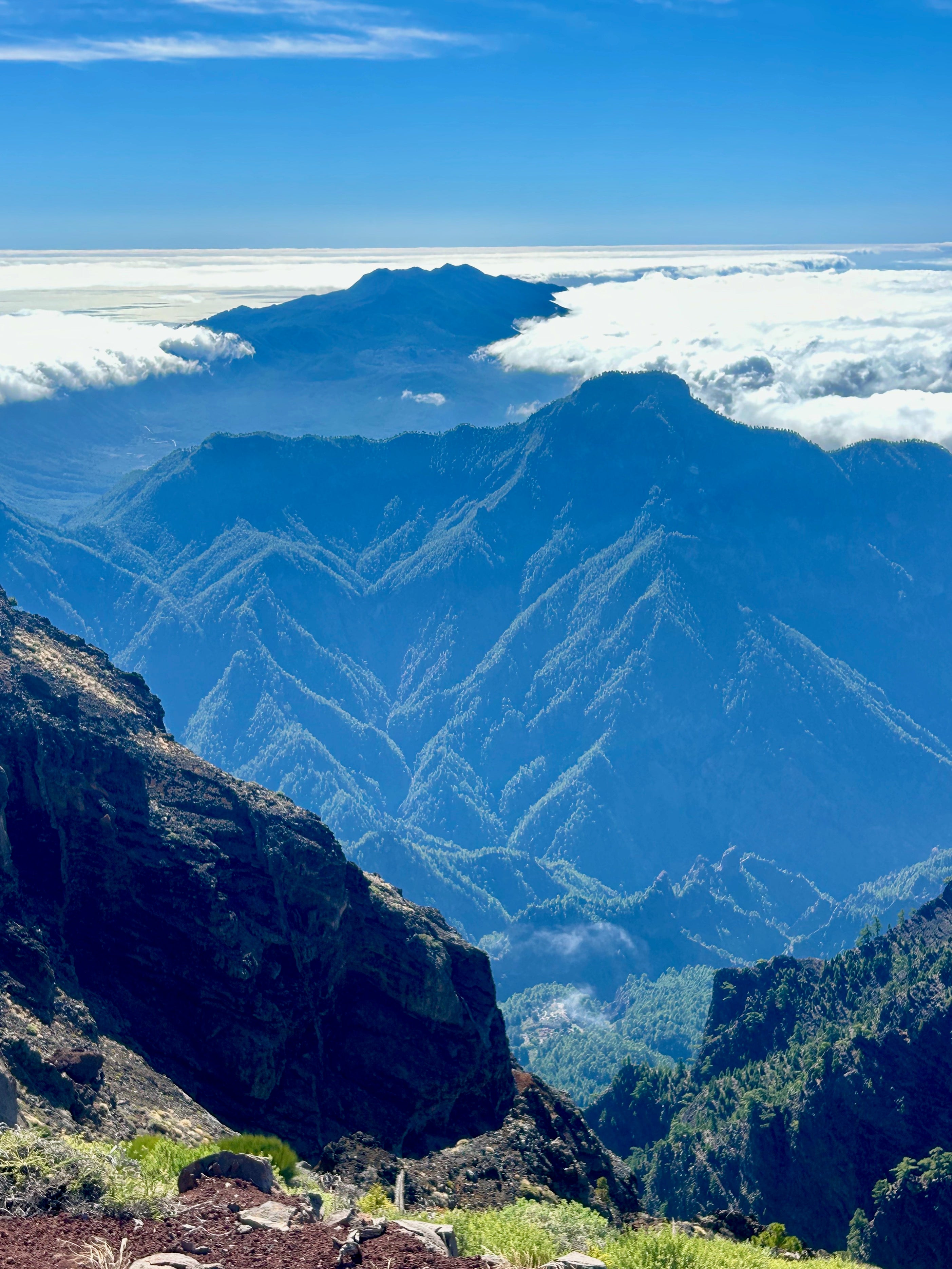
In the sun-dappled plaza of a 16th century whitewashed church, date palms shade an elderly man gazing towards Tenerife. At Restaurante San Andrés, Rafael promises a treat, starting with queso palmero, drizzled with mojo verde. Now I understand the market stallholder – the garlicky, coriander sauce lifts the cheese’s rich, creamy flavour.
But it’s the alfonsino fish that excites Rafael most. Grilled until its red skin crisps, the flesh beneath is tender and slightly sweet. Alongside, papas arrugadas (tiny potatoes boiled in sea water) deliver a salty, earthy contrast, especially when dipped into smoky mojo rojo. The meal ends with bienmesabe, a golden almond dessert that’s rich with egg yolk and honey – Rafael tells me it’s “fuel for tackling La Palma’s steep hills”.
It’s these hills that have sculpted La Palma’s landscape and its food. Driving south towards Fuencaliente, the scenery turns stark and otherworldly, as bare, conical volcanoes rise from black lava plains that feel more Martian than Mediterranean.
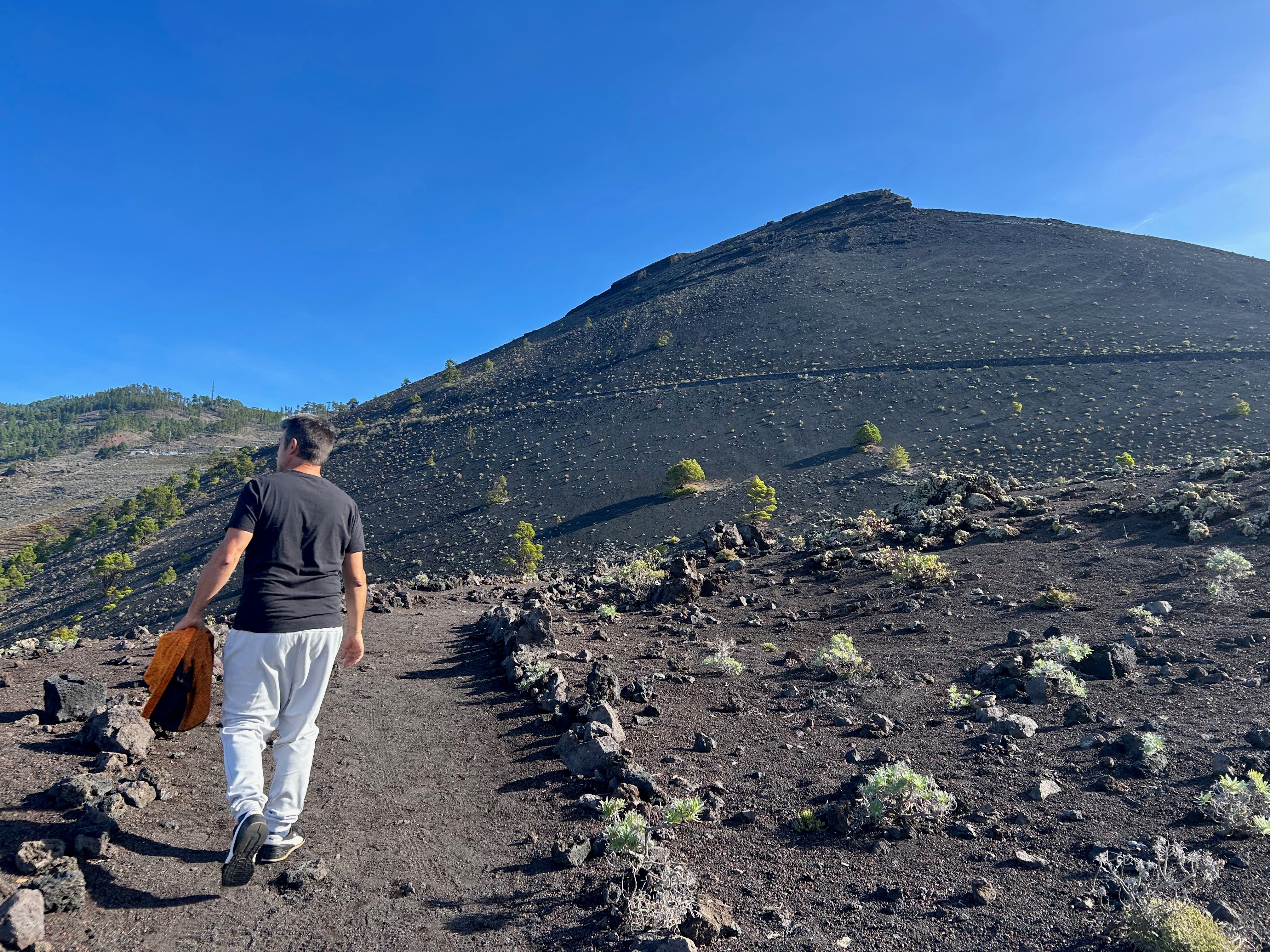
On Volcán Teneguía, the wind whistles and my feet crunch over sharp clinker, like walking over spilled Coco Pops, until it gives way and I skid downhill, causing a gecko to dart behind a volcanic bomb. Away from the usual tourist trail, Rafael shows me geometric spirals and labyrinths etched into solid rock by the Benahoaritas, who settled on La Palma two millennia ago.
Looking north, banana plantations dominate the landscape, covering almost half of agricultural land. Rafael is candid: “Bananas use too much water and chemicals – monoculture is not good for the island.” This is a view echoed by a 2023 Global Sustainability Fellows report that called for more diverse, climate-appropriate crops and greater self-sufficiency on the island.
Read more: I have found the best hotels in Lanzarote
“Tourism also needs a careful balance,” Rafael adds. “Some say La Palma is losing its character.” It’s hard not to think of the two large cruise ships docked at Santa Cruz de la Palma, with busloads of day-trippers, or the new direct UK flights launching this year. When I suggest the island might become a weekend break, Rafael shakes his head: “For two days? It would not be ecological – it would be destructive.” Instead, Rafael sees a different future. “La Palma is the perfect place for agritourism,” he says, a way to weave the benefits of tourism into the community fabric.
“We have to evolve with nature,” Rafael adds, pointing out how the village of Fuencaliente adapted to winemaking after the 1677 eruption sealed its famous hot bathing springs. On the volcano’s slopes, he shows me how vines creep low to the ground soaking up the soil’s warmth, and are sheltered by stone windbreaks known as cadenas. Bodega Carballo, one of the island’s 20-odd family-run bodegas, produces La Palma’s signature wine Malvasía. I select a dry white – crisp and aromatic, with citrus notes and a faint mineral edge that speaks of volcanic earth.
To end my visit, it’s time to look up. La Palma has some of the clearest, darkest skies on Earth and, with strict light-pollution laws, has earned Unesco Starlight Reserve status. Home to the world-class Roque de los Muchachos Observatory, the entire island is a sanctuary for stargazers – and is what drew Elena Nordio to set up her company, Ad Astra.
Read more: The best things to do in Gran Canaria

At sunset, we meet at the Mirador Astronómico Llano del Jable viewpoint, as high as Ben Nevis, where the air feels crisp and thin. As twilight deepens to an inky violet, stars multiply until darkness itself seems to sparkle, filling me with unexpected joy. Beneath the Milky Way, Elena guides me from Saturn’s delicate rings, to the misty glow of the Andromeda galaxy, to the Ring Nebula in Lyra – a glimpse of how stars like our Sun end their lives.
The universe is anything but still, yet presents itself as a moment of serene stillness. “Dark skies are a way to contemplate the beauty of the cosmos,” Elena says. “For me, it’s a special connection.” It’s why Elena believes that we must preserve the darkness of the night sky for future generations.
This instinct to protect what matters runs through everything on La Palma – tourism here isn't about consuming the landscape, but adapting to it. As Rafael put it, “we have a special life, because our natural rhythm is slower”. This unhurried pace doesn’t chase visitors, but welcomes those willing to slow down. In doing so, it offers a compelling blueprint for tourism that thrives without sacrificing what makes a place extraordinary – protecting its natural beauty while celebrating everyday life.
Yvette travelled as a guest of Visit La Palma
How to get there
Tui runs direct flights to La Palma from Gatwick and Manchester airports, with Jet2 launching new services later this year. Flight time is around 4 hours and 30 minutes.
It is possible to travel overland to La Palma, travelling by train to Cadiz in mainland Spain and taking a boat via Tenerife. It will take four to five days and further information can be found at seat61.com
Bus services around La Palma by Transportes Insular are excellent (tilp.es), although a car is needed to visit Roque de los Muchachos Observatory and Mirador Llano del Jable.
Where to stay
Parador de la Palma offers room-only rates from €115 a night (standard double), as well as half-board from €220 a night, and is located between the airport and Santa Cruz de la Palma.
H10 Taburiente Playa offers an all-inclusive rate from €170 a night (standard double) and is located in the resort of Los Cancajos.
Read more: The 14 best hotels in Tenerife