


 Africana55 Radio

This website uses cookies so that we can provide you with the best user experience possible. Cookie information is stored in your browser and performs functions such as recognising you when you return to our website and helping our team to understand which sections of the website you find most interesting and useful.
It’s a tale as old as time: Couple buys their dream home, couple grows a family, and then couple outgrows the property. But what if it wasn’t a single family, but seven — all of them living together in one unique community?
Welcome to Oakland’s Radish multi-family co-living compound — seven dwellings that are officially on the market, all together, for an anticipated $4 million to $6 million.
Despite a pending sale, everyday life there hasn’t stopped. On a recent morning at the Bay Area, California, compound, Phil Levin found himself navigating a beautifully chaotic routine — while his wife prepped for a series of business meetings, Levin wrangled their two young kids over to a standalone communal building.
Amid a blur of other adults and a messy breakfast of scrambled eggs, the Radish kids were fed and packed into a carpool for school drop-off. Levin handed off his one-year-old to a nanny shared with another family on the property.
It was just a normal morning at the complex, which now houses 20 adults and eight children — ages 4 and under — spread across seven units in four buildings on roughly 14,000 square feet of land. But after six weddings, eight births and thousands of shared dinners, the community has finally outgrown its space and is preparing to branch out into larger co-living properties nearby they call “Radellites.”
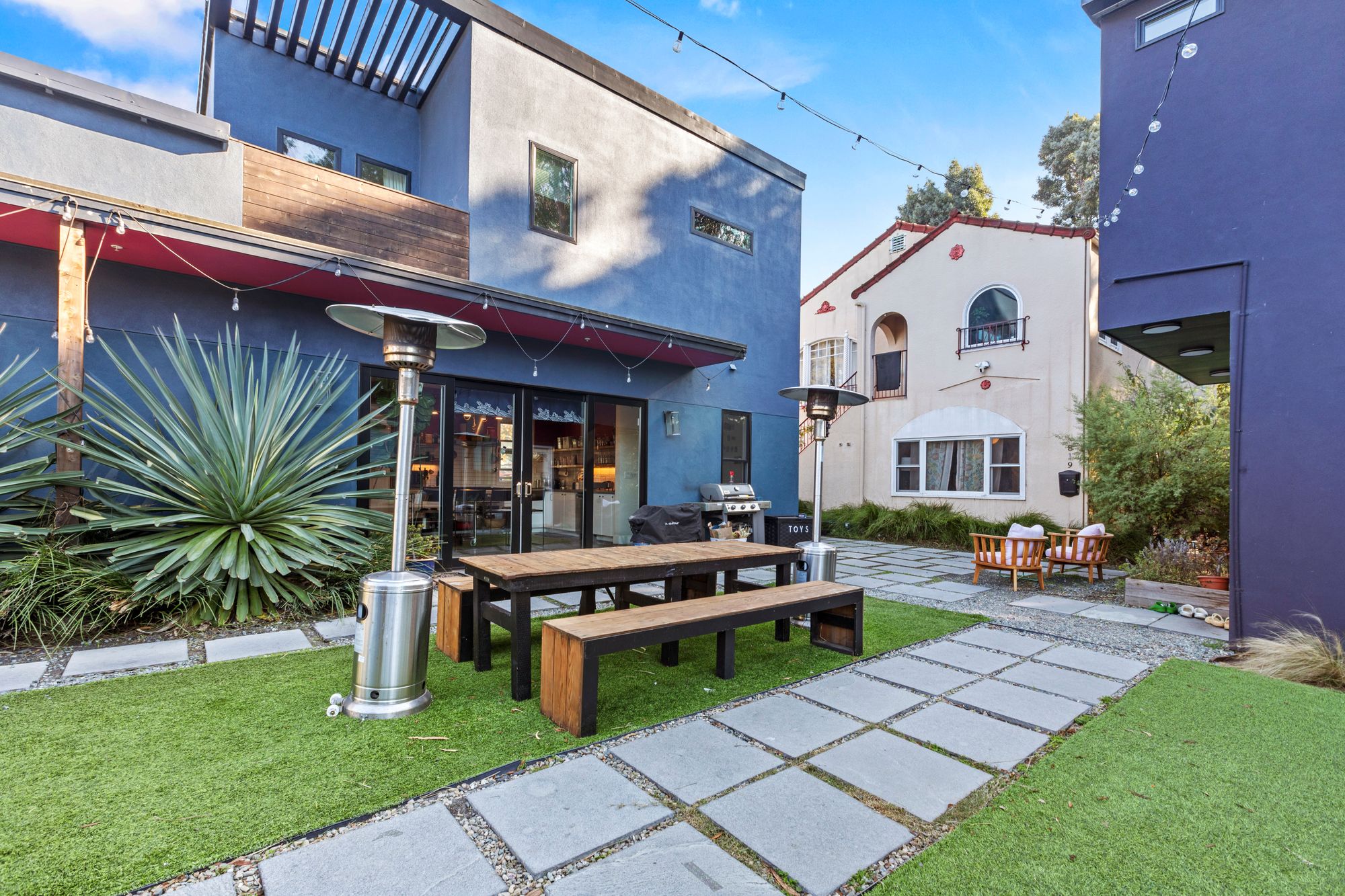
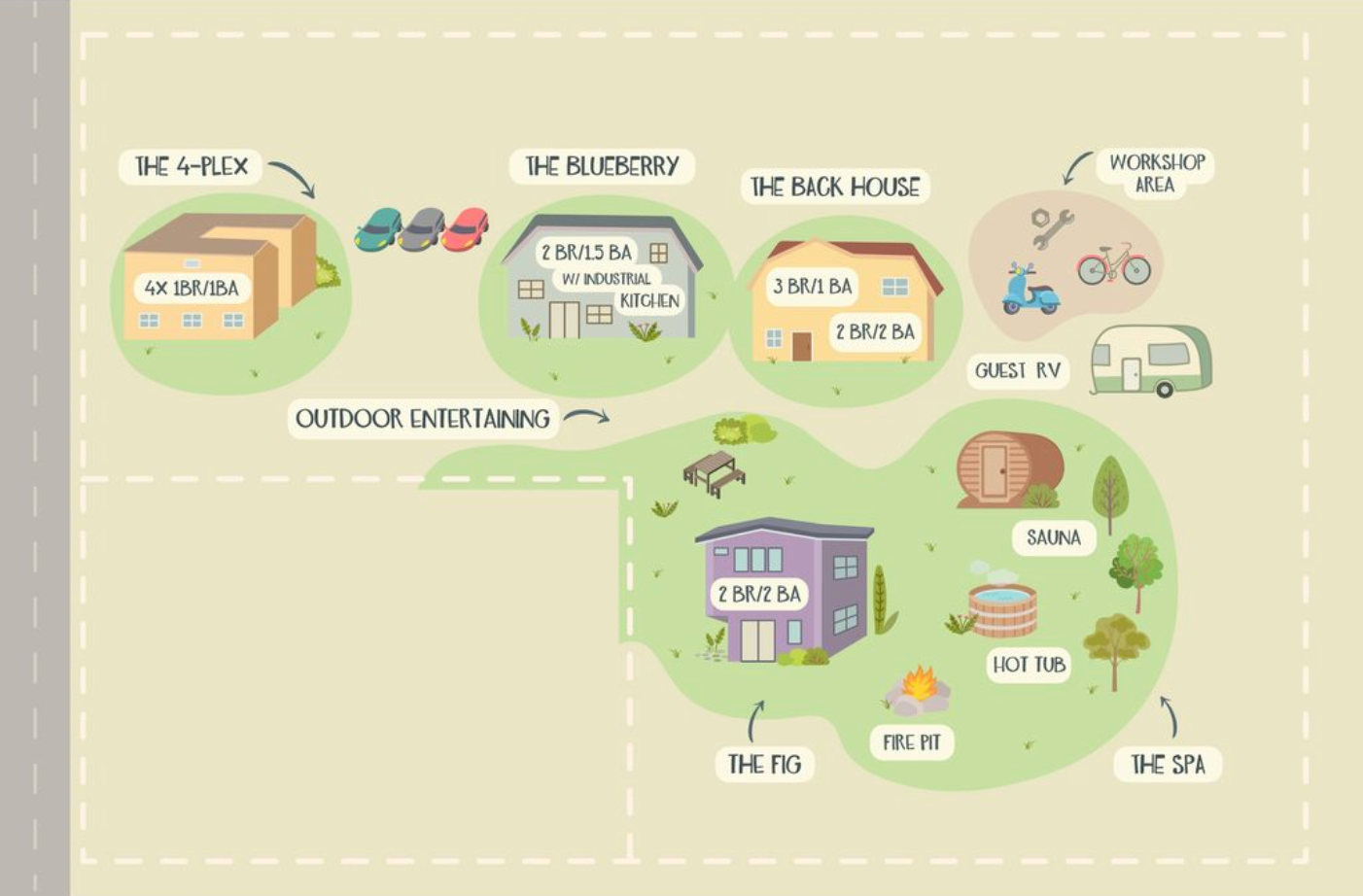
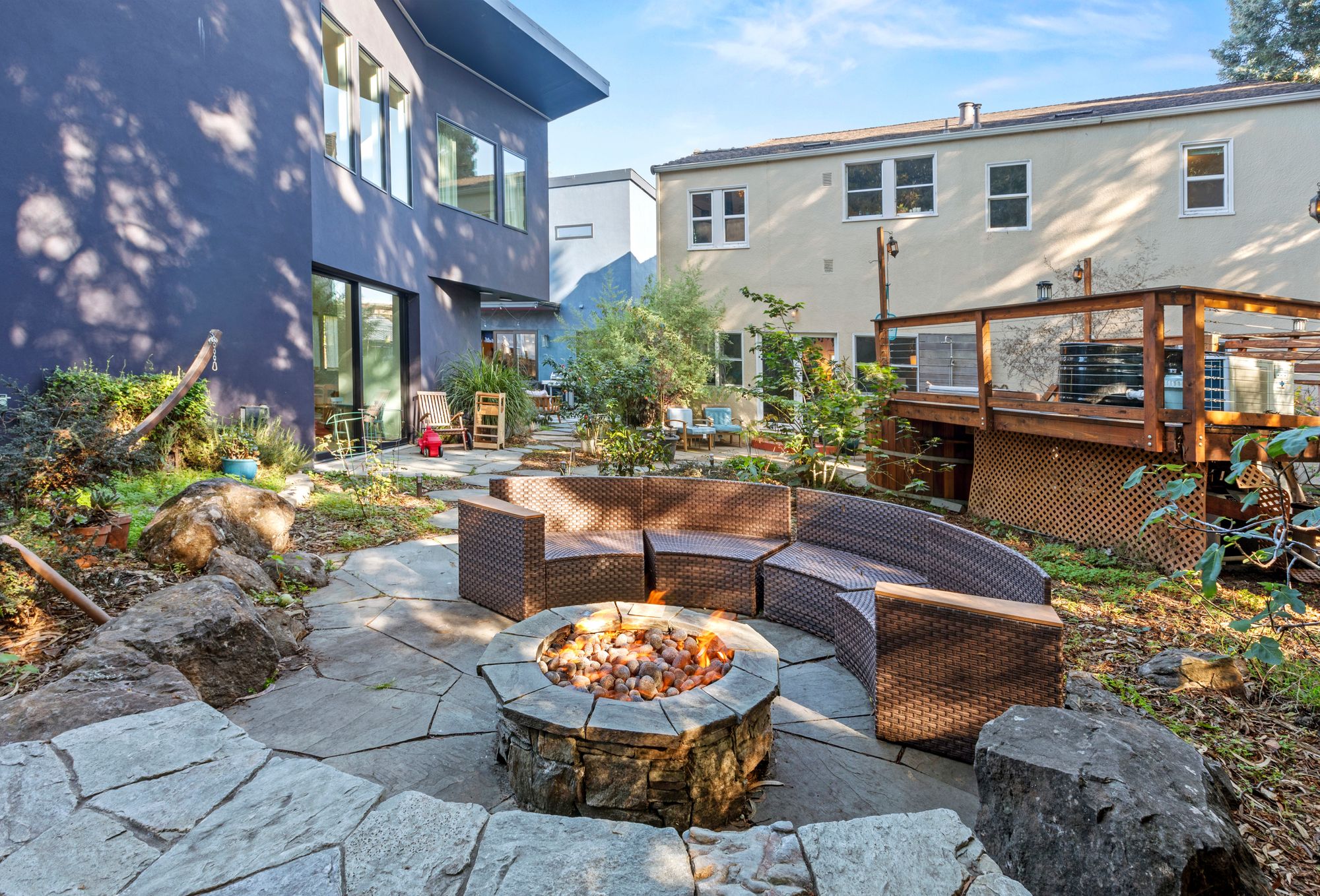
It leaves Levin with a unique problem. As the founder of Live Near Friends — a real estate platform specializing in helping groups of friends and families buy properties together — he is now navigating how exactly to sell the custom-built site which also has a large shared yard, stone fire pit, sauna and cedar wood hot tub.
“We’re really sad to be leaving. There’s a lot of tears,” Levin told The Independent. “People sort of can’t believe this is over. I think what basically happened is our community has grown too big for the space.”
Without a standard pricing model to lean on, the Radish crew is bypassing the traditional real estate market altogether. They haven’t listed the four-structure property on the MLS database — the centralized system which real estate agents use to share listings — and there is no formal agent. Instead, they are fielding offers directly from interested groups up until a July 10 deadline.
“There are no comps,” Levin wrote in a Substack post detailing the sale. “No Zestimate. No existing market for a ‘custom-built friend compound.’”
Without an established market to look to, the group settled on a target range of $4 million to $6 million, which breaks down to about $600,000 to $850,000 per unit.
“We landed on a price range ... which is uncomfortably wide but honestly, we don’t know if it’ll close closer to $4m or $6m,” Levin wrote.
.jpeg)
.jpeg)
The sale has attracted a huge wave of interest, pulling in close to 500 people for property tours, so far — though Levin quickly realized most were curious tourists rather than actual potential buyers. To weed them out, the group had to implement a stricter financial intake form.
“Serious buyers ask about the HVAC system,” Levin wrote. “Tourists ask how we handle conflict and run our food system.”
Because the property doesn't fit the mold of a standard real estate listing, Levin has had to hypothesize about who the eventual buyer will be.
He thinks there are a few possibilities: an existing friend group of five to seven households looking to skip years of construction; a multi-generational family looking to pool resources on one footprint; or even a mission-driven nonprofit looking for a turnkey community.
But his strongest bet rests on what he calls a “compound for my people” buyer.
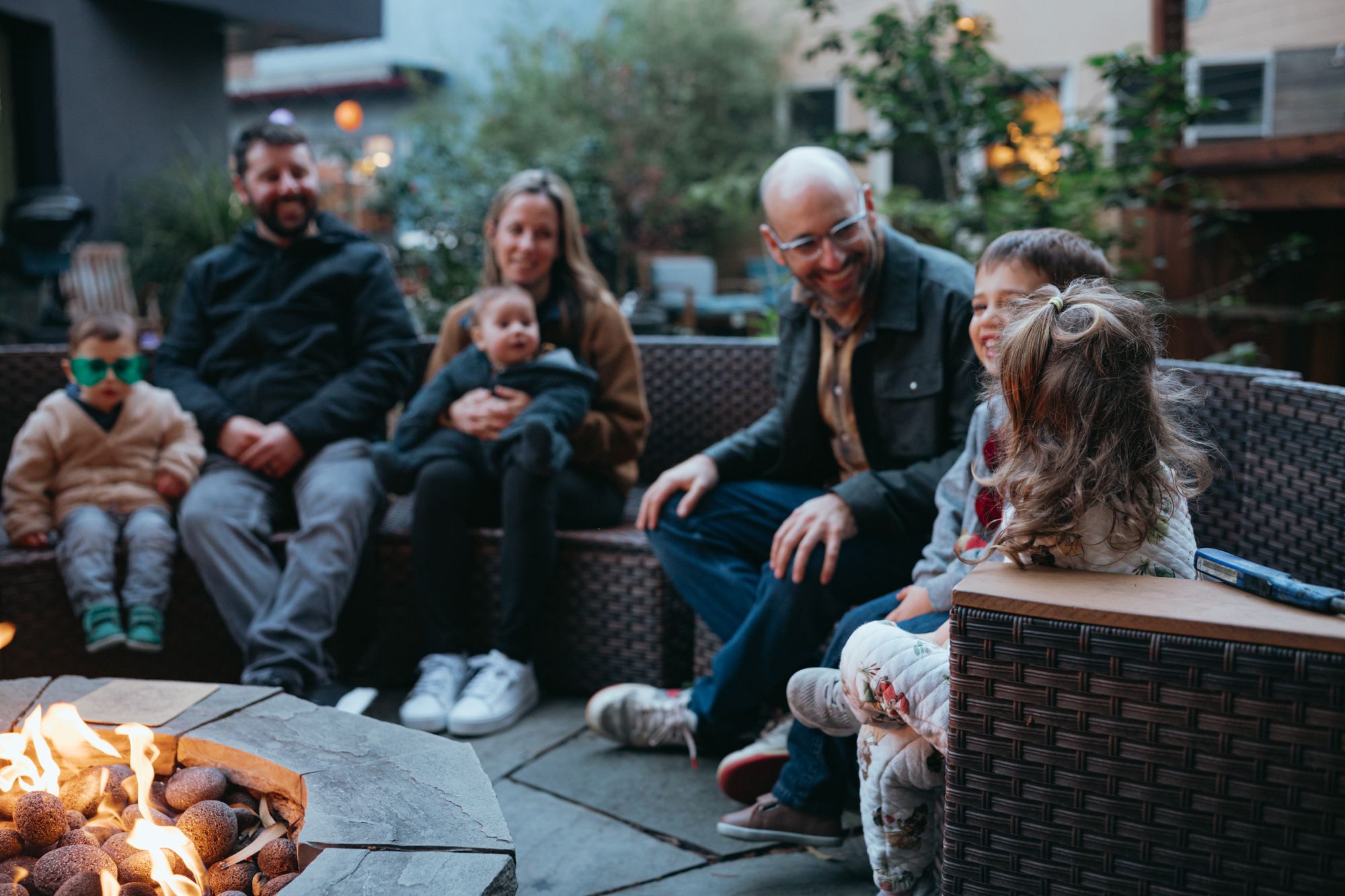

Most shared spaces don’t start with a fully formed group of 20 people, Levin reasons. Instead, they require one or two wealthy households — perhaps tech jackpot winners — brave enough to plant a financial flag first, purchase the property and then invite their inner circle to rent out the remaining units over time.
That’s how Radish began in the first place. Levin credits the concept entirely to his wife, Kristen Berman, who is a professional behavioral scientist.
When the couple was first discussing moving in together, Berman made a firm declaration: they would not be buying a single-family home or renting an apartment alone. Because her work focuses on how environments dictate human behavior, she knew that traditional housing models often breed isolation.
“She sort of proclaimed that ... that was not going to be the formula for our happiness,” Levin said. Instead, they wanted to design an environment that would actively combat what groups face in their 30s: the inevitable fracturing of a friend group. “We wanted to basically have a place that could capture them before they decided to sort of move off alone into the suburbs, and we never see them again.”
There appears a significant desire to live near friends across communities and generations, yet properties built to accommodate this remain exceedingly rare. Levin calls the sale of Radish a "once-in-a-decade thing," largely because the real estate market hasn't historically put these layouts on the menu. However, a recent loosening of zoning regulations across the U.S. is changing that, allowing people to legally convert single-family lots into multi-home pockets.
Levin and Berman bought the North Oakland property for $1.8 million in 2018, starting out with two buildings and moving in with seven friends. They spent an additional $1.6 million to construct two new buildings, renovate existing units and build out the outdoor areas. The compound’s name started as a temporary codename that the group ended up keeping simply because people liked it.
As more people joined the circle, they constructed two additional buildings, bought neighboring properties as they hit the market, and invested into major upgrades. Navigating California’s notoriously difficult building process proved challenging even for a professional developer like Levin, but it means the buyer of Radish can avoid that entire ordeal.
Over the years, the group has morphed and grown into a unified community full of rituals and traditions. Radish quickly became the center of their social world, with outside friends renting or buying homes nearby just to be close to the action.
“You have them over for dinner, you have them in the hot tub, they see the lifestyle and they immediately get it,” Levin said. For the parents, that lifestyle meant a lighter load in daily burdens. “When we go out at night, we don't have to hire a babysitter, we just put our kids to sleep and hand our friends next door the baby monitor.”
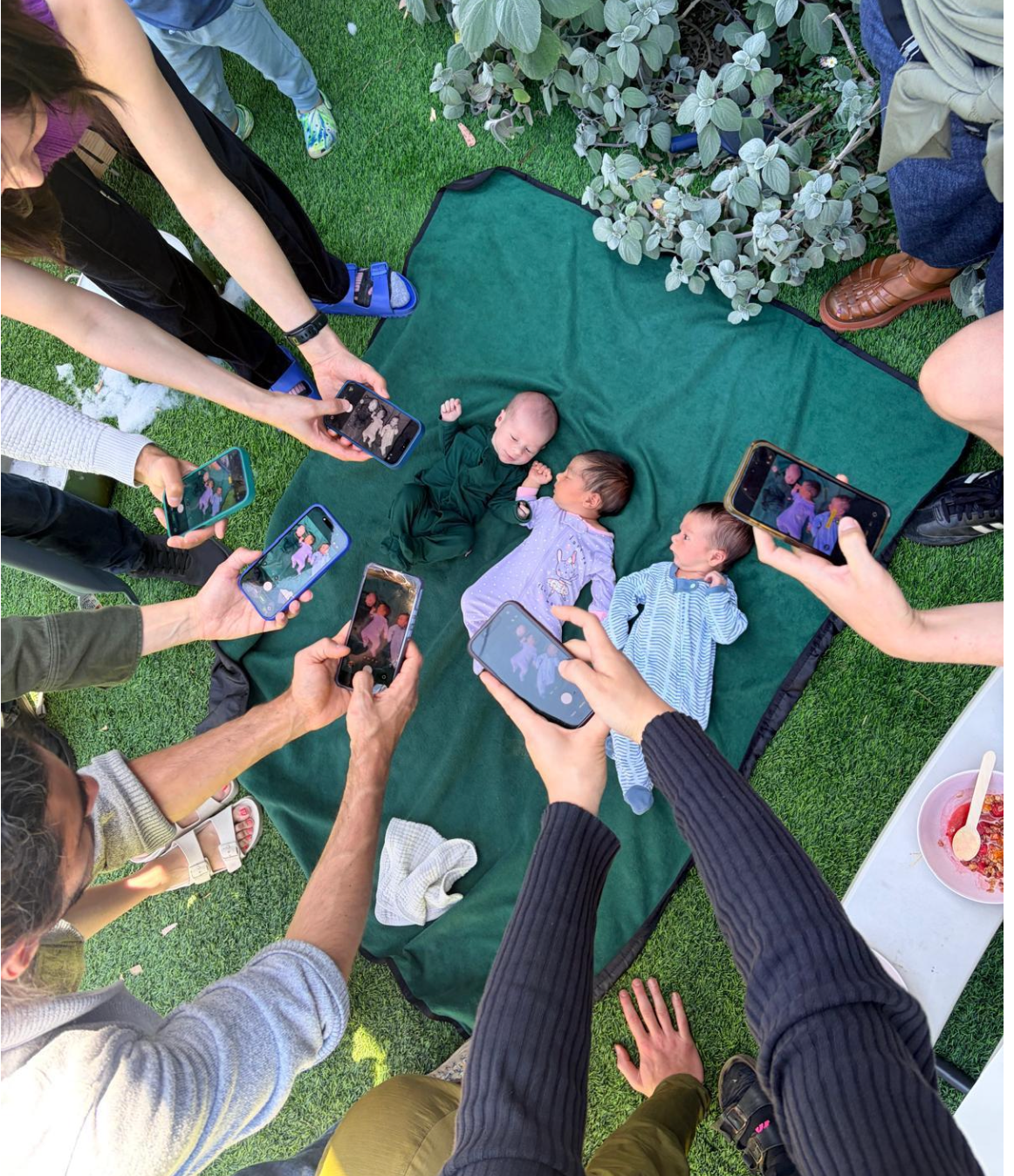
The community’s rare closeness was on full display this spring when three Radish babies were born in a 15-day window.
“We had a day where they put the three kids next to each other on a blanket, and we decided to do a paparazzi shot where everyone got their cameras out and all surrounded the kids,” Levin recalled. “There were like 20 cameras taking pictures of them on the ground, like little celebrities, and that was just pretty joyous to see.”
Today, Levin and his wife are entrepreneurs raising two of the compound’s kids themselves, a four-year-old girl and a one-year-old boy.
In their next phase, Levin and his neighbors plan to coordinate on a larger scale — organizing shared after-school programs and neighborhood “bike buses” to pedal groups of kids to school together.
In the meantime, he is focused on the compound’s July sale deadline, hoping a successful transfer will prove to investors that friend compounds are a viable, mainstream housing option.
Looking back at their seven years on the property, Levin doesn’t see Radish as a one-off experiment. To him, the massive interest proves that living next to your friends is a common goal that has simply been blocked by a rigid housing market.
“It turns out that our friends were not weird,” Levin said. “This is sort of the universal desire, and it wasn't being expressed because it wasn’t on the menu for people.”