


 Africana55 Radio

This website uses cookies so that we can provide you with the best user experience possible. Cookie information is stored in your browser and performs functions such as recognising you when you return to our website and helping our team to understand which sections of the website you find most interesting and useful.

Want to bookmark your favourite articles and stories to read or reference later? Start your Independent Membership today.
Already a member? Log in
Think of Iceland and most likely it’s the landscape that comes to mind. Glacial rivers and black sand beaches, lava fields, spouting geysers and cascading waterfalls.
But a capital with an arts and cultural powerhouse, as edgy and experimental as the galleries and theatres of London and New York? Perhaps less so. Yet beyond the stunning scenery, Reykjavik is drawing an international crowd who come for the plays, the avant-garde concerts, the cosmopolitan, quirky exhibitions and the first-class global cuisine.
Under the surface, in this city of 140,000, there’s an infectious creative energy. The first person I speak to – my taxi driver from the airport – tells me he’s also a musician and songwriter. “This isn’t unusual at all. Writing is in our history,” he says, referring to Iceland’s literary heritage, which began with the 12th-century Norse sagas.
The country is now in the Guinness World Records for having more writers per head than any other country in the world. One in 10 Icelanders is said to publish a book in their lifetime. They’re rightfully proud of their Jólabókaflóð, or “Christmas book flood”: the annual autumn rush of book titles released in time for the festive season.
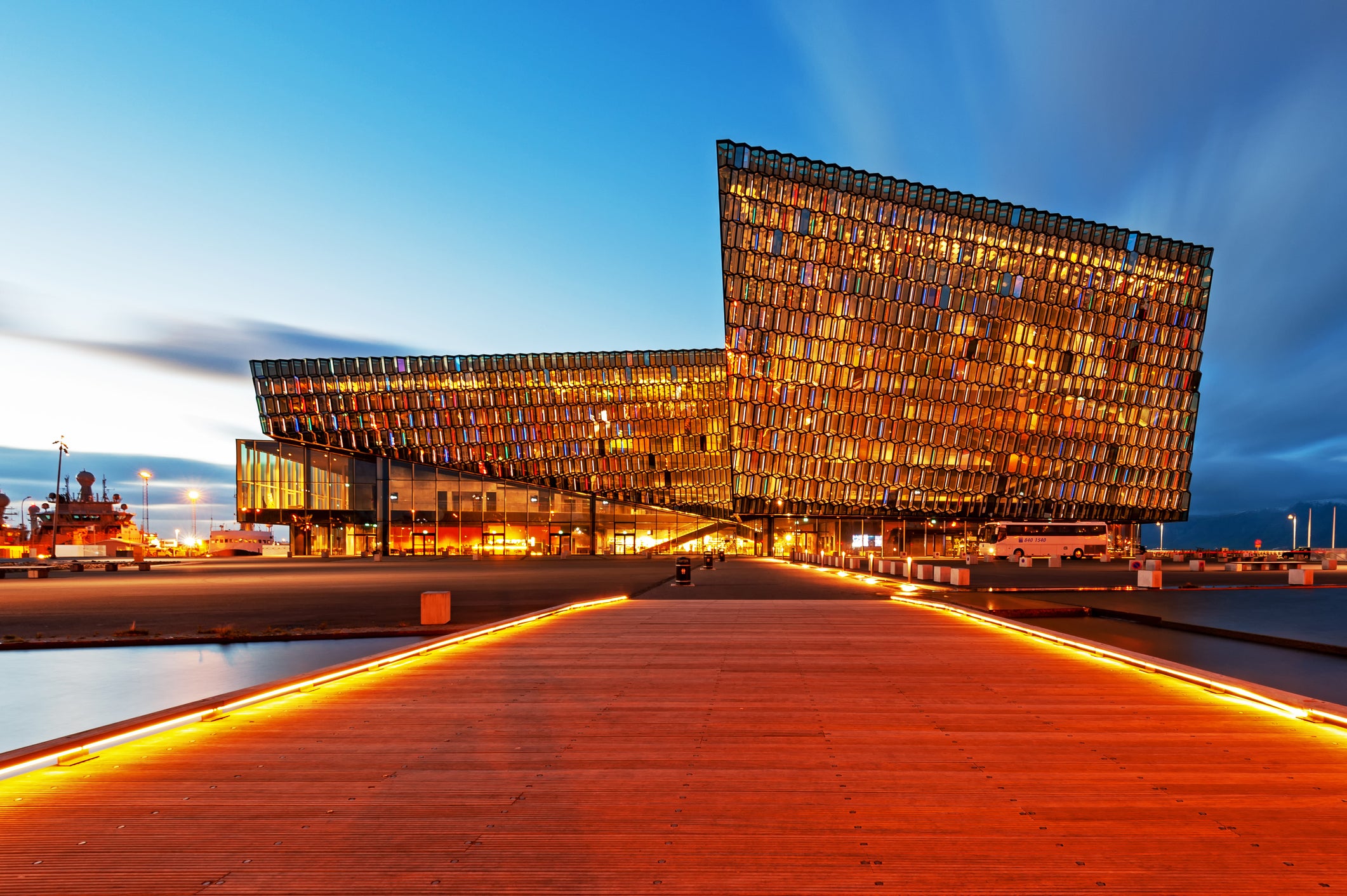
Reykjavik also punches well above its weight in music. At its heart is Harpa Concert Hall, a vast, glittering honeycomb glass design inspired by Iceland’s volcanic geology. Perched on the waterfront, it is also the hub for Iceland Airwaves, a multi-genre music festival held here every November.
On our first night, we see Hildur Guðnadóttir, a classically trained cellist who composed soundtracks for Tar and Joker. Her signature sound is brooding and cinematic with sweeping chords, perfect for the dramatic black and scarlet interior of the main performance hall. Beforehand we ate at Harpa’s Hnoss Bistro, charmed by the sweeping views across Faxaflói Bay. The ling fish in cream sauce is a highlight.
A 10-minute walk from Harpa and we’re back in Reykjavik’s centre, in Laugavegur, the main street, and Skólavörðustígur, with its striking rainbow-coloured road. It’s past 11pm, but feels much earlier due to the extraordinarily late sunset. It means the streets are full of people and the nightlife is just starting up. We stop at Amma Don, a speakeasy accessed through an anonymous doorway by pressing the tongue of a brass lion knocker. Amma is Icelandic for grandmother, referring to the decor that feels like a kitsch 1960s sitting room. Creative cocktails, definitely not like your grandmother’s, include reimagined negronis with brown butter and rye.
Down a cobbled alleyway is Fischersund, a family run parfumerie that also happens to be an art collective. Handmade perfumes made from fresh Nordic botanicals come in beautiful packaging with lyrical descriptions – not surprising since the family members are musicians and writers too. Their “scent concert”, at a music venue nearby, is a uniquely sensory experience. As part of the Reykjavik Arts Festival, 800 people sway in dry ice to ambient electro music while the perfume – with notes of earthy moss, fresh grass and birch – fills the air.
This musical experimentation is typical of Reykjavik. And the influence of the city’s most famous daughter, Bjork, is never far away. We dropped into the National Gallery of Iceland to see her most recent video exhibition, “Echolalia”, which was as immersive as you would expect: a moving three room audio-visual installation, two of them deeply inspired by the death of her mother. Alongside is James Merry’s “Metamorphlings”, a fascinating display of more than 80 elaborate masks designed for Bjork during their long collaboration.
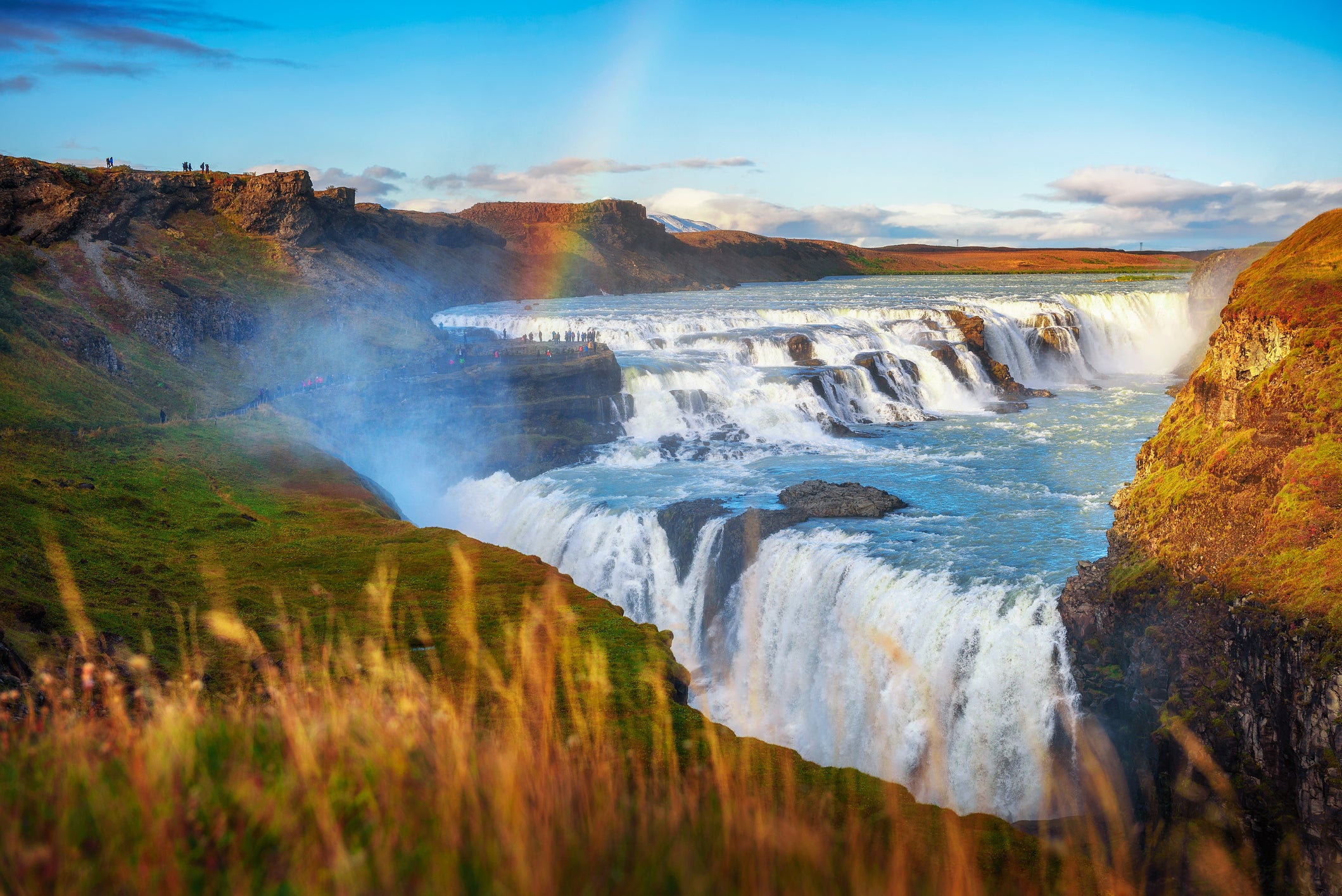
Even the most devoted culture junkie needs a break, however. Around a 90 minute drive from Reykjavik, it’s possible to escape into Icelandic nature at Gullfoss (‘Golden Falls’), one of Europe’s most powerful waterfalls, which plunges into a 70 metre-deep canyon.
Read more: I took an expedition cruise from Iceland to Greenland and it was the trip of a lifetime
Off the tourist trail, and so much less crowded than the Blue Lagoon, is Laugaras Lagoon, a spa complex 90 minutes from the city that opened last December. Its Ylja restaurant is an architectural gem, but the food is the real star. We started with forest broth, followed by fermented tomato carpaccio with burrata style cheese, then Arctic char with horseradish cream, succulent lamb in soy, and finally local strawberries and a basil granita.
By Icelandic standards, it’s reasonably priced too at £77 for a five-course tasting menu. Finally, there was the post-lunch dip. Stepping through low-slung grass-covered arches, we submerge ourselves in steaming geothermal pools and swim under a cascading waterfall that connects the two lagoons.
After the constant buzz of Reykjavik’s cultural scene, I can’t think of a better way to switch off and spend my final afternoon. It’s a different sort of ambient experience, peaceful and surprisingly empty, floating mindlessly in bubbling hot water. In Iceland, it seems, there’s no need to pick between creativity and calm.
How to do it
Icelandair operates flights from London Heathrow to Reykjavik, with prices from £200 return.
Where to stay
Alda Hotel Reykjavik is a modern 4-star boutique hotel handily located on Laugavegur, the main shopping street. There’s also an outdoor hot tub and sauna, an in-house barber and delicious Nordic-style buffet breakfasts. Rooms from £146 per night.
Emma was a guest of Reykjavik Arts Festival