


 Africana55 Radio


This website uses cookies so that we can provide you with the best user experience possible. Cookie information is stored in your browser and performs functions such as recognising you when you return to our website and helping our team to understand which sections of the website you find most interesting and useful.

Want to bookmark your favourite articles and stories to read or reference later? Start your Independent Membership today.
Already a member? Log in
As the legal dispute between President Donald Trump and media outlets whose reporting he opposes continues to intensify, a crucial third party has entered the fray: everyday citizens who consume news to fulfill their daily work duties.
A lawsuit brought on Monday on behalf of six such individuals—functioning effectively as representatives for news audiences—argues that revoking press credentials at White House locations violates more than the rights of media organizations. At a fundamental level, the suit asserts that these bans breach the public's core right to uncompromised reporting on its president and federal leadership.
"The ultimate injury here … is to the democratic public," reads the complaint, which was submitted in a federal district court in New York against Trump and three senior aides, including White House chief of staff, Susie Wiles.
"The First Amendment protects the public’s right to know what its government is doing," said Katie Fallow, who serves as deputy litigation director at the Knight First Amendment Institute. The institute filed the lawsuit for the six plaintiffs alongside Yale Law School's Media Freedom & Information Access Clinic.
"The White House cannot decide what information Americans receive by punishing critical reporting," Fallow said in a statement. "When the White House expels reporters because of their coverage and threatens others with expulsion, it isn’t just the press that suffers — the public loses access to independent reporting and gets something closer to government propaganda."
The plaintiffs all rely on White House news for their work
The six plaintiffs are all people who say they rely on independent and diverse White House reporting for their teaching, journalism or advocacy. They include a noted human rights advocate, a political journalist, a Yale history professor, a high school civics teacher, a legal journalist, and a student journalist at the University of Pennsylvania.
The complaint filed Monday recounts how various news organizations that have been targeted by Trump are already battling the administration in the courts. These cases include the current lawsuit by CNN, MS NOW and Politico, whose journalists were banished from the White House in September.
A federal judge recently extended an order preventing the White House from enforcing the ban while the case makes its way through the legal system. Still affected, though, is CNN’s pool coverage of Trump. The White House has been denying the network its usual slots in the video pool covering the president’s activities and travel, and CNN has threatened further action.
Also continuing is the legal case involving The Associated Press, whose reporters were barred last year from the Oval Office, Air Force One and some events in retaliation for the outlet’s decision not to follow Trump’s lead in changing the name of the Gulf of Mexico, which lies partially in Mexican and other waters, to the Gulf of America.
The New York Times is also involved in litigation, over a Pentagon policy requiring escorts for journalists on its grounds. And ABC is fighting back against the Trump administration in a dispute over renewal of its broadcast licenses.
This lawsuit seeks more wide-ranging relief
The new lawsuit filed Monday, though, is different from previous legal action against the president — first, in that the plaintiffs are ordinary citizens. And it seeks more wide-ranging relief.
The suit, which names Trump as defendant along with Wiles, White House Communications Director Steven Cheung, and Secret Service Director Sean M. Curran, calls not only for reinstatement of access that has already been impacted, but for a broad injunction that would protect from retaliation every news outlet that covers the White House.
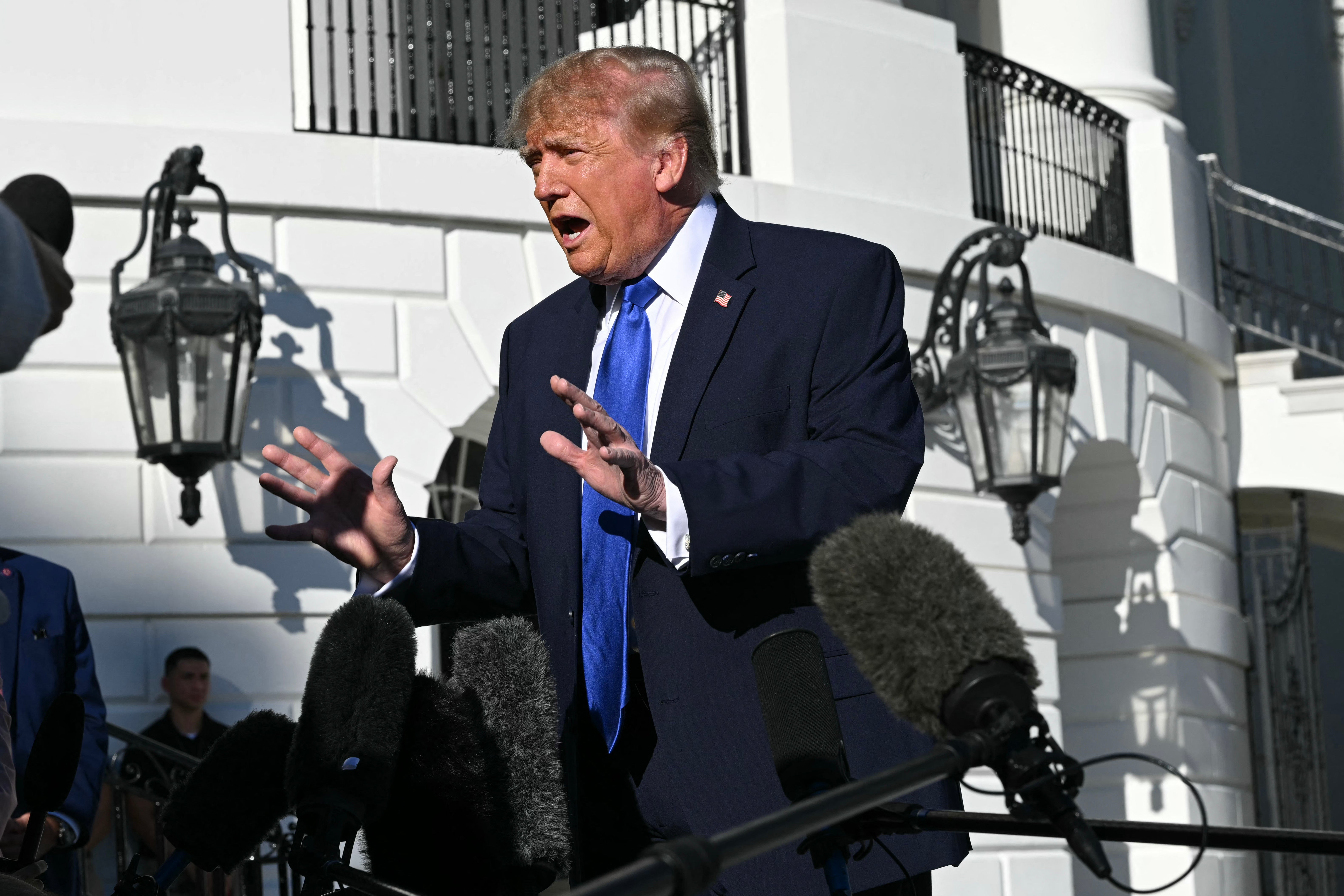
The complaint says: “Defendants' policy of restricting the access of disfavored news organizations deprives the public of the reporting of those organizations, and it inevitably deprives them of the independent reporting of other news organizations as well, since every journalist who reports from the White House must now account for the possibility that a critical or ill-advised word about the president may result in their access being summarily restricted or revoked."
“Plaintiffs ... seek a declaration that the policy is unconstitutional because it imposes restrictions on a limited public forum that are viewpoint-based and unreasonable. They also seek an injunction barring defendants from enforcing the policy.”
Plaintiffs include a human rights advocate, a teacher and a student journalist
The plaintiffs are:
—Kenneth Roth, former longtime executive director of Human Rights Watch and a lecturer at Yale’s law school and school of global affairs. Roth “relies on newsgathering and reporting from members of the White House press corps to inform his public writing and commentary," the suit says.
—Daniel Froomkin, media and political journalist and editor of Press Watch, a nonprofit that encourages political journalists to “fulfill their essential mission of creating an informed electorate and holding the powerful accountable.”
—Beverly Gage, Pulitzer Prize-winning historian and professor at Yale University who “relies on newsgathering and reporting from the White House press corps to inform her scholarship, public writing and commentary.”
—Peter Schmidt-Nowara, a social studies teacher at a New York City high school, who teaches civics courses and considers White House reporting “essential to his work as an educator.”
—Benjamin Wittes, editor-in-chief of Lawfare and a senior fellow at the Brookings Institution, whose publication is “especially reliant on the White House press corps to provide accurate and timely coverage of the president.”
—Ethan Young, a student at the University of Pennsylvania and editor-in-chief of The Daily Pennsylvanian, who, as a student journalist, “relies on a diverse, independent and trustworthy cohort of White House reporters to serve as his proxy.”
Schmidt-Nowara, who teaches at Brooklyn Technical High School, is quoted in the lawsuit as saying: “As a social studies teacher, I want my students to have access to accurate, independent reporting about their government." He adds he is "gravely concerned that the Trump administration’s restrictions on White House reporters are cutting off access to crucial information.
“I joined this lawsuit because my students deserve to know what’s happening in their government and to hear from a free and independent press,” he says.
Young, the student journalist, contends that since he can’t personally access White House press spaces, he relies on “a diverse, independent and trustworthy cohort” of White House reporters to serve as his proxy.
The effect of federal policy changes has been "acutely felt on college campuses, Penn’s included,” Young is quoted as saying. “As a student journalist, I rely on reporting from the White House press corps to understand the decisions made in Washington, their consequences, and how they impact my college community. A vibrant free press allows me to do just that.”