Africana55 Radio
About the author
Bryn Beeder, Registered Dietitian, is an assistant clinical lecturer in kinesiology, nutrition, and health, at Miami University of Ohio. This article is republished from The Conversation under a Creative Commons license.




Want to bookmark your favourite articles and stories to read or reference later? Start your Independent Membership today.
Already a member? Log in
Kids and candy are a classic pairing. From trick-or-treating to Easter baskets, to local parades and birthday parties, it can feel like kids are almost always bringing home another bag of treats. But while these holidays and events may be exciting for kids, they often end with parents dreading what comes next: negotiations around how much candy to consume.
As a registered dietitian and mom of three, I understand the stress that comes with wanting to encourage healthy food choices without removing all the fun of childhood traditions. I also believe the answer to this dilemma may be simpler than the familiar back and forth of “Just one more piece of candy!” and “Haven’t you had enough already?”
Research suggests that by placing fewer restrictions on candy and encouraging more autonomy around sweets, parents can give their kids opportunities to practice recognizing and responding to their hunger and fullness cues, supporting a healthier relationship with food over time.
There is no question that some foods have greater nutritional value than others. A piece of cake – carrot cake included – will never provide the vitamins and minerals of a large garden salad. As a result, people often categorize different foods as “good” or “bad.”

The tendency to place food in two opposing buckets can affect everything from what foods you purchase at the grocery store to the language you use to describe food. The problem is, “good” and “bad” are moral concepts. When morality is consistently applied to food, it can complicate a person’s relationship to it. Instead of viewing food as fueling, it can become a measuring stick for whether your choices are something to feel proud of or guilty about.
As a result, food choices can become less about enjoyment and more about a person’s willpower to make the “right” decision at the grocery store and at mealtimes. Any guilt or shame that arises from this inner monologue may lead to restrictions on certain foods, which sometimes have unintended consequences.
The idea of food restriction often sounds punishing. For parents and others who take care of children, it often may simply be an attempt to limit sugary foods and introduce more fruits and vegetables.
But for kids, this approach may lead them to become preoccupied with those foods. They may be nagged by the knowledge that the foods adults often call “bad” are also the ones that are delicious. What started as a simple candy rule can continue to influence a child’s relationship to food and eating long after the treats are gone.
Parents often approach food restriction in two different ways. In overt food restriction, parents or guardians tell kids that specific foods are off limits or take action in visible ways. In practice, this might mean the kids know candy is in the house but stored out of reach in the kitchen cupboards. Parents or caregivers who practice covert food restriction, on the other hand, may choose to not buy bags of candy at all in order to encourage more balanced food choices.
Research suggests that the overt approach can unintentionally increase kids’ interest in those restricted food items. That preoccupation may mean the child has a more difficult time listening to their fullness cues when presented with those foods. If bags of candy are usually stored out of reach, it may be tempting to eat more than just a few pieces when access is finally granted – and they may completely ignore any signs that their body is full.
Bryn Beeder, Registered Dietitian, is an assistant clinical lecturer in kinesiology, nutrition, and health, at Miami University of Ohio. This article is republished from The Conversation under a Creative Commons license.
Incorporating neutral language about food at mealtimes and encouraging kids to recognize when they’re hungry and when they’ve had enough to eat can help them build trust in their bodies and bring a family closer during meals. Taking the pressure off finishing all the food that’s on the plate can allow everyone to savor each bite.
Eating according to internal cues is one part of intuitive eating, which aims to increase a person’s trust in their own body to signal when to start eating and when to stop. Kids can also benefit from this same framework – with some age-appropriate modifications.
Registered dietitian and family therapist Ellyn Satter developed an approach called the Satter Division of Responsibility in Feeding. It provides a simple, research-based approach to feeding kids in a way that avoids family power struggles. This framework divides responsibility at mealtimes: parents decide when and what food is served, while kids are in charge of deciding what and how much they eat from their plates. The emphasis is on helping kids eat according to their internal cues, without pressuring them to eat specific foods.
Candy can be a part of the menu rotation in this feeding framework. Repeatedly exposing kids to a variety of foods, including sugary treats outside of special holidays or events, means no food becomes emphasized for being better or worse than another food – it is all simply food.
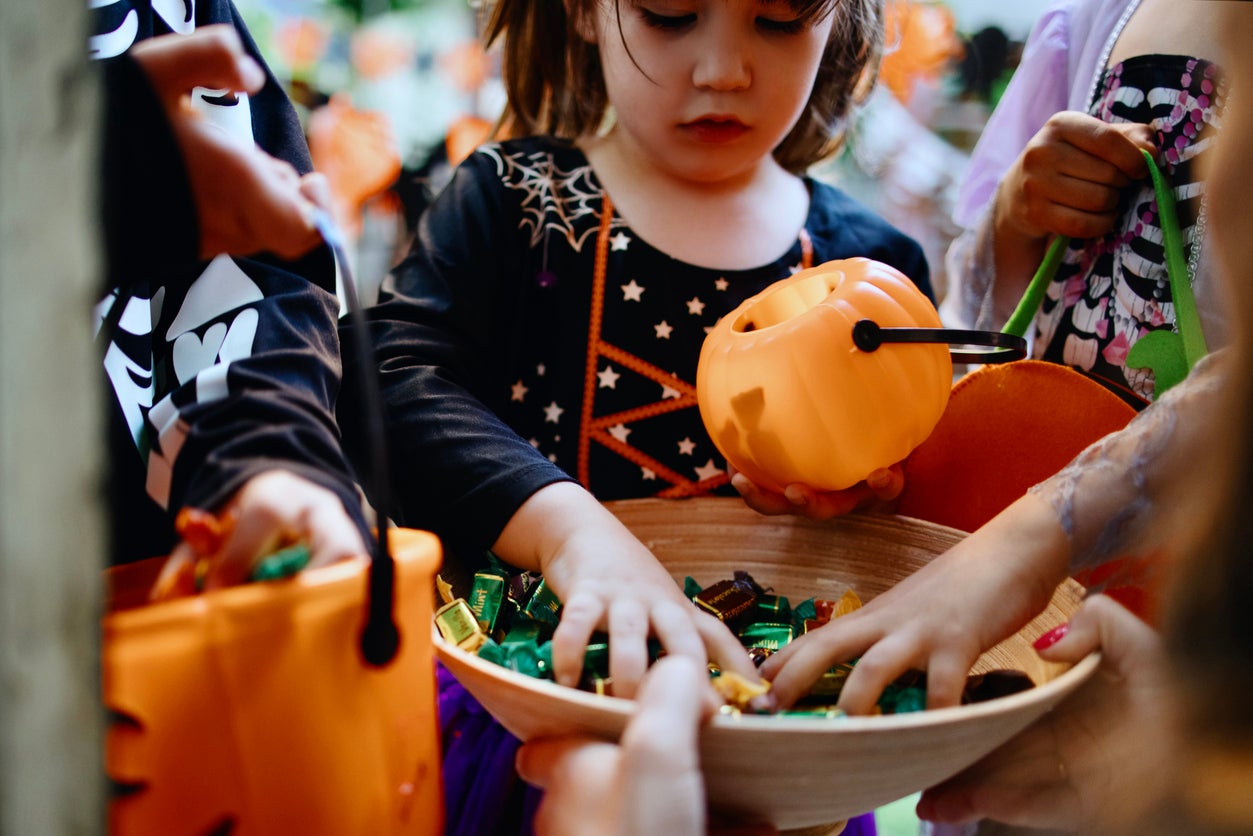
This approach can shift the conversation to how different foods affect their bodies in different ways: Some food – like candy – makes them run super fast, some foods grow their muscles, while other foods keep their eyes strong.
Regularly using neutral language to describe food and exposing kids to a variety of foods helps reduce the allure of sugary treats. This doesn’t mean birthday cake, donuts and candy will no longer taste delicious. It simply means children can feel assured they will see their favorite treats again, without the added urge to over-consume them.
If you’re interested in exploring how intuitive eating principles could change your child’s or your own relationship with food, here are a few practices you can try at home.
Involve children in menu planning and grocery shopping. Let your kids pick a treat to add to a few meals each week, and serve the treat with the rest of the food on the menu for that day. Presenting all food items at the same time on the plate – versus saving a dessert or treat for after the meal – visually reminds everyone that food does not have to be earned. Rather, each food nourishes their bodies in different ways.
Avoid commenting on what your kids eat. It can be tempting to praise a child when they choose to take a bite of the broccoli you’ve been encouraging for weeks. Lauding kids for eating certain foods versus others can create a hierarchy where they think about food as a way to earn a reward instead of fueling their body.
Challenge your own relationship with food. Do you eat when you are hungry and stop when you are full? Do you restrict your own food cravings as a punishment, or do you struggle to control yourself when enjoying a treat you love? Kids are always watching, and your own eating habits often speak louder than words.
Consider letting your kids indulge for a day. In my own family, I don't limit how much candy my three kids eat on Halloween night. I won't lie – they usually eat quite a bit. When they mention a stomachache afterward, we talk about how eating a lot of candy can make their bodies feel – without adding judgment. While we continue to offer a piece or two with meals, their interest typically fades over the next few days.