


 Africana55 Radio

This website uses cookies so that we can provide you with the best user experience possible. Cookie information is stored in your browser and performs functions such as recognising you when you return to our website and helping our team to understand which sections of the website you find most interesting and useful.
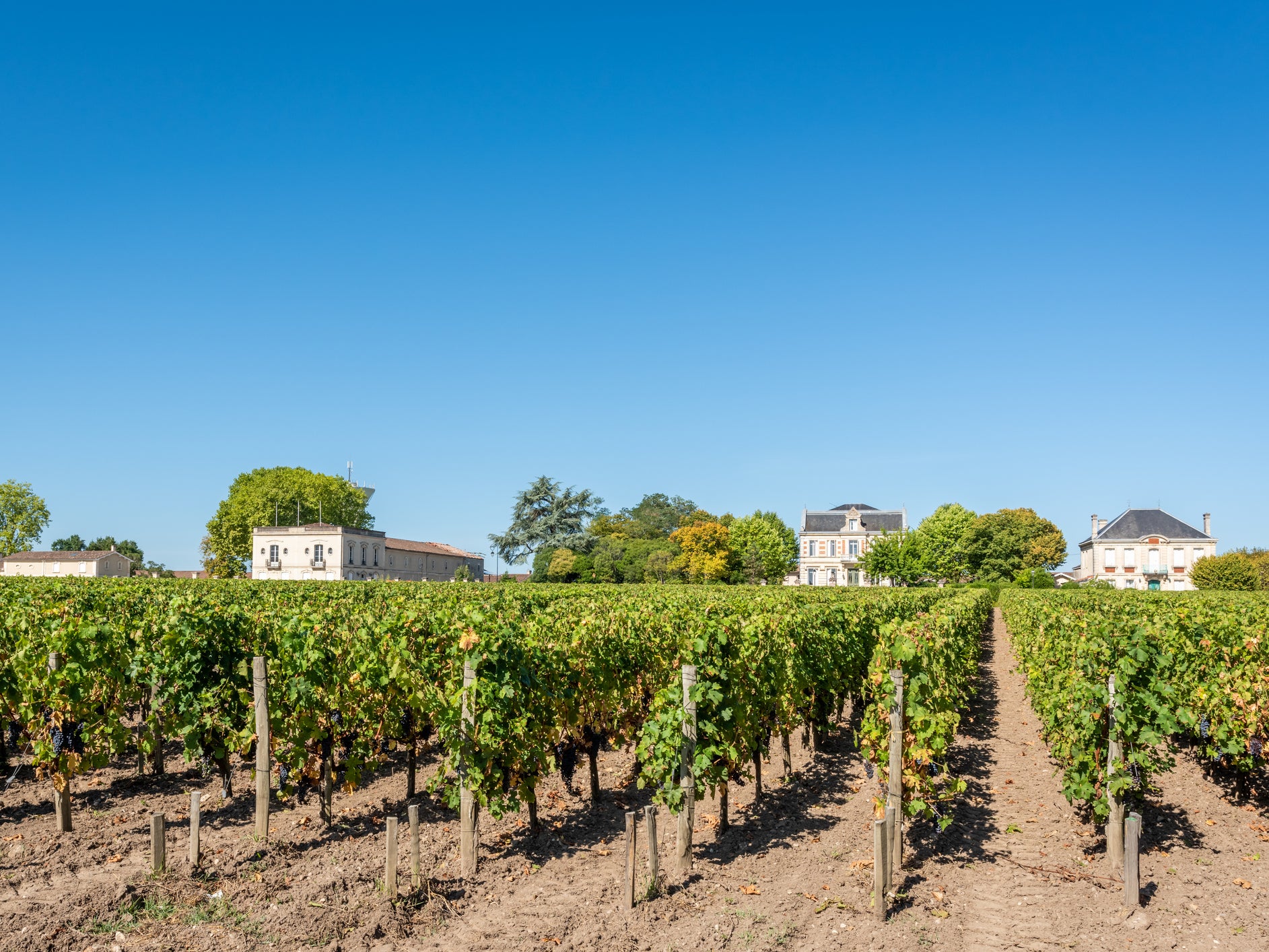
Many of the world’s most revered vineyards may face the choice of diversifying the grape varieties they grow or risk harvesting smaller and smaller crops, as climate change brings less favourable conditions.
Even if the world manage to rein in the greenhouse gas emissions causing average global temperatures to rise as the Paris agreement outlines – limiting global warming to 2C – then the regions of the world suitable for growing wine grapes could shrink by as much as 56 per cent.
Currently humanity is not on course to meet that target. Emissions over 2019 were 4 per cent higher than when the Paris agreement was signed in 2015, and the United Nations has warned that current trends put the planet on course for a 3.4C temperature rise over the next 80 years.
A new study warns that under a potential scenario of 4C of warming, 85 per cent of lands suitable for vineyards would no longer be able to produce good wines because the grapes are extremely sensitive to the changes in temperature and season brought by climate change.
“In some ways, wine is like the canary in the coal mine for climate change impacts on agriculture, because these grapes are so climate-sensitive,” said Benjamin Cook from Columbia University and the Nasa Goddard Institute for Space Studies, co-author of the study.
1/20 Athens, Greece
In this decade, humans have become ever more aware of climate change. Calls for leaders to act echo around the globe as the signs of a changing climate become ever more difficult to ignore
AFP/Getty
2/20 California
Fierce wildfires have flared up in numerous countries. The damage being caused is unprecedented: 103 people were killed in wildfires last year in California, one of the places best prepared, best equipped to fight such blazes in the world
Getty
3/20 Redding, California
Entire towns have been razed. The towns of Redding and Paradise in California were all but eliminated in the 2018 season
AP
4/20 Athens, Greece
While wildfires in Greece (pictured), Australia, Indonesia and many other countries have wrought chaos to infrastructure, economies and cost lives
AFP/Getty
5/20 Carlisle, England
In Britain, flooding has become commonplace. Extreme downpours in Carlisle in the winter of 2015 saw the previous record flood level being eclipsed by two feet
AFP/Getty
6/20 Hebden Bridge, England
Hebden Bridge in West Yorkshire has flooded repeatedly in the past decade, with the worst coming on Christmas Day 2015. Toby Smith of Climate Visuals, an organisation focused on improving how climate change is depicted in the media, says: "Extreme weather and flooding, has and will become more frequent due to climate change. An increase in the severity and distribution of press images, reports and media coverage across the nation has localised the issue. It has raised our emotions, perception and personalised the effects and hazards of climate change."
Getty
7/20 Somerset, England
Out west in Somerset, floods in 2013 led to entire villages being cut off and isolated for weeks
Getty
8/20 Dumfries, Scotland
"In summer 2012, intense rain flooded over 8000 properties. In 2013, storms and coastal surges combined catastrophically with elevated sea levels whilst December 2015, was the wettest month ever recorded. Major flooding events continued through the decade with the UK government declaring flooding as one of the nation's major threats in 2017," says Mr Smith of Climate Visuals
Getty
9/20 London, England
Weather has been more extreme in Britain in recent years. The 'Beast from the East' which arrived in February 2018 brought extraordinarily cold temperatures and high snowfall. Central London (pictured), where the city bustle tends to mean that snow doesn't even settle, was covered in inches of snow for day
PA
10/20 London, England
Months after the cold snap, a heatwave struck Britain, rendering the normally plush green of England's parks in Summer a parched brown for weeks
AFP/Getty
11/20 New South Wales, Australia
Worsening droughts in many countries have been disastrous for crop yields and have threatened livestock. In Australia, where a brutal drought persisted for months last year, farmers have suffered from mental health problems because of the threat to their livelihood
Reuters
12/20 Tonle Sap, Cambodia
Even dedicated climate skeptic Jeremy Clarkson has come to recognise the threat of climate change after visiting the Tonle Sap lake system in Cambodia. Over a million people rely on the water of Tonle Sap for work and sustinence but, as Mr Clarkson witnessed, a drought has severley depleted the water level
Carlo Frem/Amazon
13/20 Addis Ababa, Ethiopia
In reaction to these harbingers of climate obliteration, some humans have taken measures to counter the impending disaster. Ethiopia recently planted a reported 350 million trees in a single day
AFP/Getty
14/20 Morocco
Morocco has undertaken the most ambitious solar power scheme in the world, recently completing a solar plant the size of San Francisco
AFP/Getty
15/20 London, England
Electric cars are taking off as a viable alternative to fossil fuel burning vehicles and major cities across the world are adding charging points to accomodate
AFP/Getty
16/20 Purmerend, The Netherlands
Cities around the world are embracing cycling too, as a clean (and healthy) mode of transport. The Netherlands continues to lead the way with bikes far outnumbering people
Jeroen Much/Andras Schuh
17/20 Xiamen, China
Cycling infrastructure is taking over cities the world over, in the hope of reducing society's dependency on polluting vehicles
Ma Weiwei
18/20 Chennai, India
Despite positive steps being taken, humans continue to have a wildly adverse effect on the climate. There have been numerous major oil spills this decade, the most notable being the BP oil spill in the Gulf of Mexico in 2010
AFP/Getty
19/20 Amazon rainforest, Brazil
More recently, large swathes of the Amazon rainforest were set alight by people to clear land for agriculture
AFP/Getty
20/20 California
This decade may have seen horrors but it has led to an understanding that the next decade must see change if human life is to continue
Getty
1/20 Athens, Greece
In this decade, humans have become ever more aware of climate change. Calls for leaders to act echo around the globe as the signs of a changing climate become ever more difficult to ignore
AFP/Getty
2/20 California
Fierce wildfires have flared up in numerous countries. The damage being caused is unprecedented: 103 people were killed in wildfires last year in California, one of the places best prepared, best equipped to fight such blazes in the world
Getty
3/20 Redding, California
Entire towns have been razed. The towns of Redding and Paradise in California were all but eliminated in the 2018 season
AP
4/20 Athens, Greece
While wildfires in Greece (pictured), Australia, Indonesia and many other countries have wrought chaos to infrastructure, economies and cost lives
AFP/Getty
5/20 Carlisle, England
In Britain, flooding has become commonplace. Extreme downpours in Carlisle in the winter of 2015 saw the previous record flood level being eclipsed by two feet
AFP/Getty
6/20 Hebden Bridge, England
Hebden Bridge in West Yorkshire has flooded repeatedly in the past decade, with the worst coming on Christmas Day 2015. Toby Smith of Climate Visuals, an organisation focused on improving how climate change is depicted in the media, says: "Extreme weather and flooding, has and will become more frequent due to climate change. An increase in the severity and distribution of press images, reports and media coverage across the nation has localised the issue. It has raised our emotions, perception and personalised the effects and hazards of climate change."
Getty
7/20 Somerset, England
Out west in Somerset, floods in 2013 led to entire villages being cut off and isolated for weeks
Getty
8/20 Dumfries, Scotland
"In summer 2012, intense rain flooded over 8000 properties. In 2013, storms and coastal surges combined catastrophically with elevated sea levels whilst December 2015, was the wettest month ever recorded. Major flooding events continued through the decade with the UK government declaring flooding as one of the nation's major threats in 2017," says Mr Smith of Climate Visuals
Getty
9/20 London, England
Weather has been more extreme in Britain in recent years. The 'Beast from the East' which arrived in February 2018 brought extraordinarily cold temperatures and high snowfall. Central London (pictured), where the city bustle tends to mean that snow doesn't even settle, was covered in inches of snow for day
PA
10/20 London, England
Months after the cold snap, a heatwave struck Britain, rendering the normally plush green of England's parks in Summer a parched brown for weeks
AFP/Getty
11/20 New South Wales, Australia
Worsening droughts in many countries have been disastrous for crop yields and have threatened livestock. In Australia, where a brutal drought persisted for months last year, farmers have suffered from mental health problems because of the threat to their livelihood
Reuters
12/20 Tonle Sap, Cambodia
Even dedicated climate skeptic Jeremy Clarkson has come to recognise the threat of climate change after visiting the Tonle Sap lake system in Cambodia. Over a million people rely on the water of Tonle Sap for work and sustinence but, as Mr Clarkson witnessed, a drought has severley depleted the water level
Carlo Frem/Amazon
13/20 Addis Ababa, Ethiopia
In reaction to these harbingers of climate obliteration, some humans have taken measures to counter the impending disaster. Ethiopia recently planted a reported 350 million trees in a single day
AFP/Getty
14/20 Morocco
Morocco has undertaken the most ambitious solar power scheme in the world, recently completing a solar plant the size of San Francisco
AFP/Getty
15/20 London, England
Electric cars are taking off as a viable alternative to fossil fuel burning vehicles and major cities across the world are adding charging points to accomodate
AFP/Getty
16/20 Purmerend, The Netherlands
Cities around the world are embracing cycling too, as a clean (and healthy) mode of transport. The Netherlands continues to lead the way with bikes far outnumbering people
Jeroen Much/Andras Schuh
17/20 Xiamen, China
Cycling infrastructure is taking over cities the world over, in the hope of reducing society's dependency on polluting vehicles
Ma Weiwei
18/20 Chennai, India
Despite positive steps being taken, humans continue to have a wildly adverse effect on the climate. There have been numerous major oil spills this decade, the most notable being the BP oil spill in the Gulf of Mexico in 2010
AFP/Getty
19/20 Amazon rainforest, Brazil
More recently, large swathes of the Amazon rainforest were set alight by people to clear land for agriculture
AFP/Getty
20/20 California
This decade may have seen horrors but it has led to an understanding that the next decade must see change if human life is to continue
Getty
But all hope is not yet lost.
“There are still opportunities to adapt viticulture to a warmer world,” said Professor Cook. “It just requires taking the problem of climate change seriously.”
The study suggests wine producers could look at diversifying their crop by “reshuffling” grape varieties. Such a move could halve the potential losses of wine-growing regions under 2C of warming, the authors say.
The team suggests crop diversity could be key to making agriculture more resilient to climate change, and said wine grapes offer a unique opportunity to test this assumption.
Wine grapes are both extremely diverse – there are more than 1,100 different varieties planted today, growing under a wide range of conditions – and they are well-documented, with harvest data stretching back centuries.
The researchers – led by Ignacio Morales-Castilla at the University of Alcalá in Spain and Elizabeth Wolkovich at the University of British Columbia, Vancouver – focused on 11 varieties of grape: Cabernet Sauvignon, Chasselas, Chardonnay, Grenache, Merlot, Monastrell (also known as Mourvedre), Pinot Noir, Riesling, Sauvignon Blanc, Syrah and Ugni Blanc.
For the 11 varieties, the team used vintner and researcher archives to build a model for when each would bud, flower, and ripen in winegrowing regions around the world under three different warming scenarios: 0, 2, and 4C of warming. Then they used climate change projections to examine which regions those varieties would still be viable in the future.
Losses were unavoidable under both warming scenarios, due to shifting temperatures and seasonal changes which would affect conditions while the varieties were ripening. These factors would considerably impact the wines’ quality. But the team found that “by switching these varieties around, you can reduce losses by a significant amount”, said Professor Cook.
With 2C of global warming and no attempts at adaptation, 56 per cent of the world’s wine-growing areas may no longer be suitable for growing wine. But if wine producers switch to varieties more suitable for the changing climate, only 24 per cent would be lost.
For example, in France’s Burgundy region, the authors suggest heat-loving Mourvedre and Grenache could replace current varieties such as Pinot Noir. In Bordeaux, Cabernet Sauvignon and Merlot could also be replaced with Mourvedre.
Implementing such major cultural changes in areas steeped in rich viticulture history would be a significant challenge, as would the legal position – strict rules govern the grapes used in wines sold as coming from particular regions.
However, some change is already afoot. For example, in Bordeaux, where Cabernet Sauvignon dominates blends, just a handful of grapes including Cabernet Franc, Merlot, Petit Verdot and Malbec were previously permitted to be used.
But this changed in July 2019. Bordeaux wineries reportedly authorised the use of four new red grapes to combat temperature increases in Bordeaux. They are: Marselan, Touriga Nacional, Castets, and Arinarnoa.
“Conversations in Europe have already begun about new legislation to make it easier for major regions to change the varieties they grow,” said Dr Wolkovich.
“But growers still must learn to grow these new varieties. That’s a big hurdle in some regions that have grown the same varieties for hundreds and hundreds of years, and they need consumers who are willing to accept different varieties from their favourite regions.”
The scientists said cooler wine-growing regions such as Germany, New Zealand and the US Pacific Northwest would be relatively unscathed under the 2C scenario. These areas could become suitable for warmer varieties like Merlot and Grenache, while varieties that prefer cooler temperatures, such as Pinot Noir, could expand northward into regions not currently suitable for growing wine.
Wine-growing regions that are already hot now – such as Italy, Spain, and Australia – faced the largest losses, because they are already limited to planting the warmest varieties.
The variety-swapping was less effective at higher amounts of global warming. With 4C of warming, planting climate-specific varieties reduced losses from 85 to 58 per cent – about a third.
The researchers note that management practices like increased irrigation and using shade cloths can also help to protect grapevines, but only at lower levels of warming.
Ultimately, the effectiveness of any strategy depends on growers having the options and resources to adapt at a local scale, and on reducing greenhouse gas emissions and limiting warming globally, the authors said.
The research is published in the Proceedings of the National Academy of Sciences.