


 Africana55 Radio
This website uses cookies so that we can provide you with the best user experience possible. Cookie information is stored in your browser and performs functions such as recognising you when you return to our website and helping our team to understand which sections of the website you find most interesting and useful.
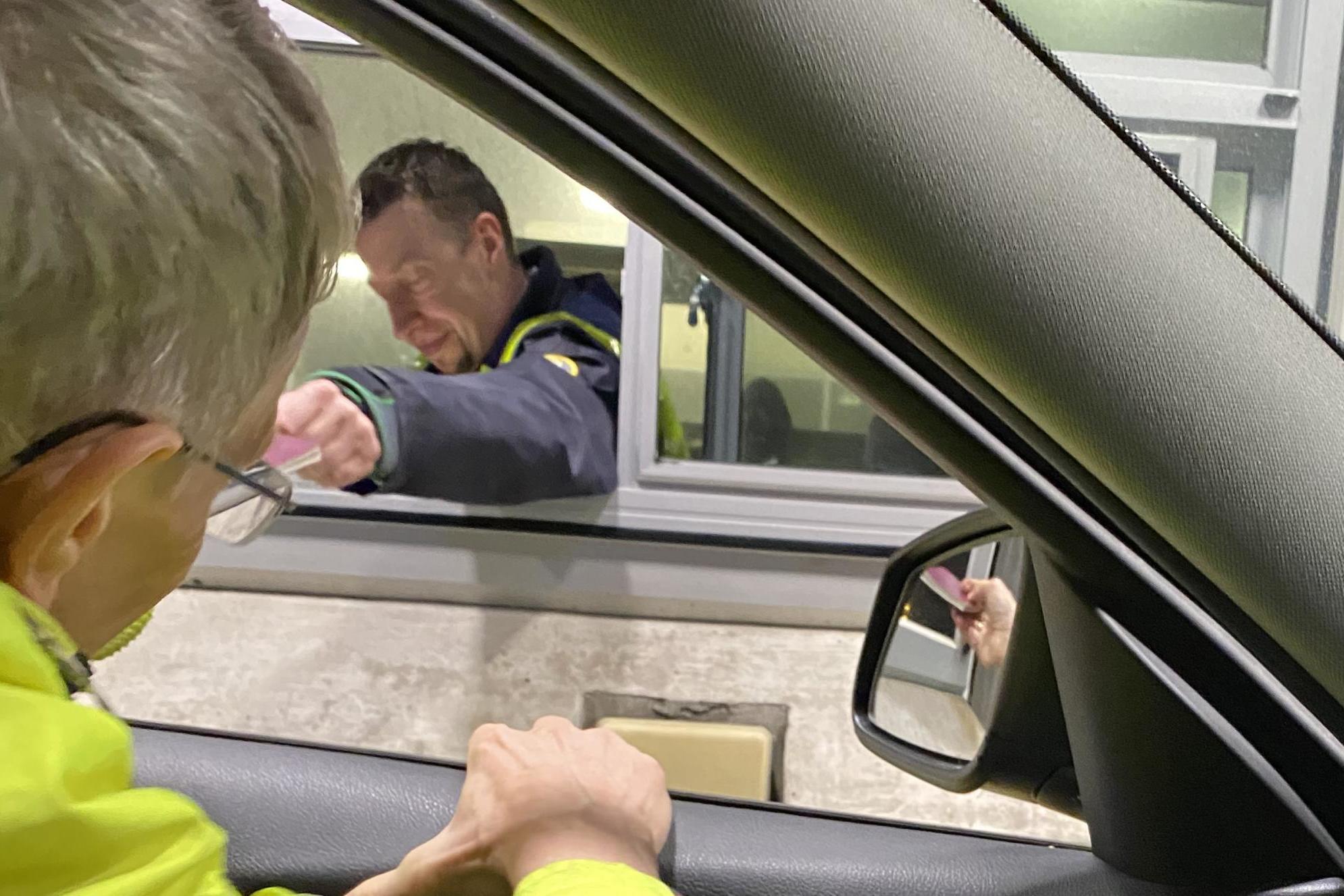
The late shift on a Friday evening at the bitter end of January is an unenviable one for the French frontier staff stationed at Eastern Docks in Dover.
The official who shivered in his booth was not in the mood to return a smile, but returned my passport after a cursory check. Frictionless – as the Withdrawal Agreement demands, at least until the end of 2020.
By next January he and his exiled colleagues will be entitled to enquire as to my health, my financial resources – and the purpose of my visit.
My intention was to take advantage of a once-in-a-lifetime opportunity: to sail aboard the first ferry to arrive in France after Brexit.
The 9.35pm DFDS departure from Dover was due to arrive in Calais just after midnight on 1 February – enabling me to rejoin the European Union just minutes after the UK left the EU.
Dover and Calais have provided the main link between England with France for centuries. One assumption behind the Channel Tunnel business plan was that the car ferries would sail off into the sunset once Le Shuttle started running from Folkestone.
Created with Sketch.
Created with Sketch.
1/20 Britain votes to leave the European Union - 23 June 2016
A referendum is held on Britain's membership of the European Union. Fifty-two per cent of the country votes in favour of leaving
AFP via Getty
2/20 David Cameron resigns - 24 June 2016
David Cameron resigns on the morning of the result after leading the campaign for Britain to remain in the EU
Getty
3/20 Theresa May takes the reins - 13 July 2016
Theresa May becomes leader of the Conservative party and prime minister, winning the leadership contest unopposed after Andrea Leadsom drops out
Getty
4/20 High Court rules parliament must vote on Brexit - November 2016 - 3 November 2016
The High Court rules that parliament must vote on triggering Article 50, which would begin the Brexit process
5/20 Article 50 triggered - 28 March 2017
The prime minister triggers Article 50 after parliament endorses the result of the referendum
Getty
6/20 May calls snap election - 18 April 2018
Seeking a mandate for her Brexit plan, May goes to the country
Getty
7/20 May loses majority as Labour makes surprise gain - 8 June 2017
After a disastrous campaign, Theresa May loses her majority in the commons and turns to the DUP for support. Jeremy Corbyn's Labour party makes gains after being predicted to lose heavily
AFP/Getty
8/20 Negotiations begin - 19 June 2017
David Davis and Michel Barnier, chief negotiators for the UK and EU respectively, hold a press conference on the first day of Brexit negotiations. Soon after the beginning of negotiations, it becomes clear that the issue of the border between Northern Ireland and the Republic will prove a major sticking point
AFP/Getty
9/20 MPs vote that withdrawal deal must be ratified by parliament - 13 December 2017
The government suffers a defeat in parliament over the EU withdrawal agreement, guaranteeing that MPs are given a 'meaningful vote' on the deal
10/20 Boris Johnson resigns as foreign secretary - 11 July 2018
Following a summit at Chequers where the prime minister claimed to have gained cabinet support for her deal, Boris Johnson resigns as foreign secretary along with David Davis, the Brexit secretary
Reuters
11/20 Draft withdrawal agreement - 15 November 2018
The draft withdrawal agreement settles Britain's divorce bill, secures the rights of EU citizens living in the UK and vice versa and includes a political declaration commiting both parties to frictionless trade in goods and cooperation on security matters. The deal also includes the backstop, which is anathema to many brexiteers and Dominic Raab and Esther McVey resign from the cabinet in protest
Getty
12/20 May resigns - 24 May 2019
After several failed attempts to pass her withdrawal agreement through the commons, Theresa May resigns
Reuters
13/20 Johnson takes over - 24 July 2019
Boris Johnson is elected leader of the Conservative party in a landslide victory. He later heads to Buckingham Palace where the Queen invites him to form a government
Getty
14/20 Parliament prorogued - 28 August 2019
Boris Johnson prorogues parliament for five weeks in the lead up to the UK's agreed departure date of 31 October.
Stephen Morgan MP
15/20 Prorogation ruled unlawful - 24 September 2019
The High Court rules that Johnson's prorogation of parliament is 'unlawful' after a legal challenge brought by businesswoman Gina Miller
Getty
16/20 Johnson agrees deal with Varadkar - October
Following a summit in Merseyside, Johnson agrees a compromise to the backstop with Irish prime minister Leo Varadkar - making the withdrawal agreement more palatable to Brexiteers
Getty
17/20 Final Say march demands second referendum - 19 October 2019
As parliament passes the Letwin amendment requiring the prime minister to request a further delay to Brexit, protesters take to the streets in the final show of force for a Final Say referendum
Getty
18/20 Johnson wins 80 seat majority - 12 December 2019
The Conservatives win the December election in a landslide, granting Boris Johnson a large majority to pass through his brexit deal and pursue his domestic agenda
Getty
19/20 Withdrawal deal passes parliament - 20 December 2019
The withdrawal agreement passes through the commons with a majority of 124
Getty
20/20 EU parliament backs UK withdrawal deal - 29 January 2020
Members of the European parliament overwhelmingly back the ratification of Britain's departure, clearing the way for Brexit two days later on 31 January. Following the vote, members join hands and sing Auld Lang Syne
AFP/Getty
1/20 Britain votes to leave the European Union - 23 June 2016
A referendum is held on Britain's membership of the European Union. Fifty-two per cent of the country votes in favour of leaving
AFP via Getty
2/20 David Cameron resigns - 24 June 2016
David Cameron resigns on the morning of the result after leading the campaign for Britain to remain in the EU
Getty
3/20 Theresa May takes the reins - 13 July 2016
Theresa May becomes leader of the Conservative party and prime minister, winning the leadership contest unopposed after Andrea Leadsom drops out
Getty
4/20 High Court rules parliament must vote on Brexit - November 2016 - 3 November 2016
The High Court rules that parliament must vote on triggering Article 50, which would begin the Brexit process
5/20 Article 50 triggered - 28 March 2017
The prime minister triggers Article 50 after parliament endorses the result of the referendum
Getty
6/20 May calls snap election - 18 April 2018
Seeking a mandate for her Brexit plan, May goes to the country
Getty
7/20 May loses majority as Labour makes surprise gain - 8 June 2017
After a disastrous campaign, Theresa May loses her majority in the commons and turns to the DUP for support. Jeremy Corbyn's Labour party makes gains after being predicted to lose heavily
AFP/Getty
8/20 Negotiations begin - 19 June 2017
David Davis and Michel Barnier, chief negotiators for the UK and EU respectively, hold a press conference on the first day of Brexit negotiations. Soon after the beginning of negotiations, it becomes clear that the issue of the border between Northern Ireland and the Republic will prove a major sticking point
AFP/Getty
9/20 MPs vote that withdrawal deal must be ratified by parliament - 13 December 2017
The government suffers a defeat in parliament over the EU withdrawal agreement, guaranteeing that MPs are given a 'meaningful vote' on the deal
10/20 Boris Johnson resigns as foreign secretary - 11 July 2018
Following a summit at Chequers where the prime minister claimed to have gained cabinet support for her deal, Boris Johnson resigns as foreign secretary along with David Davis, the Brexit secretary
Reuters
11/20 Draft withdrawal agreement - 15 November 2018
The draft withdrawal agreement settles Britain's divorce bill, secures the rights of EU citizens living in the UK and vice versa and includes a political declaration commiting both parties to frictionless trade in goods and cooperation on security matters. The deal also includes the backstop, which is anathema to many brexiteers and Dominic Raab and Esther McVey resign from the cabinet in protest
Getty
12/20 May resigns - 24 May 2019
After several failed attempts to pass her withdrawal agreement through the commons, Theresa May resigns
Reuters
13/20 Johnson takes over - 24 July 2019
Boris Johnson is elected leader of the Conservative party in a landslide victory. He later heads to Buckingham Palace where the Queen invites him to form a government
Getty
14/20 Parliament prorogued - 28 August 2019
Boris Johnson prorogues parliament for five weeks in the lead up to the UK's agreed departure date of 31 October.
Stephen Morgan MP
15/20 Prorogation ruled unlawful - 24 September 2019
The High Court rules that Johnson's prorogation of parliament is 'unlawful' after a legal challenge brought by businesswoman Gina Miller
Getty
16/20 Johnson agrees deal with Varadkar - October
Following a summit in Merseyside, Johnson agrees a compromise to the backstop with Irish prime minister Leo Varadkar - making the withdrawal agreement more palatable to Brexiteers
Getty
17/20 Final Say march demands second referendum - 19 October 2019
As parliament passes the Letwin amendment requiring the prime minister to request a further delay to Brexit, protesters take to the streets in the final show of force for a Final Say referendum
Getty
18/20 Johnson wins 80 seat majority - 12 December 2019
The Conservatives win the December election in a landslide, granting Boris Johnson a large majority to pass through his brexit deal and pursue his domestic agenda
Getty
19/20 Withdrawal deal passes parliament - 20 December 2019
The withdrawal agreement passes through the commons with a majority of 124
Getty
20/20 EU parliament backs UK withdrawal deal - 29 January 2020
Members of the European parliament overwhelmingly back the ratification of Britain's departure, clearing the way for Brexit two days later on 31 January. Following the vote, members join hands and sing Auld Lang Syne
AFP/Getty
Yet a quarter-century on there is enough traffic to sustain two rival ferry lines – P&O as well as DFDS – in competition against the tunnel.
One passenger sported a “Bollocks to Brexit” badge, which claimed “It’s not a done deal”.
Most of my fellow travellers were unaware of the significance of the sailing, and with a little manoeuvring I was able to acquire pole position on Deck 5 for the quickest getaway. But the transport and tourism industries are well aware of the possible impact of Brexit.
At present, formalities for cars, trucks and coaches are minimal. But Europe avec frontières will soon become a reality. It remains to be seen how much friction the reintroduction of customs check will create, and the possible consequences for perishable products as well as irritable travellers.
Brexiteers argue that other ports in the UK, such as Felixstowe, are already accustomed to handling imports from non-EU countries, and that being outside the single market will not hinder trade.
Britain's inbound tourism industry, meanwhile, is alarmed at how much damage the impending prohibition on EU visitors using national ID cards instead of passports will do. The ferry firms could also suffer. But for now the operation works like clockwork.
As a force-five wind pummelled across the Channel, the onboard TVs broadcast scenes from Parliament Square in London – laced with vox-pops about the benefits of Brexit that ranged from ambitious to bizarre.
At the moment Europe made its geo-political adjustment, it was midnight in France. Out on the open deck, the smokers whooped with joy at what they felt was their hard-won and new-found freedom.
Within 20 minutes we were all back in the European Union – which, even in its diminished condition, remains the world’s most formidable alliance.
The ramp from the ferry led ahead to a network of frontier-free possibilities stretching from the Mediterranean and the Balkans to the Baltic and the Arctic. With Britain left behind.