


 Africana55 Radio

This website uses cookies so that we can provide you with the best user experience possible. Cookie information is stored in your browser and performs functions such as recognising you when you return to our website and helping our team to understand which sections of the website you find most interesting and useful.
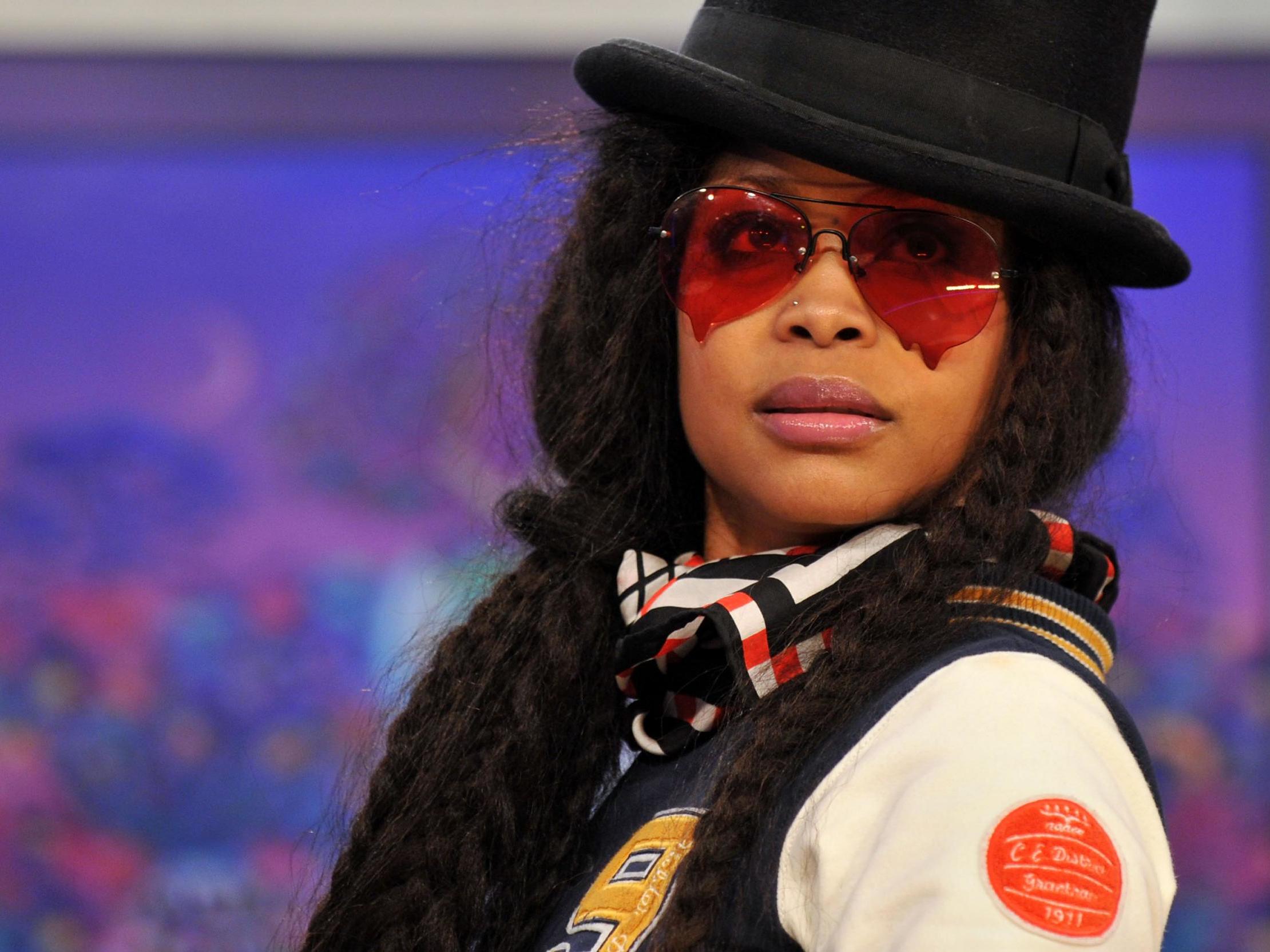
Erykah Badu has revealed she is producing incense that smells like her vagina.
Speaking to Ten magazine, the 48-year-old singer explained that the product will launch on her online store, Badu World Market, on 20 February.
The incense is called Badu’s P***y and was created using the musician’s own underwear.
“I took lots of pairs of my panties, cut them up into little pieces and burned them,” she said, adding: “Even the ash is part of it.”
Badu went on to discuss her inspiration behind the product.
Created with Sketch.
Created with Sketch.
1/17 Nadia Murad, 2018
The Iraqi Yazidi human rights activist was awarded the Nobel Peace Prize 'for their efforts to end the use of sexual violence as a weapon of war and armed conflict'.
AFP via Getty Images
2/17 Malala Yousafzai, 2014
The Pakistani activist, who champions female education, became the youngest ever recipient of the Nobel Peace Prize at 17 years old, receiving the accolade 'for their struggle against the suppression of children and young people and for the right of all children to education'.
Getty Images
3/17 Ellen Johnson Sirleaf, 2011
The Liberian politician was one of three female recipients of the Nobel Peace Prize in 2011, all of whom received the recognition 'for their non-violent struggle for the safety of women and for women's rights to full participation in peace-building work'.
AFP via Getty Images
4/17 Leymah Gbowee, 2011
The Liberian peace activist, who also received the Nobel Peace Prize in 2011, lead the Women of Liberia Mass Action for Peace movement, which contributed towards the Second Liberian Civil War coming to an end in 2003.
AFP via Getty Images
5/17 Tawakkol Karman, 2011
The journalist, politician and human rights activist from Yemen was the third person who jointly received the Nobel Peace Prize in 2011, having co-founded and lead the group Women Journalists Without Chains.
Getty Images
6/17 Wangari Muta Maathai, 2004
Wangari Muta Maathai, a social, environmental and political activist from Kenya, passed away in 2011. Seven years prior, she became the first African woman to receive the Nobel Peace Prize 'for her contribution to sustainable development, democracy and peace'.
AFP via Getty Images
7/17 Shirin Ebadi, 2003
The Iranian political activist, human rights activist, lawyer and former judge co-founded the Defenders of Human Rights Centre in Iran. She was awarded the Nobel Peace Prize 'for her efforts for democracy and human rights', having 'focused especially on the struggle for the rights of women and children'.
Getty Images
8/17 Jody Williams, 1997
American political activist Jody Williams received the accolade 'for their work for the banning and clearing of anti-personnel mines'.
AFP via Getty Images
9/17 Rigoberta Menchú Tum, 1992
The Guatemalan-born K'iche' Indigenous feminist and human rights activist became the recipient of the Nobel Peace Prize in 1992 'in recognition of her work for social justice and ethno-cultural reconciliation based on respect for the rights of indigenous peoples'.
AFP via Getty Images
10/17 Aung San Suu Kyi, 1991
The Burmese politician, who is the first State Counsellor of Myanmar and the leader of the National League for Democracy, received the Nobel Peace Prize 'for her non-violent struggle for democracy and human rights'.
Getty Images
11/17 Alva Myrdal, 1982
Alva Myrdal, a Swedish sociologist, diplomat and politician, jointly received the Nobel Peace Prize alongside Garcia Robles in 1982. She was a leader of the disarmament movement.
AFP via Getty Images
12/17 Mother Teresa, 1979
Regarded as one of the most prominent humanitarians in history, Roman Catholic nun Mother Teresa was awarded the accolade in 1979. She passed away less than two decades later.
AFP via Getty Images
13/17 Betty Williams, 1976
In 1976, Betty Williams, from Belfast, Ireland, was one of two women to receive the Nobel Peace Prize. Williams co-founded the Community of Peace People, previously named the Northern Ireland Peace Movement.
Getty Images
14/17 Mairead Corrigan, 1976
Mairead Corrigan was the second recipient of the Nobel Peace Prize in 1976, having co-founded the Community of Peace People alongside Williams.
AFP via Getty Images
15/17 Emily Greene Balch, 1946
Emily Greene Balch, an American sociologist, pacifist and economist, was a leader of the Switzerland-based Women's International League for Peace and Freedom, a role that resulted in her being awarded the Nobel Peace Prize.
AFP via Getty Images
16/17 Jane Addams, 1931
Sociologist and activist Jane Addams became the first American woman to receive the Nobel Peace Prize in 1931. She was the first international president of the Women's International League for Peace and Freedom.
AFP via Getty Images
17/17 Baroness Bertha von Suttner, 1905
Baroness Bertha Sophie Felicita von Suttner was the first woman to receive a Nobel Peace Prize, and the second female Nobel laureate after Marie Curie in 1903. She won the Nobel Peace Prize in 1905, having become a campaigner for disarmament.
Getty Images
1/17 Nadia Murad, 2018
The Iraqi Yazidi human rights activist was awarded the Nobel Peace Prize 'for their efforts to end the use of sexual violence as a weapon of war and armed conflict'.
AFP via Getty Images
2/17 Malala Yousafzai, 2014
The Pakistani activist, who champions female education, became the youngest ever recipient of the Nobel Peace Prize at 17 years old, receiving the accolade 'for their struggle against the suppression of children and young people and for the right of all children to education'.
Getty Images
3/17 Ellen Johnson Sirleaf, 2011
The Liberian politician was one of three female recipients of the Nobel Peace Prize in 2011, all of whom received the recognition 'for their non-violent struggle for the safety of women and for women's rights to full participation in peace-building work'.
AFP via Getty Images
4/17 Leymah Gbowee, 2011
The Liberian peace activist, who also received the Nobel Peace Prize in 2011, lead the Women of Liberia Mass Action for Peace movement, which contributed towards the Second Liberian Civil War coming to an end in 2003.
AFP via Getty Images
5/17 Tawakkol Karman, 2011
The journalist, politician and human rights activist from Yemen was the third person who jointly received the Nobel Peace Prize in 2011, having co-founded and lead the group Women Journalists Without Chains.
Getty Images
6/17 Wangari Muta Maathai, 2004
Wangari Muta Maathai, a social, environmental and political activist from Kenya, passed away in 2011. Seven years prior, she became the first African woman to receive the Nobel Peace Prize 'for her contribution to sustainable development, democracy and peace'.
AFP via Getty Images
7/17 Shirin Ebadi, 2003
The Iranian political activist, human rights activist, lawyer and former judge co-founded the Defenders of Human Rights Centre in Iran. She was awarded the Nobel Peace Prize 'for her efforts for democracy and human rights', having 'focused especially on the struggle for the rights of women and children'.
Getty Images
8/17 Jody Williams, 1997
American political activist Jody Williams received the accolade 'for their work for the banning and clearing of anti-personnel mines'.
AFP via Getty Images
9/17 Rigoberta Menchú Tum, 1992
The Guatemalan-born K'iche' Indigenous feminist and human rights activist became the recipient of the Nobel Peace Prize in 1992 'in recognition of her work for social justice and ethno-cultural reconciliation based on respect for the rights of indigenous peoples'.
AFP via Getty Images
10/17 Aung San Suu Kyi, 1991
The Burmese politician, who is the first State Counsellor of Myanmar and the leader of the National League for Democracy, received the Nobel Peace Prize 'for her non-violent struggle for democracy and human rights'.
Getty Images
11/17 Alva Myrdal, 1982
Alva Myrdal, a Swedish sociologist, diplomat and politician, jointly received the Nobel Peace Prize alongside Garcia Robles in 1982. She was a leader of the disarmament movement.
AFP via Getty Images
12/17 Mother Teresa, 1979
Regarded as one of the most prominent humanitarians in history, Roman Catholic nun Mother Teresa was awarded the accolade in 1979. She passed away less than two decades later.
AFP via Getty Images
13/17 Betty Williams, 1976
In 1976, Betty Williams, from Belfast, Ireland, was one of two women to receive the Nobel Peace Prize. Williams co-founded the Community of Peace People, previously named the Northern Ireland Peace Movement.
Getty Images
14/17 Mairead Corrigan, 1976
Mairead Corrigan was the second recipient of the Nobel Peace Prize in 1976, having co-founded the Community of Peace People alongside Williams.
AFP via Getty Images
15/17 Emily Greene Balch, 1946
Emily Greene Balch, an American sociologist, pacifist and economist, was a leader of the Switzerland-based Women's International League for Peace and Freedom, a role that resulted in her being awarded the Nobel Peace Prize.
AFP via Getty Images
16/17 Jane Addams, 1931
Sociologist and activist Jane Addams became the first American woman to receive the Nobel Peace Prize in 1931. She was the first international president of the Women's International League for Peace and Freedom.
AFP via Getty Images
17/17 Baroness Bertha von Suttner, 1905
Baroness Bertha Sophie Felicita von Suttner was the first woman to receive a Nobel Peace Prize, and the second female Nobel laureate after Marie Curie in 1903. She won the Nobel Peace Prize in 1905, having become a campaigner for disarmament.
Getty Images
“There’s an urban legend that my p***y changes men,” she told the publication. “The men that I fall in love with, and fall in love with me, change jobs and lives.”
Elsewhere in the interview, Badu described herself as a “noncomformist” and explained that she has always felt compelled to go against the grain.
“If [there’s] something that I’m told I’m supposed to do, I am very much inspired to go the other direction,” she said.
The launch of Badu’s incense follows that of Goop’s infamous candle that bears the slogan “This smells like my vagina”.
According to Gwyneth Paltrow’s wellness website, said candle is made with “geranium, citrusy bergamot, and cedar absolutes juxtaposed with Damask rose and ambrette seed to put us in mind of fantasy, seduction, and a sophisticated warmth”.
Paltrow recently revealed how she came up with the idea for her unconventional candle.
“I smelt this beautiful thing and I said, ‘This smells like my vagina’,” the actor told Seth Meyers on his eponymous talk show.
“It started as a joke and I was kidding, obviously,” she added.
The candle has since sold out.