


 Africana55 Radio

This website uses cookies so that we can provide you with the best user experience possible. Cookie information is stored in your browser and performs functions such as recognising you when you return to our website and helping our team to understand which sections of the website you find most interesting and useful.
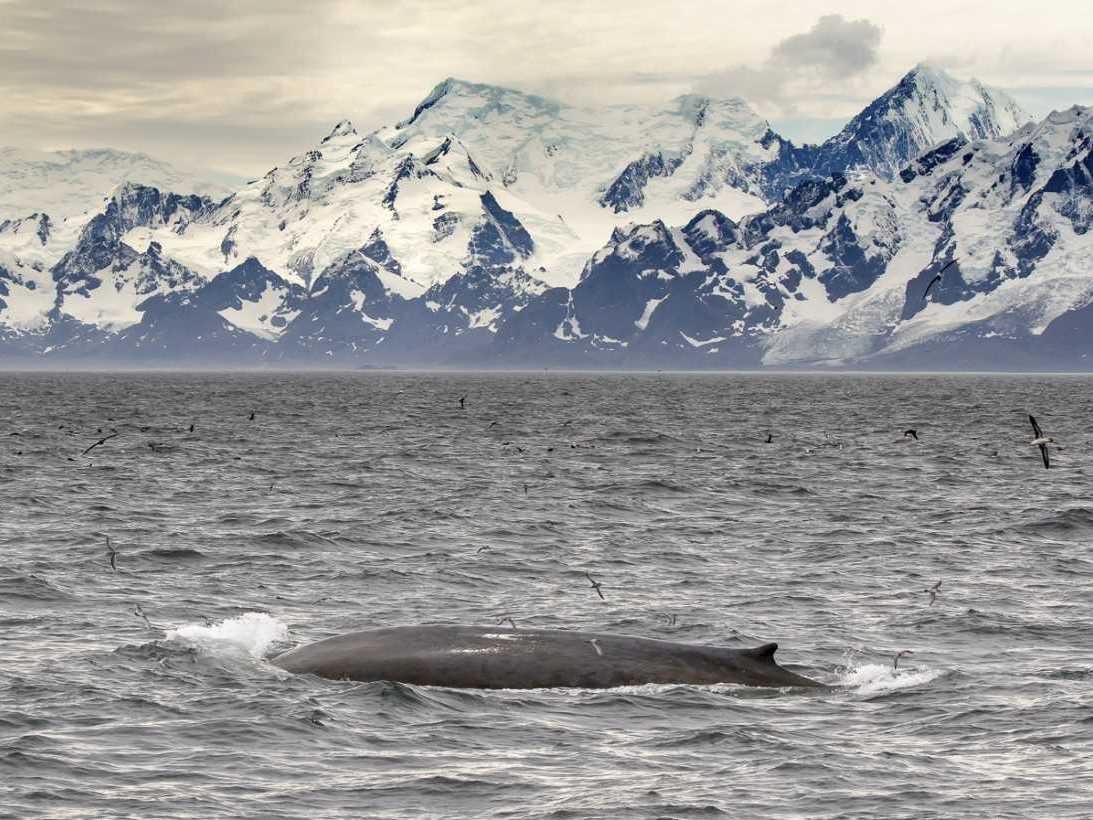
Scientists have recorded an “unprecedented” number of blue whales around the coastal waters of the sub-Antarctic island of South Georgia.
Just two individuals of the critically endangered species, and largest animal ever to have lived on our planet, were recorded in the area during a survey in 2018. But this year, during a more extensive survey, an extraordinary 36 separate sightings meant a total of 55 blue whales were spotted by the scientists.
The research team, led by the British Antarctic Survey, said: “For such a rare species, this is an unprecedented number of sightings and suggests that South Georgia waters remain an important summer feeding ground for this rare and poorly known species.”
The blue whale population was decimated through the 19th and early 20th centuries, reducing their population by as much as 97 per cent, according to some estimates.
The British Antarctic Survey said when the Norwegian explorer and whaler Carl Larsen first visited the island of South Georgia, he was so impressed by the number of whales there he said “I see them in hundreds and thousands”, and immediately applied for a licence to open a whaling station there.
Created with Sketch.
Created with Sketch.
1/15 Grand title winner and Joint Winner, Behaviour: Mammals
The moment by Yongqing Bao, China
Yongqing Bao/Wildlife Photographer of the Year
2/15 11-14 years old Winner
Night glow by Cruz Erdmann, New Zealand
Cruz Erdmann/Wildlife Photographer of the Year
3/15 Plants and Fungi Winner
Tapestry of life by Zorica Kovacevic, Serbia/USA
Zorica Kovacevic/Wildlife Photographer of the Year
4/15 Behaviour: Birds Winner
Land of the eagle by Audun Rikardsen, Norway
Audun Rikardsen/Wildlife Photographer of the Year
5/15 Black and White Winner
Snow exposure by Max Waugh, USA
Max Waugh/Wildlife Photographer of the Year
6/15 Joint Winner, Behaviour: Mammals
The equal match by Ingo Arndt, Germany
Ingo Arndt/Wildlife Photographer of the Year
7/15 Earth’s Environments Winner
Creation by Luis Vilariño Lopez, Spain
Luis Vilariño Lopez/Wildlife Photographer of the Year
8/15 Wildlife Photographer of the Year Portfolio Award Winner
The huddle by Stefan Christmann, Germany
Stefan Christmann/Wildlife Photographer of the Year
9/15 10 years and under Winner
Humming surprise by Thomas Easterbrook, UK
Thomas Easterbrook/Wildlife Photographer of the Year
10/15 Wildlife Photojournalism: Single Image Winner
Another barred migrant by Alejandro Prieto, Mexico
Alejandro Prieto/Wildlife Photographer of the Year
11/15 Rising Star Portfolio Award Winner
Frozen moment by Jérémie Villet, France
Jérémie Villet/Wildlife Photographer of the Year
12/15 15-17 years old Winner
Early riser by Riccardo Marchgiani, Italy
Riccardo Marchegiani/Wildlife Photographer of the Year
13/15 Behaviour: Amphibians and Reptiles Winner
Pondworld by Manuel Plaickner, Italy
Manuel Plaickner/Wildlife Photographer of the Year
14/15 Animal Portraits Winner
Face of deception by Ripan Biswas, India
Ripan Biswas/Wildlife Photographer of the Year
15/15 Animals in Their Environment Winner
Snow-plateau nomads by Shangzhen Fan, China
Shangzhen Fan/Wildlife Photographer of the Year
1/15 Grand title winner and Joint Winner, Behaviour: Mammals
The moment by Yongqing Bao, China
Yongqing Bao/Wildlife Photographer of the Year
2/15 11-14 years old Winner
Night glow by Cruz Erdmann, New Zealand
Cruz Erdmann/Wildlife Photographer of the Year
3/15 Plants and Fungi Winner
Tapestry of life by Zorica Kovacevic, Serbia/USA
Zorica Kovacevic/Wildlife Photographer of the Year
4/15 Behaviour: Birds Winner
Land of the eagle by Audun Rikardsen, Norway
Audun Rikardsen/Wildlife Photographer of the Year
5/15 Black and White Winner
Snow exposure by Max Waugh, USA
Max Waugh/Wildlife Photographer of the Year
6/15 Joint Winner, Behaviour: Mammals
The equal match by Ingo Arndt, Germany
Ingo Arndt/Wildlife Photographer of the Year
7/15 Earth’s Environments Winner
Creation by Luis Vilariño Lopez, Spain
Luis Vilariño Lopez/Wildlife Photographer of the Year
8/15 Wildlife Photographer of the Year Portfolio Award Winner
The huddle by Stefan Christmann, Germany
Stefan Christmann/Wildlife Photographer of the Year
9/15 10 years and under Winner
Humming surprise by Thomas Easterbrook, UK
Thomas Easterbrook/Wildlife Photographer of the Year
10/15 Wildlife Photojournalism: Single Image Winner
Another barred migrant by Alejandro Prieto, Mexico
Alejandro Prieto/Wildlife Photographer of the Year
11/15 Rising Star Portfolio Award Winner
Frozen moment by Jérémie Villet, France
Jérémie Villet/Wildlife Photographer of the Year
12/15 15-17 years old Winner
Early riser by Riccardo Marchgiani, Italy
Riccardo Marchegiani/Wildlife Photographer of the Year
13/15 Behaviour: Amphibians and Reptiles Winner
Pondworld by Manuel Plaickner, Italy
Manuel Plaickner/Wildlife Photographer of the Year
14/15 Animal Portraits Winner
Face of deception by Ripan Biswas, India
Ripan Biswas/Wildlife Photographer of the Year
15/15 Animals in Their Environment Winner
Snow-plateau nomads by Shangzhen Fan, China
Shangzhen Fan/Wildlife Photographer of the Year
South Georgia became a key whaling station, with numerous species hunted to the brink of extinction, including blue, humpback and fin whales.
But the resulting collapse of whale populations meant the South Georgia whaling industry became unprofitable by the early 20th century.
According to the South Georgia Heritage Trust, the largest whale ever recorded was processed at the Grytviken whaling station on the island. It was a blue whale caught in 1912, with a length of 33.58m (110ft).
Since the whalers left and tighter international regulations on whaling have been agreed, populations have begun to bounce back, with researchers saying the seas still have the capacity to support large numbers of whales.
Project leader Dr Jennifer Jackson, a whale ecologist at the British Antarctic Survey, told The Independent the survey broke new ground, enabling scientists to better understand whale populations’ recovery from centuries of hunting.
She said the “researchers were thrilled… It suggests blue whales are returning to their old feeding grounds at South Georgia which suggests it’s still an area with abundant food for them to eat.
“Relative to many other oceans on the planet, the Southern Ocean is still relatively pristine, so it still has capacity to support large numbers of whales.”
She said during the trips, which were the first whale surveys conducted on the south side of the island, the team were fortunate to have aboard Antarctic blue whale expert Paula Olson, who holds the largest photo-identification catalogue of Antarctic blue whales and is currently conducting a new analysis of the animal’s abundance.
Ms Olson said: “Given that it was the first voyage in decades to survey for whales [round the whole island], we truly felt like explorers.”
Although whaling has been carried out by humans for several centuries, industrial whaling only took off in the 20th century. The impact on populations has been colossal. In the 20th century alone, nearly three million cetaceans were wiped out in what may have been the largest cull of any animal – in terms of total biomass – in human history, a 2015 study found.
A new assessment of Antarctic blue whale recovery will be conducted by the International Whaling Commission Scientific Committee next year in order to find out how well the population is recovering from exploitation.