


 Africana55 Radio

This website uses cookies so that we can provide you with the best user experience possible. Cookie information is stored in your browser and performs functions such as recognising you when you return to our website and helping our team to understand which sections of the website you find most interesting and useful.
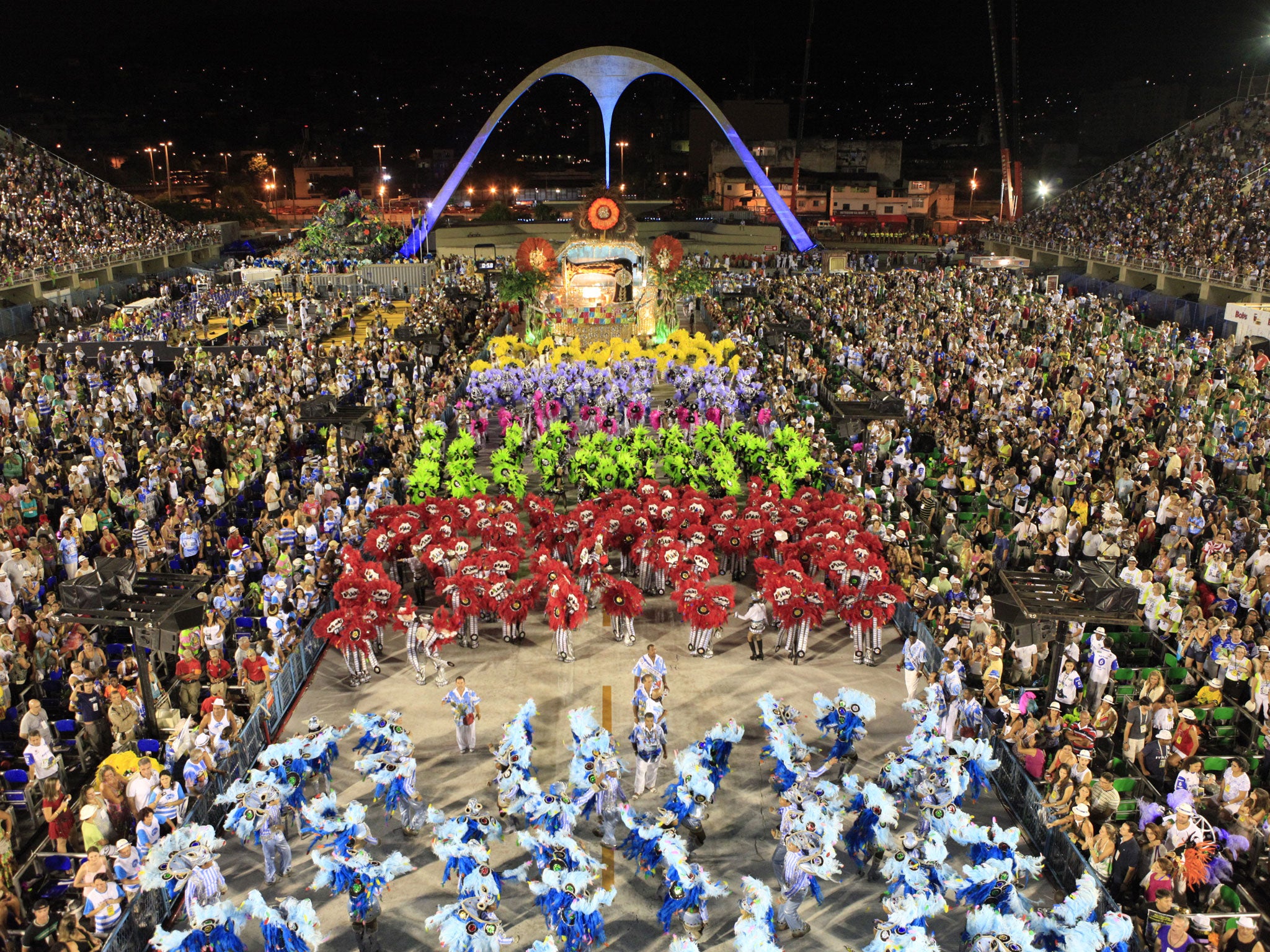
Rio Carnival is one of the biggest, boldest and brightest events in the Brazilian calendar.
This year marks the first time in six years Brazilian footballer Neymar da Silva Santos Júnior will miss the festivities in Rio de Janeiro, Brazil.
Neymar made the announcement on his Instagram Story, stating: “With immense happiness, I announce that I am out of the 2020 Carnaval. That is it. This time there will be no controversy. Thanks. Happy Carnaval!”
So when is Rio Carnival, what is it celebrating, and how can you get involved? Here’s everything you need to know.
When is Rio Carnival?
The Carnival is an annual event that always begins on the Friday before Ash Wednesday. This year, that date is 21 February. It spans the following few days, finishing on Ash Wednesday (26 February), the day Lent begins.
Where is Rio Carnival?
Events take place in Rio de Janeiro, Brazil’s most cosmopolitan city. All the main samba competitions between rival dance schools and parades take place in the Sambadrome – a purpose-built parade area created for the Carnival. After the official events, the party spills out onto the streets in every corner of the city.
Created with Sketch.
Created with Sketch.
1/16
Revellers perform at a block party called 'Carmelitas' during Carnival festivities in Rio de Janeiro, Brazil (21 February 2020)
REUTERS/Pilar Olivares
2/16
People partake in the Bloco das Carmelitas street carnival celebration in the Santa Teresa neighbourhood in Rio de Janeiro, Brazil (21 February 2020)
Photo by Bruna Prado/Getty Images
3/16
A woman at the Bloco das Carmelitas street carnival celebration smiles at the camera (21 February 2020)
Photo by Bruna Prado/Getty Images
4/16
A man dresses as the devil for carnival festivities at the Bloco das Carmelitas (21 February 2020)
Photo by Bruna Prado/Getty Images
5/16
The Carmelitas block party takes its name from the Carmelite Convent, which is situated in the Santa Theresa neighbourhood (21 February 2020)
Photo by Bruna Prado/Getty Images
6/16
The origin of Bloco das Carmelitas comes from the legend of a Catholic nun who supposedly left her convent in order to take part in a carnival street party (21 February 2020)
Photo by Bruna Prado/Getty Images
7/16
A man at the Carmelitas block party dons a serious expression as he faces up to the camera (21 February 2020)
Photo by Bruna Prado/Getty Images
8/16
Revellers dressed as nuns appear in high spirits at Bloco das Carmelitas (21 February2020)
Photo by Bruna Prado/Getty Images
9/16
A woman smiles while dressed as a nun, accessorising with a pair of crown-shaped rainbow earrings (21 February 2020)
Photo by Bruna Prado/Getty Images
10/16
A reveller displays a shocked expression during the Bloco das Carmelitas festivities (21 February 2020)
Photo by Bruna Prado/Getty Images
11/16
People partake in carnival celebrations at the Carmelitas block party (21 February 2020)
REUTERS/Pilar Olivares
12/16
A man places a crucifix in his mouth as he poses alongside a group of women dressed as nuns (21 February 2020)
REUTERS/Pilar Olivares
13/16
A little girl is surrounded by revellers at the Carmelitas street party (21 February 2020)
REUTERS/Pilar Olivares
14/16
Carmelitas partygoers dance joyfully (21 February 2020)
REUTERS/Pilar Olivares
15/16
Two individuals display peace signs for the camera while attending the Carmelitas block party (21 February 2020)
REUTERS/Pilar Olivares
16/16
A group of people wearing distinct carnival costumes pose together at the Carmelitas block party (21 February 2020)
REUTERS/Pilar Olivares
1/16
Revellers perform at a block party called 'Carmelitas' during Carnival festivities in Rio de Janeiro, Brazil (21 February 2020)
REUTERS/Pilar Olivares
2/16
People partake in the Bloco das Carmelitas street carnival celebration in the Santa Teresa neighbourhood in Rio de Janeiro, Brazil (21 February 2020)
Photo by Bruna Prado/Getty Images
3/16
A woman at the Bloco das Carmelitas street carnival celebration smiles at the camera (21 February 2020)
Photo by Bruna Prado/Getty Images
4/16
A man dresses as the devil for carnival festivities at the Bloco das Carmelitas (21 February 2020)
Photo by Bruna Prado/Getty Images
5/16
The Carmelitas block party takes its name from the Carmelite Convent, which is situated in the Santa Theresa neighbourhood (21 February 2020)
Photo by Bruna Prado/Getty Images
6/16
The origin of Bloco das Carmelitas comes from the legend of a Catholic nun who supposedly left her convent in order to take part in a carnival street party (21 February 2020)
Photo by Bruna Prado/Getty Images
7/16
A man at the Carmelitas block party dons a serious expression as he faces up to the camera (21 February 2020)
Photo by Bruna Prado/Getty Images
8/16
Revellers dressed as nuns appear in high spirits at Bloco das Carmelitas (21 February2020)
Photo by Bruna Prado/Getty Images
9/16
A woman smiles while dressed as a nun, accessorising with a pair of crown-shaped rainbow earrings (21 February 2020)
Photo by Bruna Prado/Getty Images
10/16
A reveller displays a shocked expression during the Bloco das Carmelitas festivities (21 February 2020)
Photo by Bruna Prado/Getty Images
11/16
People partake in carnival celebrations at the Carmelitas block party (21 February 2020)
REUTERS/Pilar Olivares
12/16
A man places a crucifix in his mouth as he poses alongside a group of women dressed as nuns (21 February 2020)
REUTERS/Pilar Olivares
13/16
A little girl is surrounded by revellers at the Carmelitas street party (21 February 2020)
REUTERS/Pilar Olivares
14/16
Carmelitas partygoers dance joyfully (21 February 2020)
REUTERS/Pilar Olivares
15/16
Two individuals display peace signs for the camera while attending the Carmelitas block party (21 February 2020)
REUTERS/Pilar Olivares
16/16
A group of people wearing distinct carnival costumes pose together at the Carmelitas block party (21 February 2020)
REUTERS/Pilar Olivares
What does the Carnival celebrate?
Rio Carnival is both rooted in European pagan traditions and Catholicism. It was originally a food festival, when people would take their last opportunity to gorge before the beginning of Lent, traditionally a time of abstinence and fasting in the Catholic Church.
But the unique feel of the Carnival comes from the culture clash between the Portuguese colonisers and the indigenous people. The settlers bought over the tradition of Entrudo (Carnival) from Europe, where it met with the local population’s passion for music and dance.
It gradually evolved into an annual city-wide party, culminating in the invention of samba in the early 20th century. The first samba schools were established in the 1920s, with the first samba parade competitions held in 1933.
What are the main events?
There are samba parades taking place on 21, 22, 23 and 24 February, with the Champions Parade taking place on Saturday 29 February (where the six best schools get to strut their stuff). Tickets start from $20 for grandstand seats on the Sambadrome’s giant concrete steps. There’s also the Magic Ball at the Copacabana Palace, dubbed the “grandest and most luxurious occasion in the Carnival”, which takes place on Saturday 22 February. Guests can book seats on a table for a buffet dinner and access to the open bar or purchase a standing ticket.
How can you take part?
Other than buying tickets for the parades and soaking up the atmosphere, Carnival goers can also opt to participate themselves, joining one of the available samba schools. All they have to do is purchase one of the official costumes listed on the website. However, it’s worth getting in there early – costumes are subject to availability and the organisers tend to sell out by mid-January.
Visit rio.com for more information and to buy tickets.