


 Africana55 Radio

This website uses cookies so that we can provide you with the best user experience possible. Cookie information is stored in your browser and performs functions such as recognising you when you return to our website and helping our team to understand which sections of the website you find most interesting and useful.
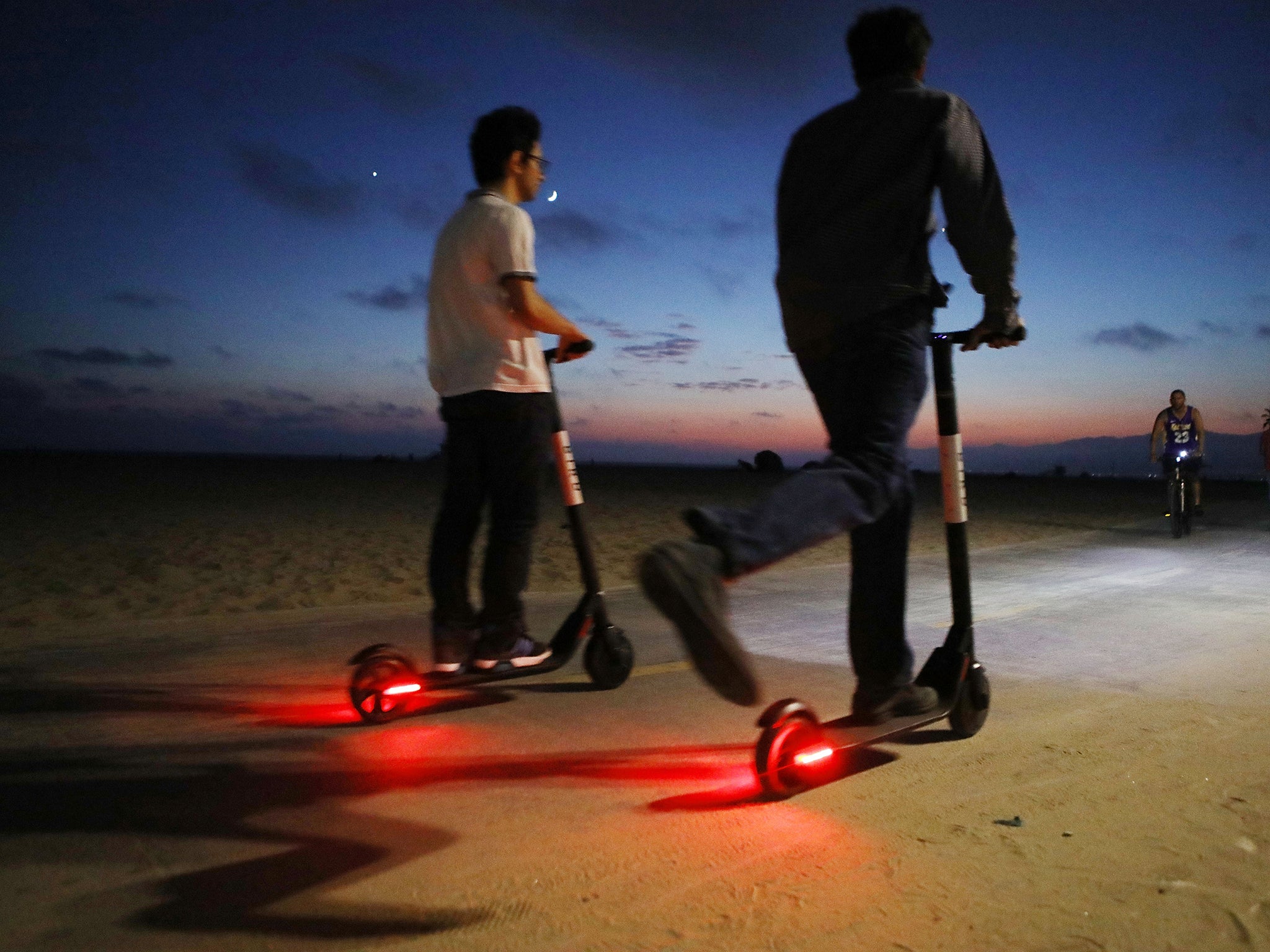
It is currently illegal to ride e-scooters in public spaces in the UK, but this has not stopped riders appearing on roads and pavements. An upcoming national consultation means it is a good time to consider the implications of e-scooters coming to UK streets.
E-scooters are an example of new “micromobilities” – short-distance transport options like bike-sharing schemes, sometimes with electric motors – that are changing how people travel in urban areas. In the UK, e-scooters are likely to be used in busy town and city centres, where people take lots of short journeys for work, education and leisure. The locations where rentable e-scooters could be introduced will probably follow Europe: transport hubs like stations, large businesses and shopping areas and university campuses.
The national consultation will include decisions on where e-scooters can be ridden. In terms of both speed and potential safety issues, e-scooters are slower than cars but faster than walking and probably closer to cycling. The pavement may seem the best place for them, but there have been reports of pedestrians being put at risk or injured by scooters.
Sharing urban space
Cycle lanes may be a more attractive idea. Research in Atlanta found that even temporary segregated lanes make people feel safer on a scooter. Yet the UK is behind many European cities when it comes to dedicated and safe infrastructure. This raises the question of how e-scooter users can safely share space with pedestrians or general traffic.
Created with Sketch.
Created with Sketch.
1/25 Gun-toting humanoid robot sent into space
Russia has launched a humanoid robot into space on a rocket bound for the International Space Station (ISS). The robot Fedor will spend 10 days aboard the ISS practising skills such as using tools to fix issues onboard. Russia's deputy prime minister Dmitry Rogozin has previously shared videos of Fedor handling and shooting guns at a firing range with deadly accuracy.
Dmitry Rogozin/Twitter
2/25 Google turns 21
Google celebrates its 21st birthday on September 27. The The search engine was founded in September 1998 by two PhD students, Larry Page and Sergey Brin, in their dormitories at California’s Stanford University. Page and Brin chose the name google as it recalled the mathematic term 'googol', meaning 10 raised to the power of 100
3/25 Hexa drone lifts off
Chief engineer of LIFT aircraft Balazs Kerulo demonstrates the company's "Hexa" personal drone craft in Lago Vista, Texas on June 3 2019
Reuters
4/25 Project Scarlett to succeed Xbox One
Microsoft announced Project Scarlett, the successor to the Xbox One, at E3 2019. The company said that the new console will be 4 times as powerful as the Xbox One and is slated for a release date of Christmas 2020
Getty
5/25 First new iPod in four years
Apple has announced the new iPod Touch, the first new iPod in four years. The device will have the option of adding more storage, up to 256GB
Apple
6/25 Folding phone may flop
Samsung will cancel orders of its Galaxy Fold phone at the end of May if the phone is not then ready for sale. The $2000 folding phone has been found to break easily with review copies being recalled after backlash
PA
7/25 Charging mat non-starter
Apple has cancelled its AirPower wireless charging mat, which was slated as a way to charge numerous apple products at once
AFP/Getty
8/25 "Super league" India shoots down satellite
India has claimed status as part of a "super league" of nations after shooting down a live satellite in a test of new missile technology
EPA
9/25 5G incoming
5G wireless internet is expected to launch in 2019, with the potential to reach speeds of 50mb/s
Getty
10/25 Uber halts driverless testing after death
Uber has halted testing of driverless vehicles after a woman was killed by one of their cars in Tempe, Arizona. March 19 2018
Getty
11/25
A humanoid robot gestures during a demo at a stall in the Indian Machine Tools Expo, IMTEX/Tooltech 2017 held in Bangalore
Getty
12/25
A humanoid robot gestures during a demo at a stall in the Indian Machine Tools Expo, IMTEX/Tooltech 2017 held in Bangalore
Getty
13/25
Engineers test a four-metre-tall humanoid manned robot dubbed Method-2 in a lab of the Hankook Mirae Technology in Gunpo, south of Seoul, South Korea
Jung Yeon-Je/AFP/Getty
14/25
Engineers test a four-metre-tall humanoid manned robot dubbed Method-2 in a lab of the Hankook Mirae Technology in Gunpo, south of Seoul, South Korea
Jung Yeon-Je/AFP/Getty
15/25
The giant human-like robot bears a striking resemblance to the military robots starring in the movie 'Avatar' and is claimed as a world first by its creators from a South Korean robotic company
Jung Yeon-Je/AFP/Getty
16/25
Engineers test a four-metre-tall humanoid manned robot dubbed Method-2 in a lab of the Hankook Mirae Technology in Gunpo, south of Seoul, South Korea
Jung Yeon-Je/AFP/Getty
17/25
Waseda University's saxophonist robot WAS-5, developed by professor Atsuo Takanishi
Rex
18/25
Waseda University's saxophonist robot WAS-5, developed by professor Atsuo Takanishi and Kaptain Rock playing one string light saber guitar perform jam session
Rex
19/25
A test line of a new energy suspension railway resembling the giant panda is seen in Chengdu, Sichuan Province, China
Reuters
20/25
A test line of a new energy suspension railway, resembling a giant panda, is seen in Chengdu, Sichuan Province, China
Reuters
21/25
A concept car by Trumpchi from GAC Group is shown at the International Automobile Exhibition in Guangzhou, China
Rex
22/25
A Mirai fuel cell vehicle by Toyota is displayed at the International Automobile Exhibition in Guangzhou, China
Reuters
23/25
A visitor tries a Nissan VR experience at the International Automobile Exhibition in Guangzhou, China
Reuters
24/25
A man looks at an exhibit entitled 'Mimus' a giant industrial robot which has been reprogrammed to interact with humans during a photocall at the new Design Museum in South Kensington, London
Getty
25/25
A new Israeli Da-Vinci unmanned aerial vehicle manufactured by Elbit Systems is displayed during the 4th International conference on Home Land Security and Cyber in the Israeli coastal city of Tel Aviv
Getty
1/25 Gun-toting humanoid robot sent into space
Russia has launched a humanoid robot into space on a rocket bound for the International Space Station (ISS). The robot Fedor will spend 10 days aboard the ISS practising skills such as using tools to fix issues onboard. Russia's deputy prime minister Dmitry Rogozin has previously shared videos of Fedor handling and shooting guns at a firing range with deadly accuracy.
Dmitry Rogozin/Twitter
2/25 Google turns 21
Google celebrates its 21st birthday on September 27. The The search engine was founded in September 1998 by two PhD students, Larry Page and Sergey Brin, in their dormitories at California’s Stanford University. Page and Brin chose the name google as it recalled the mathematic term 'googol', meaning 10 raised to the power of 100
3/25 Hexa drone lifts off
Chief engineer of LIFT aircraft Balazs Kerulo demonstrates the company's "Hexa" personal drone craft in Lago Vista, Texas on June 3 2019
Reuters
4/25 Project Scarlett to succeed Xbox One
Microsoft announced Project Scarlett, the successor to the Xbox One, at E3 2019. The company said that the new console will be 4 times as powerful as the Xbox One and is slated for a release date of Christmas 2020
Getty
5/25 First new iPod in four years
Apple has announced the new iPod Touch, the first new iPod in four years. The device will have the option of adding more storage, up to 256GB
Apple
6/25 Folding phone may flop
Samsung will cancel orders of its Galaxy Fold phone at the end of May if the phone is not then ready for sale. The $2000 folding phone has been found to break easily with review copies being recalled after backlash
PA
7/25 Charging mat non-starter
Apple has cancelled its AirPower wireless charging mat, which was slated as a way to charge numerous apple products at once
AFP/Getty
8/25 "Super league" India shoots down satellite
India has claimed status as part of a "super league" of nations after shooting down a live satellite in a test of new missile technology
EPA
9/25 5G incoming
5G wireless internet is expected to launch in 2019, with the potential to reach speeds of 50mb/s
Getty
10/25 Uber halts driverless testing after death
Uber has halted testing of driverless vehicles after a woman was killed by one of their cars in Tempe, Arizona. March 19 2018
Getty
11/25
A humanoid robot gestures during a demo at a stall in the Indian Machine Tools Expo, IMTEX/Tooltech 2017 held in Bangalore
Getty
12/25
A humanoid robot gestures during a demo at a stall in the Indian Machine Tools Expo, IMTEX/Tooltech 2017 held in Bangalore
Getty
13/25
Engineers test a four-metre-tall humanoid manned robot dubbed Method-2 in a lab of the Hankook Mirae Technology in Gunpo, south of Seoul, South Korea
Jung Yeon-Je/AFP/Getty
14/25
Engineers test a four-metre-tall humanoid manned robot dubbed Method-2 in a lab of the Hankook Mirae Technology in Gunpo, south of Seoul, South Korea
Jung Yeon-Je/AFP/Getty
15/25
The giant human-like robot bears a striking resemblance to the military robots starring in the movie 'Avatar' and is claimed as a world first by its creators from a South Korean robotic company
Jung Yeon-Je/AFP/Getty
16/25
Engineers test a four-metre-tall humanoid manned robot dubbed Method-2 in a lab of the Hankook Mirae Technology in Gunpo, south of Seoul, South Korea
Jung Yeon-Je/AFP/Getty
17/25
Waseda University's saxophonist robot WAS-5, developed by professor Atsuo Takanishi
Rex
18/25
Waseda University's saxophonist robot WAS-5, developed by professor Atsuo Takanishi and Kaptain Rock playing one string light saber guitar perform jam session
Rex
19/25
A test line of a new energy suspension railway resembling the giant panda is seen in Chengdu, Sichuan Province, China
Reuters
20/25
A test line of a new energy suspension railway, resembling a giant panda, is seen in Chengdu, Sichuan Province, China
Reuters
21/25
A concept car by Trumpchi from GAC Group is shown at the International Automobile Exhibition in Guangzhou, China
Rex
22/25
A Mirai fuel cell vehicle by Toyota is displayed at the International Automobile Exhibition in Guangzhou, China
Reuters
23/25
A visitor tries a Nissan VR experience at the International Automobile Exhibition in Guangzhou, China
Reuters
24/25
A man looks at an exhibit entitled 'Mimus' a giant industrial robot which has been reprogrammed to interact with humans during a photocall at the new Design Museum in South Kensington, London
Getty
25/25
A new Israeli Da-Vinci unmanned aerial vehicle manufactured by Elbit Systems is displayed during the 4th International conference on Home Land Security and Cyber in the Israeli coastal city of Tel Aviv
Getty
The UK can learn from cities in Europe and elsewhere on how to balance e-scooter use and available space. Barcelona has introduced regulations to limit scooter use and speed when sharing space with pedestrians, and in Paris e-scooters have been banned from pavements.
The UK can also engage in dialogue with e-scooter operators. Dockless e-scooter company Lime, for example, has been organising discussions for researchers, local authorities, transport providers and the police. They have put forward their views on how cities can support the development of e-scooters.
Legalising e-scooters would require considering how they will interact with other road and pavement users. If e-scooters are to be made legal in the UK, the government may follow Germany by specifying minimum standards for safety features such as lights, reflectors, bells and brakes. Some cities also require both adults and children to wear helmets when riding e-scooters.
In the UK, Bikeability is an established training course for those who take up cycling. A similar scheme for those using e-scooters may be valuable, alongside online and in-app resources and some operators are providing this. Driver education on how to share the roads with e-scooters and other new forms of transport is also important. The highway code will need to change to provide guidance on how e-scooters and other road users can safely share space.
Public benefit or hazard?
Parking is also an issue. E-scooters need to be left somewhere between journeys, and their convenience is dependent on a certain flexibility of pick up and drop off. Scooters that are inconsiderately parked or abandoned are unsightly and obstructive. They can also deter people from using public space and can be a serious impediment to people with limited mobility.
E-scooter companies have tried different approaches to addressing thefts and inappropriate parking, including asking people to lock them and sounding alarms. Geofencing – where operators use GPS technology to limit precisely where a scooter can be ridden or parked – can be used to stop users leaving scooters where they cause an obstruction.
It is also important to consider the implications of e-scooters for public health in the UK. Industry claims that e-scooters provide low intensity workouts may be plausible. However, the UK sustainable transport charity, Sustrans, has raised concerns that e-scooters may replace walking trips and therefore have a negative impact on activity levels. Equally, heavy on-pavement scooter use means people are less keen to walk.
E-scooters can be considered an answer to the problem of the “last mile”: that final part of a public transport journey from station to destination that feels too far to walk. This means they can help people take other forms of public transport, by providing a link between a station or bus stop and a place of work, for instance. Even with their short range, then, they could help reduce longer car journeys. A further potential benefit is that, where companies are willing, use data can be shared with local authorities to help make improvements to infrastructure and transport systems.
Additional reporting by Luke Blazejewski and Nick Davies
Graeme Sherriff is a research fellow in urban studies, University of Salford, is a research fellow, University of Salford. This article originally appeared in The Conversation