


 Africana55 Radio

This website uses cookies so that we can provide you with the best user experience possible. Cookie information is stored in your browser and performs functions such as recognising you when you return to our website and helping our team to understand which sections of the website you find most interesting and useful.
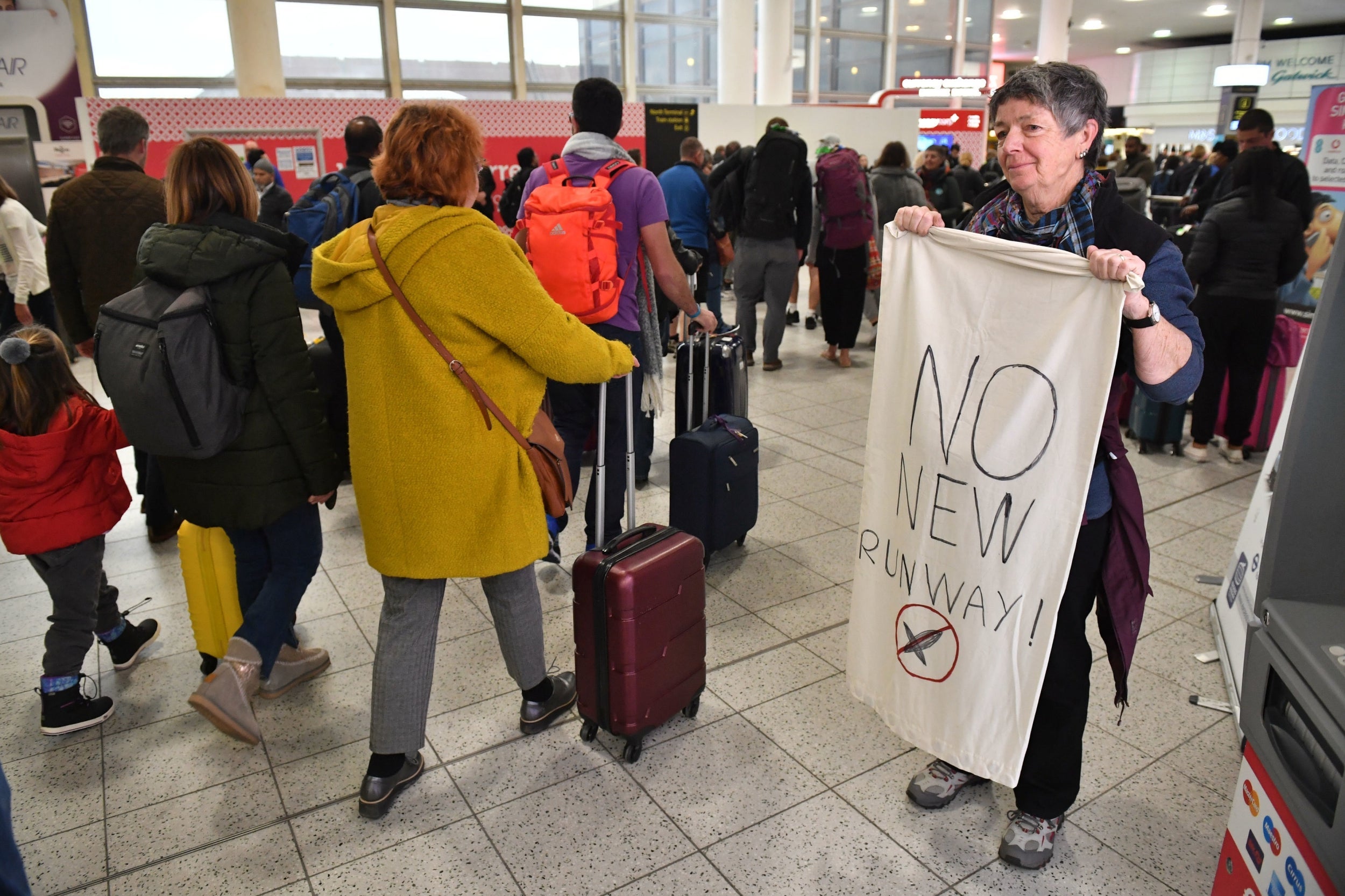
The Court of Appeal’s ruling on Heathrow raises an immediate political challenge for Boris Johnson’s Government over whether it will attempt to salvage the expansion plans for the UK’s largest airport.
But it also raises a wider economic and environmental question for the UK.
Is any UK airport expansion compatible with the government’s goals of reaching net zero carbon emissions by 2050 under the Climate Change Act?
Despite ruling that the government had failed to take account of the Paris Agreement on tackling climate change, to which the UK signed up, when giving the green light to a third runway in West London – hence making the decision unlawful – the appeal court judges did say that, in future, a third runway could go ahead, so as long as it fits with the UK’s climate policy.
So can it fit? Or should all UK airport expansions plans be scrapped?
Just how significant are emissions from aviation?
Total UK greenhouse gas emissions in 2017 were estimated at 460 million tonnes. Emissions from aviation accounted for 36 million tonnes of that, or around 7 per cent.
That’s a lower share of emissions of residential housing (14 per cent) or energy generation (23 per cent).
Yet while carbon emissions from energy have been falling fast, those from aviation have been going the other way. They have doubled since 1990.
And the vast majority of those emissions are from long haul international flights. Domestic flights made up only 4 per cent of aviation emissions.
Can’t aviation be decarbonised?
Flying can certainly be made less polluting, by making planes more fuel efficient. And experts see a lot of scope for this over the coming decades.
But the technology that would allow zero carbon aviation is not on the horizon.
So how can we have zero emissions and still have flying?
We can’t. But the government’s target is for zero “net” emissions, not zero emissions.
This means that it can still produce some greenhouse gasses so long as these are offset by other activities that suck emissions out of the atmosphere such as planting trees or carbon capture technologies.
Moreover, the government’s net-zero legislation also currently excludes emissions from international aviation (although the government has said it will maintain “headroom” for these emissions as it moves towards net zero).
The Committee on Climate Change (CCC), the independent body of experts set up by the government to advise it on decarbonisation policies, says international aviation should be formally included in the UK’s net-zero target.
And it says we can achieve this genuine net zero while still allowing some flying to continue.
Indeed, the CCC says we can have net zero while UK aviation still produces 30 million tonnes of greenhouse gasses a year by 2050, which would make it the largest emitting sector of the economy.
But that’s lower than the 36 million tonnes aviation produces today isn’t it?
Yes and the CCC said this reduction would rely on planes becoming more fuel-efficient and using more sustainable biofuels.
But the CCC also, crucially, says that demand for flying would need to be curbed.
Its scenario where the government achieves its overall net-zero target is based on an assumption of a 25 per cent growth in demand for flying by 2050 compared with today.
Created with Sketch.
Created with Sketch.
1/51
Angela Christofilou/The Independent
2/51
Angela Christofilou/The Independent
3/51
Angela Christofilou/The Independent
4/51
Angela Christofilou/The Independent
5/51
Angela Christofilou/The Independent
6/51
Angela Christofilou/The Independent
7/51
Angela Christofilou/The Independent
8/51
Angela Christofilou/The Independent
9/51
Angela Christofilou/The Independent
10/51
Angela Christofilou/The Independent
11/51
Angela Christofilou/The Independent
12/51
Angela Christofilou/The Independent
13/51
Angela Christofilou/The Independent
14/51
Angela Christofilou/The Independent
15/51
Angela Christofilou/The Independent
16/51
Angela Christofilou/The Independent
17/51
Angela Christofilou/The Independent
18/51
Angela Christofilou/The Independent
19/51
Angela Christofilou/The Independent
20/51
Angela Christofilou/The Independent
21/51
Angela Christofilou/The Independent
22/51
Angela Christofilou/The Independent
23/51
Angela Christofilou/The Independent
24/51
Angela Christofilou/The Independent
25/51
Angela Christofilou/The Independent
26/51
Angela Christofilou/The Independent
27/51
Angela Christofilou/The Independent
28/51
Angela Christofilou/The Independent
29/51
Angela Christofilou/The Independent
30/51
Angela Christofilou/The Independent
31/51
Angela Christofilou/The Independent
32/51
Angela Christofilou/The Independent
33/51
Angela Christofilou/The Independent
34/51
Angela Christofilou/The Independent
35/51
Angela Christofilou/The Independent
36/51
Angela Christofilou/The Independent
37/51
Police officers arrest an activist at London City Airport on the fourth day of demonstrations by the climate change action group Extinction Rebellion
AFP/Getty
38/51
Police officers react as an activist scales the roof above the entrance to London City Airport
AFP/Getty
39/51
Activists blockade the Docklands Light Rail (DLR) statio
AFP/Getty
40/51
Protests have been carried out in 60 cities around the world this week, with thousands taking to the streets of New Delhi, Cape Town, Paris, Vienna, Madrid, and Buenos Aires
Reuters
41/51
Extinction Rebellion is demanding that governments drastically cut carbon emissions
AFP/Getty
42/51
AP
43/51
Police officers detain a protestor
Reuters
44/51
The activist gestures after scaling the roof
AFP/Getty
45/51
Police officers detain protester Phil Kingston
Reuters
46/51
An activist holds a placard during a 'Hong Kong style' blockage of the exit from the Docklands Light Railway to City Airport
PA
47/51
AFP/Getty
48/51
AP
49/51
REUTERS
50/51
AFP/Getty
51/51
AP
1/51
Angela Christofilou/The Independent
2/51
Angela Christofilou/The Independent
3/51
Angela Christofilou/The Independent
4/51
Angela Christofilou/The Independent
5/51
Angela Christofilou/The Independent
6/51
Angela Christofilou/The Independent
7/51
Angela Christofilou/The Independent
8/51
Angela Christofilou/The Independent
9/51
Angela Christofilou/The Independent
10/51
Angela Christofilou/The Independent
11/51
Angela Christofilou/The Independent
12/51
Angela Christofilou/The Independent
13/51
Angela Christofilou/The Independent
14/51
Angela Christofilou/The Independent
15/51
Angela Christofilou/The Independent
16/51
Angela Christofilou/The Independent
17/51
Angela Christofilou/The Independent
18/51
Angela Christofilou/The Independent
19/51
Angela Christofilou/The Independent
20/51
Angela Christofilou/The Independent
21/51
Angela Christofilou/The Independent
22/51
Angela Christofilou/The Independent
23/51
Angela Christofilou/The Independent
24/51
Angela Christofilou/The Independent
25/51
Angela Christofilou/The Independent
26/51
Angela Christofilou/The Independent
27/51
Angela Christofilou/The Independent
28/51
Angela Christofilou/The Independent
29/51
Angela Christofilou/The Independent
30/51
Angela Christofilou/The Independent
31/51
Angela Christofilou/The Independent
32/51
Angela Christofilou/The Independent
33/51
Angela Christofilou/The Independent
34/51
Angela Christofilou/The Independent
35/51
Angela Christofilou/The Independent
36/51
Angela Christofilou/The Independent
37/51
Police officers arrest an activist at London City Airport on the fourth day of demonstrations by the climate change action group Extinction Rebellion
AFP/Getty
38/51
Police officers react as an activist scales the roof above the entrance to London City Airport
AFP/Getty
39/51
Activists blockade the Docklands Light Rail (DLR) statio
AFP/Getty
40/51
Protests have been carried out in 60 cities around the world this week, with thousands taking to the streets of New Delhi, Cape Town, Paris, Vienna, Madrid, and Buenos Aires
Reuters
41/51
Extinction Rebellion is demanding that governments drastically cut carbon emissions
AFP/Getty
42/51
AP
43/51
Police officers detain a protestor
Reuters
44/51
The activist gestures after scaling the roof
AFP/Getty
45/51
Police officers detain protester Phil Kingston
Reuters
46/51
An activist holds a placard during a 'Hong Kong style' blockage of the exit from the Docklands Light Railway to City Airport
PA
47/51
AFP/Getty
48/51
AP
49/51
REUTERS
50/51
AFP/Getty
51/51
AP
The government’s existing projections are for up to an almost 50 per cent increase in demand over the same period.
That means many people will need to be somehow incentivised to fly less than they would otherwise choose to.
Expanding current airport capacity does not sit easily with that.
So is airport expansion compatible with meeting our climate targets or not?
The view of the CCC seems to be that the government essentially has to choose between allowing Heathrow to expand and preventing any other UK airport from growing.
“Current planned additional airport capacity in London, including the third runway at Heathrow, is likely to leave at most very limited room for growth at non-London airports,” the CCC’s chair, Lord Deben, wrote to the transport secretary in September 2019.
The CCC told The Independent that its view has not changed since then. And, of course, climate activists disagree with the view of the CCC that the UK can decarbonise while still allowing some expansion of the aviation sector.