


 Africana55 Radio

This website uses cookies so that we can provide you with the best user experience possible. Cookie information is stored in your browser and performs functions such as recognising you when you return to our website and helping our team to understand which sections of the website you find most interesting and useful.
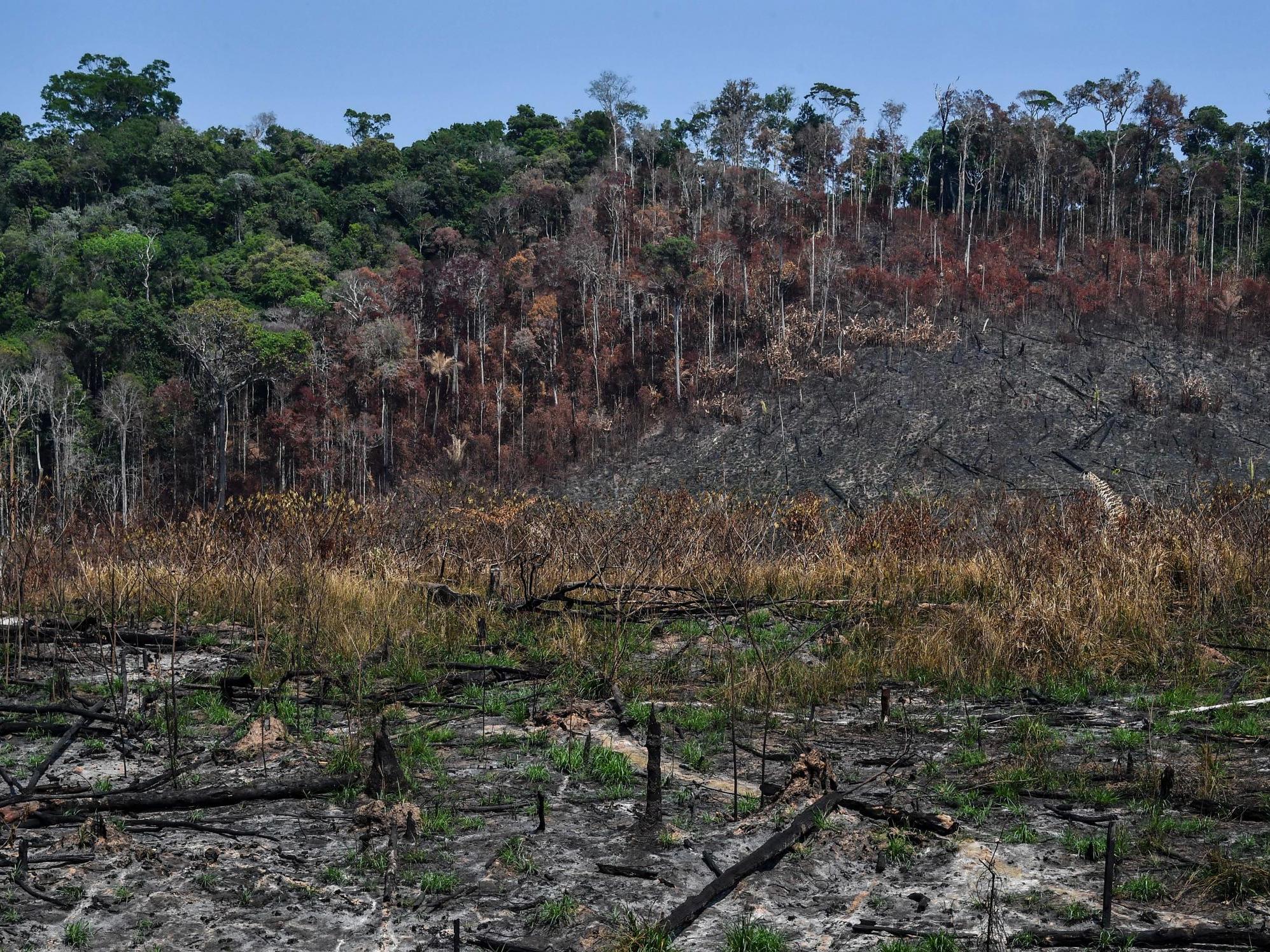
Large ecosystems like the Amazon rainforest could collapse in less than 50 years once a crucial tipping point is reached, a new study has claimed.
Researchers have argued some natural environments are collapsing at a “significantly faster rate” than previously thought and could transform into “alternative ecosystems” when put under stress.
The study, which was based on computer simulations using real-world data from more than 40 natural environments, suggested the Amazon could shift to “a savannah-type ecosystem with a mix of trees and grass” in just 49 years.
Meanwhile, the Caribbean coral reefs, which are approximately 20,000 square kilometres in size, could become bleached and sparsely populated in just 15 years.
The researchers studied data on the transformations of four land, 25 marine and 13 freshwater ecosystems to come to their conclusions.
Created with Sketch.
Created with Sketch.
1/25
Fire rages in the Amazon rainforest in the Brazilian state of Rondonina on August 23
Reuters
2/25
Smoke billlows from burning tracts of the Amazon rainforest in the Brazilian state of Para on August 23
AFP/Getty
3/25
Fire rages in the Amazon rainforest in the Brazilian state of Rondonina on August 23
EPA
4/25
Land in the Amazon rainforest left scorched in the fires in the Brazilian state of Rondonina on August 23
AFP/Getty
5/25
Smoke billows during a fire in an area of the Amazon rainforest in the state of Rondonia, Brazil on August 23
AFP
6/25
Fire tears through a farm in the Brazilian state of Mato Grosso
AP
7/25
An area of the Amazon rainforest left scorched in the fires in the Brazilian state of Amazonas on August 24
AFP/Getty
8/25
Satellite images show a series of fires in the southwest Brazilian state of Rondonia on August 15
AP
9/25
Smoke billows during a fire in an area of the Amazon rainforest in the state of Rondonia, Brazil
Reuters
10/25
A satellite image released by NASA shows the active fires that have been detected in the Amazon region
EPA
11/25
Smoke billows during a fire in an area of the Amazon rainforest in the state of Amazonas, Brazil
Reuters
12/25
Smoke billows during a fire in an area of the Amazon rainforest in the state of Rondonia, Brazil
Reuters
13/25
Smoke billows during a fire in an area of the Amazon rainforest in the state of Rondonia, Brazil
Reuters
14/25
Smoke billows during a fire in an area of the Amazon rainforest in the state of Amazonas, Brazil
Reuters
15/25
Indigenous people from the Mura tribe wallk in a deforested area inside the Amazon rainforest in the Brazilian state of Amazonas on August 20
Reuters
16/25
Fire tears through a farm in the Brazilian state of Mato Grosso
AP
17/25
Smoke billows from a stretch of fire in the Amazon rainforest in the Brazilian state of Rondonia on 23 August
AFP/Getty
18/25
Smoke billows during a fire in an area of the Amazon rainforest in the state of Amazonas, Brazil
Reuters
19/25
Indigenous people from the Mura tribe wallk in a deforested area inside the Amazon rainforest in the Brazilian state of Amazonas on August 20
Reuters
20/25
Smoke billows from a stretch of fire in the Amazon rainforest in the Brazilian state of Rondonia on 23 August
AFP/Getty
21/25
A view of logs felled illegally in the Amazon rainforest are seen in sawmills in the Brazilian state of Amazonas on August 22
Reuters
22/25
A scorched patch of land in the state of Mato Grosso in Brazil on 20 August
EPA
23/25
Several fires are seen burning in the Amazon rainforest in this satellite image taken by NASA on 11 August
AFP/Getty
24/25
Smoke billows from a stretch of fire in the Amazon rainforest in the Brazilian state of Rondonia on 23 August
AFP/Getty
25/25
The sunsets behind clouds and smoke from fires in the Amazon rainforest in the Brazilian state of Rondonia on 18 August
EPA
1/25
Fire rages in the Amazon rainforest in the Brazilian state of Rondonina on August 23
Reuters
2/25
Smoke billlows from burning tracts of the Amazon rainforest in the Brazilian state of Para on August 23
AFP/Getty
3/25
Fire rages in the Amazon rainforest in the Brazilian state of Rondonina on August 23
EPA
4/25
Land in the Amazon rainforest left scorched in the fires in the Brazilian state of Rondonina on August 23
AFP/Getty
5/25
Smoke billows during a fire in an area of the Amazon rainforest in the state of Rondonia, Brazil on August 23
AFP
6/25
Fire tears through a farm in the Brazilian state of Mato Grosso
AP
7/25
An area of the Amazon rainforest left scorched in the fires in the Brazilian state of Amazonas on August 24
AFP/Getty
8/25
Satellite images show a series of fires in the southwest Brazilian state of Rondonia on August 15
AP
9/25
Smoke billows during a fire in an area of the Amazon rainforest in the state of Rondonia, Brazil
Reuters
10/25
A satellite image released by NASA shows the active fires that have been detected in the Amazon region
EPA
11/25
Smoke billows during a fire in an area of the Amazon rainforest in the state of Amazonas, Brazil
Reuters
12/25
Smoke billows during a fire in an area of the Amazon rainforest in the state of Rondonia, Brazil
Reuters
13/25
Smoke billows during a fire in an area of the Amazon rainforest in the state of Rondonia, Brazil
Reuters
14/25
Smoke billows during a fire in an area of the Amazon rainforest in the state of Amazonas, Brazil
Reuters
15/25
Indigenous people from the Mura tribe wallk in a deforested area inside the Amazon rainforest in the Brazilian state of Amazonas on August 20
Reuters
16/25
Fire tears through a farm in the Brazilian state of Mato Grosso
AP
17/25
Smoke billows from a stretch of fire in the Amazon rainforest in the Brazilian state of Rondonia on 23 August
AFP/Getty
18/25
Smoke billows during a fire in an area of the Amazon rainforest in the state of Amazonas, Brazil
Reuters
19/25
Indigenous people from the Mura tribe wallk in a deforested area inside the Amazon rainforest in the Brazilian state of Amazonas on August 20
Reuters
20/25
Smoke billows from a stretch of fire in the Amazon rainforest in the Brazilian state of Rondonia on 23 August
AFP/Getty
21/25
A view of logs felled illegally in the Amazon rainforest are seen in sawmills in the Brazilian state of Amazonas on August 22
Reuters
22/25
A scorched patch of land in the state of Mato Grosso in Brazil on 20 August
EPA
23/25
Several fires are seen burning in the Amazon rainforest in this satellite image taken by NASA on 11 August
AFP/Getty
24/25
Smoke billows from a stretch of fire in the Amazon rainforest in the Brazilian state of Rondonia on 23 August
AFP/Getty
25/25
The sunsets behind clouds and smoke from fires in the Amazon rainforest in the Brazilian state of Rondonia on 18 August
EPA
“Unfortunately, what our paper reveals is that humanity needs to prepare for changes far sooner than expected,” Dr Simon Willcock, a joint lead author on the study, from Bangor University‘s School of Natural Sciences, said.
“These rapid changes to the world’s largest and most iconic ecosystems would impact the benefits which they provide us with, including everything from food and materials, to the oxygen and water we need for life.”
The research, which included teams from Bangor University, Southampton University and the School of Oriental & African Studies, University of London, used computer modelling to find that while larger ecosystems took longer to collapse, their breakdown occurred relatively quickly compared with smaller systems.
“We intuitively knew that big systems would collapse more slowly than small ones – due to the time it takes for impacts to diffuse across large distances,” John Dearing, a professor of physical geography at Southampton University, who led the research, said.
“But what was unexpected was the finding that big systems collapse much faster than you might expect – even the largest on Earth only taking possibly a few decades.”
James Crabbe, a professor of biochemistry who was not involved in the study, described the research as “thorough and well-researched”.
However, Dr Erika Berenguer, a senior research associate at the University of Oxford and Lancaster University, who was also not involved in the study, said its conclusions were not supported by the data analysed.
Dr Berenguer argued the claim that the Amazon could become a “savannah-type ecosystem” was not tested in the paper, which was published in Nature Communications.
“The authors use data from only four terrestrial systems, none of which is a tropical rainforest, but still claim that the Amazon, the largest rainforest on the planet, will experience a dieback in just 50 years,” she said.
“While there is no doubt that the Amazon is at great risk and that a tipping point is likely, such inflated claims do not help either science or policy making.”
In 2019, South America saw a surge in wildfires across the Amazon within Brazil, Bolivia, Paraguay and Peru, leading to international concern about the future of the rainforest.
During the peak of the wildfire season in August, Brazil’s National Institute for Space Research reported more than 80,000 fires across the country – a 77 per cent year-on-year increase.
Environmental organisations blamed the increase on the policies of Brazil’s president Jair Bolsonaro, who had weakened environmental protections and encouraged deforestation of the Amazon.
Additional reporting by PA