


 Africana55 Radio

This website uses cookies so that we can provide you with the best user experience possible. Cookie information is stored in your browser and performs functions such as recognising you when you return to our website and helping our team to understand which sections of the website you find most interesting and useful.
The coronavirus, known as Covid-19, affects lungs and airways causing symptoms of a cough, fever and high temperature, and shortness of breath, and can be potentially deadly.
Because coronavirus is a novel virus, the NHS says it does not know “exactly” how coronavirus spreads from person to person but other similar viruses are spread in cough droplets.
As a result Public Health England (PHE) and the World Health Organisation (WHO) both recommend covering your mouth and nose with a tissue when you cough or sneeze and washing your hands more often than normal. [The latest government advice also emphasises the importance of people doing social distancing and staying at home where possible].
They also suggest not touching your face in case the virus is present on your hands. But should you avoid touching potentially-contaminated surfaces in public?
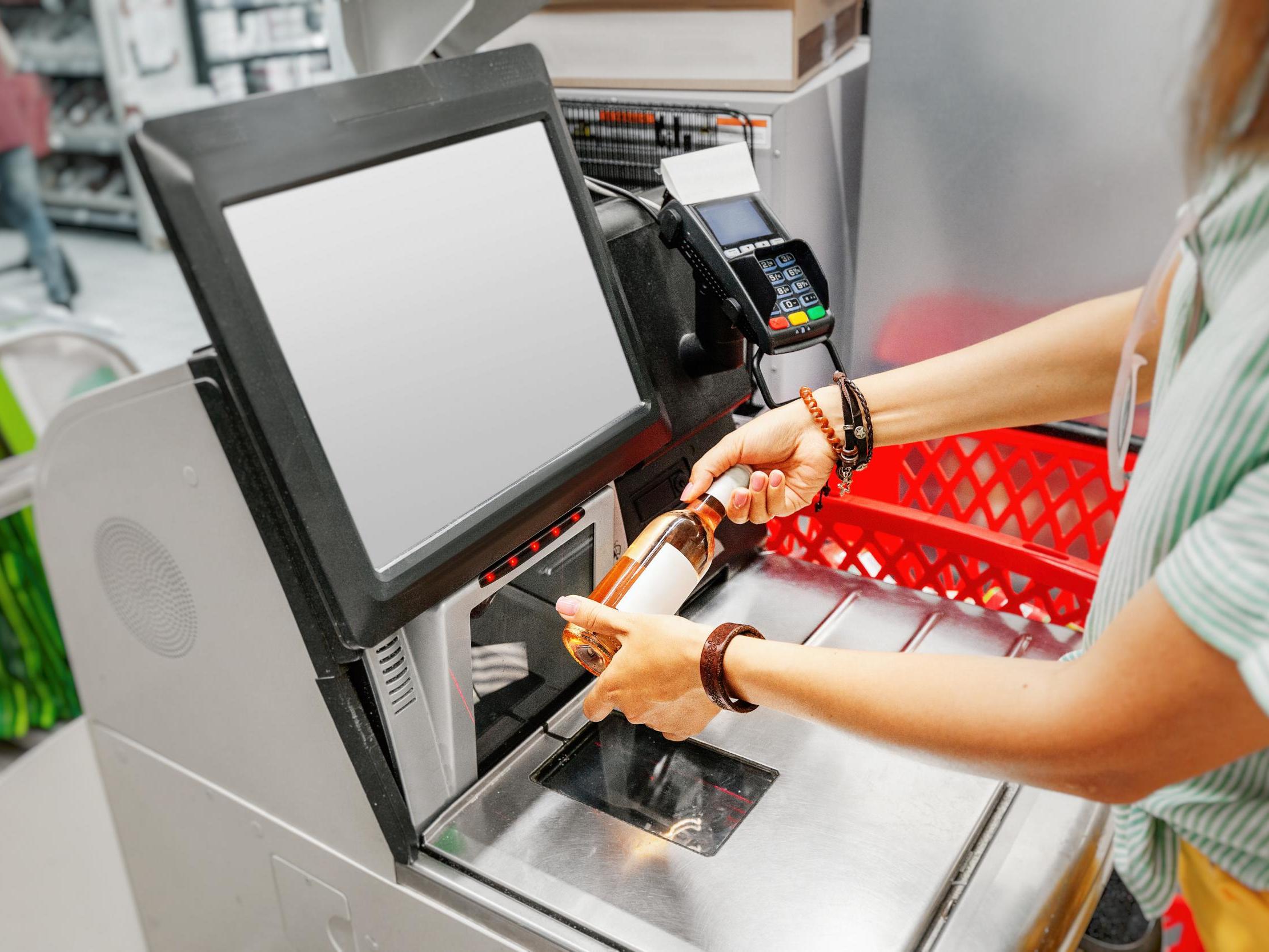
While some are easier to not use, like escalator handrails, others like self-service checkouts at the supermarket can be harder to avoid in day-to-day life.
Are touchscreens dangerous?
Studies have suggested coronaviruses like SARS and MERS can stay alive for up to three hours in the air but as much as two or three days on metal, glass and plastic surfaces.
Professor William Keevil from the University of Southampton warned people should be cautious about using their phone after washing their hands without cleaning it first. But Keevil also said as your mobile device is only used by you, the risk isn’t so high.
However with public touchscreens, used by lots of people, an infected person could leave the virus on a surface days before and successfully infect another uncontaminated person without them knowing.
Infectious disease epidemiologist Dr Tara Smith from Kent State University said: “Since so many people are touching them day in and day out, they’re a great place for viruses and bacteria to be deposited by infected individuals and be picked up by healthy ones, spreading the germ to new people.”
Dr Smith suggested that as a result companies should consider increasing hygiene measures for those using the screens – such as wipes on the stations. But until we can be sure all companies are doing so, is it safer just to avoid touchscreens?
Should we still use touchscreens?
Michael Head, a senior research fellow in global health at the University of Southampton told The Independent that avoidance isn’t necessarily the best step: “Touchscreens are now in many places in UK society, so it’s often hard to avoid needing to use them.
"Various laboratory studies have shown it is certainly theoretically possible, viral loads are detected on the screens.
“The most practical advice is for people to make sure they are thoroughly washing and cleaning their hands several times a day, thus reducing the risks of transmission of any infection.”
Created with Sketch.
Created with Sketch.
1/12
The Via Partenope in Naples is empty after Italy was put on lockdown on 10 March
Reuters
2/12
A waiter stands by empty tables outside a restaurant in St Mark's Square in Venice on 9 March
Reuters
3/12
Empty stands during a football match between Sassuolo and Brescia at the Mapei stadium in Reggio Emilia, northern Italy on 9 March
AP
4/12
Shops are shuttered on an empty street in Venice on 9 March
Reuters
5/12
People keep a safe distance while lining up to enter a post office in Rome on 10 March
AFP/Getty
6/12
A canal and the roads next to it are completely empty on 9 March
Getty
7/12
A completely empty bridge in Venice on 9 March
Getty
8/12
A canal pathway in Venice is empty after Italy was put on lockdown
Getty
9/12
An empty square in Venice on 9 March
Getty
10/12
A nearly empty tram drives through Milan on 10 March
AFP/Getty
11/12
An empty bakery in Milan on 10 March
AFP/Getty
12/12
An empty street in Milan on 10 March
AFP/Getty
1/12
The Via Partenope in Naples is empty after Italy was put on lockdown on 10 March
Reuters
2/12
A waiter stands by empty tables outside a restaurant in St Mark's Square in Venice on 9 March
Reuters
3/12
Empty stands during a football match between Sassuolo and Brescia at the Mapei stadium in Reggio Emilia, northern Italy on 9 March
AP
4/12
Shops are shuttered on an empty street in Venice on 9 March
Reuters
5/12
People keep a safe distance while lining up to enter a post office in Rome on 10 March
AFP/Getty
6/12
A canal and the roads next to it are completely empty on 9 March
Getty
7/12
A completely empty bridge in Venice on 9 March
Getty
8/12
A canal pathway in Venice is empty after Italy was put on lockdown
Getty
9/12
An empty square in Venice on 9 March
Getty
10/12
A nearly empty tram drives through Milan on 10 March
AFP/Getty
11/12
An empty bakery in Milan on 10 March
AFP/Getty
12/12
An empty street in Milan on 10 March
AFP/Getty
Public Health England (PHE) also told The Independent they are not issuing any guidance particularly around the use of touchscreens.
Instead people should continue to wash their hands frequently with hot water and soap for 20 seconds or use alcohol hand gel and be aware of safe coughing etiquette.
Should we use wipes on the touchscreens?
If you’re worried about using the screen and not having access to hand washing straight away then it could be tempting to use screen wipes (as people have been recommended to do with their individual mobile devices) but Michael Head says this isn’t a good idea.
Head says: “It’s probably not advisable to use wipes first on the screen, since the wipe may not adequately disinfect the screen, and it may also cause problems on the screen itself.
“So washing hands soon afterwards is definitely the best solution.”
Are shops and restaurants doing anything to make touchscreens safer?
Most supermarkets now have self-checkouts that require customers to interact with a touchscreen and fast food restaurants, like McDonalds, allow customers to order their food on digital devices. [McDonalds closed all UK restaurants from 23 March].
Some places have decided to stop letting visitors use touch screens all together – the Grand Mosque in Saudi Arabia has completely turned off all interactive screens to stop visitors using them during tours.
In the UK the British Retail Consortium – which represents major supermarkets – said stores are not going to stop using touchscreens but are increasing the number of deep cleans and are advising customers to take precautions.
Andrew Opie, director of food and sustainability at the BRC told The Independent: “Retailers are continuing to adhere to high standards of hygiene in store and are taking extra precautions as advised by PHE.
"Alongside this, we are urging everyone to follow Public Health England’s advice: wash hands frequently with hot water and soap for 20 seconds or use alcohol hand gel, and be aware of safe coughing etiquette.”
A spokesperson for McDonalds, who use touchscreens in stores, said: “We are closely monitoring any potential impact of coronavirus on our people, customers and in the communities we operate in. We are committed to the highest standards of hygiene and cleanliness, with a number of detailed procedures in place in our restaurants to prevent germs from spreading.
“These measures include sanitising surfaces such as door handles, self-order screens and tablets frequently throughout the day.”
If you are experiencing coronavirus symptoms and recently travelled to a high-risk country, contact the NHS 111 helpline, stay at home and avoid close contact with other people.