


 Africana55 Radio

This website uses cookies so that we can provide you with the best user experience possible. Cookie information is stored in your browser and performs functions such as recognising you when you return to our website and helping our team to understand which sections of the website you find most interesting and useful.
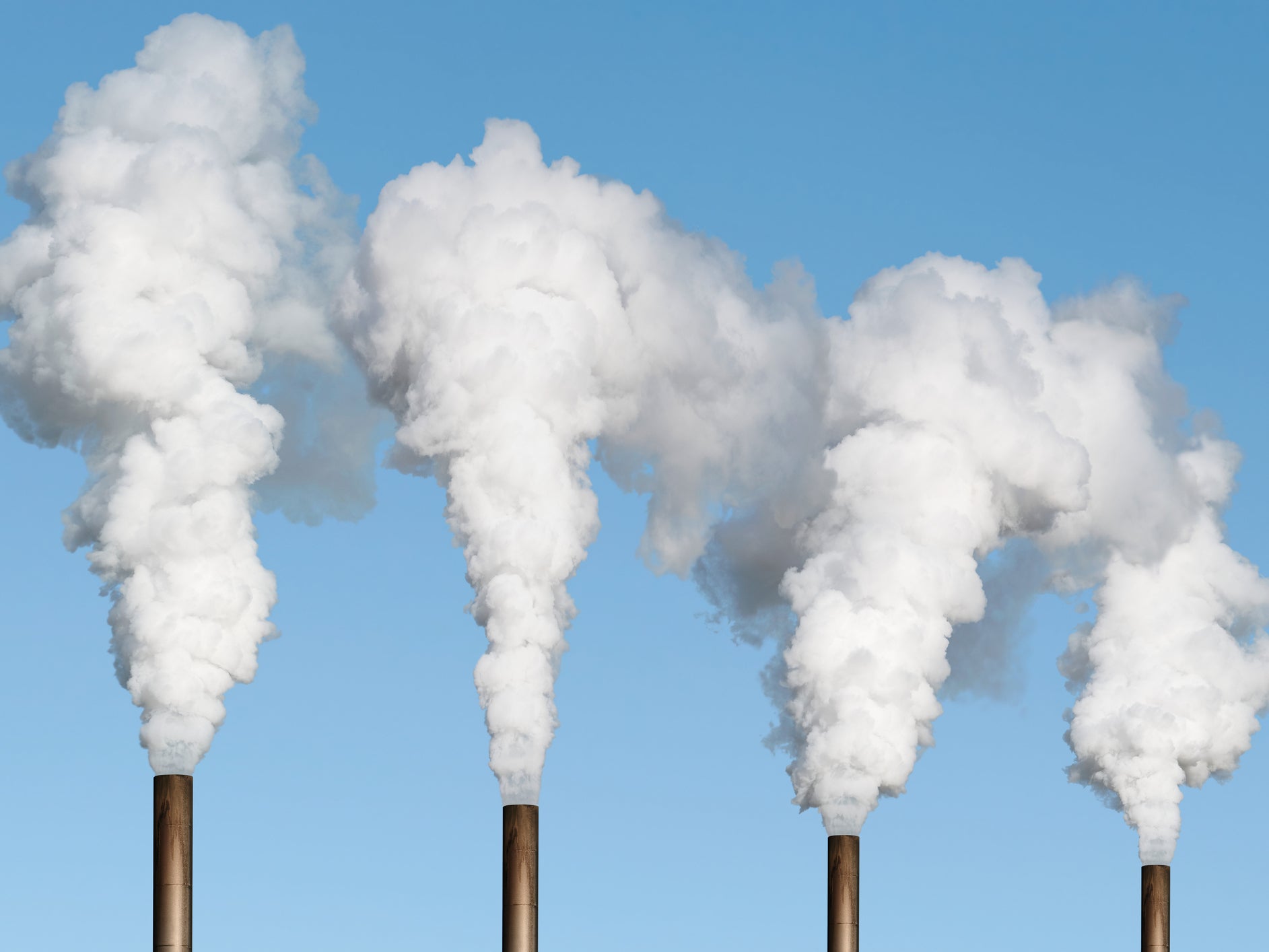
The coronavirus pandemic could mean this year’s world carbon dioxide pollution output falls by the largest amount in over 70 years, according to a network of scientists examining emissions data.
Rob Jackson, chair of the Global Carbon Project, which produces widely watched annual emissions estimates, said carbon dioxide output could fall by more than 5 per cent year-on-year – the first dip since a 1.4 per cent reduction after the 2008 financial crisis.
“I wouldn’t be shocked to see a 5 per cent or more drop in carbon dioxide emissions this year, something not seen since the end of World War Two,” said Professor Jackson, of Stanford University in California.
“Neither the fall of the Soviet Union nor the various oil or savings and loan crises of the past 50 years are likely to have affected emissions the way this crisis is,” he added.
The fall in carbon dioxide comes as countries around the world have reported dramatic improvements in air quality due to the effect of shutdowns which have largely stopped travel and shut down industrial activity.
Created with Sketch.
Created with Sketch.
1/20 California
In this decade, humans have become ever more aware of climate change. Calls for leaders to act echo around the globe as the signs of a changing climate become ever more difficult to ignore
Getty
2/20 Athens, Greece
Fierce wildfires have flared up in numerous countries. The damage being caused is unprecedented: 103 people were killed in wildfires last year in California, one of the places best prepared, best equipped to fight such blazes in the world
AFP/Getty
3/20 Redding, California
Entire towns have been razed. The towns of Redding and Paradise in California were all but eliminated in the 2018 season
AP
4/20 Athens, Greece
While wildfires in Greece (pictured), Australia, Indonesia and many other countries have wrought chaos to infrastructure, economies and cost lives
AFP/Getty
5/20 Carlisle, England
In Britain, flooding has become commonplace. Extreme downpours in Carlisle in the winter of 2015 saw the previous record flood level being eclipsed by two feet
AFP/Getty
6/20 Hebden Bridge, England
Hebden Bridge in West Yorkshire has flooded repeatedly in the past decade, with the worst coming on Christmas Day 2015. Toby Smith of Climate Visuals, an organisation focused on improving how climate change is depicted in the media, says: "Extreme weather and flooding, has and will become more frequent due to climate change. An increase in the severity and distribution of press images, reports and media coverage across the nation has localised the issue. It has raised our emotions, perception and personalised the effects and hazards of climate change."
Getty
7/20 Somerset, England
Out west in Somerset, floods in 2013 led to entire villages being cut off and isolated for weeks
Getty
8/20 Dumfries, Scotland
"In summer 2012, intense rain flooded over 8000 properties. In 2013, storms and coastal surges combined catastrophically with elevated sea levels whilst December 2015, was the wettest month ever recorded. Major flooding events continued through the decade with the UK government declaring flooding as one of the nation's major threats in 2017," says Mr Smith of Climate Visuals
Getty
9/20 London, England
Weather has been more extreme in Britain in recent years. The 'Beast from the East' which arrived in February 2018 brought extraordinarily cold temperatures and high snowfall. Central London (pictured), where the city bustle tends to mean that snow doesn't even settle, was covered in inches of snow for day
PA
10/20 London, England
Months after the cold snap, a heatwave struck Britain, rendering the normally plush green of England's parks in Summer a parched brown for weeks
AFP/Getty
11/20 New South Wales, Australia
Worsening droughts in many countries have been disastrous for crop yields and have threatened livestock. In Australia, where a brutal drought persisted for months last year, farmers have suffered from mental health problems because of the threat to their livelihood
Reuters
12/20 Tonle Sap, Cambodia
Even dedicated climate skeptic Jeremy Clarkson has come to recognise the threat of climate change after visiting the Tonle Sap lake system in Cambodia. Over a million people rely on the water of Tonle Sap for work and sustinence but, as Mr Clarkson witnessed, a drought has severley depleted the water level
Carlo Frem/Amazon
13/20 Addis Ababa, Ethiopia
In reaction to these harbingers of climate obliteration, some humans have taken measures to counter the impending disaster. Ethiopia recently planted a reported 350 million trees in a single day
AFP/Getty
14/20 Morocco
Morocco has undertaken the most ambitious solar power scheme in the world, recently completing a solar plant the size of San Francisco
AFP/Getty
15/20 London, England
Electric cars are taking off as a viable alternative to fossil fuel burning vehicles and major cities across the world are adding charging points to accomodate
AFP/Getty
16/20 Purmerend, The Netherlands
Cities around the world are embracing cycling too, as a clean (and healthy) mode of transport. The Netherlands continues to lead the way with bikes far outnumbering people
Jeroen Much/Andras Schuh
17/20 Xiamen, China
Cycling infrastructure is taking over cities the world over, in the hope of reducing society's dependency on polluting vehicles
Ma Weiwei
18/20 Chennai, India
Despite positive steps being taken, humans continue to have a wildly adverse effect on the climate. There have been numerous major oil spills this decade, the most notable being the BP oil spill in the Gulf of Mexico in 2010
AFP/Getty
19/20 Amazon rainforest, Brazil
More recently, large swathes of the Amazon rainforest were set alight by people to clear land for agriculture
AFP/Getty
20/20 California
This decade may have seen horrors but it has led to an understanding that the next decade must see change if human life is to continue
Getty
1/20 California
In this decade, humans have become ever more aware of climate change. Calls for leaders to act echo around the globe as the signs of a changing climate become ever more difficult to ignore
Getty
2/20 Athens, Greece
Fierce wildfires have flared up in numerous countries. The damage being caused is unprecedented: 103 people were killed in wildfires last year in California, one of the places best prepared, best equipped to fight such blazes in the world
AFP/Getty
3/20 Redding, California
Entire towns have been razed. The towns of Redding and Paradise in California were all but eliminated in the 2018 season
AP
4/20 Athens, Greece
While wildfires in Greece (pictured), Australia, Indonesia and many other countries have wrought chaos to infrastructure, economies and cost lives
AFP/Getty
5/20 Carlisle, England
In Britain, flooding has become commonplace. Extreme downpours in Carlisle in the winter of 2015 saw the previous record flood level being eclipsed by two feet
AFP/Getty
6/20 Hebden Bridge, England
Hebden Bridge in West Yorkshire has flooded repeatedly in the past decade, with the worst coming on Christmas Day 2015. Toby Smith of Climate Visuals, an organisation focused on improving how climate change is depicted in the media, says: "Extreme weather and flooding, has and will become more frequent due to climate change. An increase in the severity and distribution of press images, reports and media coverage across the nation has localised the issue. It has raised our emotions, perception and personalised the effects and hazards of climate change."
Getty
7/20 Somerset, England
Out west in Somerset, floods in 2013 led to entire villages being cut off and isolated for weeks
Getty
8/20 Dumfries, Scotland
"In summer 2012, intense rain flooded over 8000 properties. In 2013, storms and coastal surges combined catastrophically with elevated sea levels whilst December 2015, was the wettest month ever recorded. Major flooding events continued through the decade with the UK government declaring flooding as one of the nation's major threats in 2017," says Mr Smith of Climate Visuals
Getty
9/20 London, England
Weather has been more extreme in Britain in recent years. The 'Beast from the East' which arrived in February 2018 brought extraordinarily cold temperatures and high snowfall. Central London (pictured), where the city bustle tends to mean that snow doesn't even settle, was covered in inches of snow for day
PA
10/20 London, England
Months after the cold snap, a heatwave struck Britain, rendering the normally plush green of England's parks in Summer a parched brown for weeks
AFP/Getty
11/20 New South Wales, Australia
Worsening droughts in many countries have been disastrous for crop yields and have threatened livestock. In Australia, where a brutal drought persisted for months last year, farmers have suffered from mental health problems because of the threat to their livelihood
Reuters
12/20 Tonle Sap, Cambodia
Even dedicated climate skeptic Jeremy Clarkson has come to recognise the threat of climate change after visiting the Tonle Sap lake system in Cambodia. Over a million people rely on the water of Tonle Sap for work and sustinence but, as Mr Clarkson witnessed, a drought has severley depleted the water level
Carlo Frem/Amazon
13/20 Addis Ababa, Ethiopia
In reaction to these harbingers of climate obliteration, some humans have taken measures to counter the impending disaster. Ethiopia recently planted a reported 350 million trees in a single day
AFP/Getty
14/20 Morocco
Morocco has undertaken the most ambitious solar power scheme in the world, recently completing a solar plant the size of San Francisco
AFP/Getty
15/20 London, England
Electric cars are taking off as a viable alternative to fossil fuel burning vehicles and major cities across the world are adding charging points to accomodate
AFP/Getty
16/20 Purmerend, The Netherlands
Cities around the world are embracing cycling too, as a clean (and healthy) mode of transport. The Netherlands continues to lead the way with bikes far outnumbering people
Jeroen Much/Andras Schuh
17/20 Xiamen, China
Cycling infrastructure is taking over cities the world over, in the hope of reducing society's dependency on polluting vehicles
Ma Weiwei
18/20 Chennai, India
Despite positive steps being taken, humans continue to have a wildly adverse effect on the climate. There have been numerous major oil spills this decade, the most notable being the BP oil spill in the Gulf of Mexico in 2010
AFP/Getty
19/20 Amazon rainforest, Brazil
More recently, large swathes of the Amazon rainforest were set alight by people to clear land for agriculture
AFP/Getty
20/20 California
This decade may have seen horrors but it has led to an understanding that the next decade must see change if human life is to continue
Getty
The new estimates of a fall in carbon dioxide – a potent greenhouse gas – being released into the atmosphere are a sliver of positive news as the world grapples with the cost of the pandemic in which more than a million people have now been affected and over 50,000 have died.
Scientists from across the planet have made repeated pleas to world governments to do more to rein in emissions in order to avoid “catastrophe”, as the Intergovernmental Panel on Climate Change put it.
However, the recent reductions in carbon dioxide and pollution have not come because of concern about climate change, but due to the unprecedented health emergency which has forced people into their homes.
Experts have warned without major structural reorganisation of economies, the emissions declines caused by coronavirus could be short-lived and have little impact on the concentrations of carbon dioxide that have accumulated in the atmosphere over decades.
“This drop is not due to structural changes so as soon as confinement ends, I expect the emissions will go back close to where they were,” said Corinne Le Quéré, a climate scientist at the University of East Anglia.
After world greenhouse gas emissions dipped in the aftermath of the 2007-2008 global financial crisis, they shot back up 5.1 per cent in the subsequent recovery, according to Prof Jackson.
A similar pattern of a rapid rebound has already begun to play out in China, where emissions fell by an estimated 25 per cent as the country closed factories and put in place strict measures on people’s movement to contain the coronavirus earlier this year, but have since returned to a normal range.
The rapid resurgence in pollution underscores the magnitude of the economic and societal transformation which is required to meet the goals of the Paris climate deal and avert the worst climate change scenarios.
A UN report published in November found emissions need to start falling by an average of 7.6 per cent a year to give the world a viable chance of limiting the rise in average global temperatures to 1.5C, the most ambitious Paris goal.
“I don’t see any way that this is good news except for proving that humans drive greenhouse gas emissions,” said Kristopher Karnauskas, associate professor at the Department of Atmospheric and Oceanic Sciences at the University of Colorado Boulder.
Several teams have estimated any “silver lining” in terms of carbon reduction due to the pandemic could be “vanishingly thin”.
The world remains dependent on fossil fuels for 80 per cent of its energy, and emissions forecasts are often based on projections for global economic growth.
Last month, Glen Peters, research director of the Centre for International Climate Research in Oslo, predicted carbon emissions would fall between 0.3 per cent and 1.2 per cent this year, using higher and lower forecasts for global GDP growth from the OECD.
A few days later, the Breakthrough Institute, a research centre in California, predicted emissions will decline 0.5-2.2 per cent, basing its calculations on growth forecasts from JP Morgan, and assuming the global economy recovers in the second half.
“Our estimates indicate that the pandemic’s climate silver lining is vanishingly thin,” said Seaver Wang, a climate and energy analyst at the institute.
“It’s as if we went back in time and emitted the same amount we were a few years ago – which was already too much. In the grand scheme of things, it really makes no difference.”
Some foresee a bigger hit to the economy. The London-based Centre for Economics and Business Research told Reuters it estimates world GDP will fall by at least 4 per cent this year – albeit with a “huge margin of error”.
Such a drop would be more than twice as large as the contraction during the financial crisis, and the largest annual fall in GDP since 1931, barring wartime, the centre said.
With governments launching enormous stimulus packages to stop their economies collapsing, investors are now watching to see how far the United States, and China, the European Union, Japan and others embrace lower-emission energy sources.
“Even if there is a decline in emissions in 2020, let’s say 10 per cent or 20 per cent, it’s not negligible, it’s important, but from a climate point of view, it would be a small dent if emissions go back to pre-Covid-19 crisis levels in 2021,” said Pierre Friedlingstein, chair in mathematical modelling of the climate system at the University of Exeter in southwest England.
“This is why it is important to think about the nature of the economic stimulus packages around the world as countries come out of the most immediate health crisis,” said Dan Lashof, US director at the World Resources Institute.
Additional reporting by Reuters