


 Africana55 Radio

This website uses cookies so that we can provide you with the best user experience possible. Cookie information is stored in your browser and performs functions such as recognising you when you return to our website and helping our team to understand which sections of the website you find most interesting and useful.
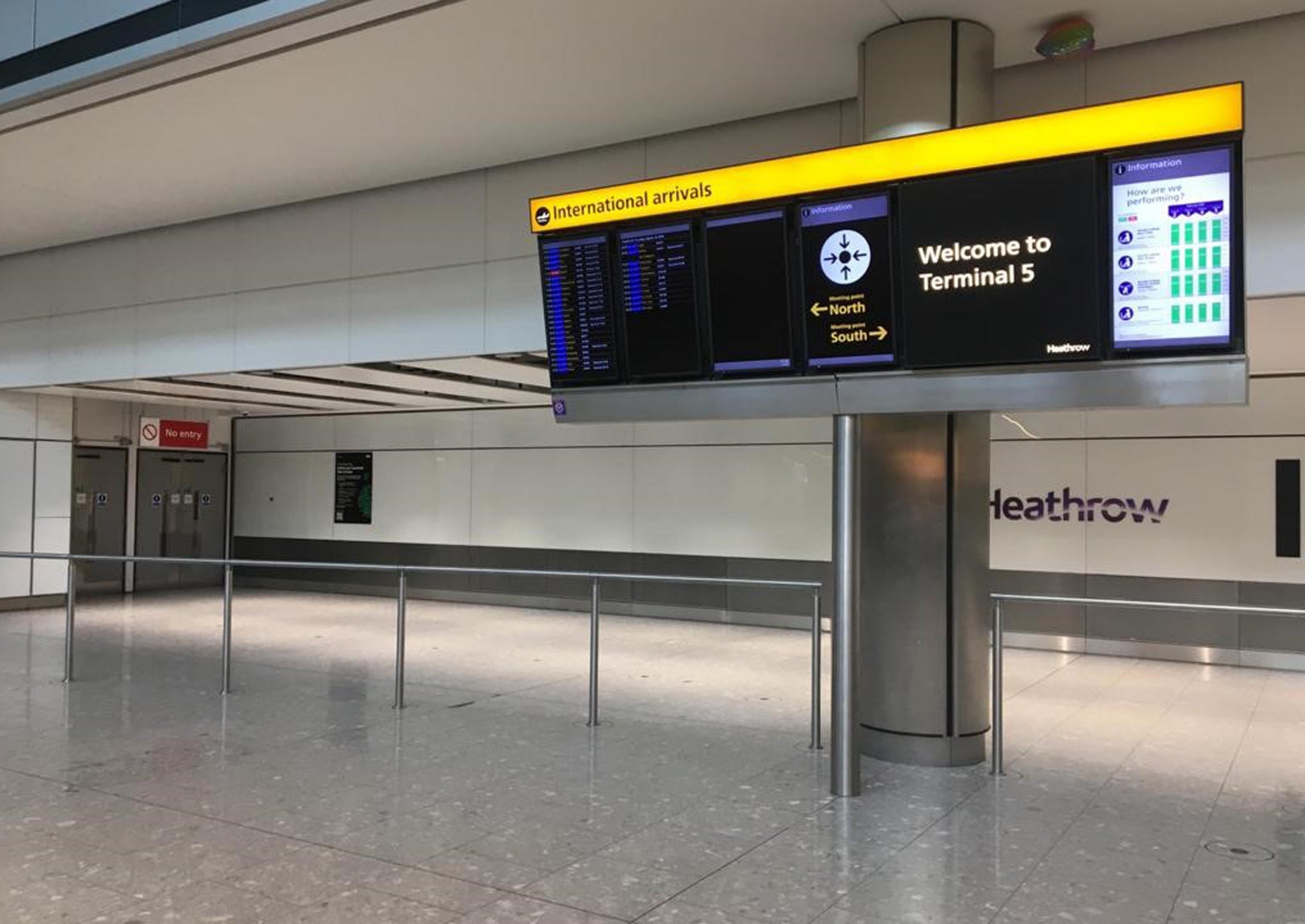
Heathrow will close one of its runways next week as air traffic continues to fall globally amid the coronavirus pandemic.
The London hub will operate its landings and takeoffs from one strip from Monday 6 April to “increase resilience and safety for staff, passengers and cargo” throughout the Covid-19 outbreak.
The airport has two runways and will alternate which one they keep open on a weekly basis, a spokesman said.
They added: “Although we are seeing significantly fewer flights at the moment, Heathrow will remain open so that we can continue to play a crucial role in helping to secure vital medical goods and food for the nation during this unprecedented epidemic.”
In 2018, Heathrow served 80.1 million passengers, according to their website.
Created with Sketch.
Created with Sketch.
1/22 Inside one of the terminal tents in 1946
The year the airport opened. Comfortable armchairs and flowers try to distract from the conditions
Graham Bridges collection
2/22 An aerial view of the airport in 1949
Construction of the runway layout and Central Area are under way
3/22 A Pan Am crew checks out the Boeing Stratocruiser N1029V Clipper Golden Eagle in 1954
During the early 1950s, Pan Am and American Overseas Airlines operated Statocruisers into London Airport in direct competition on the North Atlantic route operated by BOAC
4/22 One of the first official London Airport guidebooks
C.1953, priced 1s
5/22 In 1950 a permanent concrete terminal building was built
This replaced the tents previously used at London Airport North and is seen still in use for charter and cargo flights in this 1959 view
via Graham Bridges
6/22 BOAC check-in desk in 1954
Inside the new London Airport North terminal building, just before the move to the Central Area
Graham Bridges collection
7/22 Air traffic control tower in the 1960s
Inside the visual control room
CAA Archives via Pete Bish
8/22 Rear cover of the 1956 guidebook
Showing a plan of the airport at the time, with entrance prices to the spectators’ viewing terraces and for airport coach tours
9/22 Spectators in 1958
How close can you get? As soon as the Central Area was open, spectators were afforded unprecedented views of the airliners
10/22 Terminal 3 was opened as the Oceanic Terminal on 13 November 1961
It was built to handle flight departures for long-haul routes. Renamed Terminal 3 in 1968, it was expanded in 1970 with the addition of an arrivals building
11/22 Inside Terminal 3 in 1969
Check-in desks for BOAC and QANTAS airlines
12/22 Plane spotting on Heathrow’s viewing terraces in the 1960s
Wrap up warm, take your spotting logbooks, pen and binoculars and get your mum to pack your sandwiches
13/22 No 1 Passenger Building
Also called the Europa Building. In this photo, taken on 22 June 1963, flags of the many airlines it serves are flown
Lee Holden
14/22 Luggage-trailer-towing Routemaster buses
When BEA and BOAC merged to form BA on 1 April 1974, both fleets had to be repainted in the new livery, but so did all the ground support equipment
15/22 The entrance to the traffic tunnel in 1974
A Lufthansa Boeing 737 is seen on the runway
16/22 A 40 per cent scale model of Concorde
In September 1990 it was erected on the roundabout at the entrance to the tunnel that passes under the northern runway at Heathrow Airport. It was built in four main parts, with an 80ft-long central fuselage section, to which the wings and tail fin were attached. The completed model was placed on the roundabout in September 1990 and was monitored by CCTV and surrounded by an infrared perimeter alarm that was connected to the local Heathrow police station to ensure it was not vandalised
17/22 Heathrow Airport's 50th anniversary
On 2 June 1996, Heathrow marked its anniversary with a flypast of representative airliner types that have served the airport over the years. This culminated in a formation flypast by Concorde with Hawks of the RAF Red Arrows aerobatic team
18/22 The roof of Terminal 3’s car park
One of the last bastions for plane spotters and spectators was here. This is the unfriendly notice that greets anyone who attempts this today
Richard Vandervord
19/22 On 24 October 2003 BA withdrew its Concordes from service
The final scheduled commercial flight was BA002 from JFK operated by G-BOAG. Here we see three of the Concordes parked together outside the BA hangar on 8 November 2003 following withdrawal
John Hughes
20/22 The new control tower
Costing £50 million to construct, it gives controllers an excellent 360-degree panoramic view
NATS photograph
21/22 The new Terminal 2
The Queen’s Terminal
22/22
Looking due west down Runway 27L
1/22 Inside one of the terminal tents in 1946
The year the airport opened. Comfortable armchairs and flowers try to distract from the conditions
Graham Bridges collection
2/22 An aerial view of the airport in 1949
Construction of the runway layout and Central Area are under way
3/22 A Pan Am crew checks out the Boeing Stratocruiser N1029V Clipper Golden Eagle in 1954
During the early 1950s, Pan Am and American Overseas Airlines operated Statocruisers into London Airport in direct competition on the North Atlantic route operated by BOAC
4/22 One of the first official London Airport guidebooks
C.1953, priced 1s
5/22 In 1950 a permanent concrete terminal building was built
This replaced the tents previously used at London Airport North and is seen still in use for charter and cargo flights in this 1959 view
via Graham Bridges
6/22 BOAC check-in desk in 1954
Inside the new London Airport North terminal building, just before the move to the Central Area
Graham Bridges collection
7/22 Air traffic control tower in the 1960s
Inside the visual control room
CAA Archives via Pete Bish
8/22 Rear cover of the 1956 guidebook
Showing a plan of the airport at the time, with entrance prices to the spectators’ viewing terraces and for airport coach tours
9/22 Spectators in 1958
How close can you get? As soon as the Central Area was open, spectators were afforded unprecedented views of the airliners
10/22 Terminal 3 was opened as the Oceanic Terminal on 13 November 1961
It was built to handle flight departures for long-haul routes. Renamed Terminal 3 in 1968, it was expanded in 1970 with the addition of an arrivals building
11/22 Inside Terminal 3 in 1969
Check-in desks for BOAC and QANTAS airlines
12/22 Plane spotting on Heathrow’s viewing terraces in the 1960s
Wrap up warm, take your spotting logbooks, pen and binoculars and get your mum to pack your sandwiches
13/22 No 1 Passenger Building
Also called the Europa Building. In this photo, taken on 22 June 1963, flags of the many airlines it serves are flown
Lee Holden
14/22 Luggage-trailer-towing Routemaster buses
When BEA and BOAC merged to form BA on 1 April 1974, both fleets had to be repainted in the new livery, but so did all the ground support equipment
15/22 The entrance to the traffic tunnel in 1974
A Lufthansa Boeing 737 is seen on the runway
16/22 A 40 per cent scale model of Concorde
In September 1990 it was erected on the roundabout at the entrance to the tunnel that passes under the northern runway at Heathrow Airport. It was built in four main parts, with an 80ft-long central fuselage section, to which the wings and tail fin were attached. The completed model was placed on the roundabout in September 1990 and was monitored by CCTV and surrounded by an infrared perimeter alarm that was connected to the local Heathrow police station to ensure it was not vandalised
17/22 Heathrow Airport's 50th anniversary
On 2 June 1996, Heathrow marked its anniversary with a flypast of representative airliner types that have served the airport over the years. This culminated in a formation flypast by Concorde with Hawks of the RAF Red Arrows aerobatic team
18/22 The roof of Terminal 3’s car park
One of the last bastions for plane spotters and spectators was here. This is the unfriendly notice that greets anyone who attempts this today
Richard Vandervord
19/22 On 24 October 2003 BA withdrew its Concordes from service
The final scheduled commercial flight was BA002 from JFK operated by G-BOAG. Here we see three of the Concordes parked together outside the BA hangar on 8 November 2003 following withdrawal
John Hughes
20/22 The new control tower
Costing £50 million to construct, it gives controllers an excellent 360-degree panoramic view
NATS photograph
21/22 The new Terminal 2
The Queen’s Terminal
22/22
Looking due west down Runway 27L
A total of 475,624 flights took off from the west London site in the same year.
The news comes after British Airways said it was putting more than 30,000 staff on furlough.
The airline has introduced its own job retention scheme similar to the Government's, which will still give staff 80% of their pay plus 80% of their allowances.
A BA spokesman said on Thursday: “Our colleagues have done a brilliant job keeping vital routes open to reunite customers with their families, and bring back supplies to our hospitals, factories and shops.
“But with the challenges of coronavirus, like many airlines, we have been in touch with colleagues to advise that we are implementing the furlough scheme to minimise the financial impact on them.”
Gatwick Airport has also significantly scaled back its operations.
From 1 April the West Sussex airport closed one of its two terminals, and its runway will only be open for scheduled flights between 2pm and 10pm.
The measures will be in place for a minimum of one month.
Gatwick recorded 47 million passengers last year.
Press Association