


 Africana55 Radio

This website uses cookies so that we can provide you with the best user experience possible. Cookie information is stored in your browser and performs functions such as recognising you when you return to our website and helping our team to understand which sections of the website you find most interesting and useful.
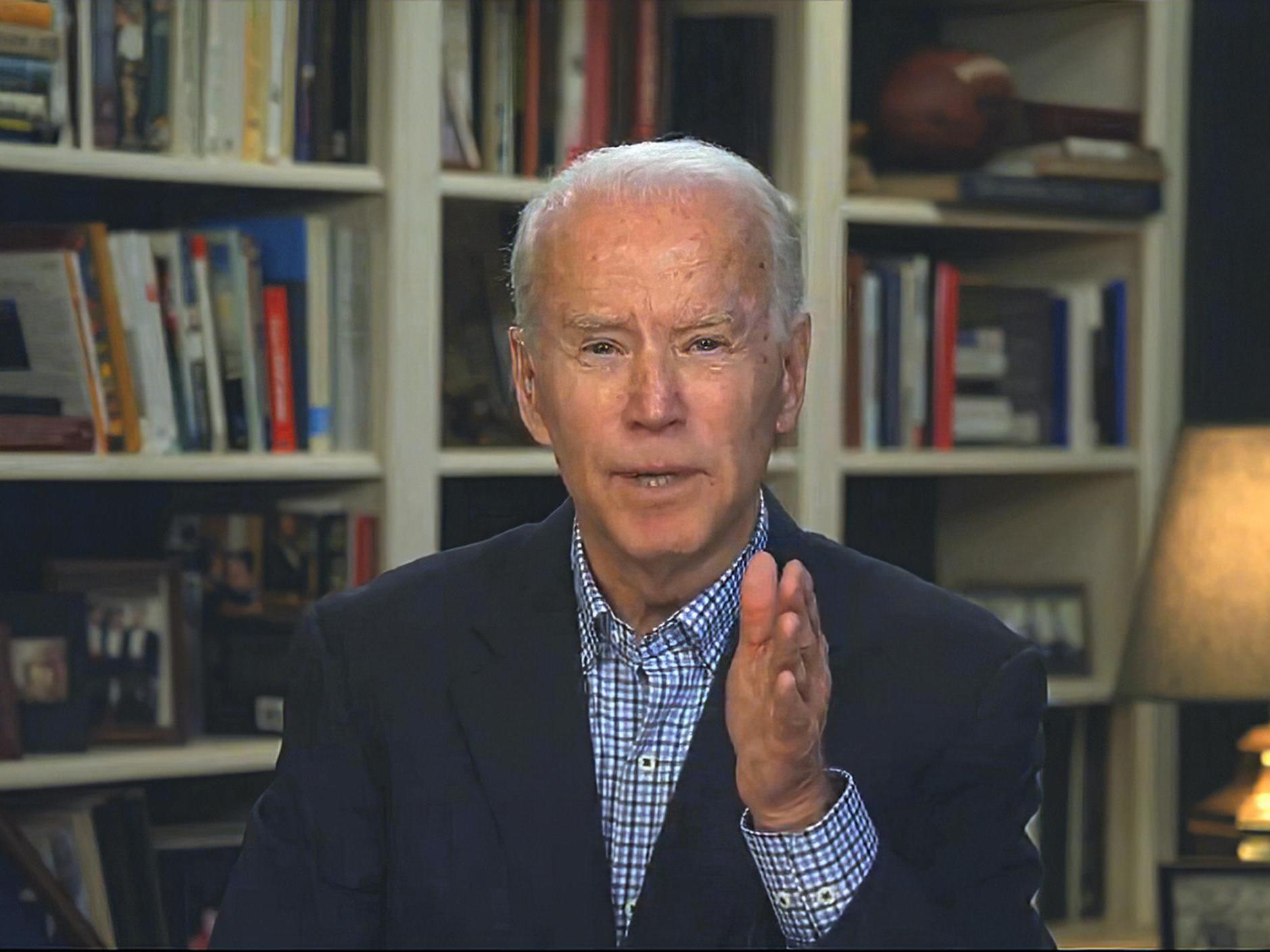
Joe Biden’s presidential campaign got off to an inauspicious start but with decisive wins in recent primaries, he appears set to seize the Democratic nomination.
Vermont Senator Bernie Sanders is still in the fight but the path to the nomination is increasingly narrow.
Mr Biden, 77, has built a broad coalition of Democrats but there are dissenting voices and skepticism of the former VP, particularly in the climate community.
Tamara Toles O’Laughlin, North America Director of 350.org, told The Independent: “As a climate-specific organisation that’s focused on ending fossil fuels, [Biden’s] current positions are lacking ambition to say the least."
Mr Sanders, 78, has likened climate change to the coronavirus pandemic as “a warlike situation” on which “we have to act dramatically”, adding that Mr Biden’s plan is “nowhere near enough”.
The senator’s sense of urgency has resonated with climate activists. Friends of the Earth, 350.org and the Sunrise Movement have issued endorsements while Mr Sanders has achieved near-perfect scorecards from Greenpeace, the Center for Biological Diversity Action Fund and Sunrise.
The Sunrise Movement, in particular, has pulled no punches. “@TheDemocrats are planning their own funeral if they nominate Joe,” they tweeted in March.
More than three-quarters of Democrats say climate change is a top policy priority for 2020 (only 21 per cent of Republicans see it the same way), according to polling by Pew Research Center.
However, there’s evidence that Trump voters who think climate change is an important issue could be swayed to vote Democrat in November.
Eleven per cent of 2016 Trump voters “take a liberal position on at least four out of five climate-related issues”, according to the study by Data For Progress, and more than half are considering voting Democratic in 2020.
Former Democratic candidate, Tom Steyer, told The Independent that he believed Mr Biden was “overwhelmingly likely” to be the nominee.
“I think that [Biden’s] plan isn’t fully formed. I’m sure it will come into much sharper focus over the coming months, hopefully the coming weeks, and that it will get a lot more specific,” he added.
When asked if Mr Biden’s plan was aggressive enough, he said: “I think it has to get fleshed out before we can really make that decision. I’m going to be pushing to have it be as aggressive as possible.”
Mr Steyer said that key to Mr Biden winning over voters who viewed climate as a top priority would be “convincing people that there’s a real emotional understanding and prioritisation of things that are impacting people so deeply”.
Both Mr Biden and Mr Sanders have centred their environmental policies around the Green New Deal. They both would immediately re-enter global climate talks, after Mr Trump pulled out, and have pledged help for fossil fuel workers to shift to a clean energy economy.
But there are marked differences: Mr Sanders has a goal of 2030 for ending fossil fuel use in power and transport, moving the rest of the economy to clean energy by 2050. His environmental plan indicates a $16.3tn investment over the next decade.
Mr Biden has a $1.7tn plan for the next decade and plans for the US to have net-zero emissions by 2050, meaning still using fossil fuels but off-set with measures such as carbon capture.
Created with Sketch.
Created with Sketch.
1/20 California
In this decade, humans have become ever more aware of climate change. Calls for leaders to act echo around the globe as the signs of a changing climate become ever more difficult to ignore
Getty
2/20 Athens, Greece
Fierce wildfires have flared up in numerous countries. The damage being caused is unprecedented: 103 people were killed in wildfires last year in California, one of the places best prepared, best equipped to fight such blazes in the world
AFP/Getty
3/20 Redding, California
Entire towns have been razed. The towns of Redding and Paradise in California were all but eliminated in the 2018 season
AP
4/20 Athens, Greece
While wildfires in Greece (pictured), Australia, Indonesia and many other countries have wrought chaos to infrastructure, economies and cost lives
AFP/Getty
5/20 Carlisle, England
In Britain, flooding has become commonplace. Extreme downpours in Carlisle in the winter of 2015 saw the previous record flood level being eclipsed by two feet
AFP/Getty
6/20 Hebden Bridge, England
Hebden Bridge in West Yorkshire has flooded repeatedly in the past decade, with the worst coming on Christmas Day 2015. Toby Smith of Climate Visuals, an organisation focused on improving how climate change is depicted in the media, says: "Extreme weather and flooding, has and will become more frequent due to climate change. An increase in the severity and distribution of press images, reports and media coverage across the nation has localised the issue. It has raised our emotions, perception and personalised the effects and hazards of climate change."
Getty
7/20 Somerset, England
Out west in Somerset, floods in 2013 led to entire villages being cut off and isolated for weeks
Getty
8/20 Dumfries, Scotland
"In summer 2012, intense rain flooded over 8000 properties. In 2013, storms and coastal surges combined catastrophically with elevated sea levels whilst December 2015, was the wettest month ever recorded. Major flooding events continued through the decade with the UK government declaring flooding as one of the nation's major threats in 2017," says Mr Smith of Climate Visuals
Getty
9/20 London, England
Weather has been more extreme in Britain in recent years. The 'Beast from the East' which arrived in February 2018 brought extraordinarily cold temperatures and high snowfall. Central London (pictured), where the city bustle tends to mean that snow doesn't even settle, was covered in inches of snow for day
PA
10/20 London, England
Months after the cold snap, a heatwave struck Britain, rendering the normally plush green of England's parks in Summer a parched brown for weeks
AFP/Getty
11/20 New South Wales, Australia
Worsening droughts in many countries have been disastrous for crop yields and have threatened livestock. In Australia, where a brutal drought persisted for months last year, farmers have suffered from mental health problems because of the threat to their livelihood
Reuters
12/20 Tonle Sap, Cambodia
Even dedicated climate skeptic Jeremy Clarkson has come to recognise the threat of climate change after visiting the Tonle Sap lake system in Cambodia. Over a million people rely on the water of Tonle Sap for work and sustinence but, as Mr Clarkson witnessed, a drought has severley depleted the water level
Carlo Frem/Amazon
13/20 Addis Ababa, Ethiopia
In reaction to these harbingers of climate obliteration, some humans have taken measures to counter the impending disaster. Ethiopia recently planted a reported 350 million trees in a single day
AFP/Getty
14/20 Morocco
Morocco has undertaken the most ambitious solar power scheme in the world, recently completing a solar plant the size of San Francisco
AFP/Getty
15/20 London, England
Electric cars are taking off as a viable alternative to fossil fuel burning vehicles and major cities across the world are adding charging points to accomodate
AFP/Getty
16/20 Purmerend, The Netherlands
Cities around the world are embracing cycling too, as a clean (and healthy) mode of transport. The Netherlands continues to lead the way with bikes far outnumbering people
Jeroen Much/Andras Schuh
17/20 Xiamen, China
Cycling infrastructure is taking over cities the world over, in the hope of reducing society's dependency on polluting vehicles
Ma Weiwei
18/20 Chennai, India
Despite positive steps being taken, humans continue to have a wildly adverse effect on the climate. There have been numerous major oil spills this decade, the most notable being the BP oil spill in the Gulf of Mexico in 2010
AFP/Getty
19/20 Amazon rainforest, Brazil
More recently, large swathes of the Amazon rainforest were set alight by people to clear land for agriculture
AFP/Getty
20/20 California
This decade may have seen horrors but it has led to an understanding that the next decade must see change if human life is to continue
Getty
1/20 California
In this decade, humans have become ever more aware of climate change. Calls for leaders to act echo around the globe as the signs of a changing climate become ever more difficult to ignore
Getty
2/20 Athens, Greece
Fierce wildfires have flared up in numerous countries. The damage being caused is unprecedented: 103 people were killed in wildfires last year in California, one of the places best prepared, best equipped to fight such blazes in the world
AFP/Getty
3/20 Redding, California
Entire towns have been razed. The towns of Redding and Paradise in California were all but eliminated in the 2018 season
AP
4/20 Athens, Greece
While wildfires in Greece (pictured), Australia, Indonesia and many other countries have wrought chaos to infrastructure, economies and cost lives
AFP/Getty
5/20 Carlisle, England
In Britain, flooding has become commonplace. Extreme downpours in Carlisle in the winter of 2015 saw the previous record flood level being eclipsed by two feet
AFP/Getty
6/20 Hebden Bridge, England
Hebden Bridge in West Yorkshire has flooded repeatedly in the past decade, with the worst coming on Christmas Day 2015. Toby Smith of Climate Visuals, an organisation focused on improving how climate change is depicted in the media, says: "Extreme weather and flooding, has and will become more frequent due to climate change. An increase in the severity and distribution of press images, reports and media coverage across the nation has localised the issue. It has raised our emotions, perception and personalised the effects and hazards of climate change."
Getty
7/20 Somerset, England
Out west in Somerset, floods in 2013 led to entire villages being cut off and isolated for weeks
Getty
8/20 Dumfries, Scotland
"In summer 2012, intense rain flooded over 8000 properties. In 2013, storms and coastal surges combined catastrophically with elevated sea levels whilst December 2015, was the wettest month ever recorded. Major flooding events continued through the decade with the UK government declaring flooding as one of the nation's major threats in 2017," says Mr Smith of Climate Visuals
Getty
9/20 London, England
Weather has been more extreme in Britain in recent years. The 'Beast from the East' which arrived in February 2018 brought extraordinarily cold temperatures and high snowfall. Central London (pictured), where the city bustle tends to mean that snow doesn't even settle, was covered in inches of snow for day
PA
10/20 London, England
Months after the cold snap, a heatwave struck Britain, rendering the normally plush green of England's parks in Summer a parched brown for weeks
AFP/Getty
11/20 New South Wales, Australia
Worsening droughts in many countries have been disastrous for crop yields and have threatened livestock. In Australia, where a brutal drought persisted for months last year, farmers have suffered from mental health problems because of the threat to their livelihood
Reuters
12/20 Tonle Sap, Cambodia
Even dedicated climate skeptic Jeremy Clarkson has come to recognise the threat of climate change after visiting the Tonle Sap lake system in Cambodia. Over a million people rely on the water of Tonle Sap for work and sustinence but, as Mr Clarkson witnessed, a drought has severley depleted the water level
Carlo Frem/Amazon
13/20 Addis Ababa, Ethiopia
In reaction to these harbingers of climate obliteration, some humans have taken measures to counter the impending disaster. Ethiopia recently planted a reported 350 million trees in a single day
AFP/Getty
14/20 Morocco
Morocco has undertaken the most ambitious solar power scheme in the world, recently completing a solar plant the size of San Francisco
AFP/Getty
15/20 London, England
Electric cars are taking off as a viable alternative to fossil fuel burning vehicles and major cities across the world are adding charging points to accomodate
AFP/Getty
16/20 Purmerend, The Netherlands
Cities around the world are embracing cycling too, as a clean (and healthy) mode of transport. The Netherlands continues to lead the way with bikes far outnumbering people
Jeroen Much/Andras Schuh
17/20 Xiamen, China
Cycling infrastructure is taking over cities the world over, in the hope of reducing society's dependency on polluting vehicles
Ma Weiwei
18/20 Chennai, India
Despite positive steps being taken, humans continue to have a wildly adverse effect on the climate. There have been numerous major oil spills this decade, the most notable being the BP oil spill in the Gulf of Mexico in 2010
AFP/Getty
19/20 Amazon rainforest, Brazil
More recently, large swathes of the Amazon rainforest were set alight by people to clear land for agriculture
AFP/Getty
20/20 California
This decade may have seen horrors but it has led to an understanding that the next decade must see change if human life is to continue
Getty
Their campaigns did not respond to requests for comment by The Independent.
Ms O’Laughlin, of 350.org, said: “We are looking for a climate candidate regardless of who ends up as the nominee. Biden doesn’t seem to have the urgency, especially because we’re in a moment that will only be amplified by ongoing conditions in the climate.
“We’re looking for greater commitment through future investments and a little more fight for the next generation.”
Black voters were instrumental to Mr Biden’s success in the recent primaries, including in South Carolina where he received the prized endorsement of House Majority Whip James E. Clyburn, the highest-ranking African American in Congress.
Ms O’Laughlin said it was important to keep in mind the challenge that climate change has created.
“As an African-American woman running a climate organisation, I can tell you getting the votes of black people is not enough to deliver what will be necessary for us to survive in these conditions or any other,” she said.
“We’re looking for a detailed plan for environmental justice. There’s a real gap in how any investments would relate specifically to indigenous communities and communities of colour and how they would be involved in any transition.
“We think Biden is decent on worker transition but workers are part of communities. If we have learned anything from the current crisis, it’s that people go home to a place and if the community itself has been weakened by failed policies and rollbacks, there’s nothing that the community can build on to multiply good.
“It’s time for Biden to take that gutsiness and passion that he has shown for workers and make sure that extends to the communities they live in.”
Mr Biden’s mixed messages on fracking are particularly disheartening, she said.
“No more – no new fracking,” Mr Biden stated at the most recent debate which his campaign later backtracked on.
His plan remains that he would issue no new fracking permits for federal lands or waters but allow existing operations to go on. (Mr Sanders says he will ban fracking nationwide but that it couldn’t happen “overnight”, the Washington Post reported).
“Fracking is really destructive and every kind of community, both urban and rural, is impacted by these inappropriate and extractive set of policies. The fact that it’s also not financially viable makes it doubly stupid to engage in,” Ms O’Laughlin said.
“The last time Biden was in the White House, there were arguably people who felt differently about [fracking]. Now we know better, it’s time to do better.”
Ms O’Laughlin noted how the coronavirus pandemic highlights how one disaster can deepen another.
“Climate is the determinant of all other things. If we were dealing with Covid-19 except people could not shelter in place because of sea-level rise, extreme heat or fire, then this situation would be even more intolerable,” she noted.
“We need a leader who is paying attention to the world that exists and not leaning on the world as it was.”
Ms O’Laughlin wants to see “passion and prioritization” of the climate issue from Mr Biden and commitment to an international alliance on climate as it is a “global issue”.
“It would be great to see him talking for the modern era and not leaning so much on his previous reputation.”
Brent J. Cohen, executive director of Generation Progress Action, the youth engagement group under the wing of Center for American Progress, founded by John Podesta who ran Hillary Clinton’s 2016 presidential campaign. They do not endorse a candidate.
He said that it was hard to judge whether Mr Biden’s plan was aggressive enough given the “unchartered territory” of the climate crisis.
“When you look at polling, and particularly what young Americans are saying, we know that three-quarters say that the future is at risk because of climate change. They want to see that aggressive and deliberate action to combat that. Getting to net-zero emissions and 100 per cent clean energy by 2050, needs to be the cornerstone of any path forward. Biden’s plan includes that," he told The Independent.
Mr Cohen said that if Biden becomes the nominee “he should be very explicit about what the first 100 days and first year looks like on climate action".
“The candidate needs to articulate specific and concrete actions that will be taken and how those are significantly different from what a Donald Trump administration would do.”
Mr Cohen's organisation was encouraged by Mr Biden’s plan to use executive actions to rollback Mr Trump's industry-friendly moves.
“Trump has almost gone out of his way to roll back every sort of environmental protection provision that he could through executive action. It’s been a complete abdication of global responsibility and leadership.
“I am confident that it would switch almost immediately with either Biden or Sanders in the Oval Office. I think a new administration needs to implement executive orders, which is within the purview of the presidency, to say what immediate action can we take to stop this? On the back-end is pushing for significant legislation in year one.
“The US re-entering the Paris climate agreement is a must but it’s not sufficient. However it’s a first step towards reestablishing some credibility on the world stage.”
Mr Cohen sees hope in Mr Biden’s vow to not only work on a bipartisan basis but also with his former rivals in the Democratic field.
“Joe Biden has a willingness and an astuteness to look at the plans of other candidates. He’s adopted several from Elizabeth Warren.
“I think what will be true for any candidate, whether it’s Biden or Sanders, is to say what are the best ideas out there to adopt?
“Biden or Sanders would be leaps and bounds better than a Trump administration, particularly on this issue.”
Mr Cohen said the Biden campaign appears to known what’s at stake.
“My understanding is that they are fully aware of how pressing this issue is,” he said.
Scientists warn we have around decade to keep global warming to 1.5C, beyond which we face catastrophic consequences of drought, floods, extreme heat and the potential geopolitical crisis of millions of people forced into migration and poverty. No voices have been more passionate and pressing on the crisis than the youth-driven movements.
Joe Hobbs, 17, is an activist with Fridays For Future, the school strike movement founded by Greta Thunberg (he doesn’t speak for the movement which is non-political).
He fears that Biden’s timeline to fight climate change is too long and that his plans only pay lip service to the issue.
He told The Independent: “[Biden] says that he wants to achieve a 100 per cent clean-energy economy and reach net-zero emissions by no later than 2050. It’s too late, we don’t have that much time. We need faster action, more action.
“He’s making all these promises but will he follow through with them and is it enough? That’s the real question. I don’t think it is and a lot of us don’t think it is.
“How’s he going to create more sanctions again oil, gas and coal corporations? His plans sounds amazing but there isn’t enough in the plans to actually make it happen.”
Mr Hobbs, who is four months shy of being able to vote in November, said it would be a mistake to dismiss younger voters.
Mr Biden appeared to acknowledge that when he spoke directly to Sanders’ youth following about climate change after winning the Florida and Illinois primaries last month.
“I hear you. I know what’s at stake. I know what we have to do,” he said.
There have also been cringe-worthy, viral internet moments of condescension when he has been challenged one-on-one. When one college student activist asked the VP how he would battle the influence of money from the fossil fuel industry in his campaign, he responded: “Take a look at my record, child.”
Mr Hobbs said: ”Some activists are under 18 but not all of us and we have a huge amount of influence.
“Just in the US, Fridays for Future has millions of activists show up to our strikes. How does [Biden] plan to influence that?
“I don’t want to speak for other places but I’ve reached out [to his campaign] for a podcast we’re working on and got no response. That aside, he should be talking to us about what we think.
“This election will decide our climate because if we don’t do something in the next four years, there’s not a lot of hope left.”
He believes that Mr Sanders’ message has resonated more deeply because he has listened to the worries of young voters.
“He’s supported youth activists and they support him, that’s why he gained Sunrise’s endorsement.
“Biden said he’s passionate [about climate] but he’s focused on beating Trump. Right now, all I care about is what he’s doing to beat the climate crisis.”
Mr Hobbs said that ultimately Biden’s plan may not be perfect but it’s better than Trump’s climate denial. However, he fears, being “good enough” comes with risks.
“Maybe some people won’t [vote for Biden] because they feel climate is not a focus for him. I’m not saying climate is the only thing that should be talked about but I think it needs to be talked about a lot more than it is currently.”