


 Africana55 Radio

This website uses cookies so that we can provide you with the best user experience possible. Cookie information is stored in your browser and performs functions such as recognising you when you return to our website and helping our team to understand which sections of the website you find most interesting and useful.
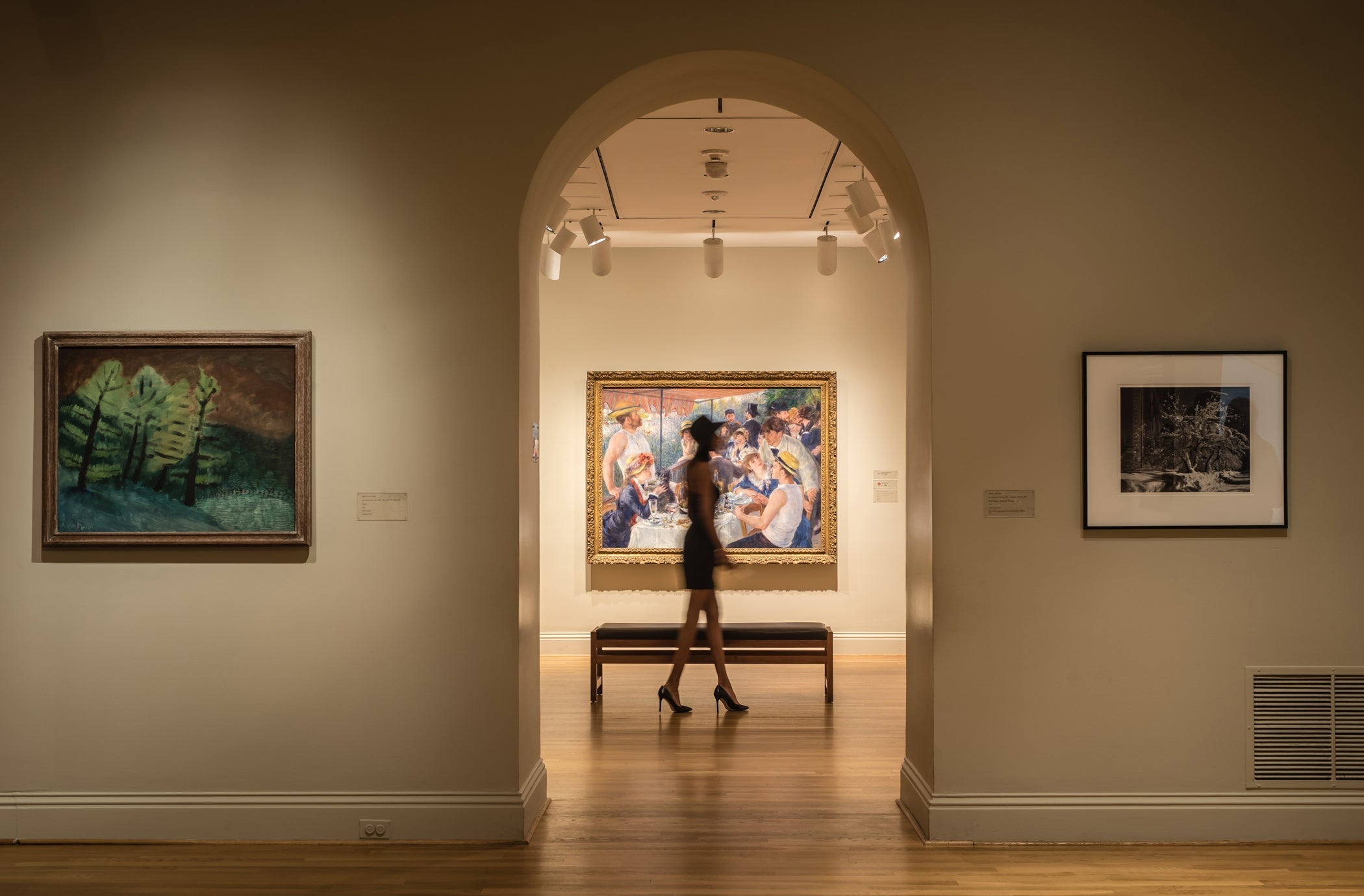
It could be a long time before we enjoy the arts as a form of social bonding once again. For now, there are no intermissions because there are no concerts, no eavesdropping in the galleries because the museums are all closed, no flirtations across the table because the clubs and cabarets are shuttered. The substitutes for the collective experience of art – the streaming concerts, virtual gallery tours and Zoom improv sessions – are a stopgap, but does anyone want them to become an actual replacement for experiencing art in the company of others?
Yet if we are cut off from experiencing art with others, we are perfectly placed to consider an old and out of fashion idea: the power of private contemplation and solitary engagement. The silence in the room as you read a poem or look at a print, or prepare to listen to a piece of music, isn’t absence. It is the presence of your undivided attention.
Since the culture wars of the late 1980s and early 1990s, the arts have largely rebranded themselves as an essential public good. Arts leaders stress things like connection and engagement, promoting a collective experience, ideally one that can be monetised. New museum buildings are constructed around restaurants, cafes and event spaces. Art forms, such as poetry, which earlier generations may have thought of as a solitary communion, have been reinvented (or returned) to social spectacles, like poetry slams.
Today, we are far more likely to say that the arts take us outside of ourselves, and spur us to make connections with others, and the world, than the opposite – that they drive us inward and make us aware of our isolation and smallness in a grandly scaled universe. But both are true, and perhaps now that one avenue is mostly closed off to us, we might explore the richness of the other.
Throughout the history of the arts, and especially since around the beginning of the 18th century, there has been a recurring belief that the best art, the most true and meaningful, is made apart from the world. Artists need distance to create. They need independence and isolation to free themselves from the conceits of fashion and the desire to please. The idea has encompassed not just creators, but also performers, interpreters and audiences. In 1964, the great Canadian pianist Glenn Gould gave up live performances, in part because they were hard on his nerves, but also because he felt an audience corrupted musical interpretation, encouraging showmanship and superficiality.
That made Gould, for decades, the patron saint of a certain breed of musical connoisseurs, who weren’t ashamed to admit what is now often seen as freakish or perverse: that they preferred recorded music to live concerts, that they found audiences a distraction and would rather hear music alone, in the home, in perfect sessions of sweet, silent thought. The public perception of art in isolation has evolved from a sense that it is an enervating substitute for real life – young people in the 19th century were warned not to spend too much time alone in their rooms reading novels – to the popular calumny that it is a marker of mental illness. What does Hollywood’s charismatic psychopath, the murderous Hannibal Lecter, listen to, alone in his cell? Bach’s Goldberg Variations, which was Gould’s signature piece.
In part, the devaluing of creative and self-sufficient solitude was about democratizing the arts. The connoisseur might claim to find meaning and value in private contemplation of art, but this was a function of class and education, a pose of his or her privilege. You can hear what advocates for a more popular and public experience of art found so distasteful in the connoisseur’s solitary pursuits in these lines from Joseph Addison’s classic 1712 essay “The Pleasures of Imagination”: “A man of polite imagination is let into a great many pleasures, that the vulgar are not capable of receiving. He can converse with a picture, and find an agreeable companion in a statue. He meets with a secret refreshment in a description, and often feels a greater satisfaction in the prospect of fields and meadows, than another does in the possession. It gives him, indeed, a kind of property in everything he sees, and makes the most rude, uncultivated parts of nature administer to his pleasures: so that he looks upon the world, as it were in another light, and discovers in it a multitude of charms, that conceal themselves from the generality of mankind.”
But one needn’t use Addison’s sniffish language (“polite” and “vulgar” and “the generality of mankind”) nor his fundamental metaphor – that aesthetic pleasure gives us dominion or ownership of transient things – to accept his general premise that there are pleasures we cultivate in isolation that can sustain us.
Created with Sketch.
Created with Sketch.
1/10 The Peggy Guggenheim, Venice
The only gallery I’ve ever visited by water taxi, this little canal-side museum is a tiny gem – and it’s ideal for ticking off your Venice ‘to do’ list without having to head back to the hotel for a lie down after. Housed in famed art collector Peggy Guggenheim’s old gaffe, Palazzo Venier dei Leoni, it comes complete with an adorable little sculpture garden and yes, of course there’s a cafe. Expect to see lots of paintings you recognise including Picassos and Pollocks, Mondrians and Miros. All the big names in a bite-sized space: bliss.
Getty
2/10 The Picasso Museum, Barcelona
There is only one art gallery I have broken down and cried in, and this is it. I think it was just the sheer volume of work, the guy never stopped experimenting and making stuff. He might not have been the nicest person, but you’ve got to take your hat off to him: he could do anything and everything. And, it's central location makes it perfect for heading out to lunch after working up an appetite learning all about cubism.
Getty
3/10 Louisiana Museum of Modern Art, Copenhagen
This gallery is situated about 40km outside of Copenhagen which means you get to go on an exciting train ride through the posh suburbs of Copenhagen – all very Borgen. A 15-minute walk from the station, the gallery itself sits in stunning landscaped gardens slap bang on the Danish coast with a view over the Sound across to Sweden. Expect top class international art, both indoors and outdoors, plus the best open fishy sandwiches on pumpernickel you could hope for. Yum.
Rex
4/10 Astrup Fearnley Museet, Oslo
This is a smart little place on the edge of the freezing fjorde waters of Oslo. I visited in January and basically slid over from the hotel next door – which offered free entry along with our stay. Hugely more enjoyable than the Munch Museum, which I found slightly miserable. This is a light-filled modern gallery with ever-changing exhibitions as well as a permanent collection of names that even the most clueless of us have heard of. Hirst cows are in there for example, alongside Jeff Koon’s disturbing Michael Jackson with monkey sculpture. It also has a cafe and shop but prepare to choke slightly over the prices.
Rex
5/10 Miro Museum, Palma
A must for Miro fans, there are buses from the city centre but we cheated and got a cab. Essentially it’s a massive Miro fest with some lovely quirky architectural details – Miro’s studio for example is a primary colour 1960s design classic. There’s also a sculpture garden, coffee bar and obligatory shop where you can buy all things Miro: mugs; fridge magnets; tea towels… etc.
Rex
6/10 Museum of Contemporary Art Kiasma, Helsinki
This was a gallery the old man and I stumbled on whilst strolling around Helsinki, around a decade ago. We were over visiting a production of ‘Grumpy Old Women Live’ which was being performed in Finnish in the city centre. And after perusing such delicacies as traditional bear pate in the market we needed something a bit more contemporary. Expect cutting-edge modern, colourful and fun, a mix of installation, photography and painting. The exhibitions change seasonally, as does the lunch menu in the cafe, good work Helsinki, though I'd give the bear pate a miss.
Rex
7/10 The Black Horizon Art Pavilion, Lopud Island, Croatia
OK this one is a bit off the beaten track, for starters you’ve got to get a ferry from Durbrovnik to the tiny island of Lopud, from there you either walk, cycle or golf cart it to this wonderful magical box which basically squats in the middle of nowhere. Basically it’s a wooden shed, designed by our very own David Adjaye, which houses a lighting installation by the artist Olafur Eliasson. It showcases the colour changes on Lopud’s horizon over 24 hours on a repeating 15-minute loop. Expect to have your mind blown, but don’t expect coffee or cake – there is no cafe. I repeat, there is no cafe.
Zoran Marinovic
8/10 Museum der Dinge, Berlin
This isn’t strictly an art gallery, it’s a collection of things, displayed over 500 metres in a former workshop. It’s one of my favourite back street hot spots, and features a beautifully curated collection of design and everyday objects from the 20th and 21st century. This might be anything from dolls house furniture to kitchen utensils. Imagine a modern day equivalent of the Victorian collector, where plastic and mass produced household items replace eggs and butterflies. No cafe, but there are lots of cool places to hang out locally. It’s so Berlin it hurts.
Rex
9/10 Dubrovnik Contemporary Gallery, Croatia
A second Croatian gallery, guess where I like to go on my hols? This one is in Dubrovnik and if it’s getting a bit hot out there on the beach, this is the idea place to take shelter. Fabulously cool and blissfully empty, the exhibitions change regularly, but I remember being mightily impressed when I visited a few years ago. I seem to remember some kind of refreshment facility but I don’t think it ran to a decent light lunch menu, so bear that in mind when you visit (or smuggle in a sandwich).
AFP/Getty Images
10/10 Hamburger Bahnhof Gallery, Berlin
This is a massive gallery housed in an old train station. It’s home to some of the world’s best contemporary art, so you can wander round and tick off all the big names. It’s pretty exhausting but don’t worry, if you need a pit stop there’s a proper restaurant with fancy beers and a comprehensive menu which features the Berlin classic currywurst, chips and homemade ketchup. Oh God, I might just have to catch a plane.
Rex
1/10 The Peggy Guggenheim, Venice
The only gallery I’ve ever visited by water taxi, this little canal-side museum is a tiny gem – and it’s ideal for ticking off your Venice ‘to do’ list without having to head back to the hotel for a lie down after. Housed in famed art collector Peggy Guggenheim’s old gaffe, Palazzo Venier dei Leoni, it comes complete with an adorable little sculpture garden and yes, of course there’s a cafe. Expect to see lots of paintings you recognise including Picassos and Pollocks, Mondrians and Miros. All the big names in a bite-sized space: bliss.
Getty
2/10 The Picasso Museum, Barcelona
There is only one art gallery I have broken down and cried in, and this is it. I think it was just the sheer volume of work, the guy never stopped experimenting and making stuff. He might not have been the nicest person, but you’ve got to take your hat off to him: he could do anything and everything. And, it's central location makes it perfect for heading out to lunch after working up an appetite learning all about cubism.
Getty
3/10 Louisiana Museum of Modern Art, Copenhagen
This gallery is situated about 40km outside of Copenhagen which means you get to go on an exciting train ride through the posh suburbs of Copenhagen – all very Borgen. A 15-minute walk from the station, the gallery itself sits in stunning landscaped gardens slap bang on the Danish coast with a view over the Sound across to Sweden. Expect top class international art, both indoors and outdoors, plus the best open fishy sandwiches on pumpernickel you could hope for. Yum.
Rex
4/10 Astrup Fearnley Museet, Oslo
This is a smart little place on the edge of the freezing fjorde waters of Oslo. I visited in January and basically slid over from the hotel next door – which offered free entry along with our stay. Hugely more enjoyable than the Munch Museum, which I found slightly miserable. This is a light-filled modern gallery with ever-changing exhibitions as well as a permanent collection of names that even the most clueless of us have heard of. Hirst cows are in there for example, alongside Jeff Koon’s disturbing Michael Jackson with monkey sculpture. It also has a cafe and shop but prepare to choke slightly over the prices.
Rex
5/10 Miro Museum, Palma
A must for Miro fans, there are buses from the city centre but we cheated and got a cab. Essentially it’s a massive Miro fest with some lovely quirky architectural details – Miro’s studio for example is a primary colour 1960s design classic. There’s also a sculpture garden, coffee bar and obligatory shop where you can buy all things Miro: mugs; fridge magnets; tea towels… etc.
Rex
6/10 Museum of Contemporary Art Kiasma, Helsinki
This was a gallery the old man and I stumbled on whilst strolling around Helsinki, around a decade ago. We were over visiting a production of ‘Grumpy Old Women Live’ which was being performed in Finnish in the city centre. And after perusing such delicacies as traditional bear pate in the market we needed something a bit more contemporary. Expect cutting-edge modern, colourful and fun, a mix of installation, photography and painting. The exhibitions change seasonally, as does the lunch menu in the cafe, good work Helsinki, though I'd give the bear pate a miss.
Rex
7/10 The Black Horizon Art Pavilion, Lopud Island, Croatia
OK this one is a bit off the beaten track, for starters you’ve got to get a ferry from Durbrovnik to the tiny island of Lopud, from there you either walk, cycle or golf cart it to this wonderful magical box which basically squats in the middle of nowhere. Basically it’s a wooden shed, designed by our very own David Adjaye, which houses a lighting installation by the artist Olafur Eliasson. It showcases the colour changes on Lopud’s horizon over 24 hours on a repeating 15-minute loop. Expect to have your mind blown, but don’t expect coffee or cake – there is no cafe. I repeat, there is no cafe.
Zoran Marinovic
8/10 Museum der Dinge, Berlin
This isn’t strictly an art gallery, it’s a collection of things, displayed over 500 metres in a former workshop. It’s one of my favourite back street hot spots, and features a beautifully curated collection of design and everyday objects from the 20th and 21st century. This might be anything from dolls house furniture to kitchen utensils. Imagine a modern day equivalent of the Victorian collector, where plastic and mass produced household items replace eggs and butterflies. No cafe, but there are lots of cool places to hang out locally. It’s so Berlin it hurts.
Rex
9/10 Dubrovnik Contemporary Gallery, Croatia
A second Croatian gallery, guess where I like to go on my hols? This one is in Dubrovnik and if it’s getting a bit hot out there on the beach, this is the idea place to take shelter. Fabulously cool and blissfully empty, the exhibitions change regularly, but I remember being mightily impressed when I visited a few years ago. I seem to remember some kind of refreshment facility but I don’t think it ran to a decent light lunch menu, so bear that in mind when you visit (or smuggle in a sandwich).
AFP/Getty Images
10/10 Hamburger Bahnhof Gallery, Berlin
This is a massive gallery housed in an old train station. It’s home to some of the world’s best contemporary art, so you can wander round and tick off all the big names. It’s pretty exhausting but don’t worry, if you need a pit stop there’s a proper restaurant with fancy beers and a comprehensive menu which features the Berlin classic currywurst, chips and homemade ketchup. Oh God, I might just have to catch a plane.
Rex
Even more important, we needn’t be confined by the idea that art is fundamentally about pleasure, shared or otherwise. The experience of art in isolation has been loaded with negative associations about snobbery and mental instability because, in some ways, it is more intense and more painful than art experienced in more social contexts. We are so used to this idea – that the essential thing about art is to share it, to say to others, “Here, look at this” – that we neglect one of the most painful and profound things about the contemplation of aesthetic objects: that there are depths to the experience that are fundamentally incommunicable.
In that, art is like life. There is painting called Landscape With the Fall of Icarus, once thought to be by Pieter Bruegel, now believed to be a high-level copy of a missing original by the same artist. It has been an inspiration to poets, including WH Auden and William Carlos Williams, because it depicts, with brutal humour, a simple fact that most of us are loath to acknowledge: Suffering is incommunicable. We may say to a close companion, “I suffer,” but that transfers nothing of the real experience of emotion.
The painting shows the denouement of the old myth about Icarus, son of Daedalus, the artist and craftsman famous for making statues so real that they had to be tied down or they would wander off, like living beings. Daedalus makes wings, fastened with bee’s wax, for his son to fly, warning him not to go too close to the sun or the wax will melt and he will fall to Earth. Unlike other paintings that depicted the story, Bruegel shows us not the moment when Icarus begins to fall, but merely two pale legs sticking out of the ocean, the last of the lad as he drowns. These legs are barely noticeable, a minor visual element; what matters more is the farmer tilling his field in the foreground, indifferent to the event, and a fisherman unflappably tending his line as a young man meets his doom.
“... the ploughman may/ Have heard the splash, the forsaken cry/ But for him it was not an important failure,” Auden wrote in his poem “Musee des Beaux Arts”.
“Off the coast/ there was/ a splash quite unnoticed/ this was/ Icarus drowning,” wrote Williams in his “Landscape With the Fall of Icarus”.
Art binds us to others, but it also helps us grieve for the many things in our lives which will fall like the “splash quite unnoticed”. In that, it helps us anticipate the thing we most dread – the final, solitary experience of life, which is our own death. When you leave the theatre after an exceptional performance, only to find the world as busy and as indifferent as it was before you entered, that is the splash unnoticed. When you find something small, new and miraculous in a piece of music you thought you knew through and through, that is the splash unnoticed. Yes, you may speak of these things to other people, and perhaps, if you are very lucky, they will say they saw or heard the same thing. (If so, grab hold of them and never let them go.)
But even if you manage to isolate and point to the thing, the thing that sparked the wonder or flooded the mind with memory, at some level it will remain fundamentally private. No two people share the same aesthetic experience. Learning to accept, indulge and even revel in this fact is part of what art does. Paradoxically, it makes us better citizens of the world, more alert to its pain, more intent on its salvation. You can learn this lesson in a crowd, to be sure. But you can also learn it alone, and there’s no time like the present.
© The Washington Post