


 Africana55 Radio

This website uses cookies so that we can provide you with the best user experience possible. Cookie information is stored in your browser and performs functions such as recognising you when you return to our website and helping our team to understand which sections of the website you find most interesting and useful.
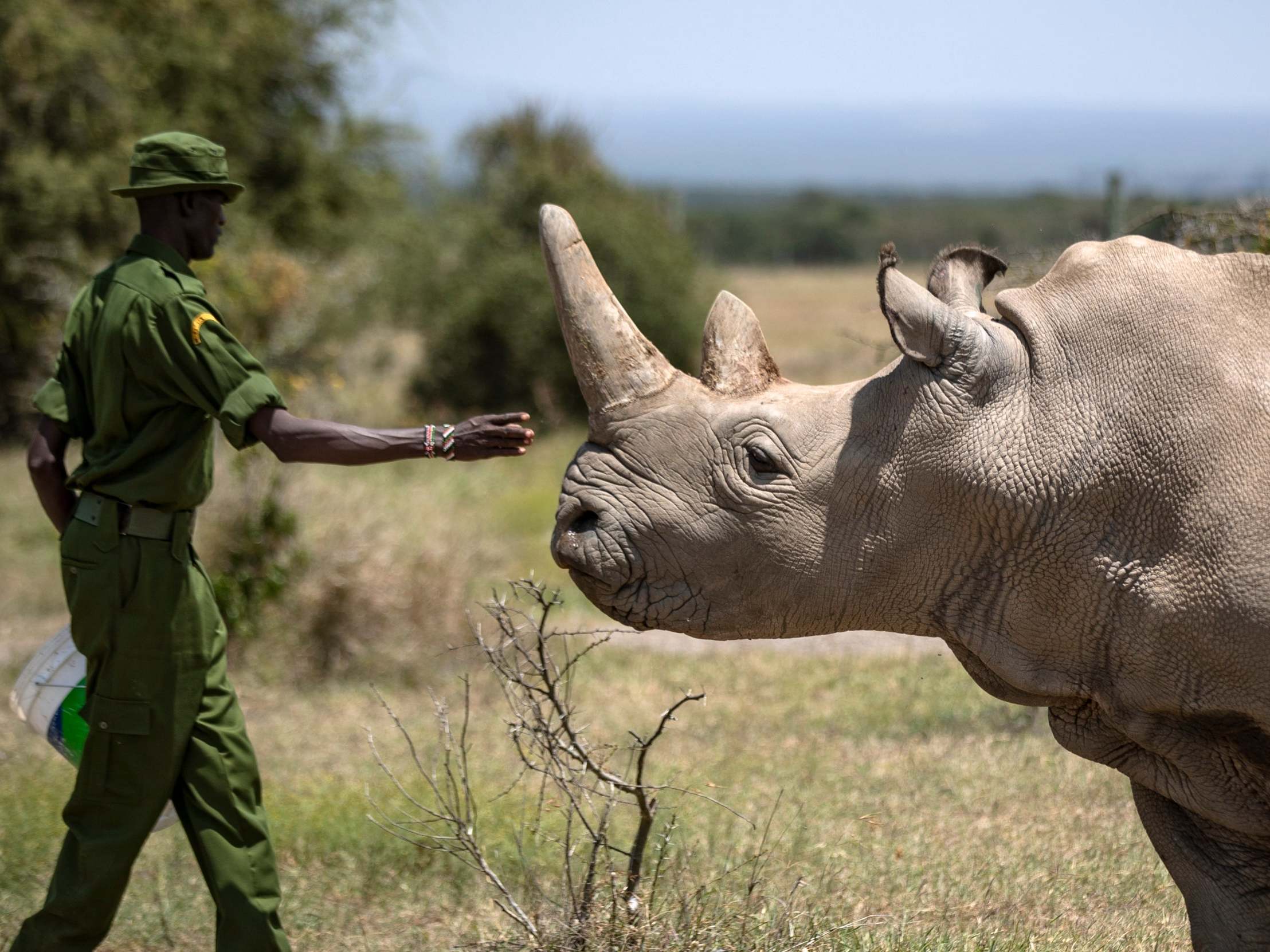
It's not quite a case of coitus interruptus, but efforts to create a very special baby are definitely on hold. Blame the pandemic.
Groundbreaking work to keep alive the nearly extinct northern white rhino subspecies — population, two — by in-vitro fertilisation has been stalled by travel restrictions. And time is running out.
The two northern white rhinos are female. The goal is to create viable embryos in a lab by inseminating their eggs with frozen sperm from dead males, then transfer them into a surrogate mother, a more common southern white rhino.
As of January, three embryos had been created and stored in liquid nitrogen. But further key steps now have to wait.
“It has been disrupted by Covid-19, like everything else,” said Richard Vigne, managing director of Ol Pejeta Conservancy in Kenya, home of the two remaining rhinos. “That is, the process of collecting more eggs from the females as well as the process of developing the technique to introduce the northern white rhino embryo into the southern white rhino females.”
Created with Sketch.
Created with Sketch.
1/17 Amur Leopard
Endemic to the far east of Russia, the Amur Leopard has a population of around 84 and is critically endangered. Here follows every species that the WWF lists as critically endangered.
Getty
2/17 Sumatran Elephant
The Sumatran elephant population now stands at only 2400-2800
Getty
3/17 Yangtze Finless Porpoise
Endemic to China's Yangtze River, the Yangtze finless porpoise has an estimated population of 1000-1800
Kenichi Nobusue
4/17 South China Tiger
When discovered in the 1950s, the South China tiger population was estimated to be 4000, by 1996 it was estimated to be only 30-80. Scientists consider the tiger to be "functionally extinct" as one has not been sighted for over 25 years
5/17 Sumatran Orangutan
The Sumatran orangutan was once found across the island of Sumatra and even further south on Java. Today it is found only in the island's north and its population stands at 14,613
Getty
6/17 Western Lowland Gorilla
Though it is the most populous of all gorilla subspecies, the western lowland gorilla is still critically endangered and its population has declined by 60% in the last quarter century
Getty
7/17 Sumatran Rhinoceros
The Sumatran rhinoceros is the smallest of the surviving rhinoceros species. Only 80 are known to be living today. The last male Sumatran rhino in Malaysia died on 28 May 2019
Willem V Strien
8/17 Sumatran Tiger
There are fewer than 400 Sumatran tigers left today. They are severely threatened by deforestation and poaching
Getty
9/17 Eastern Lowland Gorilla
Half of the rainforest of the Democratic Republic of Congo in which these gorillas live has been destroyed the past 50 years. There were 17,000 Eastern Lowland gorillas in the 1990s but scientists estimate their population has declined by over 50% since then
Getty
10/17 Vaquita
The world's rarest marine animal has a population of only 30. They were discovered in 1958 and are endemic to Mexico's Gulf of California
Paula Olson / NOAA
11/17 Javan Rhino
The most threatened of all rhino species, there are only an estimated 58-68 Javan rhinos left
Reuters
12/17 Saola
The saola was first sighted in 1992, being the first large mammal to be discovered in over 50 years. Scientists have only sighted saola in the wild four times and it is considered critically endangered
13/17 Malayan Tiger
The Malayan Tiger population now stands at only 250-300
Getty
14/17 Hawksbill Turtle
The population of the Hawksbill Turtle has declined by more than 80% in the last century. They are threatened by black market poachers who kill them for their shell
Getty
15/17 Black Rhino
The population of the black rhino dropped by 98% in the years 1960-1995 due to poaching, it stands today at around 5000
Getty
16/17 Cross River Gorilla
The population of the Cross River gorilla has been damaged by deforestation and poaching, it now stands at 200-300
Julie Langford
17/17 Bornean Orangutan
The population of the Bornean orangutan has been reduced by over 50% in the past 60 years, now standing at around 104,700. Their habitat has been reduced by at least 50% in the 21st century
Getty
1/17 Amur Leopard
Endemic to the far east of Russia, the Amur Leopard has a population of around 84 and is critically endangered. Here follows every species that the WWF lists as critically endangered.
Getty
2/17 Sumatran Elephant
The Sumatran elephant population now stands at only 2400-2800
Getty
3/17 Yangtze Finless Porpoise
Endemic to China's Yangtze River, the Yangtze finless porpoise has an estimated population of 1000-1800
Kenichi Nobusue
4/17 South China Tiger
When discovered in the 1950s, the South China tiger population was estimated to be 4000, by 1996 it was estimated to be only 30-80. Scientists consider the tiger to be "functionally extinct" as one has not been sighted for over 25 years
5/17 Sumatran Orangutan
The Sumatran orangutan was once found across the island of Sumatra and even further south on Java. Today it is found only in the island's north and its population stands at 14,613
Getty
6/17 Western Lowland Gorilla
Though it is the most populous of all gorilla subspecies, the western lowland gorilla is still critically endangered and its population has declined by 60% in the last quarter century
Getty
7/17 Sumatran Rhinoceros
The Sumatran rhinoceros is the smallest of the surviving rhinoceros species. Only 80 are known to be living today. The last male Sumatran rhino in Malaysia died on 28 May 2019
Willem V Strien
8/17 Sumatran Tiger
There are fewer than 400 Sumatran tigers left today. They are severely threatened by deforestation and poaching
Getty
9/17 Eastern Lowland Gorilla
Half of the rainforest of the Democratic Republic of Congo in which these gorillas live has been destroyed the past 50 years. There were 17,000 Eastern Lowland gorillas in the 1990s but scientists estimate their population has declined by over 50% since then
Getty
10/17 Vaquita
The world's rarest marine animal has a population of only 30. They were discovered in 1958 and are endemic to Mexico's Gulf of California
Paula Olson / NOAA
11/17 Javan Rhino
The most threatened of all rhino species, there are only an estimated 58-68 Javan rhinos left
Reuters
12/17 Saola
The saola was first sighted in 1992, being the first large mammal to be discovered in over 50 years. Scientists have only sighted saola in the wild four times and it is considered critically endangered
13/17 Malayan Tiger
The Malayan Tiger population now stands at only 250-300
Getty
14/17 Hawksbill Turtle
The population of the Hawksbill Turtle has declined by more than 80% in the last century. They are threatened by black market poachers who kill them for their shell
Getty
15/17 Black Rhino
The population of the black rhino dropped by 98% in the years 1960-1995 due to poaching, it stands today at around 5000
Getty
16/17 Cross River Gorilla
The population of the Cross River gorilla has been damaged by deforestation and poaching, it now stands at 200-300
Julie Langford
17/17 Bornean Orangutan
The population of the Bornean orangutan has been reduced by over 50% in the past 60 years, now standing at around 104,700. Their habitat has been reduced by at least 50% in the 21st century
Getty
It is an international effort that includes conservationists from Kenya, the Czech Republic, Germany and Italy — many affected by closed borders or restricted travel.
For those involved in the effort, acutely aware of time, the delay can be painful. The procedure to create viable embryos has proven to be safe, they say, and can be performed regularly before the animals become too old.
In January, the transfer of the embryos to surrogates had been planned for the coming months. In March, the plan had been to collect another round of eggs from the two remaining females.
Because those eggs are limited, scientists are working with embryos from southern white rhinos until they can establish a successful pregnancy. Seven or eight transfers so far have failed to take hold. A receptive female is needed, along with the knowledge of exactly when she ovulates.
“We know time is working against us,” said Cesare Galli, an in-vitro fertilisation expert based in Italy. “The females will age and we don't have many to choose from.”
He hopes restrictions on international travel will loosen in the coming weeks so key steps can resume in August. “The problem is quite serious,” he said. “Certainly as soon as international travel is resumed, it will be the first priority to go” to Kenya and collect more eggs from the two females.
Even when travel can resume, another problem looms. The Ol Pejeta Conservancy also is home to non-human apes which are susceptible to the coronavirus, Mr Galli said.
“If you bring in the virus accidentally, it's an additional risk,” he said. “You threaten one species to save another.”
So for now, the two northern white rhinos wait. Fatu and her mother, Najin, roam and graze within sight of rangers in the company of one intended surrogate mother, a southern white rhino named Tewa.
One of the rhinos' keepers, Zachariah Mutai, was sympathetic.
“They won't have a chance anymore to have babies in a natural way, but the only hope is to save them with the scientific way,” he said.
The ultimate goal is to create a herd of at least five animals that could be returned to their natural habitat in Africa. That could take decades.
Decades of poaching have taken a heavy toll on rhino species. The animals are killed for their horns, which have long been used as carving material and prized in traditional Chinese medicine for their supposed healing properties.
The last male northern white rhino was a 45-year-old named Sudan, who gained fame in 2017 when he was listed as “The Most Eligible Bachelor in the World” on the Tinder dating app as part of a fundraising effort. He was euthanised in 2018 because of age-related ills.
This effort to keep the northern white rhino subspecies alive has been a good way to draw the world's attention to the issue of extinction, Mr Vigne said.
“The rate of extinction of species on this planet is now the fastest that has ever been recorded, much faster than the rate dinosaurs went extinct, and that is as a result of human activity,” he said. “So there comes a time where we have to draw a line . and say no more.”
Associated Press