


 Africana55 Radio

This website uses cookies so that we can provide you with the best user experience possible. Cookie information is stored in your browser and performs functions such as recognising you when you return to our website and helping our team to understand which sections of the website you find most interesting and useful.
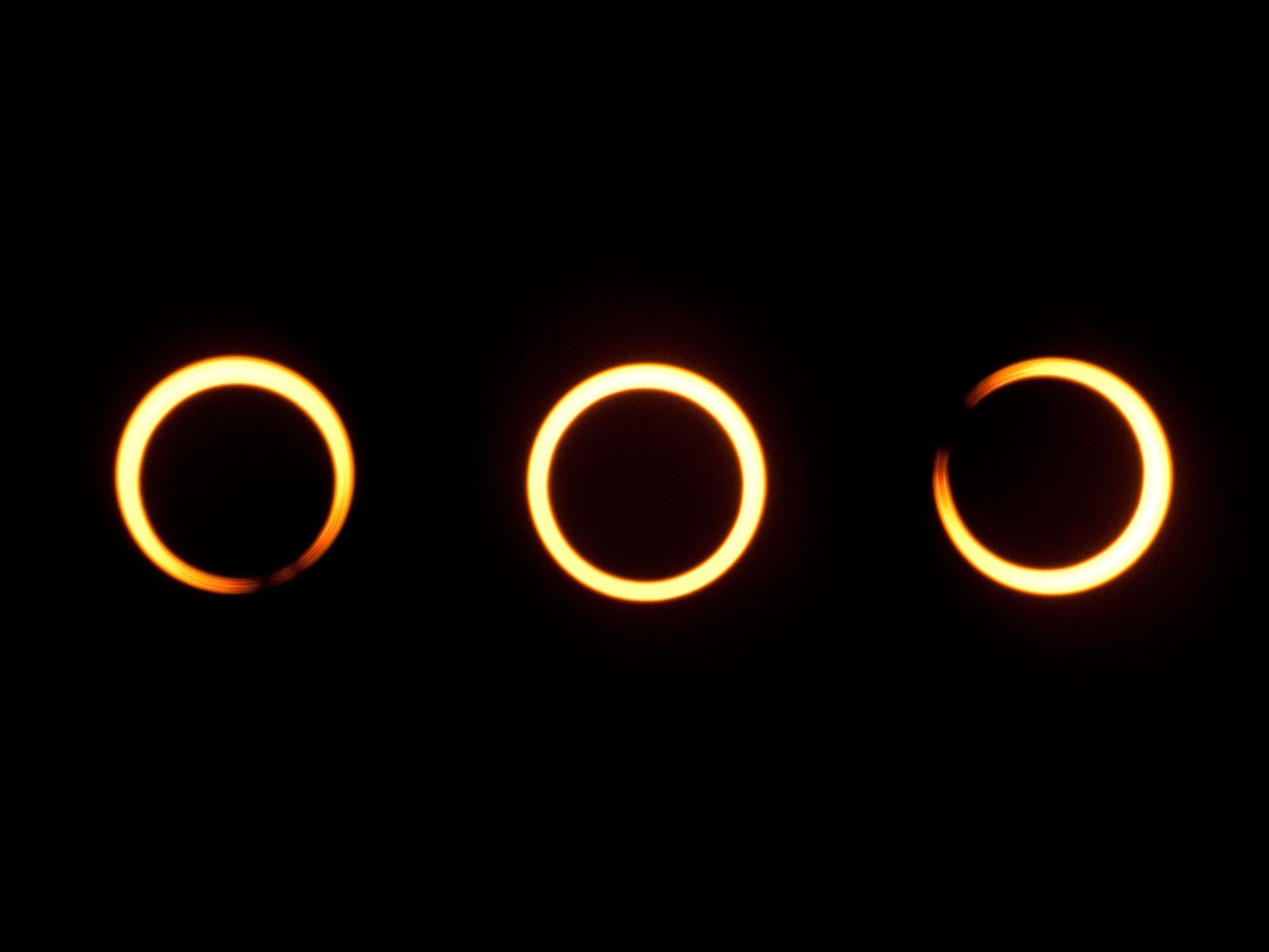
A rare type of solar eclipse that creates a “ring of fire” around the moon is set to take place this weekend, passing over large parts of the Earth.
The spectacular effect of the so-called annular eclipse is created when the Moon is further away than usual from the Earth, meaning it is unable to completely block out the Sun.
At the point of totality – when the Earth, Moon and Sun are aligned – 0.6 per cent of the Sun will remain visible on the periphery of the Moon's edges.
The path of the total eclipse on 21 June will pass directly over 12 countries and territories: Democratic Republic of Congo, South Sudan, Ethiopia, Eritrea, Yemen, Oman, Pakistan, India, Nepal, China, Taiwan and Guam.
It will also be partially visible as far north as Europe and Siberia, and as far south as Australia – but only just.
Those unable to witness the event in person will be able to watch a free live stream broadcast by Timeanddate.com.
Anyone viewing the eclipse from the ground is advised to use eye protection to avoid causing serious damage to their eyes.
Wearing specialised eclipse viewing glasses make it possible to look directly at the sun, while equipment like pinhole projectors allow people to see a projection of the sun.
These can be made using a couple of pieces of card or paper, using one to project the image of the sun through a pin-sized hole, and the other to project the image onto.
It is also possible to view the eclipse using a camera with the correct settings. To take a photo, the camera needs to a small aperture and an extremely short shutter speed.
Digital camera maker Nikon recommends using an aperture of between f/8 and f/16, and a shutter speed from 1/4000 second to 1/30 second.
The totality phase of the eclipse will only be visible for a fraction of a second, however the full process of the Moon passing in front of the Sun will take several minutes.
Created with Sketch.
Created with Sketch.
1/12
A handout photo made available by NASA shows the Moon as it starts passing in front of the Sun during a solar eclipse from Ross Lake, Northern Cascades National Park, Washington, USA, 21 August 2017. The 21 August 2017 total solar eclipse will last a maximum of 2 minutes 43 seconds and the thin path of totality will pass through portions of 14 US states, according to the National Aeronautics and Space Administration (NASA)
EPA
2/12
The sun is projected on the ground glass (bottom) as photographer C.D. Olsen adjusts his replica of the Kew Photo Heliograph camera, which he will use to make a glass plate photograph of the total solar eclipse, outside the football stadium at Southern Illinois University in Carbondale, Illinois, U.S
REUTERS
3/12
The sun emerges through clouds and fog cover before the solar eclipse in Depoe Bay, Oregon
REUTERS
4/12
A boy uses solar viewing glasses as the sun emerges through fog cover before the solar eclipse in Depoe Bay, Oregon
REUTERS
5/12
First responders and city officials man the emergency operations center in Charleston, South Carolina, on the day of the total solar eclipse
AFP/Getty Images
6/12
A man looks through his solar viewing glasses after purchasing them to watch the total solar eclipse in New York City
REUTERS
7/12
People are seen lining up outside the Smithsonian's Air and Space Museum as a sign indicates there are no more eclipse glasses on the National Mall before an eclipse August 21, 2017 in Washington, DC. The Sun started to vanish behind the Moon as the partial phase of the so-called Great American Eclipse began Monday, with millions of eager sky-gazers soon to witness "totality" across the nation for the first time in nearly a century
AFP/Getty Images
8/12
Solar Eclipse in Depoe Bay, Oregon, U.
REUTERS
9/12
People watch the start of the solar eclipse and raise their hands in prayer in an eclipse viewing event led by Native American elders, at Big Summit Prairie ranch in Oregon's Ochoco National Forest near the city of Mitchell on August 21, 2017. The Sun started to vanish behind the Moon as the partial phase of the so-called Great American Eclipse began Monday, with millions of eager sky-gazers soon to witness "totality" across the nation for the first time in nearly a century
AFP/Getty Images
10/12
People line up on a bridge as the sun emerges through fog cover before the solar eclipse in Depoe Bay, Oregon, U.S
REUTERS
11/12
The Sun rises behind Jack Mountain ahead of the solar eclipse in Ross Lake, Northern Cascades National Park, Washington, U.S
REUTERS
12/12
The sun rises over Grand Teton National Park on August 21, 2017 outside Jackson, Wyoming. Thousands of people have flocked to the Jackson and Teton National Park area for the 2017 solar eclipse which will be one of the areas that will experience a 100% eclipse
Getty Images
1/12
A handout photo made available by NASA shows the Moon as it starts passing in front of the Sun during a solar eclipse from Ross Lake, Northern Cascades National Park, Washington, USA, 21 August 2017. The 21 August 2017 total solar eclipse will last a maximum of 2 minutes 43 seconds and the thin path of totality will pass through portions of 14 US states, according to the National Aeronautics and Space Administration (NASA)
EPA
2/12
The sun is projected on the ground glass (bottom) as photographer C.D. Olsen adjusts his replica of the Kew Photo Heliograph camera, which he will use to make a glass plate photograph of the total solar eclipse, outside the football stadium at Southern Illinois University in Carbondale, Illinois, U.S
REUTERS
3/12
The sun emerges through clouds and fog cover before the solar eclipse in Depoe Bay, Oregon
REUTERS
4/12
A boy uses solar viewing glasses as the sun emerges through fog cover before the solar eclipse in Depoe Bay, Oregon
REUTERS
5/12
First responders and city officials man the emergency operations center in Charleston, South Carolina, on the day of the total solar eclipse
AFP/Getty Images
6/12
A man looks through his solar viewing glasses after purchasing them to watch the total solar eclipse in New York City
REUTERS
7/12
People are seen lining up outside the Smithsonian's Air and Space Museum as a sign indicates there are no more eclipse glasses on the National Mall before an eclipse August 21, 2017 in Washington, DC. The Sun started to vanish behind the Moon as the partial phase of the so-called Great American Eclipse began Monday, with millions of eager sky-gazers soon to witness "totality" across the nation for the first time in nearly a century
AFP/Getty Images
8/12
Solar Eclipse in Depoe Bay, Oregon, U.
REUTERS
9/12
People watch the start of the solar eclipse and raise their hands in prayer in an eclipse viewing event led by Native American elders, at Big Summit Prairie ranch in Oregon's Ochoco National Forest near the city of Mitchell on August 21, 2017. The Sun started to vanish behind the Moon as the partial phase of the so-called Great American Eclipse began Monday, with millions of eager sky-gazers soon to witness "totality" across the nation for the first time in nearly a century
AFP/Getty Images
10/12
People line up on a bridge as the sun emerges through fog cover before the solar eclipse in Depoe Bay, Oregon, U.S
REUTERS
11/12
The Sun rises behind Jack Mountain ahead of the solar eclipse in Ross Lake, Northern Cascades National Park, Washington, U.S
REUTERS
12/12
The sun rises over Grand Teton National Park on August 21, 2017 outside Jackson, Wyoming. Thousands of people have flocked to the Jackson and Teton National Park area for the 2017 solar eclipse which will be one of the areas that will experience a 100% eclipse
Getty Images
In certain areas of Africa, US-based organisation Astronomers Without Borders has been handing out recycled eclipse viewing glasses to people for free.
“Living in such uncertain times, we hope that by sharing across space and time the experience of witnessing the natural beauty of a solar eclipse we can help transcend borders, and bring a sense of peace and togetherness, which is so needed these days,” said Zoe Chee, interim executive director of Astronomers Without Borders.
“Thanks to the generosity of so many across the United States, we are excited to be able to offer access to this amazing celestial phenomenon to those who otherwise would have missed out.”