


 Africana55 Radio
This website uses cookies so that we can provide you with the best user experience possible. Cookie information is stored in your browser and performs functions such as recognising you when you return to our website and helping our team to understand which sections of the website you find most interesting and useful.
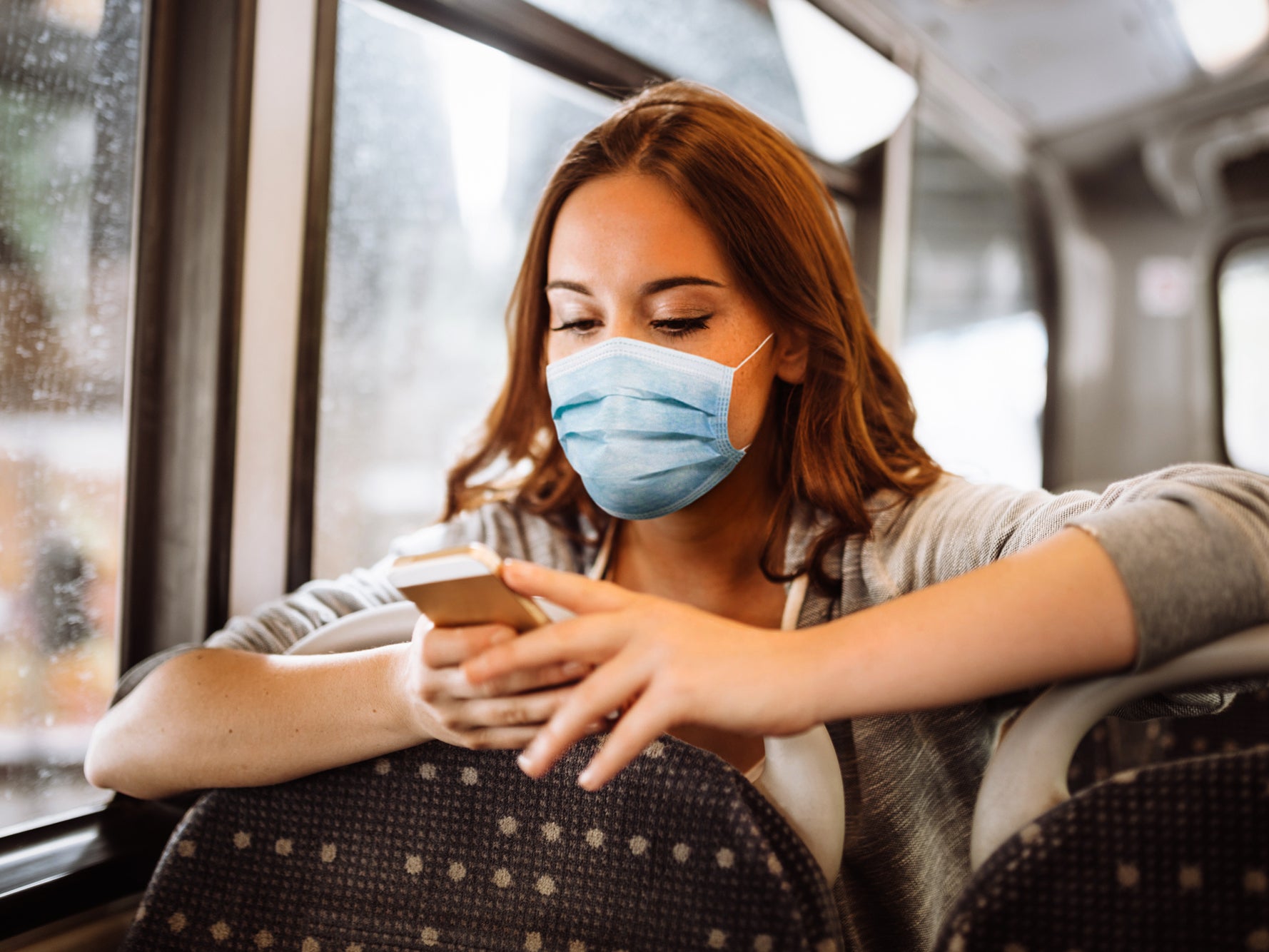
On Tuesday, health secretary Matt Hancock will announce that failure to wear a face covering inside a shop in England, from 24 July, could result in a fine of up to £100.
This follows previous legislation that outlined that face coverings were to become compulsory on public transport from 15 June.
While some members of the public may welcome the new safeguarding measure amid the continued Covid-19 outbreak, others may not feel comfortable with the new rules, perhaps because they have breathing issues or disabilities that make wearing a face covering difficult.
Here is everything you need to know about the new rules and who is exempt from them.
What are the new rules for wearing face coverings?
From 24 July, it will become compulsory for people to cover their faces while in shops in England, including supermarkets.
Members of the public are not required to wear medical masks, as ministers want to preserve these for frontline health staff.
While the new legislation follows in the footsteps of Scotland, where it has been mandatory to wear face coverings in shops since 10 July, it has sparked some confusion - not least around who is responsible for enforcing the rules.
The head of the British Chambers of Commerce urged the government on Tuesday to provide "absolute clarity" to retailers on the new rules.
Created with Sketch.
Created with Sketch.
1/15 Yeside Linney before
The 70-year-old teacher was ‘desperate to come back’ to get her hair done at Purely Natural Salon in Stratford, East London
Chiara Brambilla/The Independent
2/15 Yeside Linney during
She had come for a wash and a braiding, for extensions and to get her new curls set
Chiara Brambilla/The Independent
3/15 Yeside Linney after
Appointments will be very different from now on with limited contact with stylists and staggered arrival times
Chiara Brambilla/The Independent
4/15 Levi Robbins before
Levi Robbins could not wait till the morning to get his haircut at Idris Barbering Co. in Tottenham, north London
Chiara Brambilla/The Independent
5/15 Levi Robbins during
The 29-year-old lab technician said it was important everyone feel safe as lockdown eased
Chiara Brambilla/The Independent
6/15 Levi Robbins after
Before going to the hairdresser on Saturday, Levi said he’d had to endure a series of ‘sketchy haircuts’
Chiara Brambilla/The Independent
7/15 Kate Knight before
Kate Knight said she had been strategising for months about how and when she would be able to get her first haircut after lockdown
Chiara Brambilla/The Independent
8/15 Kate Knight during
The 32-year-old recruiter said it had been difficult to be stuck at home looking in the mirror at her unkempt her
Chiara Brambilla/The Independent
9/15 Kate Knight after
She said people shouldn’t be afraid of going to get their hair cut under social distancing rules; ‘it is just amazing’, she said
Chiara Brambilla/The Independent
10/15 Ethan Defoe before
Ethan Defoe said he had got used to having long hair and that not having a haircut for such a long time had been ‘crazy’ for him
Chiara Brambilla/The Independent
11/15 Ethan Defoe during
The 27-year-old IT project manager said he felt safe under social distancing measures at Idris Barbering Co. in Tottenham, north London
Chiara Brambilla/The Independent
12/15 Ethan Defoe after
He said, for him, the easing of lockdown restrictions had come at the right time; ‘the whole country has been waiting for this,’ he said
Chiara Brambilla/The Independent
13/15 Catia Vieira before
Catia Vieira said getting her hair cut was like ‘one of those little luxuries in life that everybody has been craving for so long’
Chiara Brambilla/The Independent
14/15 Catia Vieira during
The 36-year-old recruiter said people had been looking forward to socialising after experiencing ‘cabin fever’ in lockdown
Chiara Brambilla/The Independent
15/15 Catia Vieira after
She said everyone was going to try social distancing but that it might be difficult in places like pubs and restaurants; ‘It’s not going to happen, especially after a few glasses of wine,’ she said
Chiara Brambilla/The Independent
1/15 Yeside Linney before
The 70-year-old teacher was ‘desperate to come back’ to get her hair done at Purely Natural Salon in Stratford, East London
Chiara Brambilla/The Independent
2/15 Yeside Linney during
She had come for a wash and a braiding, for extensions and to get her new curls set
Chiara Brambilla/The Independent
3/15 Yeside Linney after
Appointments will be very different from now on with limited contact with stylists and staggered arrival times
Chiara Brambilla/The Independent
4/15 Levi Robbins before
Levi Robbins could not wait till the morning to get his haircut at Idris Barbering Co. in Tottenham, north London
Chiara Brambilla/The Independent
5/15 Levi Robbins during
The 29-year-old lab technician said it was important everyone feel safe as lockdown eased
Chiara Brambilla/The Independent
6/15 Levi Robbins after
Before going to the hairdresser on Saturday, Levi said he’d had to endure a series of ‘sketchy haircuts’
Chiara Brambilla/The Independent
7/15 Kate Knight before
Kate Knight said she had been strategising for months about how and when she would be able to get her first haircut after lockdown
Chiara Brambilla/The Independent
8/15 Kate Knight during
The 32-year-old recruiter said it had been difficult to be stuck at home looking in the mirror at her unkempt her
Chiara Brambilla/The Independent
9/15 Kate Knight after
She said people shouldn’t be afraid of going to get their hair cut under social distancing rules; ‘it is just amazing’, she said
Chiara Brambilla/The Independent
10/15 Ethan Defoe before
Ethan Defoe said he had got used to having long hair and that not having a haircut for such a long time had been ‘crazy’ for him
Chiara Brambilla/The Independent
11/15 Ethan Defoe during
The 27-year-old IT project manager said he felt safe under social distancing measures at Idris Barbering Co. in Tottenham, north London
Chiara Brambilla/The Independent
12/15 Ethan Defoe after
He said, for him, the easing of lockdown restrictions had come at the right time; ‘the whole country has been waiting for this,’ he said
Chiara Brambilla/The Independent
13/15 Catia Vieira before
Catia Vieira said getting her hair cut was like ‘one of those little luxuries in life that everybody has been craving for so long’
Chiara Brambilla/The Independent
14/15 Catia Vieira during
The 36-year-old recruiter said people had been looking forward to socialising after experiencing ‘cabin fever’ in lockdown
Chiara Brambilla/The Independent
15/15 Catia Vieira after
She said everyone was going to try social distancing but that it might be difficult in places like pubs and restaurants; ‘It’s not going to happen, especially after a few glasses of wine,’ she said
Chiara Brambilla/The Independent
Who is exempt from wearing face coverings?
Following the announcement that face coverings were to become mandatory on public transport in England, guidelines were released outlining individuals who were exempt from the rule.
These included children under the age of 11; people who cannot put on, wear or remove a face covering without experiencing “severe distress”; individuals with physical or mental disabilities who may have an issue with wearing a face coverings; people who communicate with others through lip-reading; those who are “travelling to avoid injury, or to escape a risk of harm, and do not have a face covering with them”; and individuals who need to remove their face coverings while taking medication.
When face coverings become obligatory in shops in England, similar rules will apply, with children under the age of 11, people with certain disabilities and individuals with breathing conditions not required to follow the regulation.
Do face coverings protect against Covid-19?
The World Health Organisation (WHO) states that the use of a face covering on its own ”is not sufficient to provide an adequate level of protection against Covid-19”.
“You should also maintain a minimum physical distance of at least one metre from others, frequently clean your hands and avoid touching your face and mask,” the WHO says.
Professor David Heymann, of the London School of Hygiene and Tropical Medicine, explained that the use of masks in non-medical settings are “only for the protection of others, not for the protection of oneself”.
On 21 April the government’s DELVE ( Data Evaluation and Learning for Viral Epidemics group) in the Royal Society, said: “Face masks offer an important tool for managing community transmission of Covid19 within the general population.
“Our analysis suggests that their use could reduce onward transmission by asymptomatic and pre-symptomatic wearers if widely used, contrasting to the standard use of masks for the protection of wearers. If used widely and correctly, face masks, including homemade cloth masks, can reduce viral transmission.”
On the government website, it agrees: “The evidence suggests that face coverings can help us protect each other and reduce the spread of the disease if someone is suffering from coronavirus, but not showing symptoms.”