


 Africana55 Radio

This website uses cookies so that we can provide you with the best user experience possible. Cookie information is stored in your browser and performs functions such as recognising you when you return to our website and helping our team to understand which sections of the website you find most interesting and useful.
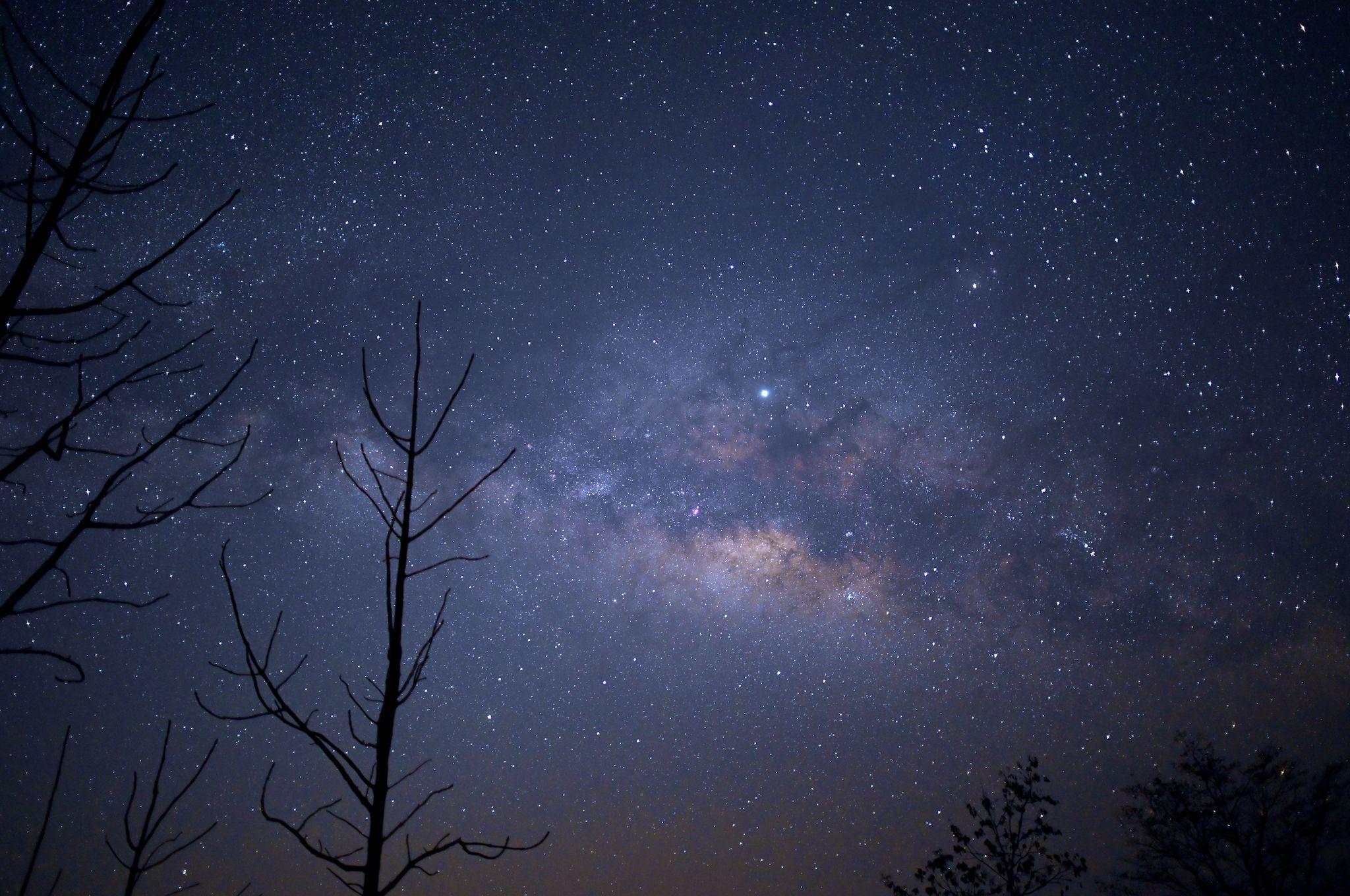
Researchers have found a dense, cold gas that has been shot out from the centre of the Milky Way.
The researchers are unclear how the gas has been sent out with such force from the centre of our galaxy. But it could help reveal where the Milky Way is heading, they said.
Scientists have been examining the wind from the centre of the galaxy over the last decade. One of the great breakthroughs came when they discovered the Fermi Bubbles, which are two giant orbs made up of hot gas and cosmic rays.
But the new discovery indicates there is also cold and very dense gas being shot out from the centre of the galaxy too. Since the cold gas is heavier, it is more difficult to move across the Milky Way.
As it pushes the gas out across the Milky Way, our galaxy could find itself without the resources it needs to go on forming stars, the researchers said.
"Galaxies can be really good at shooting themselves in the foot," Naomi McClure-Griffiths from The Australian National University, one of the researchers on the study, said.
"When you drive out a lot of mass, you're losing some of the material that could be used to form stars, and if you lose enough of it, the galaxy can't form stars at all anymore.
"So, to be able to see hints of the Milky Way losing this star forming gas is kind of exciting - it makes you wonder what's going to happen next!"
There is a massive black hole at the middle of our galaxy, known as Sagittarius A*. That could be responsible for shooting the gas out across the galaxy, or it could have been blown by the vast stars that are also nearby.
"We don't know how either the black hole or the star formation can produce this phenomenon. We're still looking for the smoking gun, but it gets more complicated the more we learn about it," lead author Dr Enrico Di Teodoro from Johns Hopkins University said in a statement.
Created with Sketch.
Created with Sketch.
1/10
Mystic Mountain, a pillar of gas and dust standing at three-light-years tall, bursting with jets of gas from fledgling stars buried within, was captured by Nasa's Hubble Space Telescope in February 2010
Nasa/ESA/STScI
2/10
The first ever selfie taken on an alien planet, captured by Nasa's Curiosity Rover in the early days of its mission to explore Mars in 2012
Nasa/JPL-Caltech/MSSS
3/10
Death of a star: This image from Nasa's Chandra X-ray telescope shows the supernova of Tycho, a star in our Milky Way galaxy
Nasa
4/10
Arrokoth, the most distant object ever explored, pictured here on 1 January 2019 by a camera on Nasa's New Horizons spaceraft at a distance of 4.1 billion miles from Earth
Getty
5/10
An image of the Large Magellanic Cloud galaxy seen in infrared light by the Herschel Space Observatory in January 2012. Regions of space such as this are where new stars are born from a mixture of elements and cosmic dust
Nasa
6/10
The first ever image of a black hole, captured by the Event Horizon telescope, as part of a global collaboration involving Nasa, and released on 10 April 2019. The image reveals the black hole at the centre of Messier 87, a massive galaxy in the nearby Virgo galaxy cluster. This black hole resides about 54 million light-years from Earth
Getty
7/10
Pluto, as pictured by Nasa's New Horizons spacecraft as it flew over the dwarf planet for the first time ever in July 2015
Nasa/APL/SwRI
8/10
A coronal mass ejection as seen by the Chandra Observatory in 2019. This is the first time that Chandra has detected this phenomenon from a star other than the Sun
Nasa
9/10
Dark, narrow, 100 meter-long streaks running downhill on the surface Mars were believed to be evidence of contemporary flowing water. It has since been suggested that they may instead be formed by flowing sand
Nasa/JPL/University of Arizona
10/10
Morning Aurora: Nasa astronaut Scott Kelly captured this photograph of the green lights of the aurora from the International Space Station in October 2015
Nasa/Scott Kelly
1/10
Mystic Mountain, a pillar of gas and dust standing at three-light-years tall, bursting with jets of gas from fledgling stars buried within, was captured by Nasa's Hubble Space Telescope in February 2010
Nasa/ESA/STScI
2/10
The first ever selfie taken on an alien planet, captured by Nasa's Curiosity Rover in the early days of its mission to explore Mars in 2012
Nasa/JPL-Caltech/MSSS
3/10
Death of a star: This image from Nasa's Chandra X-ray telescope shows the supernova of Tycho, a star in our Milky Way galaxy
Nasa
4/10
Arrokoth, the most distant object ever explored, pictured here on 1 January 2019 by a camera on Nasa's New Horizons spaceraft at a distance of 4.1 billion miles from Earth
Getty
5/10
An image of the Large Magellanic Cloud galaxy seen in infrared light by the Herschel Space Observatory in January 2012. Regions of space such as this are where new stars are born from a mixture of elements and cosmic dust
Nasa
6/10
The first ever image of a black hole, captured by the Event Horizon telescope, as part of a global collaboration involving Nasa, and released on 10 April 2019. The image reveals the black hole at the centre of Messier 87, a massive galaxy in the nearby Virgo galaxy cluster. This black hole resides about 54 million light-years from Earth
Getty
7/10
Pluto, as pictured by Nasa's New Horizons spacecraft as it flew over the dwarf planet for the first time ever in July 2015
Nasa/APL/SwRI
8/10
A coronal mass ejection as seen by the Chandra Observatory in 2019. This is the first time that Chandra has detected this phenomenon from a star other than the Sun
Nasa
9/10
Dark, narrow, 100 meter-long streaks running downhill on the surface Mars were believed to be evidence of contemporary flowing water. It has since been suggested that they may instead be formed by flowing sand
Nasa/JPL/University of Arizona
10/10
Morning Aurora: Nasa astronaut Scott Kelly captured this photograph of the green lights of the aurora from the International Space Station in October 2015
Nasa/Scott Kelly
"This is the first time something like this has been observed in our galaxy. We see these kind of processes happening in other galaxies. But, with external galaxies you get much more massive black holes, star formation activity is higher, it makes it easier for the galaxy to expel material.
"And these other galaxies are obviously a long way away, we can't see them in a lot of detail.
"Our own galaxy is almost like a laboratory that we can actually get into and try to understand how things work by looking at them up close."
The paper, 'Cold Gas in the Milky Way’s Nuclear Wind', is published in Nature.