


 Africana55 Radio
This website uses cookies so that we can provide you with the best user experience possible. Cookie information is stored in your browser and performs functions such as recognising you when you return to our website and helping our team to understand which sections of the website you find most interesting and useful.
Boris Johnson is to unveil a “roadmap to recovery” for lifting lockdown restrictions across England on Monday after weeks of a third nationwide lockdown that began in January.
The roadmap will be revealed to MPs in the House of Commons at 3.30pm, and then to the public in a televised broadcast at 7pm.
The Prime Minister is keen to prioritise the return of all pupils to classrooms, and announce plans for socialising and the reopening of non-essential shops and businesses.
But with much of the economy on pause while we wait lockdown out, and with several shops going into administration in recent months, the question of when we are likely to see the reopening of non-essential shops is of concern to many.
Here’s everything you need to know.
What counts as an ‘essential shop’?
Pharmacies are classified as an ‘essential shop'
(Getty Images/iStockphoto)
Food shops, supermarkets, off-licences, pharmacies and garden centres are all categorised as essential retailers.
Market stalls selling essential goods, petrol stations, medial providers, vets, launderettes, banks, post offices and building societies have also been permitted to remain open throughout the lockdown.
When will non-essential shops reopen?
Non-essential shops include everything from clothing, books, department stores and technology stores.
However, the government has not yet indicated when shops might be allowed to open their doors again.
Many are hopeful that shops will be allowed to reopen by early April in a bid to kickstart the economy.
Non-essential shops were also one of the first businesses permitted to reopen after the first lockdown in 2020.
What have the experts said?
A browse in a bookshop sounds like a perfect way to spend an afternoon
(Getty Images/iStockphoto)
The Scientific Advisory Group for Emergencies (Sage) has said that retail has a low impact on the transmission of the virus.
Prior to the last lockdown, Sage recommended that “opening non-essential retail safely would require a significant effort to ensure that environments are appropriate to minimise transmission (for example social distancing and hygiene measures, ventilation)”.
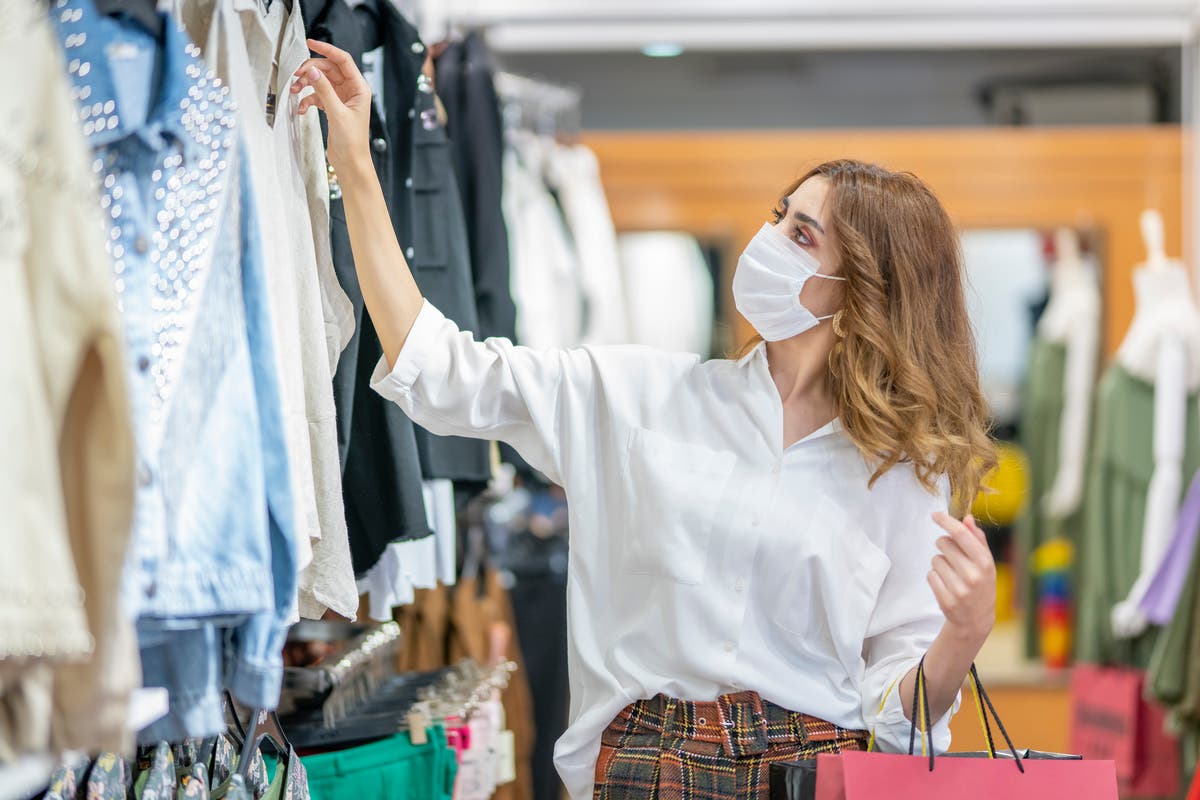
This means that rules relating to social distancing, the wearing of face masks and a limit on the number of people allowed inside a shop are likely to continue when shops do eventually reopen.
How have non-essential shops been impacted by the lockdown?
For many bricks-and-mortar retailers, the pandemic has been the final blow, however.
Small and independent retailers have also been among the hardest-hit businesses during the pandemic.
Not only have they had to conform to government restrictions but – even when allowed to open – many consumers worried about contracting the virus have opted to shop online rather than in-person.