


 Africana55 Radio

This website uses cookies so that we can provide you with the best user experience possible. Cookie information is stored in your browser and performs functions such as recognising you when you return to our website and helping our team to understand which sections of the website you find most interesting and useful.
Bees in Europe are struggling. Some species are already disappearing at rates “consistent with a mass extinction”, due to the climate crisis and other human impacts.
But there is now another major threat to bees’ survival in Europe: killer hornets.
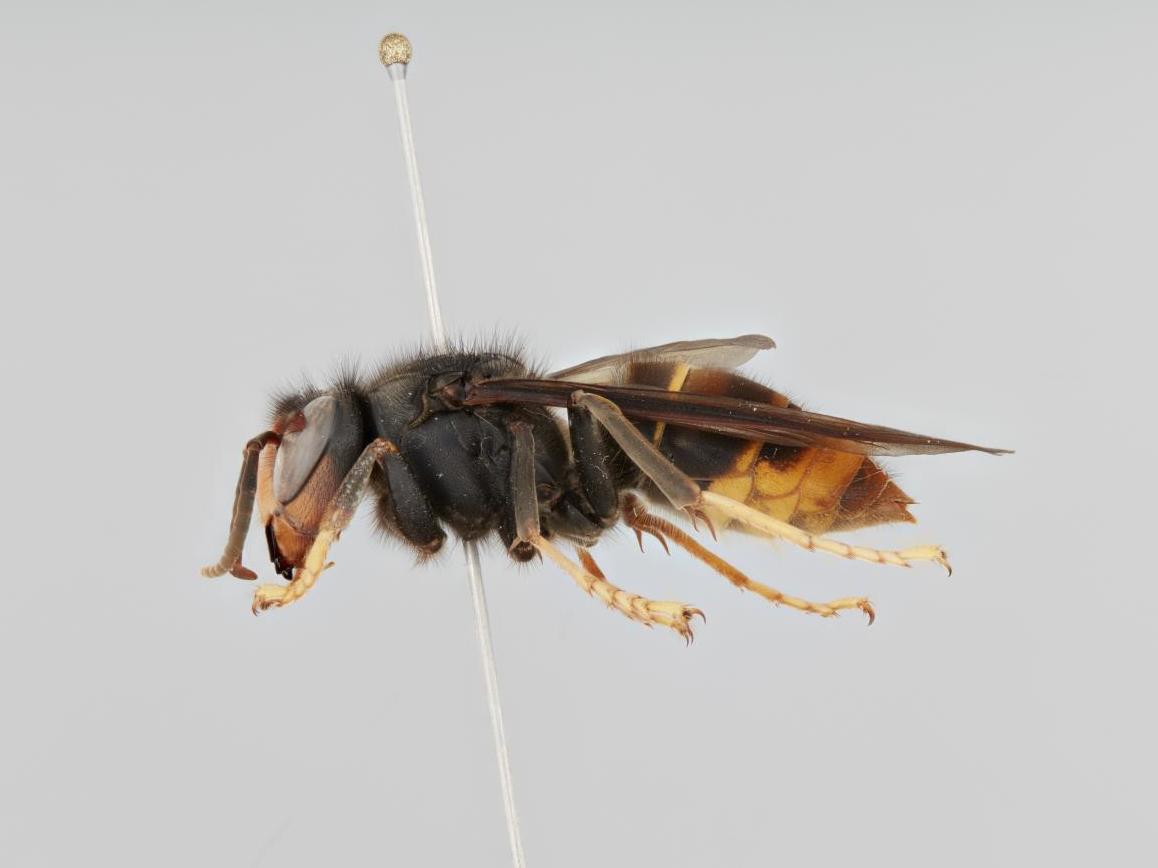
In early September 2019, an Asian hornet (Vespa velutina nigrithorax) was collected alive in Hamburg, Germany (the city has roughly the same latitude as Manchester in the UK).
The find represents the northernmost range of this invasive species so far in Europe and indicates it is spreading further north.
New research by a research group from Hamburg, which also serves to update the occurrence of the dangerous insect, has been published in the open access journal Evolutionary Systematics.
Created with Sketch.
Created with Sketch.
1/20 A cluster fly covered in rain in a forest near the Po River, Italy
Alberto Ghizzi Panizza/ SWNS
2/20 A fly covered in rain drops in a forest near the Po river in Italy
Alberto Ghizzi Panizza/ SWNS
3/20 A Brachycera fly covered in rain drops in a forest near the Po river in Italy
Alberto Ghizzi Panizza/ SWNS
4/20 Two damselflies covered by dew drops on a wild flower
Alberto Ghizzi Panizza/ SWNS
5/20 A spider building a web among moss buds
Alberto Ghizzi Panizza/ SWNS
6/20 A dragonfly in the rain
Alberto Ghizzi Panizza/ SWNS
7/20 A Lightblue dragonfly covered in rain drops
Alberto Ghizzi Panizza/ SWNS
8/20 A damselfly covered in rain
Alberto Ghizzi Panizza/ SWNS
9/20 A fly covered in rain in a forest near the Po River
Alberto Ghizzi Panizza/ SWNS
10/20 A blow fly covered in rain
Alberto Ghizzi Panizza/ SWNS
11/20 A cluster fly covered in rain
Alberto Ghizzi Panizza/ SWNS
12/20 A cluster fly covered in rain
Alberto Ghizzi Panizza/ SWNS
13/20 A theraphosidae spider
Alberto Ghizzi Panizza/ SWNS
14/20 A hornet covered in rain on a wild flower
Alberto Ghizzi Panizza/ SWNS
15/20 A damselfly covered in rain in a forest
Alberto Ghizzi Panizza/ SWNS
16/20 Two damselflies covered in rain
Alberto Ghizzi Panizza/ SWNS
17/20 A fly covered in rain drops
Alberto Ghizzi Panizza/ SWNS
18/20 A Theraphosidae spider in the rain in a forest near the Po River
Alberto Ghizzi Panizza/ SWNS
19/20 A fly covered in rain in a forest near the Po River
Alberto Ghizzi Panizza/ SWNS
20/20 A Ladybird covered in rain drops
Alberto Ghizzi Panizza/ SWNS
1/20 A cluster fly covered in rain in a forest near the Po River, Italy
Alberto Ghizzi Panizza/ SWNS
2/20 A fly covered in rain drops in a forest near the Po river in Italy
Alberto Ghizzi Panizza/ SWNS
3/20 A Brachycera fly covered in rain drops in a forest near the Po river in Italy
Alberto Ghizzi Panizza/ SWNS
4/20 Two damselflies covered by dew drops on a wild flower
Alberto Ghizzi Panizza/ SWNS
5/20 A spider building a web among moss buds
Alberto Ghizzi Panizza/ SWNS
6/20 A dragonfly in the rain
Alberto Ghizzi Panizza/ SWNS
7/20 A Lightblue dragonfly covered in rain drops
Alberto Ghizzi Panizza/ SWNS
8/20 A damselfly covered in rain
Alberto Ghizzi Panizza/ SWNS
9/20 A fly covered in rain in a forest near the Po River
Alberto Ghizzi Panizza/ SWNS
10/20 A blow fly covered in rain
Alberto Ghizzi Panizza/ SWNS
11/20 A cluster fly covered in rain
Alberto Ghizzi Panizza/ SWNS
12/20 A cluster fly covered in rain
Alberto Ghizzi Panizza/ SWNS
13/20 A theraphosidae spider
Alberto Ghizzi Panizza/ SWNS
14/20 A hornet covered in rain on a wild flower
Alberto Ghizzi Panizza/ SWNS
15/20 A damselfly covered in rain in a forest
Alberto Ghizzi Panizza/ SWNS
16/20 Two damselflies covered in rain
Alberto Ghizzi Panizza/ SWNS
17/20 A fly covered in rain drops
Alberto Ghizzi Panizza/ SWNS
18/20 A Theraphosidae spider in the rain in a forest near the Po River
Alberto Ghizzi Panizza/ SWNS
19/20 A fly covered in rain in a forest near the Po River
Alberto Ghizzi Panizza/ SWNS
20/20 A Ladybird covered in rain drops
Alberto Ghizzi Panizza/ SWNS
The Asian hornet is known to prey on many insects, including honeybees and other beneficiary species, has already invaded some parts of southern and central Europe, and is regarded as a potential threat to apiculture and even to ecosystems, scientists said.
Bees are vital pollinators for fruit, vegetables and non-domesticated plants. It is estimated that a third of all the food that we eat depends on pollination mainly by bees.
“Invasive species represent one of the big challenges in a globalised world as they more easily reach new habitats, may change local diversity patterns and often pose threats to native species and economy,” the authors said.
The Asian hornet specimen found in Europe was recorded in south-western France in 2005 and the species started to spread quickly. Over the next few years, it invaded large parts of France and regions of Spain, Portugal, Belgium, Italy, the Netherlands, southern parts of Great Britain and south-western areas in Germany.
The estimated invasion speed for France was estimated at around 78 km/year, but in reality, the spread might be occurring much faster due to human factors.
The research team said it is not yet clear if the collected Asian hornet belonged to an already settled population or if it’s the first record of a new invasion.
“Considering the fast invasion speed of the species and its relatively high climatic tolerance, it’s quite possible that it had reached Hamburg on natural routes and now reproduces there,” the scientists said.
Even though other models suggest the Hamburg area is not suitable for the species today, the new find might be a sign the Asian hornet has begun spreading at a speed above that previously known and even in climatically less favourable regions.
“The current find needs to be taken seriously, no matter if it is only a single specimen or a member of an established population”, said lead researcher Martin Husemann of the University of Hamburg.
Insects are in crisis around the world. More than 40 per cent of insect species are declining and a third are endangered.
Their loss threatens a “catastrophic collapse of nature’s ecosystems”, according to a major international study published last year.