


 Africana55 Radio

This website uses cookies so that we can provide you with the best user experience possible. Cookie information is stored in your browser and performs functions such as recognising you when you return to our website and helping our team to understand which sections of the website you find most interesting and useful.
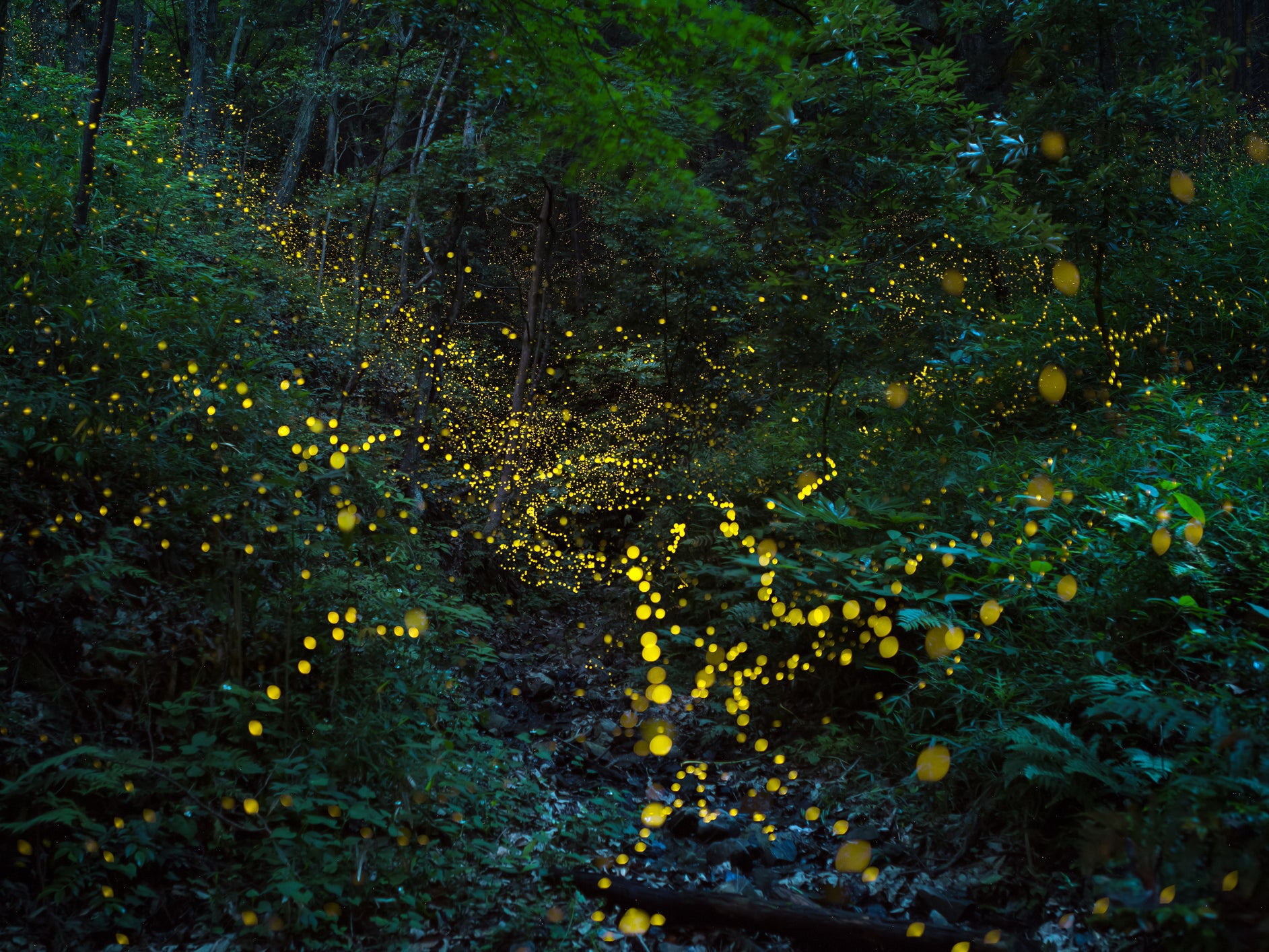
Fireflies, of which there are more than 2,000 species strobing softly throughout dark corners of the world, are facing grave threats to their continued existence due to the impact of humans, a study suggests.
Habitat loss, pesticide use and artificial light are three of the most serious threats to fireflies, with certain species more at risk than others.
The widespread insects are soft-bodied beetles remarkable for their enchanting use of bioluminescence during twilight to attract mates or prey.
The health of firefly populations helps illustrate the impact humans have on sensitive ecosystems.
To better understand what threats are faced by fireflies, a team led by Professor Sara Lewis at Tufts University, Massachusetts, alongside the International Union for the Conservation of Nature, surveyed firefly experts around the world to assess the most prominent threats to survival for their local species.
Created with Sketch.
Created with Sketch.
1/20 Long-billed Curlew
Long-billed curlews are found around the UK coast in winter and will be protected by several conservation zones
Getty
2/20 Lobster
Lobsters are found all around the UK coast will be protected by several conservation zones
Getty
3/20 Seahorse
Seahorses are found along the south coast of England and Wales and will be protected by several conservation zones
PA
4/20 Starfish
Starfish are found all around the UK coast will be protected by several conservation zones
Herbythyme
5/20 Cuttlefish
Cuttlefish are found around all of the UK coast will be protected by several conservation zones
PA
6/20 Cuckoo wrasse
Cuckoo wrasse are found all around the UK coast will be protected by several conservation zones
Getty
7/20 Lapwing
Lapwings are found on the south west coast in winter and will be protected by several conservation zones
Getty
8/20 Catshark
Catsharks (previously known as dogfish) are found all around the UK coast will be protected by several conservation zones
PA
9/20 Hermit Crab
Hermit crabs are found all around the UK coast will be protected by several conservation zones
S. Rae
10/20 Common eider
Berwick to St Mary's conservation zone off the Northumberland coast has been proposed to protect the common eider
Getty
11/20 Common mussel
Common mussels are found around all of the UK coast will be protected by several conservation zones
Getty
12/20 Sea urchin
Sea urchins are found around most of the UK coast will be protected by several conservation zones
Getty
13/20 Kittiwake
Kittiwakes are found around most of the UK coast will be protected by several conservation zones
Getty
14/20 Tombot Blenny
Tompot blennys are found on the south coast and will be protected by several conservation zones
PA
15/20 Crabs
A variety of crabs are found around all of the UK coast will be protected by several conservation zones
PA
16/20 Black-headed gull
Black-headed gulls are found around all of the UK coast will be protected by several conservation zones
Getty
17/20 Spotted ray
Spotted rays are commonly found on the west coast of the UK and are found around all of the UK coast will be protected by several conservation zones
Getty
18/20 Rock goby fish
Rock goby fish are found in rocky outcrops all around the UK coast will be protected by several conservation zones
Getty
19/20 Fulmar
Fulmars are found around all of the UK coast will be protected by several conservation zones
Getty
20/20 Sea Bass
Sea bass are commonly found around the south and west UK coast and will be protected by several conservation zones
Getty
1/20 Long-billed Curlew
Long-billed curlews are found around the UK coast in winter and will be protected by several conservation zones
Getty
2/20 Lobster
Lobsters are found all around the UK coast will be protected by several conservation zones
Getty
3/20 Seahorse
Seahorses are found along the south coast of England and Wales and will be protected by several conservation zones
PA
4/20 Starfish
Starfish are found all around the UK coast will be protected by several conservation zones
Herbythyme
5/20 Cuttlefish
Cuttlefish are found around all of the UK coast will be protected by several conservation zones
PA
6/20 Cuckoo wrasse
Cuckoo wrasse are found all around the UK coast will be protected by several conservation zones
Getty
7/20 Lapwing
Lapwings are found on the south west coast in winter and will be protected by several conservation zones
Getty
8/20 Catshark
Catsharks (previously known as dogfish) are found all around the UK coast will be protected by several conservation zones
PA
9/20 Hermit Crab
Hermit crabs are found all around the UK coast will be protected by several conservation zones
S. Rae
10/20 Common eider
Berwick to St Mary's conservation zone off the Northumberland coast has been proposed to protect the common eider
Getty
11/20 Common mussel
Common mussels are found around all of the UK coast will be protected by several conservation zones
Getty
12/20 Sea urchin
Sea urchins are found around most of the UK coast will be protected by several conservation zones
Getty
13/20 Kittiwake
Kittiwakes are found around most of the UK coast will be protected by several conservation zones
Getty
14/20 Tombot Blenny
Tompot blennys are found on the south coast and will be protected by several conservation zones
PA
15/20 Crabs
A variety of crabs are found around all of the UK coast will be protected by several conservation zones
PA
16/20 Black-headed gull
Black-headed gulls are found around all of the UK coast will be protected by several conservation zones
Getty
17/20 Spotted ray
Spotted rays are commonly found on the west coast of the UK and are found around all of the UK coast will be protected by several conservation zones
Getty
18/20 Rock goby fish
Rock goby fish are found in rocky outcrops all around the UK coast will be protected by several conservation zones
Getty
19/20 Fulmar
Fulmars are found around all of the UK coast will be protected by several conservation zones
Getty
20/20 Sea Bass
Sea bass are commonly found around the south and west UK coast and will be protected by several conservation zones
Getty
The research, published in the journal Bioscience, “sounds a warning bell” about the insects’ future, highlighting specific threats and the vulnerability of different species across geographical regions.
According to survey respondents, habitat loss is the most critical threat to firefly survival in the majority of geographic regions, followed by light pollution and pesticide use.
“Lots of wildlife species are declining because their habitat is shrinking,” said Professor Lewis.
“So it wasn’t a huge surprise that habitat loss was considered the biggest threat. Some fireflies get hit especially hard when their habitat disappears because they need special conditions to complete their life cycle. For instance, one Malaysian firefly (Pteroptyx tener), famous for its synchronised flash displays, is a mangrove specialist.”
Drastic declines have recently been recorded in this species after the destruction of their mangrove habitat to make way for palm oil plantations and aquaculture farms.
Across the world, light pollution was regarded as the second most serious threat to fireflies.
Artificial light at night has grown exponentially during the last century.
“In addition to disrupting natural biorhythms – including our own – light pollution really messes up firefly mating rituals,” said Avalon Owens, a co-author of the research paper.
Many fireflies rely on bioluminescence to find and attract their mates, and previous work has shown too much artificial light can interfere with these courtship exchanges. Switching to energy efficient, overly bright LEDs is not helping.
“Brighter isn’t necessarily better,” Ms Owens said.
The firefly experts also said the widespread use of pesticides in agriculture was another key threat to firefly survival.
Most insecticide exposure occurs during larval stages, because juvenile fireflies spend up to two years living below ground or under water.
Insecticides such as organophosphates and neonicotinoids are designed to kill pests, yet they also have off-target effects on beneficial insects. While more research is needed, the evidence suggests many commonly used insecticides are harmful to fireflies.
The paper acknowledges previous studies which have quantified firefly population declines, such as those seen in the tourist-attracting synchronous fireflies of Malaysia, and the glowworm Lampyris noctiluca in England.
Numerous anecdotal reports suggest that many other firefly species across a wide range of habitats have also suffered recent declines.
“We really need better long-term data about firefly population trends. This is a place where citizen science efforts like Massachusetts Audubon’s Firefly Watch project can really help,” said Professor Lewis.
The researchers also highlighted risk factors that allow them to predict which species will be most vulnerable when faced with threats like habitat loss or light pollution. For instance, females of the Appalachian blue ghost firefly (Phausis reticulata) are flightless.
“So when their habitat disappears, they can’t just pick up and move somewhere else,” said co-author J Michael Reed, professor of biology at Tufts.
Despite the verdict the researchers remain optimistic about fireflies’ future.
“Here in the US, we’re fortunate to have some robust species like the Big Dipper fireflies (Photinus pyralis),” said Professor Lewis.
“Those guys can survive pretty much anywhere, and they’re beautiful, too.”
By illuminating these threats and evaluating the conservation status of firefly species around the world, researchers aim to preserve the magical lights of fireflies for future generations to enjoy.
“Our goal is to make this knowledge available for land managers, policy makers, and firefly fans everywhere,” said co-author Sonny Wong of the Malaysian Nature Society.
“We want to keep fireflies lighting up our nights for a long, long time.”