


 Africana55 Radio

This website uses cookies so that we can provide you with the best user experience possible. Cookie information is stored in your browser and performs functions such as recognising you when you return to our website and helping our team to understand which sections of the website you find most interesting and useful.
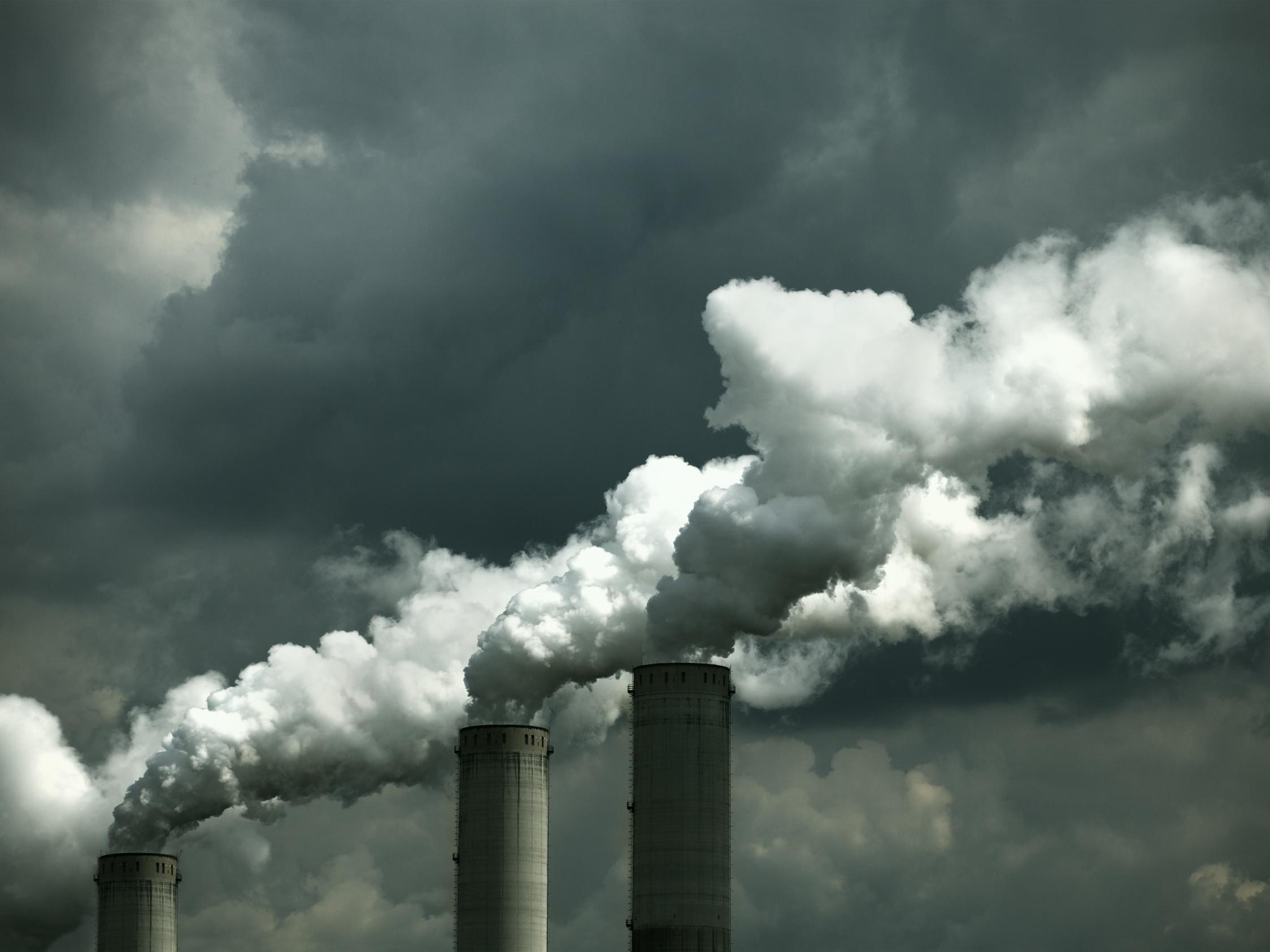
The oil, gas and coal industries are emitting “vastly” more of the potent greenhouse gas methane than was previously thought, and curbing these emissions could provide rapid benefits to the planet, a study has found.
After carbon dioxide, methane is the second biggest contributor to global warming, and levels in the atmosphere have increased by about 150 per cent since the industrial revolution.
Though there is less of it than CO2, methane’s greenhouse effect is around 80 times more potent. And unlike CO2, which can remain in the Earth’s atmosphere for around a century after it is emitted, methane lasts for less than a decade, meaning the impacts of reduction could be felt relatively quickly.
“If we stopped emitting all carbon dioxide today, high carbon dioxide levels in the atmosphere would still persist for a long time,” said University of Rochester researcher Benjamin Hmiel.
“Methane is important to study because if we make changes to our current methane emissions, it’s going to reflect more quickly.”
Created with Sketch.
Created with Sketch.
1/20 California
In this decade, humans have become ever more aware of climate change. Calls for leaders to act echo around the globe as the signs of a changing climate become ever more difficult to ignore
Getty
2/20 Athens, Greece
Fierce wildfires have flared up in numerous countries. The damage being caused is unprecedented: 103 people were killed in wildfires last year in California, one of the places best prepared, best equipped to fight such blazes in the world
AFP/Getty
3/20 Redding, California
Entire towns have been razed. The towns of Redding and Paradise in California were all but eliminated in the 2018 season
AP
4/20 Athens, Greece
While wildfires in Greece (pictured), Australia, Indonesia and many other countries have wrought chaos to infrastructure, economies and cost lives
AFP/Getty
5/20 Carlisle, England
In Britain, flooding has become commonplace. Extreme downpours in Carlisle in the winter of 2015 saw the previous record flood level being eclipsed by two feet
AFP/Getty
6/20 Hebden Bridge, England
Hebden Bridge in West Yorkshire has flooded repeatedly in the past decade, with the worst coming on Christmas Day 2015. Toby Smith of Climate Visuals, an organisation focused on improving how climate change is depicted in the media, says: "Extreme weather and flooding, has and will become more frequent due to climate change. An increase in the severity and distribution of press images, reports and media coverage across the nation has localised the issue. It has raised our emotions, perception and personalised the effects and hazards of climate change."
Getty
7/20 Somerset, England
Out west in Somerset, floods in 2013 led to entire villages being cut off and isolated for weeks
Getty
8/20 Dumfries, Scotland
"In summer 2012, intense rain flooded over 8000 properties. In 2013, storms and coastal surges combined catastrophically with elevated sea levels whilst December 2015, was the wettest month ever recorded. Major flooding events continued through the decade with the UK government declaring flooding as one of the nation's major threats in 2017," says Mr Smith of Climate Visuals
Getty
9/20 London, England
Weather has been more extreme in Britain in recent years. The 'Beast from the East' which arrived in February 2018 brought extraordinarily cold temperatures and high snowfall. Central London (pictured), where the city bustle tends to mean that snow doesn't even settle, was covered in inches of snow for day
PA
10/20 London, England
Months after the cold snap, a heatwave struck Britain, rendering the normally plush green of England's parks in Summer a parched brown for weeks
AFP/Getty
11/20 New South Wales, Australia
Worsening droughts in many countries have been disastrous for crop yields and have threatened livestock. In Australia, where a brutal drought persisted for months last year, farmers have suffered from mental health problems because of the threat to their livelihood
Reuters
12/20 Tonle Sap, Cambodia
Even dedicated climate skeptic Jeremy Clarkson has come to recognise the threat of climate change after visiting the Tonle Sap lake system in Cambodia. Over a million people rely on the water of Tonle Sap for work and sustinence but, as Mr Clarkson witnessed, a drought has severley depleted the water level
Carlo Frem/Amazon
13/20 Addis Ababa, Ethiopia
In reaction to these harbingers of climate obliteration, some humans have taken measures to counter the impending disaster. Ethiopia recently planted a reported 350 million trees in a single day
AFP/Getty
14/20 Morocco
Morocco has undertaken the most ambitious solar power scheme in the world, recently completing a solar plant the size of San Francisco
AFP/Getty
15/20 London, England
Electric cars are taking off as a viable alternative to fossil fuel burning vehicles and major cities across the world are adding charging points to accomodate
AFP/Getty
16/20 Purmerend, The Netherlands
Cities around the world are embracing cycling too, as a clean (and healthy) mode of transport. The Netherlands continues to lead the way with bikes far outnumbering people
Jeroen Much/Andras Schuh
17/20 Xiamen, China
Cycling infrastructure is taking over cities the world over, in the hope of reducing society's dependency on polluting vehicles
Ma Weiwei
18/20 Chennai, India
Despite positive steps being taken, humans continue to have a wildly adverse effect on the climate. There have been numerous major oil spills this decade, the most notable being the BP oil spill in the Gulf of Mexico in 2010
AFP/Getty
19/20 Amazon rainforest, Brazil
More recently, large swathes of the Amazon rainforest were set alight by people to clear land for agriculture
AFP/Getty
20/20 California
This decade may have seen horrors but it has led to an understanding that the next decade must see change if human life is to continue
Getty
1/20 California
In this decade, humans have become ever more aware of climate change. Calls for leaders to act echo around the globe as the signs of a changing climate become ever more difficult to ignore
Getty
2/20 Athens, Greece
Fierce wildfires have flared up in numerous countries. The damage being caused is unprecedented: 103 people were killed in wildfires last year in California, one of the places best prepared, best equipped to fight such blazes in the world
AFP/Getty
3/20 Redding, California
Entire towns have been razed. The towns of Redding and Paradise in California were all but eliminated in the 2018 season
AP
4/20 Athens, Greece
While wildfires in Greece (pictured), Australia, Indonesia and many other countries have wrought chaos to infrastructure, economies and cost lives
AFP/Getty
5/20 Carlisle, England
In Britain, flooding has become commonplace. Extreme downpours in Carlisle in the winter of 2015 saw the previous record flood level being eclipsed by two feet
AFP/Getty
6/20 Hebden Bridge, England
Hebden Bridge in West Yorkshire has flooded repeatedly in the past decade, with the worst coming on Christmas Day 2015. Toby Smith of Climate Visuals, an organisation focused on improving how climate change is depicted in the media, says: "Extreme weather and flooding, has and will become more frequent due to climate change. An increase in the severity and distribution of press images, reports and media coverage across the nation has localised the issue. It has raised our emotions, perception and personalised the effects and hazards of climate change."
Getty
7/20 Somerset, England
Out west in Somerset, floods in 2013 led to entire villages being cut off and isolated for weeks
Getty
8/20 Dumfries, Scotland
"In summer 2012, intense rain flooded over 8000 properties. In 2013, storms and coastal surges combined catastrophically with elevated sea levels whilst December 2015, was the wettest month ever recorded. Major flooding events continued through the decade with the UK government declaring flooding as one of the nation's major threats in 2017," says Mr Smith of Climate Visuals
Getty
9/20 London, England
Weather has been more extreme in Britain in recent years. The 'Beast from the East' which arrived in February 2018 brought extraordinarily cold temperatures and high snowfall. Central London (pictured), where the city bustle tends to mean that snow doesn't even settle, was covered in inches of snow for day
PA
10/20 London, England
Months after the cold snap, a heatwave struck Britain, rendering the normally plush green of England's parks in Summer a parched brown for weeks
AFP/Getty
11/20 New South Wales, Australia
Worsening droughts in many countries have been disastrous for crop yields and have threatened livestock. In Australia, where a brutal drought persisted for months last year, farmers have suffered from mental health problems because of the threat to their livelihood
Reuters
12/20 Tonle Sap, Cambodia
Even dedicated climate skeptic Jeremy Clarkson has come to recognise the threat of climate change after visiting the Tonle Sap lake system in Cambodia. Over a million people rely on the water of Tonle Sap for work and sustinence but, as Mr Clarkson witnessed, a drought has severley depleted the water level
Carlo Frem/Amazon
13/20 Addis Ababa, Ethiopia
In reaction to these harbingers of climate obliteration, some humans have taken measures to counter the impending disaster. Ethiopia recently planted a reported 350 million trees in a single day
AFP/Getty
14/20 Morocco
Morocco has undertaken the most ambitious solar power scheme in the world, recently completing a solar plant the size of San Francisco
AFP/Getty
15/20 London, England
Electric cars are taking off as a viable alternative to fossil fuel burning vehicles and major cities across the world are adding charging points to accomodate
AFP/Getty
16/20 Purmerend, The Netherlands
Cities around the world are embracing cycling too, as a clean (and healthy) mode of transport. The Netherlands continues to lead the way with bikes far outnumbering people
Jeroen Much/Andras Schuh
17/20 Xiamen, China
Cycling infrastructure is taking over cities the world over, in the hope of reducing society's dependency on polluting vehicles
Ma Weiwei
18/20 Chennai, India
Despite positive steps being taken, humans continue to have a wildly adverse effect on the climate. There have been numerous major oil spills this decade, the most notable being the BP oil spill in the Gulf of Mexico in 2010
AFP/Getty
19/20 Amazon rainforest, Brazil
More recently, large swathes of the Amazon rainforest were set alight by people to clear land for agriculture
AFP/Getty
20/20 California
This decade may have seen horrors but it has led to an understanding that the next decade must see change if human life is to continue
Getty
Levels of methane in the atmosphere are still rising, but until now it has been difficult to determine exactly where the emissions are coming from as methane can be emitted in two distinct ways.
These are: through biological activity on the surface of the planet – such as agriculture, from wetlands, from paddyfields and landfill – and it is also produced by industrial burning of fossil fuels.
The new research has allowed scientists to unpick the difference between the methane produced by burning fossil fuels, and the methane produced biologically, allowing us to see for the first time the extent to which fossil fuels are to blame for introducing damagingly high levels of methane into the atmosphere.
The research has considerable implications.
“Placing stricter methane emission regulations on the fossil fuel industry will have the potential to reduce future global warming to a larger extent than previously thought,” said Dr Hmiel.
The contribution of biological methane in the atmosphere can be detected by a chemical signature – the presence of carbon-14 – a rare radioactive isotope.
But in fossil fuels, the hydrocarbons required to leave this signature have all broken down – as the organic matter has spent millions of years underground, so no carbon-14 isotopes are left.
While scientists are able to accurately measure total amounts of methane in the atmosphere, the carbon-14 signature, or lack thereof, provides an indication as to how much methane is coming from fossil fuel extraction.
In order to more accurately separate the natural and anthropogenic components, Dr Hmiel and his colleagues turned to the past, by drilling and collecting ice cores from Greenland.
The ice core samples act like time capsules, containing bubbles with small quantities of ancient air trapped inside.
The researchers used a melting chamber to extract the ancient air from the bubbles in order to study its chemical composition.
The researchers focused on measuring the composition of air from the early 18th century – before the start of the Industrial Revolution – to the present day.
Humans did not begin using fossil fuels in significant amounts until the mid-19th century.
Measuring emission levels before this time period allows researchers to identify the natural emissions present at the time without the fossil fuels in today’s atmosphere.
There is no evidence to suggest natural fossil methane emissions can vary over the course of a few centuries.
By measuring the carbon-14 isotopes in air from more than 200 years ago, the researchers found that almost all of the methane emitted to the atmosphere was biological in nature until about 1870.
At this point the fossil fuel methane component began to rise rapidly. The timing coincides with a sharp increase in the use of fossil fuels.
The researchers said their findings indicate levels of biologically released fossil methane – by natural processes such as venting – are about 10 times lower than previous research reported.
Meanwhile the burning of fossil fuels by humans is contributing between 25 – 40 per cent more methane than previously reported.
The research indicates the energy sector is failing to account for the levels of the colourless, odourless gas it is pumping into the atmosphere, helping to heat the planet.
Dr Hmeil said the findings were positive.
“I don’t want to get too hopeless on this because my data does have a positive implication: most of the methane emissions are anthropogenic, so we have more control. If we can reduce our emissions, it’s going to have more of an impact.”
The research is published in the journal Nature.