


 Africana55 Radio
This website uses cookies so that we can provide you with the best user experience possible. Cookie information is stored in your browser and performs functions such as recognising you when you return to our website and helping our team to understand which sections of the website you find most interesting and useful.
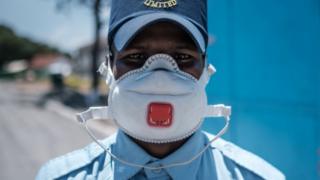 Image copyright AFP
Several African states have imposed far-reaching restrictions in a bid to curb the spread of coronavirus.
South Africa has announced a ban on travel from the worst-affected countries and has banned gatherings of more than 100, while Kenya has also imposed sweeping travel restrictions.
The measures are an attempt to prevent a major outbreak on a continent with poor health services.
At least 27 African states have so far been affected by the virus.
Liberia, where more than 4,800 died during the Ebola outbreak of 2014 and 2015, has become the latest African state to report a case of coronavirus.
The executive director of the state-run Environmental Protection Agency (EPA), Eugene Nagbe, tested positive after returning from Switzerland on Friday.
In total, more than 300 people have been diagnosed with the virus in Africa. Six deaths have been reported.
Most of the cases involve people arriving from Europe and North America.
But South Africa imposed the most severe restrictions on its citizens since the end of white-minority rule after reporting its first local transmission.
Media playback is unsupported on your device
In an address to the nation on Sunday, President Cyril Ramaphosa declared a national disaster as the number of cases rose to 61.
"Initially, it was people who had travelled out of the country, especially from Italy, who had positively tested for the virus," he said.
"It is concerning that we are now dealing with internal transmission of the virus," Mr Ramaphosa said.
More on Africa and the virus:
What else has South Africa done?
Mr Ramaphosa said he would chair a government command council that would "coordinate all aspects of our extraordinary emergency response".
Among the measures he announced are:
- The closure of nearly half - 35 out of 72 - of South Africa's land border crossings from Monday, along with two of its eight sea ports
- Banning foreign nationals from eight countries - including the UK and US - from entering South Africa from Wednesday
- Advising people to avoid domestic travel
- Shutting all schools with immediate effect until the end of the Easter holidays
- Banning all public gatherings of more than 100 with immediate effect. This forces the cancellation of the biggest annual event in South Africa - an Easter religious service attended by several million followers of the Zionist Christian Church at its headquarters in northern Limpopo province.
President ends 'dithering'
South Africans have been waiting for this moment - of transparency, decisiveness and leadership. President Ramaphosa's strict measures are seen as a clear message that his government is finally taking the coronavirus crisis seriously. There were concerns that it had been dithering since the first case was detected 10 days ago.
But to be fair to the government, South Africa, like much of Africa, has not been severely affected so far. But the mood has changed, with health officials reporting that the number of cases is rising at an alarming rate.
Health Minister Zweli Mkhize has called on South Africans to take responsibility for their health and safety, and that of fellow citizens. And with good reason - the public health sector, which caters for about 80% of the country's mainly poor population, is overstretched. It will not be able to cope with a huge outbreak.
The steps being taken now are aimed at containing the outbreak and protecting vulnerable people. If the crisis worsens it will require building a bridge of compassion between those who have access to good quality private health care and those who do not.
Media playback is unsupported on your device
What has Kenya done?
In an address to the nation, President Uhuru Kenyatta announced:
- A ban on travel from any country that is known to have the virus
- Any Kenyan or foreigner residing in Kenya would have to go into quarantine if they arrives from an affected country
- The closure of all education institutions.
But Kenya's efforts to tackle the global pandemic have been hampered by nurses who have started a go-slow at a coronavirus isolation ward at the Mbagathi Hospital in the capital, Nairobi.
The nurses say there is a shortage of protective gear and they have not received adequate training on how to deal with patients.
The hospital has admitted 22 people who came into contact with the first confirmed case in Kenya.
Meanwhile, a 23-year-old man has been arrested in the eastern town of Mwingi for publishing "false information", Kenya's Directorate of Criminal Investigations said in a tweet:
The man would be charged under cybercrime legislation, and risked a fine of up to $50,000 (£40,000) or a maximum prison sentence of 10 years.
What's happening in other African countries?
Other African states that have announced measures to curb the spread of the virus include:
- Ethiopia - the closure of all schools and a ban on all public gatherings and sporting activities
- Ghana - a ban on all public gatherings and travel from countries with more than 200 cases of coronavirus. As a result, all football matches in the country have been suspended.
- Tunisia - the closure of all borders and the suspension of prayers in mosques
- Mozambique - a ban on all gatherings of more than 300 people
- Morocco and Djibouti - the suspension of all international flights.