


 Africana55 Radio

This website uses cookies so that we can provide you with the best user experience possible. Cookie information is stored in your browser and performs functions such as recognising you when you return to our website and helping our team to understand which sections of the website you find most interesting and useful.
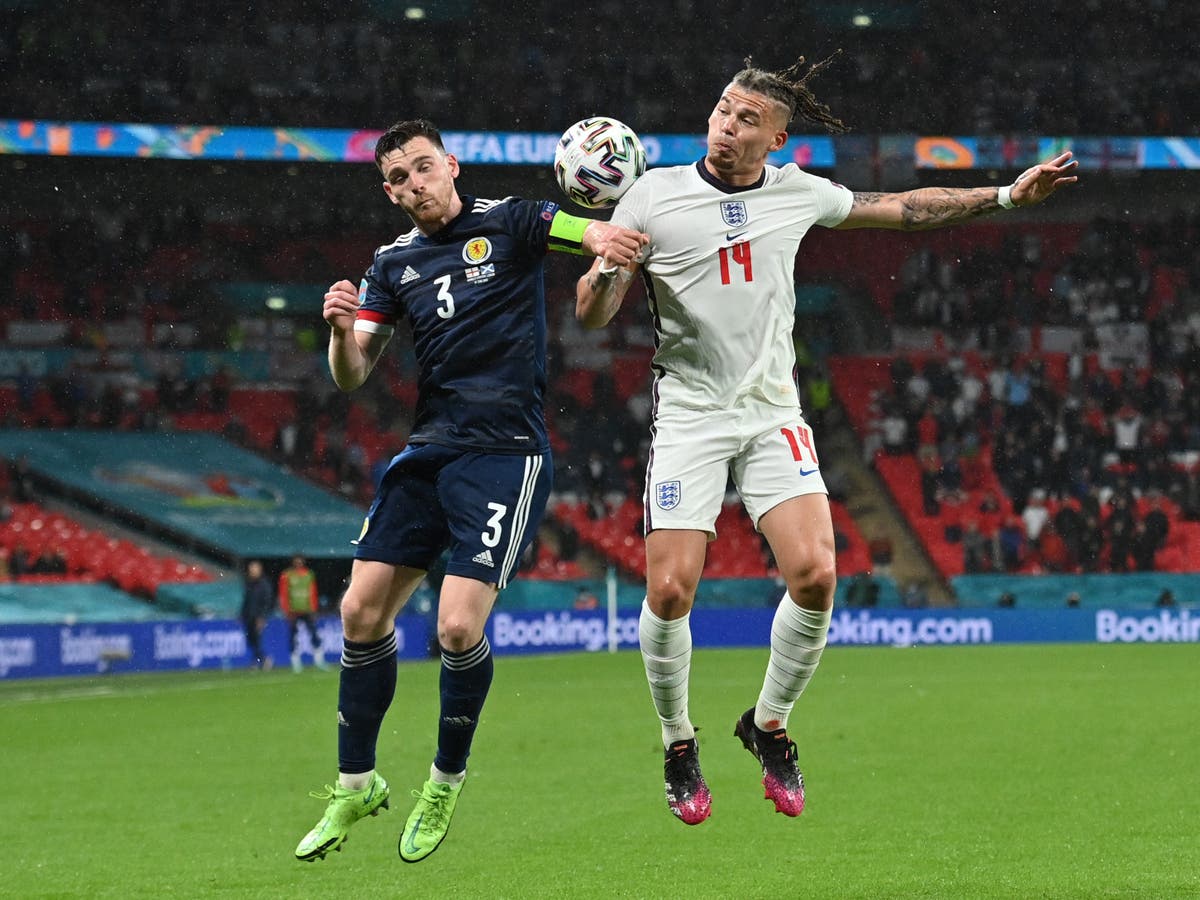
After three seconds of this gritty goalless draw, an airborne Lyndon Dykes cracked his knee into Luke Shaw's pelvis so hard the England left-back crumpled to the floor. Shaw had been picked for his "technical ability", Gareth Southgate explained before kick-off, but as he writhed on the ground under biblical rain, he might have realised he was going to need to fight for the right to play with the ball.
It was a revealing moment forewarned by an atmosphere in the capital which had been brooding all day. Scots emerged from trains at Kings Cross Station in waves. Men in kilts captured all four corners Trafalgar Square and flooded Wembley Way. The dressing rooms are a walk from the pitch at Wembley but the players would have heard refrains of "Yes Sir, I Can Boogie" drift down the tunnel. Scotland started the week vowing to give it all they had, almost as if they were convincing themselves their tournament wasn't over. By a fervent kick-off, Ally McCoist declared he was ready to march on Carlisle.
John McGinn and Andrew Robertson both took an early opportunity to introduce themselves to Phil Foden with a crunch, but Scotland's aggression wasn't all mindless bludgeoning of the nearest opponent. The back five billowed up and down as England shifted possession across the pitch, their two wing-backs rushing to squeeze England's wide players, while in midfield Billy Gilmour sharpened his elbows to protect the ball and himself from Chelsea teammate Mason Mount's harrying.
What unfolded was a game of moments, instances which made you hold your breath and clench your fists and churned the stomach. John Stones hung in the air like a freezeframe and smashed a header against the post. Che Adams' shot flew towards goal only to be cleared off the line by Reece James at the last. Stephen O’Donnell’s volley was destined for the corner before a giant Jordan Pickford glove intercepted its trajectory.
As the match began to find some rhythm England found themselves with two significant problems. The first was through the middle: England's high press worked insomuch that it forced Scotland into direct balls forwards but the Stones and Tyrone Mings stayed deep, leaving a chasm between defense and midfield for Scotland's strikers, Dykes and Che Adams, to receive the ball and turn.
The second was on Scotland's flanks. Shaw and James weren't sure whether to run out and squeeze the advancing wingbacks or sit tight alongside their centre-backs. James had the added conundrum of Kieran Tierney whose occasional burst around the outside of Robertson went untracked, left-back layered upon left-back overloading the flank. Tierney's most dangerous moment found Scotland's right wingback O'Donnell darting in from the other side and that perfectly timed volley.
England's best threats came with darts from midfield. James found Phil Foden and then Harry Kane in behind but both had strayed marginally offside. Mount and Kalvin Phillips made dangerous darts down the sides of Scotland's back three but gradually found the channels cut off. For all Southgate's planning, this was not a night for "technical ability". It said everything that, by most accounts, the standout performers were not twinkle-toed Mount and Gilmour but battle-hardened centre-halves, Tyrone Mings and Grant Hanley.
The match finished as it started, with blood and thunder. A royal rumble in the penalty box, bodies strewn, limbs flaying like a cartoon dust-up, until McGinn came and planted the ball into Wembley's highest tier, a souvenir for someone on a night when Scotland won the battle and England got a draw.