


 Africana55 Radio

This website uses cookies so that we can provide you with the best user experience possible. Cookie information is stored in your browser and performs functions such as recognising you when you return to our website and helping our team to understand which sections of the website you find most interesting and useful.
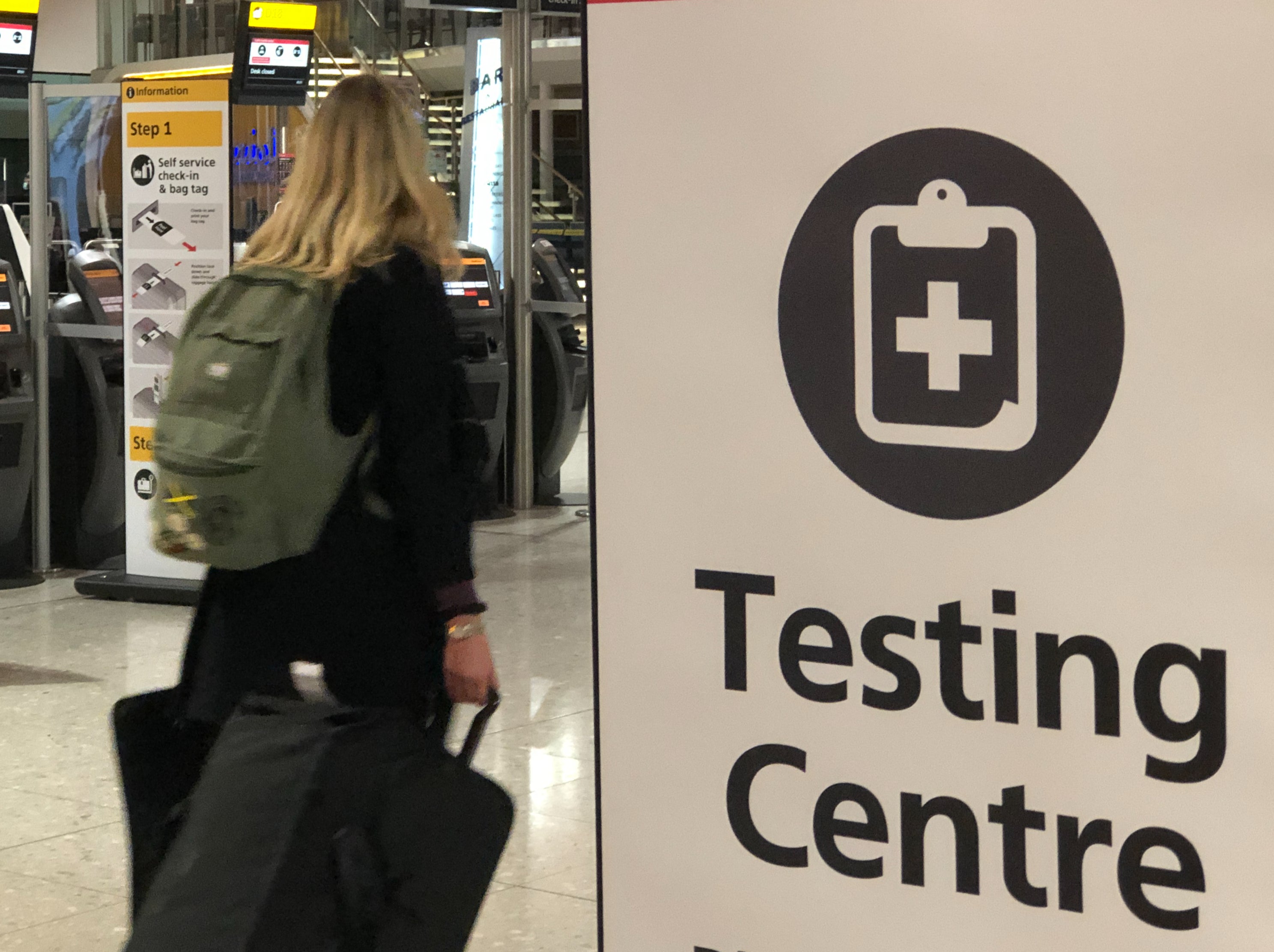
For the past 24 weeks, travellers arriving in the UK from the vast majority of countries have had to spend two weeks in self-isolation. But starting on 15 December, travellers living in England will be able to take a Covid-19 test after five clear days of leaving a quarantine country – ie one that is not on the government’s “travel corridor list”. If it proves negative you can end self-isolation..
How does the system work at present?
At present everyone travelling to the UK – unless they are arriving from one of a handful of countries on the “travel corridors” list – must go straight home and stay there for two weeks, with the timing starting from the day after the date of arrival. So someone arriving on 25 November must remain at the same address up to 0.01am on 10 December.
The rules are far more onerous than the current lockdown regulations in England: the expectation is that you will not leave your home for a fortnight. You should arrange for food to be delivered, and even taking the dog for a walk is against the law.
What’s changing?
From 15 December, everyone travelling to England from abroad will still need to self-isolate. But on the passenger locator form that everyone arriving into the UK has to complete, you will be able to opt for “test to release,” as the new system will be called.
You should book a private test from a company appearing on an official government list before travelling to the UK – though people who return and then decide they want to take a test can update the passenger locator form to that effect.
On arrival you will be expected to self-isolate as normal: the government does not believe testing on arrival, as offered at Heathrow airport and elsewhere, has any merit.
But after completing five full days since you left a quarantine country, can either go to a pre-booked private testing centre, or take a pre-booked test at home and despatch it. If the result is negative, you are free to end self-isolation and take your place in the wide world – or at least to the extent permitted under the prevailing local rules.
On 15 December you fly from Frankfurt to Manchester, departing from Germany at 2.20pm local town (1.20pm GMT). You must complete five full days from this time, which takes you to 1.20pm on 20 December. You can take a test from this moment onwards.
Alternatively, on 15 December you leave Johannesburg on Emirates at 6.50pm local time and fly to Dubai, where you stay for five days. You take the Emirates afternoon flight back to Heathrow, arriving at 6.20pm on 20 December.
Because you have spent time in a quarantine-free country, the UAE, that counts towards your five full days since leaving South Africa. By the time you pick up your baggage, it will be 6.50pm at you will be able to seek an immediate test at the airport’s clinic. If it is negative you have no need to self-isolate.
I am arriving earlier in December. Can I take a test?
Yes. Anyone arriving in England between 1 and 10 December will be able to shorten their quarantine by applying for a test on 15 December. For example, someone who arrived on 1 December would normally be expecting to be able to leave their home at one minute past on 16 December – the two weeks’ self-isolation starts from the day after arrival.
But by taking a test on 15 December, they can end quarantine as soon as a negative test result is received on that date.
Travellers arriving on 11, 12, 13 and 14 December will also be able to shorten the length of quarantine, by booking a test for five days after they were last in a quarantine country.
Why doesn’t this apply to the whole UK?
Test-to-release applies to England only at present. It is thought likely that Scotland, Wales and Northern Ireland, which are responsible for health issues such as quarantine, will follow suit.
But until the devolved administrations sign up then residents of those countries will still be expected to self-isolate for two weeks, even if they’re flying into an English airport.
How much is the test likely to cost – and how long will it take?
The government has opted for a swift and relatively cheap Lamp test – which gives a higher number of false positives and negatives than the “gold standard” PCR test as used by the NHS. It is significantly cheaper – probably between £60 and £120, around half the cost of a private PCR test – and results can be analysed in an hour or less.
Travel firms, whether airports such as Gatwick or Heathrow or tour operators such as Tui and Jet2, may well set up deals that cut the cost.
Of course you can choose not to be tested, in which case you simply carry on with your quarantine for the full two weeks, counted from the day after you arrived in the UK.
Will it make much difference to travellers?
“Test to release” will be welcomed by people returning to the UK for Christmas to see family, because it will save them nine days of staying indoors. But it’s hard to see that business travellers, weekenders or simply people wanting a week in a high-temperature, low-risk destination such as Egypt will regard five days as acceptable.
What does the travel industry think of the move?
Senior figures in airlines, airports and the wider travel industry, who have been seething since blanket quarantine was first imposed in June, have publicly welcomed the announcement – but privately regard it as much too little, much too late. “Even five days’ quarantine is a travel ban in all but name,” said one.
They are continuing to demand that self-isolation should be replaced by a rigorous testing regime.
Why has this taken so long?
The government in London says it has taken six months to be confident about a test-to-release scheme, and that there will now be enough private providers to allow the system to work.