


 Africana55 Radio

This website uses cookies so that we can provide you with the best user experience possible. Cookie information is stored in your browser and performs functions such as recognising you when you return to our website and helping our team to understand which sections of the website you find most interesting and useful.
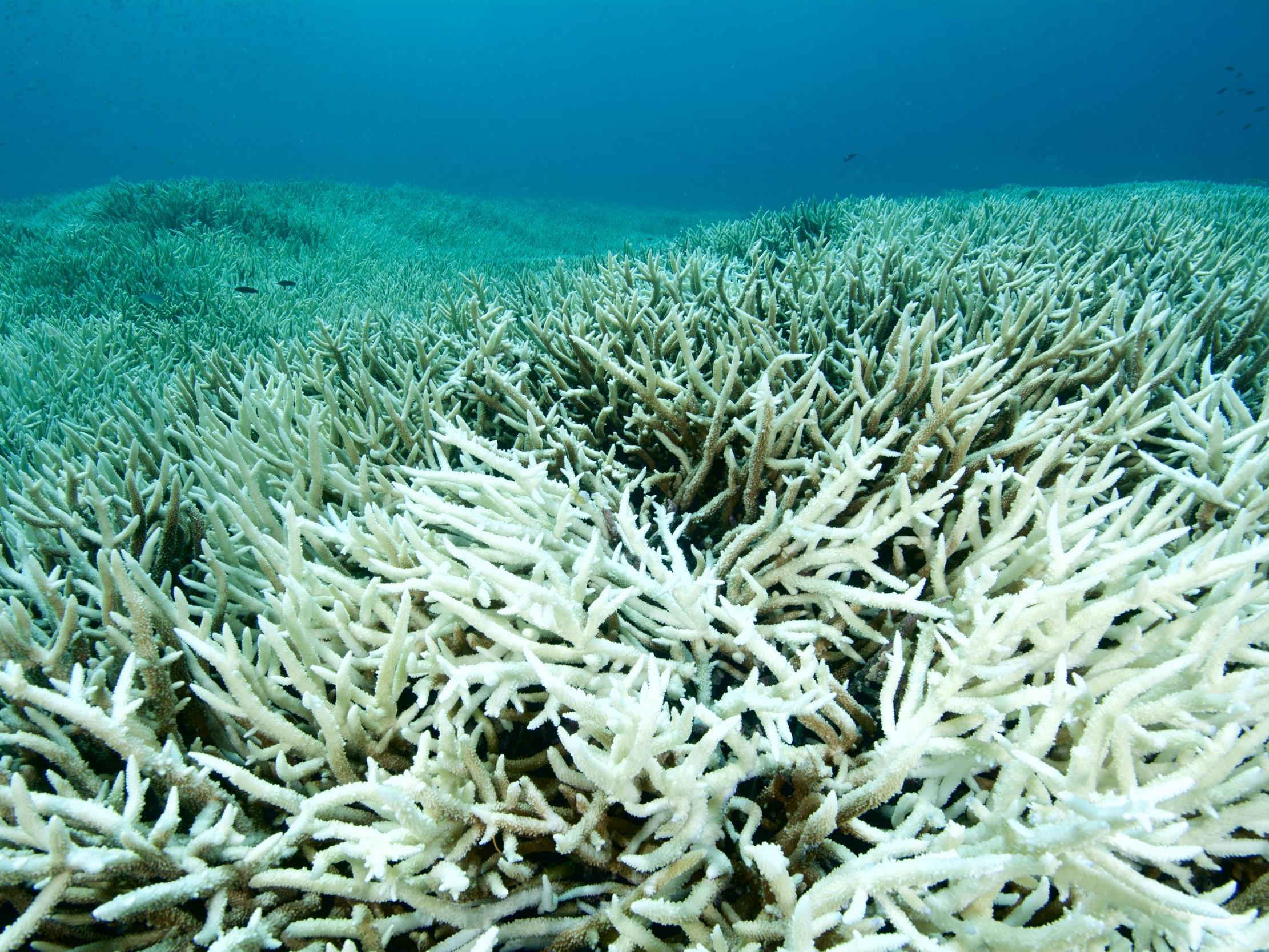
The Great Barrier Reef is facing a critical period of heat stress over the coming weeks following the most widespread coral bleaching the natural wonder has ever endured, scientists said.
David Wachenfeld, chief scientist at the Great Barrier Reef Marine Park Authority, the government agency that manages the coral expanse off northeast Australia, said ocean temperatures over the next month will be crucial to how the reef recovers from heat-induced bleaching.
“The forecasts ... indicate that we can expect ongoing levels of thermal stress for at least the next two weeks and maybe three or four weeks,” Mr Wachenfeld said in a weekly update on the reef's health on Thursday.
“So this still is a critical time for the reef and it is the weather conditions over the next two to four weeks that will determine the final outcome,” he said.
Ocean temperatures across most of the reef were 0.5 to 1.5C above the March average.
Created with Sketch.
Created with Sketch.
1/17
The fish are still living around the reef
Reef Encounter Cruises
2/17
Underwater at the Great Barrier Reef
Quicksilver Group
3/17
Underwater at the Great Barrier Reef, May 2017, showing healthy coral alongside bleached coral
Jenny Peters
4/17
Underwater at the Great Barrier Reef showing a bleached coral
Queensland Tourism
5/17
The iconic heart reef at the Great Barrier Reef
Queensland Tourism
6/17
Underwater at the Great Barrier Reef
Mark Geddes/Quicksilver Group
7/17
There's still beauty to be found
Reef Encounter Cruises
8/17
Scuba diving at the Great Barrier Reef
Queensland Tourism
9/17
Great Barrier Reef coral garden
Queensland Tourism
10/17
An aerial view of the Great Barrier Reef
Queensland Tourism
11/17
The Quicksilver Silversonic ship departing for the Great Barrier Reef from Port Douglas, Australia
Quicksilver Group
12/17
Underwater at the Great Barrier Reef
Reef Encounter Cruises
13/17
Reef Encounter Cruises
14/17
Reef Encounter Cruises
15/17
Reef Encounter Cruises
16/17
Reef Encounter Cruises
17/17
Jenny Cheetham getting to grips wth the reef
Reef Encounter Cruises
1/17
The fish are still living around the reef
Reef Encounter Cruises
2/17
Underwater at the Great Barrier Reef
Quicksilver Group
3/17
Underwater at the Great Barrier Reef, May 2017, showing healthy coral alongside bleached coral
Jenny Peters
4/17
Underwater at the Great Barrier Reef showing a bleached coral
Queensland Tourism
5/17
The iconic heart reef at the Great Barrier Reef
Queensland Tourism
6/17
Underwater at the Great Barrier Reef
Mark Geddes/Quicksilver Group
7/17
There's still beauty to be found
Reef Encounter Cruises
8/17
Scuba diving at the Great Barrier Reef
Queensland Tourism
9/17
Great Barrier Reef coral garden
Queensland Tourism
10/17
An aerial view of the Great Barrier Reef
Queensland Tourism
11/17
The Quicksilver Silversonic ship departing for the Great Barrier Reef from Port Douglas, Australia
Quicksilver Group
12/17
Underwater at the Great Barrier Reef
Reef Encounter Cruises
13/17
Reef Encounter Cruises
14/17
Reef Encounter Cruises
15/17
Reef Encounter Cruises
16/17
Reef Encounter Cruises
17/17
Jenny Cheetham getting to grips wth the reef
Reef Encounter Cruises
In parts of the marine park in the south close to shore which avoided the ravages of previous bleachings, ocean temperatures were 2 to 3C above average.
The authority has received 250 reports of sightings of bleached coral due to elevated ocean temperatures during an unusually hot February.
The 133,360-square mile World Heritage-listed colourful coral network has been devastated by four coral bleaching events since 1998.
The most deadly were the most recent, in consecutive summers in 2016 and 2017.
Scientists fear the latest coral death rate could match those events.
“At the moment, it's definitely the most extensive bleaching event we've ever had,” US National Oceanographic and Atmospheric Administration Coral Reef Watch scientist William Skirving said on Friday.
“It's certainly an end-to-end bleaching event with severe bits at each end and it's not looking good for the southern end, but it really depends on the weather in the next two weeks,” he said.
Ove Hoegh-Guldberg, a scientist from the Australian Research Council Centre for Excellence in Coral Reef Studies, said how much of the bleached coral would recover and how much would die would not be known for weeks.
“I'm very worried about the situation given how warm the temperatures are on the Great Barrier Reef and what the projections are,” Mr Hoegh-Guldberg said.
“If it cools down a bit, they'll recover or, if not, we may head off into something not too different from 2016 and 2017.
“We're right at the fork in the road,” he added.
The Great Barrier Reef Marine Park Authority last year downgraded its outlook for the corals' condition from “poor” to “very poor” due to warming oceans.
Its latest report, which is updated every five years, found the greatest threat to the reef remained climate change.
The other threats are associated with coastal development, land-based water runoff and human activity such as illegal fishing.
Associated Press