


 Africana55 Radio

This website uses cookies so that we can provide you with the best user experience possible. Cookie information is stored in your browser and performs functions such as recognising you when you return to our website and helping our team to understand which sections of the website you find most interesting and useful.
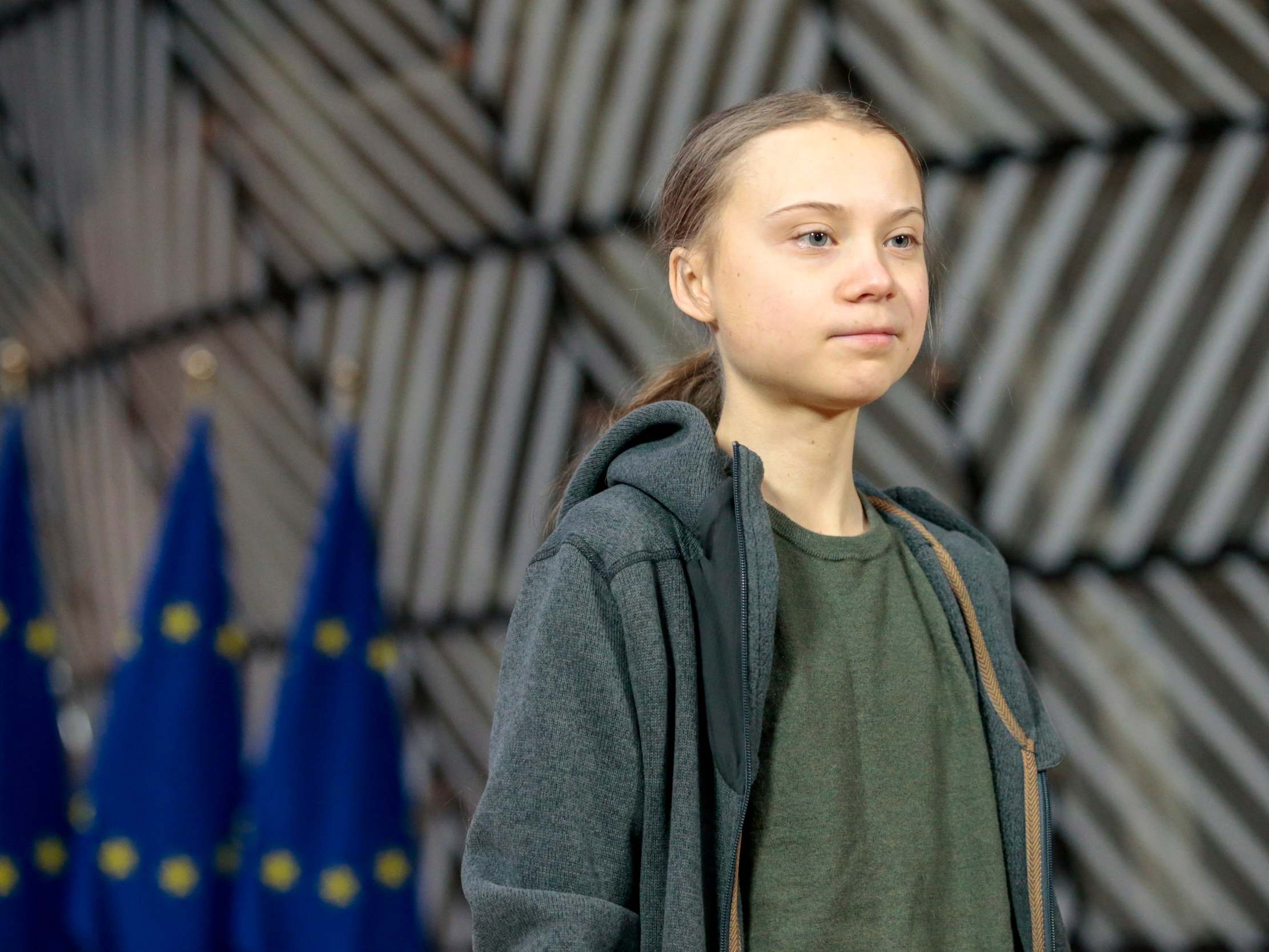
As Greta Thunberg blasted the EU’s climate law “surrender”, she had another important message to broadcast.
“Until we have the technologies that at scale can put our emissions to minus then we must forget about net zero or ‘carbon neutrality’,” the 17-year-old activist wrote in a letter to the bloc’s leaders. “We need real zero.”
The Swede was highlighting an often ignored, but increasingly critical part of Paris Agreement pledges – carbon capture and storage. As the EU celebrated its 2050 net zero target to reduce global warming to 2°C, Ms Thunberg asked how we can possibly continue burning fossil fuels now and defer drastic mitigation until later.
This deferral is seemingly lent legitimacy through negative emission technologies (NETs) – which are included in the majority of 1.5C and 2C pathways by the Intergovernmental Panel on Climate Change (IPCC). The modelling has been interpreted by many policymakers that we can overshoot our dwindling global carbon budget (800Gt until 2100 and counting) if we place faith in untested technologies in the future.
The most prominent of these fixes, bioenergy and carbon capture and storage (BECCS), is besieged by a number of issues, including the sheer land mass required (up to 80 per cent of global cropland). It involves absorbing carbon dioxide through photosynthesis when growing biomass, burning or converting the feed to create power, and sequestering the resulting carbon underground – thus promising the creation of net negative emissions. Other impressive but still underdeveloped methods include directly capturing CO2 from the air before storing it (DACCS), using iron fertilisation to increase oxygen levels in the ocean, or simply planting trees through afforestation and reforestation.
Created with Sketch.
Created with Sketch.
1/20 California
In this decade, humans have become ever more aware of climate change. Calls for leaders to act echo around the globe as the signs of a changing climate become ever more difficult to ignore
Getty
2/20 Athens, Greece
Fierce wildfires have flared up in numerous countries. The damage being caused is unprecedented: 103 people were killed in wildfires last year in California, one of the places best prepared, best equipped to fight such blazes in the world
AFP/Getty
3/20 Redding, California
Entire towns have been razed. The towns of Redding and Paradise in California were all but eliminated in the 2018 season
AP
4/20 Athens, Greece
While wildfires in Greece (pictured), Australia, Indonesia and many other countries have wrought chaos to infrastructure, economies and cost lives
AFP/Getty
5/20 Carlisle, England
In Britain, flooding has become commonplace. Extreme downpours in Carlisle in the winter of 2015 saw the previous record flood level being eclipsed by two feet
AFP/Getty
6/20 Hebden Bridge, England
Hebden Bridge in West Yorkshire has flooded repeatedly in the past decade, with the worst coming on Christmas Day 2015. Toby Smith of Climate Visuals, an organisation focused on improving how climate change is depicted in the media, says: "Extreme weather and flooding, has and will become more frequent due to climate change. An increase in the severity and distribution of press images, reports and media coverage across the nation has localised the issue. It has raised our emotions, perception and personalised the effects and hazards of climate change."
Getty
7/20 Somerset, England
Out west in Somerset, floods in 2013 led to entire villages being cut off and isolated for weeks
Getty
8/20 Dumfries, Scotland
"In summer 2012, intense rain flooded over 8000 properties. In 2013, storms and coastal surges combined catastrophically with elevated sea levels whilst December 2015, was the wettest month ever recorded. Major flooding events continued through the decade with the UK government declaring flooding as one of the nation's major threats in 2017," says Mr Smith of Climate Visuals
Getty
9/20 London, England
Weather has been more extreme in Britain in recent years. The 'Beast from the East' which arrived in February 2018 brought extraordinarily cold temperatures and high snowfall. Central London (pictured), where the city bustle tends to mean that snow doesn't even settle, was covered in inches of snow for day
PA
10/20 London, England
Months after the cold snap, a heatwave struck Britain, rendering the normally plush green of England's parks in Summer a parched brown for weeks
AFP/Getty
11/20 New South Wales, Australia
Worsening droughts in many countries have been disastrous for crop yields and have threatened livestock. In Australia, where a brutal drought persisted for months last year, farmers have suffered from mental health problems because of the threat to their livelihood
Reuters
12/20 Tonle Sap, Cambodia
Even dedicated climate skeptic Jeremy Clarkson has come to recognise the threat of climate change after visiting the Tonle Sap lake system in Cambodia. Over a million people rely on the water of Tonle Sap for work and sustinence but, as Mr Clarkson witnessed, a drought has severley depleted the water level
Carlo Frem/Amazon
13/20 Addis Ababa, Ethiopia
In reaction to these harbingers of climate obliteration, some humans have taken measures to counter the impending disaster. Ethiopia recently planted a reported 350 million trees in a single day
AFP/Getty
14/20 Morocco
Morocco has undertaken the most ambitious solar power scheme in the world, recently completing a solar plant the size of San Francisco
AFP/Getty
15/20 London, England
Electric cars are taking off as a viable alternative to fossil fuel burning vehicles and major cities across the world are adding charging points to accomodate
AFP/Getty
16/20 Purmerend, The Netherlands
Cities around the world are embracing cycling too, as a clean (and healthy) mode of transport. The Netherlands continues to lead the way with bikes far outnumbering people
Jeroen Much/Andras Schuh
17/20 Xiamen, China
Cycling infrastructure is taking over cities the world over, in the hope of reducing society's dependency on polluting vehicles
Ma Weiwei
18/20 Chennai, India
Despite positive steps being taken, humans continue to have a wildly adverse effect on the climate. There have been numerous major oil spills this decade, the most notable being the BP oil spill in the Gulf of Mexico in 2010
AFP/Getty
19/20 Amazon rainforest, Brazil
More recently, large swathes of the Amazon rainforest were set alight by people to clear land for agriculture
AFP/Getty
20/20 California
This decade may have seen horrors but it has led to an understanding that the next decade must see change if human life is to continue
Getty
1/20 California
In this decade, humans have become ever more aware of climate change. Calls for leaders to act echo around the globe as the signs of a changing climate become ever more difficult to ignore
Getty
2/20 Athens, Greece
Fierce wildfires have flared up in numerous countries. The damage being caused is unprecedented: 103 people were killed in wildfires last year in California, one of the places best prepared, best equipped to fight such blazes in the world
AFP/Getty
3/20 Redding, California
Entire towns have been razed. The towns of Redding and Paradise in California were all but eliminated in the 2018 season
AP
4/20 Athens, Greece
While wildfires in Greece (pictured), Australia, Indonesia and many other countries have wrought chaos to infrastructure, economies and cost lives
AFP/Getty
5/20 Carlisle, England
In Britain, flooding has become commonplace. Extreme downpours in Carlisle in the winter of 2015 saw the previous record flood level being eclipsed by two feet
AFP/Getty
6/20 Hebden Bridge, England
Hebden Bridge in West Yorkshire has flooded repeatedly in the past decade, with the worst coming on Christmas Day 2015. Toby Smith of Climate Visuals, an organisation focused on improving how climate change is depicted in the media, says: "Extreme weather and flooding, has and will become more frequent due to climate change. An increase in the severity and distribution of press images, reports and media coverage across the nation has localised the issue. It has raised our emotions, perception and personalised the effects and hazards of climate change."
Getty
7/20 Somerset, England
Out west in Somerset, floods in 2013 led to entire villages being cut off and isolated for weeks
Getty
8/20 Dumfries, Scotland
"In summer 2012, intense rain flooded over 8000 properties. In 2013, storms and coastal surges combined catastrophically with elevated sea levels whilst December 2015, was the wettest month ever recorded. Major flooding events continued through the decade with the UK government declaring flooding as one of the nation's major threats in 2017," says Mr Smith of Climate Visuals
Getty
9/20 London, England
Weather has been more extreme in Britain in recent years. The 'Beast from the East' which arrived in February 2018 brought extraordinarily cold temperatures and high snowfall. Central London (pictured), where the city bustle tends to mean that snow doesn't even settle, was covered in inches of snow for day
PA
10/20 London, England
Months after the cold snap, a heatwave struck Britain, rendering the normally plush green of England's parks in Summer a parched brown for weeks
AFP/Getty
11/20 New South Wales, Australia
Worsening droughts in many countries have been disastrous for crop yields and have threatened livestock. In Australia, where a brutal drought persisted for months last year, farmers have suffered from mental health problems because of the threat to their livelihood
Reuters
12/20 Tonle Sap, Cambodia
Even dedicated climate skeptic Jeremy Clarkson has come to recognise the threat of climate change after visiting the Tonle Sap lake system in Cambodia. Over a million people rely on the water of Tonle Sap for work and sustinence but, as Mr Clarkson witnessed, a drought has severley depleted the water level
Carlo Frem/Amazon
13/20 Addis Ababa, Ethiopia
In reaction to these harbingers of climate obliteration, some humans have taken measures to counter the impending disaster. Ethiopia recently planted a reported 350 million trees in a single day
AFP/Getty
14/20 Morocco
Morocco has undertaken the most ambitious solar power scheme in the world, recently completing a solar plant the size of San Francisco
AFP/Getty
15/20 London, England
Electric cars are taking off as a viable alternative to fossil fuel burning vehicles and major cities across the world are adding charging points to accomodate
AFP/Getty
16/20 Purmerend, The Netherlands
Cities around the world are embracing cycling too, as a clean (and healthy) mode of transport. The Netherlands continues to lead the way with bikes far outnumbering people
Jeroen Much/Andras Schuh
17/20 Xiamen, China
Cycling infrastructure is taking over cities the world over, in the hope of reducing society's dependency on polluting vehicles
Ma Weiwei
18/20 Chennai, India
Despite positive steps being taken, humans continue to have a wildly adverse effect on the climate. There have been numerous major oil spills this decade, the most notable being the BP oil spill in the Gulf of Mexico in 2010
AFP/Getty
19/20 Amazon rainforest, Brazil
More recently, large swathes of the Amazon rainforest were set alight by people to clear land for agriculture
AFP/Getty
20/20 California
This decade may have seen horrors but it has led to an understanding that the next decade must see change if human life is to continue
Getty
Dr Ajay Gambhir of Imperial College London’s Grantham Institute believes NETs can still have a role in our decarbonised future – but that they can prove a “distraction” from the priority of emissions reductions.
“Over-reliance on NETs, none of which have been demonstrated at commercial scale, is risky, especially if used as an excuse to delay emissions reductions today,” he told The Independent.
“There are several cost-effective ways of doing this which aren’t being taken up, such as closing increasingly unprofitable fossil fuel power plants, energy efficiency measures, dietary changes and less profligate consumption. In this sense, NETs are a distraction.”
While BECCS may be the technology most favoured in IPCC pathways, it can currently be found in only one pilot plant at Drax in Selby, where one ton of carbon a day is removed (there are four other plants in operation worldwide). A Drax spokesperson said the technology would have the potential to store 16 million tonnes of carbon a year by 2035 – and that by 2050 BECCS could generate up to 173TWh of electricity by 2050, capturing up to 51 million tonnes of CO2 – around half of the remaining carbon in the economy that the UK will need to capture to become net zero.
The word “potential” has alarm bells ringing for scientists. Professor Simon Lewis, Professor of Global Change Science at University College London, says there is a role for negative emissions technologies – but they should not be considered an excuse for policymakers to continue with “business as usual”.
“These technologies must be in addition to getting emissions down as much as possible and as fast as possible,” he told The Independent.
“Negative emissions technologies are essential to mop up residual emissions and reach net zero, but it is delusional to consider them as a way of allowing for the continued use of large amounts of fossil fuels.”
The Department for Business, Energy and Industrial Strategy has been contacted for a comment.