


 Africana55 Radio

This website uses cookies so that we can provide you with the best user experience possible. Cookie information is stored in your browser and performs functions such as recognising you when you return to our website and helping our team to understand which sections of the website you find most interesting and useful.
“Cheer up love, it might never happen!”
If you want a guaranteed way to grind a woman’s gears, simply use this line beloved by builders everywhere. (Then watch her eyes go black and sparks start issuing from her nose and mouth.)
But patronising and infuriating as it might seem, the sentiment behind this invitation to slap on a smile and adopt a more “hakuna matata” mindset could just be some of the best advice she’ll ever receive.
New research has suggested that, in the ultimate example of a self-fulfilling prophecy, worrying about ageing is speeding up the ageing process in women. That’s right: the thing we’re anxious about is potentially happening faster because of that anxiety.
A recent study from New York University’s School of Global Public Health found that women who reported higher levels of anxiety about ageing exhibited signs of accelerated biological ageing at a cellular level, measured by looking at markers in their blood and using “epigenetic clock” technology.
Published in Psychoneuroendocrinology, a journal dedicated to the mind/body connection, the study came to this conclusion after analysing blood samples from more than 700 women in the US.
“Our research suggests that subjective experiences may be driving objective measures of ageing,” said PhD student and lead study author Mariana Rodrigues. “Ageing-related anxiety is not merely a psychological concern, but may leave a mark on the body with real health consequences.” In other words, the psychological and physiological are inextricably linked.
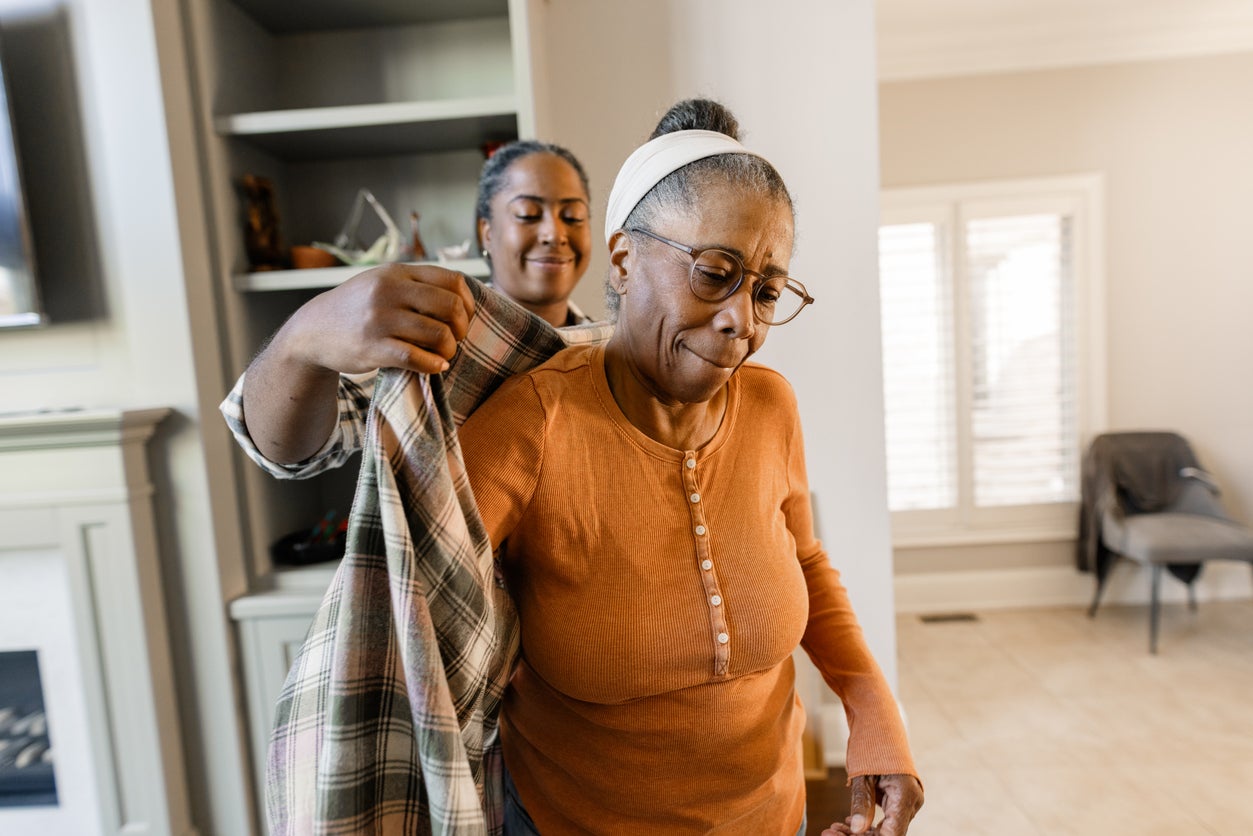
What’s important to note is that these women weren’t anxious about looking older; vanity has nothing to do with it, despite the new wave of miracle facelifts touted by celebrities and “preventative” botox for twenty-somethings being positioned as the norm. It’s also not related to fertility and the “tick-tock, tick-tock!” pressure to procreate imposed by society.
No, the effects of accelerated epigenetic ageing were only observed in women whose fears were rooted in their potential declining health in old age.
But how is anxiety ageing us faster? The key lies in our DNA; more specifically, in our telomeres. These are DNA-protein complexes that sit at the end of chromosomes and protect them from deteriorating, as well as guarding genetic information during cell division. Telomere length is one of the strongest indicators of biological ageing – shortened telomere length is associated with an increased risk of all age-related diseases, including heart disease, cancer and dementia. In fact, once telomeres become too short, cells can no longer divide, leading to tissue dysfunction and cell death.
Though this latest study’s link to a very specific subject of concern is new, the understanding that anxiety can impact lifespan is not. One 2012 study of more than 5,000 women found that a common form of anxiety, known as phobic anxiety, was associated with shorter telomeres in middle-aged and older women. Having a high phobic anxiety level was associated with “significantly” shorter telomere lengths, enough to knock the equivalent of six years off one’s life compared to women who weren’t phobic.
This might seem radical but makes sense when we accept just how much our state of mind affects our physical health
Another piece of research, published by Cambridge University Press in 2018, discovered that patients with anxiety disorder had a shorter telomere length, “suggesting a process of accelerated cellular ageing”. Even more interestingly, patients who had previously suffered from anxiety disorder but were in recovery did not have such shortened telomeres, and the time since remission was positively related to telomere length. The upshot? Biological ageing caused by anxiety may well be reversible.
This might seem radical but makes sense when we accept just how much our state of mind affects our physical health. One major US study at the turn of the century took a huge dataset that had been tracking people for 30 years. It uncovered that those with an optimistic view of getting old would live, on average, 7.5 years longer than those who felt negatively about it, even controlling for factors like socioeconomic status, loneliness and participants’ health at the start of the study.

Dr Becca Levy, who headed up the study, went on to do several further pieces of groundbreaking research, including revealing that people’s attitudes to ageing before they turned 50 could strongly predict their risk of heart disease up to 38 years later, and that people with positive attitudes towards ageing were considerably less likely to develop dementia. Here, there were actual observable differences in the brain: the optimists had maintained a greater volume in the hippocampus, a seahorse-shaped structure essential for making and consolidating memories, as they got older; the pessimists showed greater deterioration. The latter group were also more likely to develop amyloid plaques, believed to destroy brain tissue and a strong indicator of Alzheimer’s.
In fact, one meta analysis of more than 100 studies found a “robust” association between perceptions of ageing and longevity, with around 80 per cent of papers demonstrating link – enough to establish causation.

What is less clear is why anxiety or a dim view on getting older are impacting lifespan, but experts have identified three main mechanisms that drive something called “stereotype embodiment”, a theory first posited by Levy: psychological, behavioural and physiological.
The first refers to internalised beliefs about ageing that change how we think and act – for example, doubting our physical strength or becoming more forgetful because we expect that to happen with age.
The second refers to longer-term “self-fulfilling prophecy” behaviours, whereby people who assume their health will decline with age and believe they have little to no influence over it therefore don’t take preventative measures to slow the ageing process, such as eating well and exercising regularly.
And the third is connected to the physical toll that heightened stress takes. One study found that people who felt negatively about getting old suffered a 40 per cent increase in cortisol levels between their 50th and 80th birthday; the inverse was true for those with a chipper outlook, whose cortisol levels slightly declined in that same period. Over time, sustained cortisol flooding the system can negatively impact the immune and cardiovascular systems and the hippocampus, plus trigger inflammation.
In short, our perception becomes, quite literally, our reality
In short, our perception becomes, quite literally, our reality.
And yet it’s difficult to blame women for being anxious about ageing or having a bleak outlook on potential future health problems.
Just take, for example, the 2009 study that found that a woman is six times more likely to be separated or divorced soon after a diagnosis of cancer or multiple sclerosis than if the man in the relationship is the patient (this stat hit headlines again last year after Stephen Bartlett referenced it on his Diary of a CEO podcast).
Or the fact that women are often much more well-acquainted with the ugly realities of age-related illness – because they’re usually the ones dealing with it ahead of time. In the UK, women are significantly more likely to be providing unpaid care for elderly parents than their male peers. That care is also likely to be more expansive and time-intensive; some 59 per cent of all unpaid carers are female, according to England and Wales Census data, and they’re more likely to provide 20 or more hours of care a week than men.
With all this in mind, it’s hardly surprising that women are concerned about getting older. But, ultimately, trying to develop a sunny outlook on ageing might be the best and most practical way to combat those fears. So cheer up love – it might happen, yes, but worrying about it definitely won’t help.