


 Africana55 Radio

This website uses cookies so that we can provide you with the best user experience possible. Cookie information is stored in your browser and performs functions such as recognising you when you return to our website and helping our team to understand which sections of the website you find most interesting and useful.
There’s much to be said for the wisdom of crowds – though not, perhaps, at Alicante-Elche airport. Follow the hordes spilling out of arrivals and you’ll be deposited, efficiently and unquestioningly, on Spain’s Costa Blanca. For many years, I followed the that trend, elbowing my way onto packed buses heading north to equally rammed beaches.
Eventually, curiosity got the better of me and I turned towards the neglected second half of the airport’s double-barrelled name. One short bus journey later and I had traded the beach for an oasis. A trade I’d make again in a heartbeat.
Located less than 12 miles from Alicante, Elche sits in the same arid interior as its neighbouring towns, which are scorched by summer winds and light on shade. Despite having lived in several places along Spain’s eastern coast, I realised Elche is different within ten minutes of arriving, as I swap[ed a pavement already simmering in the mid-morning sun for a park unlike any other.
Unlike rival cities, the city’s landscape wasn’t designed for pleasure; it was engineered for survival in a hostile climate.
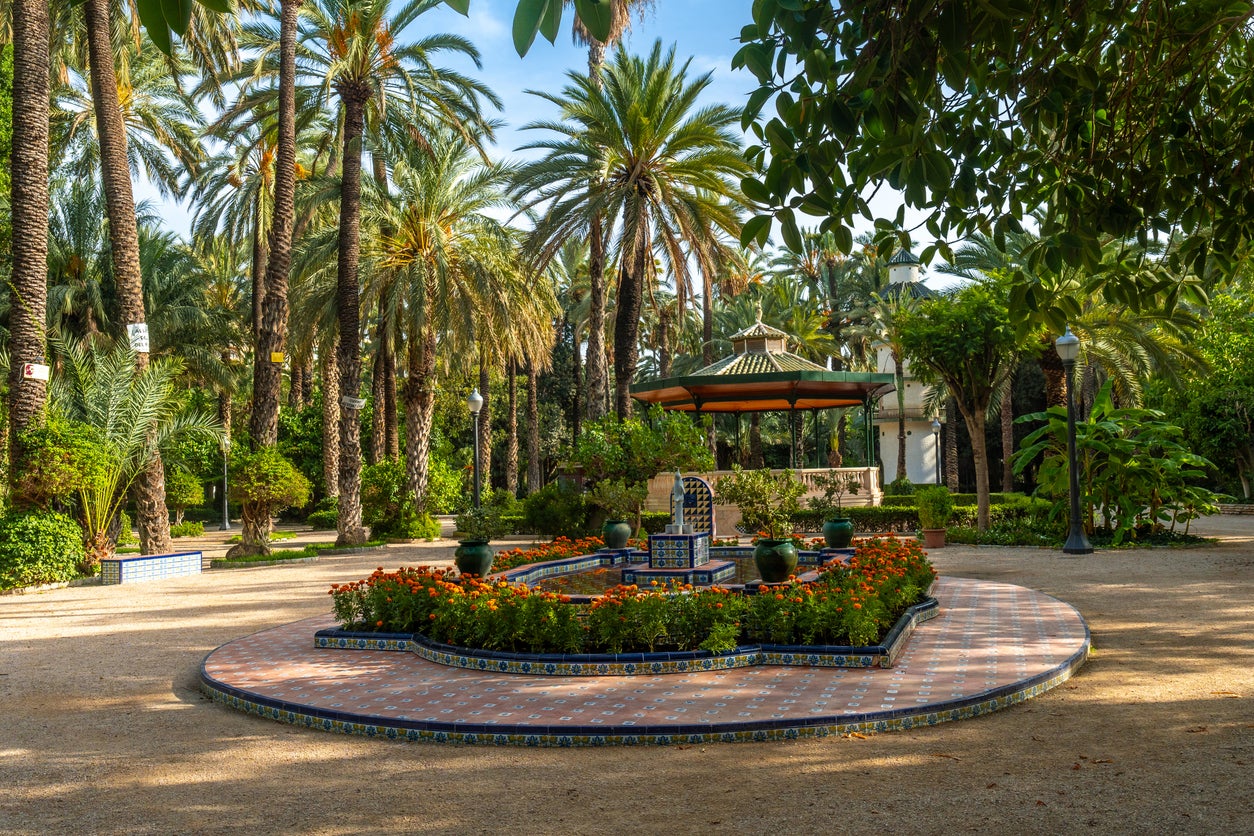
Recognised by Unesco in 2000, Elche’s Palmeral – Europe’s largest historic palm grove – contains more than 200,000 trees, rustling gently and reflecting chinks of sunlight through its verdant canopy. This shaded oasis is dotted with fountains, benches and statues old and new, giving it the feel of a shared civic space.
What’s striking is how ordinary it all feels. The Palmeral isn’t treated as a monument, but as part of the city’s daily circuitry.
On a bright winter’s morning – Elche enjoys 270 to 300 sunny days per year – couples of all ages stroll lazily through the park or lounge on benches to share the latest gossip. I spent a happy hour reading under a particularly bulbous palm. Couriers cycled past, older couples paused on shaded benches with newspapers and teenagers lingered at the edges of fountains in animated conversations.
In the Arabic tradition, the planting of palms was to signal permanence and Elche certainly retains this feeling. A millennium on from its planting, the Palmeral remains the cool artery that shades the Vinalopo River through the city centre.
While records of palm groves stretch back to Roman times, it was Moorish rule in the 10th century that shaped Elche’s most enduring landmark. Muslim leaders introduced structured orchards (huertos), many of which survived to today, which provided shade for people and secondary crops alike, food in the form of dates exported across the Arab world and raw material for ropes, baskets and bindings, the medieval equivalent of duct tape.
The popularity of dates here persists to this day, with delicias de Elche appearing as a starter on menus across the city. I remember the first time I ordered these, expecting some form of local petit fours. I was rewarded with a plate of dates stuffed with almonds and wrapped in jamón. The waitress saw my puzzled face and laughed: “This is everything Spain enjoys: sweet, salty, nutty, soft, on one plate!”
She’s right. The flavours sound odd but all work together, rather like the city itself.
Elche’s relationship with its previous rulers symbolises what AA Gill termed the “most complex and pyrotechnically hysterical international love affairs” between Christian and Arab civilisations.
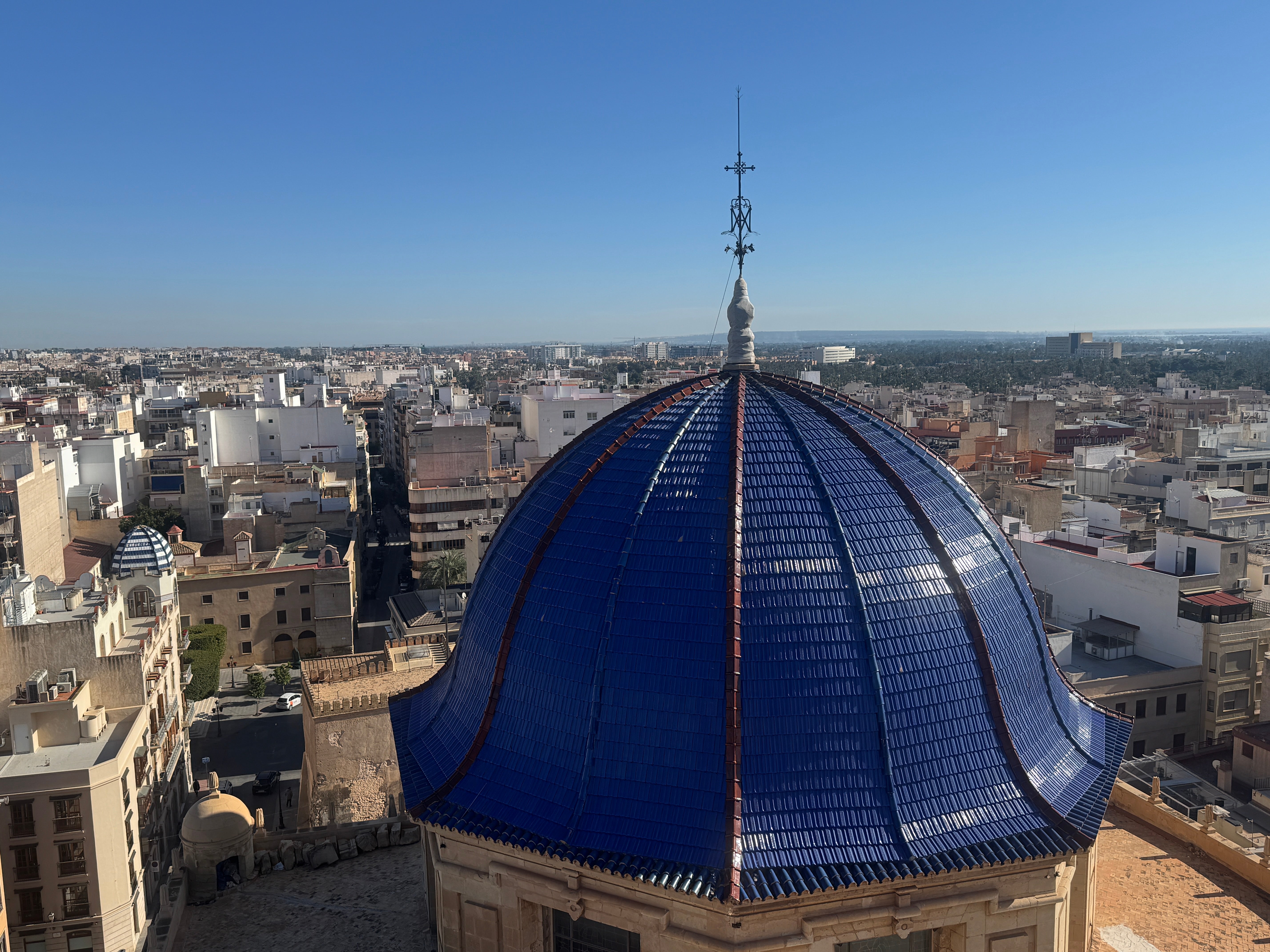
While the Palmeral has survived for over a millennium, other symbols of Arabic rule didn’t fare so well after the Reconquista (the military campaign to capture land from the Moors). The main basilica, Santa Maria, was built on the site of the city’s principal mosque. Several iterations later, the blue-tiled dome glimmers across the city.
The cathedral hosts an annual mystery play every August, depicting the assumption of the Virgin Mary, a tradition which, according to legend, began in 1265 and has continued ever since.
Other Moorish creations survived largely by accident: buried, forgotten and therefore spared. The subterranean Arab Baths (Banys Àrabs) are modest but evocative, with vaulted ceilings and columns dividing rooms by temperature. Travellers once bathed here before entering the walled city — a custom I sincerely wish could be revived in the heat of midday.
Later that day, I wandered into my favourite garden in all of Elche. Huerto de la Cura– the largest of Elche’s traditional huerto gardens – is laid out along the same Moorish irrigation channels that have quietly done their job for centuries.
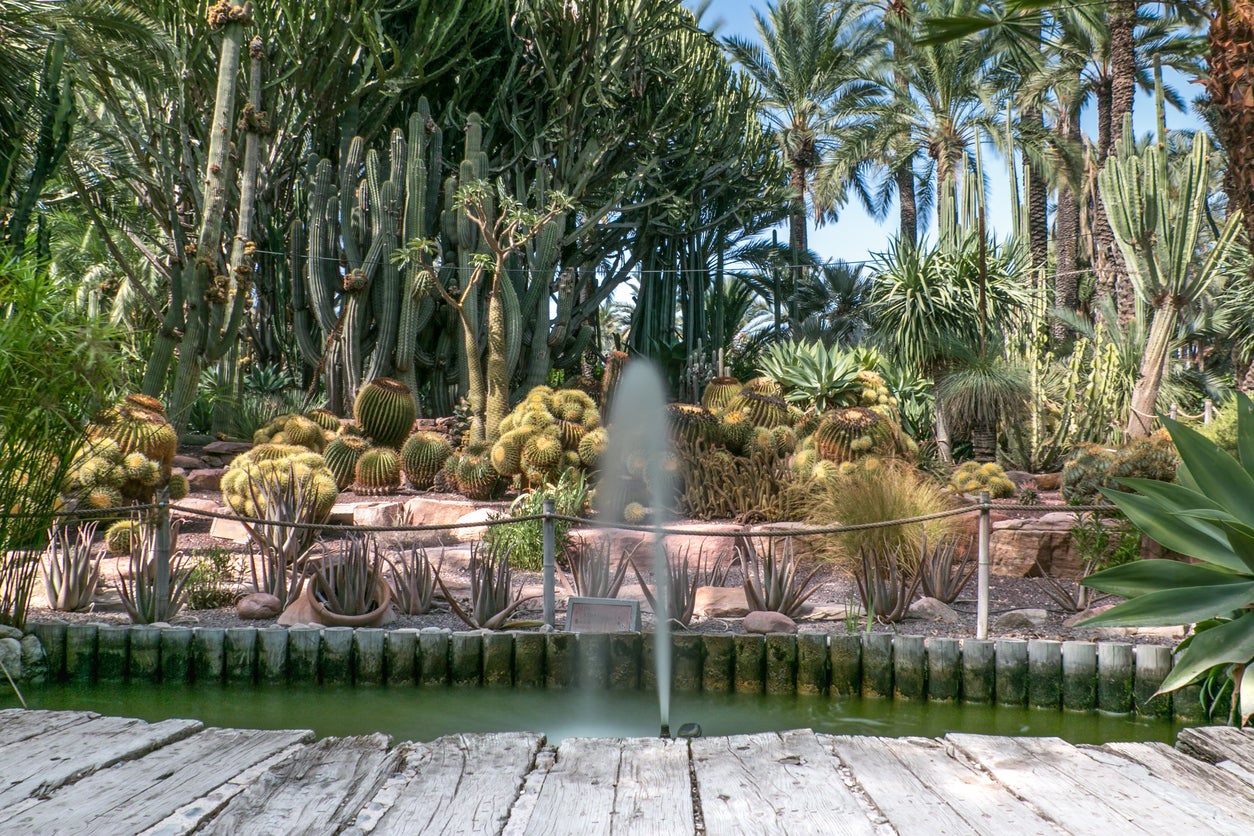
Date palms dominate, of course, but look closer and there’s a supporting cast of citrus trees, pomegranates and low-growing Mediterranean shrubs and cacti thriving in their shade, a microcosm of how Elche would have looked a century ago (minus the irrigation hosepipes which whir quietly in the background). Peacocks, which symbolise the beauty of creation in Arabic tradition, strut across sun-warmed paths, dragonflies hover above the central pond and the whole place hums softly with life.
History in many cities is buried several layers underground and can only be seen in a museum, which is what makes Elche so remarkable. For over a millennium, in a region where shade is a precious and rare commodity, the palms function less as scenery than as shelter and sustenance. Walking through the horta, it’s easy to forget you’re walking through a Unesco-listed landscape at all. Perhaps this is the clearest sign that it’s still doing exactly what it was designed to do.
It feels like more people should know about Elche beyond just a passing glance at the airport name. It is one of the most easily accessible places in Spain and yet remains largely unknown to British visitors. Compared to the crowded coast, Elche feels like a quiet but radical alternative: greener, calmer and infinitely more interesting. After all, fantastic beaches are ten-a-penny in Spain. But an oasis? That’s worth changing direction for.
How to do it
The majority of international visitors arrive via Alicante-Elche Airport (ALC), one of Spain’s busiest regional hubs.
There are year-round direct flights from the UK on carriers including easyJet, Ryanair, Jet2 and British Airways from airports across the country. Flight time is around two-and-a-half hours, with fares starting from £40 outside the peak summer months.
From the airport, buses 1A and 1b airport buses runs regularly to Elche (taking 30-40 minutes), costing just €1.55 (£1.35) one-way. A taxi to central Elche costs €20-€25 (£17-£21), depending on time of day. For visitors wanting to visit from Alicante city, direct buses reach Elche in 40 minutes, costing €3 (£2.60).
Where To Stay
As its name suggests, the Hotel Elche Centro has a prime location in the city centre, close to the Palmeral and all other attractions. Good breakfast and comfortable, modern rooms. From £80 per night.