


 Africana55 Radio

This website uses cookies so that we can provide you with the best user experience possible. Cookie information is stored in your browser and performs functions such as recognising you when you return to our website and helping our team to understand which sections of the website you find most interesting and useful.
When Madeeha Qureshi’s father, Gulzar Ahmed Qureshi, died, the BBC One MasterChef finalist says she “couldn’t cry afterwards” – for three years.
Referring to him as Aba Jan, he died in 2018, but it took writing her first cookbook for Qureshi to fully grieve her loss.
“I cried endlessly writing this book,” says the 44-year-old. “Every single memory was coming from my heart – I’ve cut my heart open and I’ve poured it physically into this book.”
Through writing and finally releasing her emotions, Qureshi says she has learned that “grief is a final form of love” and hopes that, while also inspiring people to cook, she can “normalise” conversations on grief and loss, too.
“Having that part of grief in you is not wrong, and we shouldn’t be hiding it, we shouldn’t be masking it,” she says. “We should normalise it, the feeling of grief, because it is part of love.”
Qureshi, a mother-of-three who lives in Hinckley, Leicestershire, captivated audiences with her unique blend of traditional and modern culinary techniques when she appeared on MasterChef in 2021.
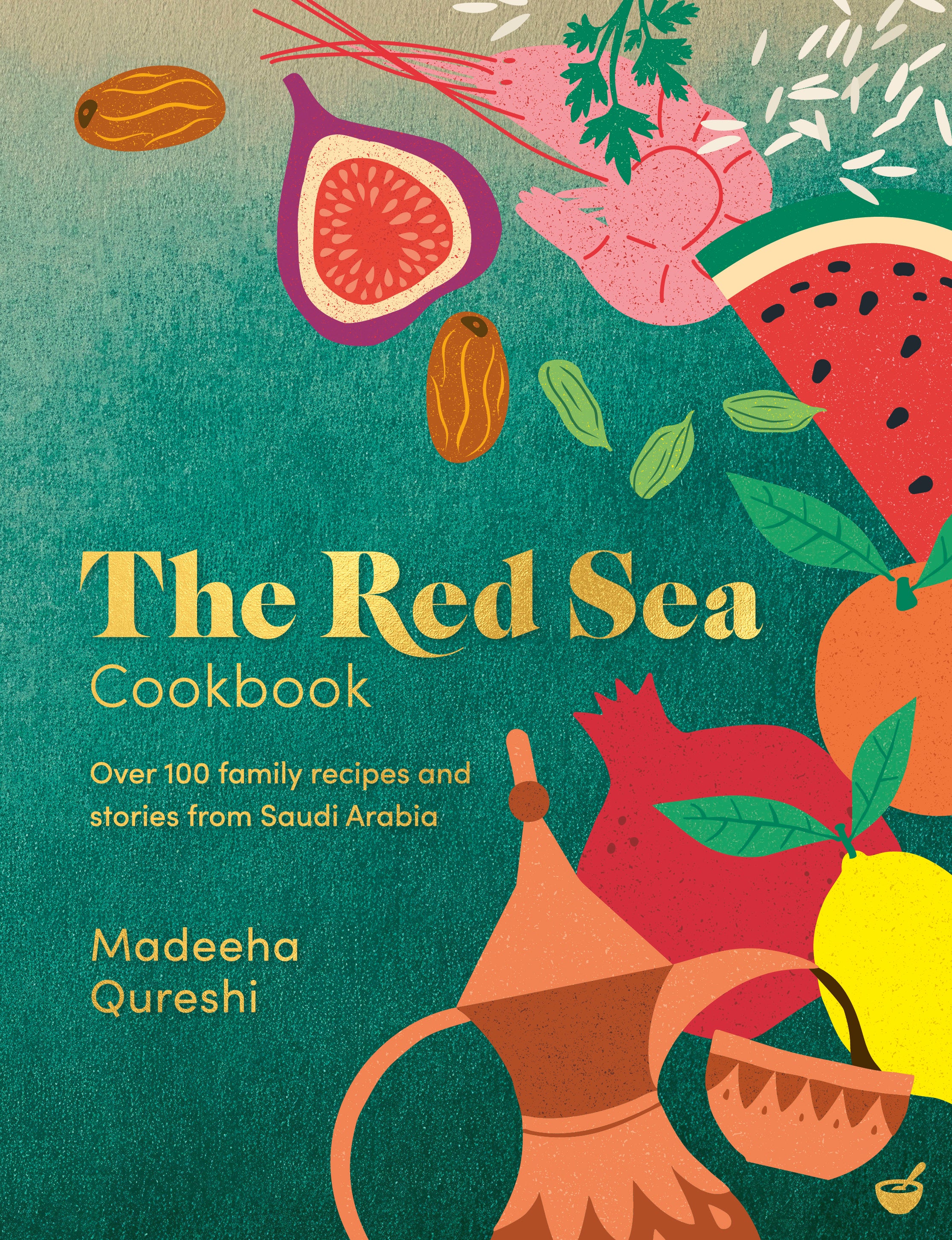
Her debut book, The Red Sea Cookbook, is devoted to Saudi cuisine and includes stories from her childhood in Jeddah, in the district of Balad and Kandarah, where she grew up.
“I am someone who is ethnically both Arab and Asian, so I am a sandwich of culture,” she explains.
Born in Pakistan, the family moved to Saudi Arabia when Qureshi was just three months old. “Saudi Arabia is the place which is my spiritual homeland. This is where I got my memories, this is where I grew up, this is who I am. The people there shaped me into who I am,” she says.
She says that, from the outside, citizens of Saudi Arabia might seem “closed” but they are in fact “the most hospitable and generous people” she has ever come across.

Describing them in three words, she says they are “incredibly kind, generous and hospitable”, and she still visits Saudi Arabia today, having moved to the UK in 2007.
“Saudi Arabia is a treasure trove that is just waiting to be explored,” she says. “Even though there are developments happening, you will still find it very serene, very natural.
“The Red Sea, the reason it’s famous is the iconic red coral reef which is visible from a distance, and the sapphire blue water, clear as crystal – you will forget the Maldives.”
Some of Qureshi’s earliest and fondest memories involve cooking – and one recipe that stands out is an orange loaf cake, the first cake she ever made.
Taught the recipe by her neighbour and family friend, Umi Qamar, when she was 11 years old, she knows it so well that she could now make it “with one hand tied behind [her] back and blindfolded”.
She bakes the cake, which is made with fresh orange juice, every single week and says it was the first recipe that went viral on social media. It features in her cookbook, which has more than 100 recipes, each with personal stories from Qureshi’s life.
“That cake has been part of my life from a very early age,” she says. “I can remember from my earliest memories, in November, December, Navel oranges used to flood from Egypt across the Red Sea into Saudi Arabia and there were open fruit markets.
“My dad used to bring absolute buckets of oranges – I never recall a day where my dad brought anything in a small bag – and those oranges and their smell, they were so intoxicating.
I cried endlessly writing this book. Every single memory was coming from my heart – I’ve cut my heart open and I’ve poured it physically into this book
“I remember I used to peel them with my little hands, even though they were damaging my nails, my cuticles, and I baked the orange cake in a Danish biscuit tin because that was what we had at that time.
“The smell, the waft, just reminds me of Saudi Arabia and my home, my parents, my dad, and now my kids love it.”
Other “nostalgic” recipes that feature in the book include chicken livers, inspired by her father, and watermelon pith jam, which she used to eat by the spoonful as a child in Saudi Arabia.
She explains that, in the 1980s, watermelon pith jam in tins was widely imported into Saudi Arabia from Iraq, where it originated.
However, during the Gulf War, which took place between 1990 and 1991, the supply chain vanished, leading her father to find someone’s family recipe for the jam so they could make it themselves.
“[At the] time, as a child, I didn’t understand the calamity of war… I was just fixating on losing my regular supply of watermelon pith jam,” she says.
“Whenever I make it, I’m reminded of that whole situation, that grim time, and that gesture of humanity – that someone came forward and gave that (watermelon pith jam) recipe to my dad, who was struggling with a very young child who was being picky about this jam.”
Qureshi says one general misconception about Saudi cuisine is that it is “very meaty, bland, beige and boring” – but she says it is “the polar opposite”. She describes the food as “zingy, punchy and zesty” and says key ingredients include black lime, green cardamom and mastika.
“Saudi food is very flavourful, but it’s not spicy,” she adds. “It’s so diverse, but the warmth and the love that is poured into Saudi cuisine, that is one common thing in their food across the region – you can taste the food if it’s without love. It’s the effort and the way they make it, that’s the key.”
The Red Sea Cookbook features everything from small plates and salads to main dishes, breads, sweet treats, drinks and spices – including a tuna and butter bean salad and baleela, described as “a lip-smacking, slurpy Saudi street food”.
Qureshi wanted to include recipes that are easy to make, use readily available ingredients found in supermarkets, and do not require a large budget.
Along with her personal stories, she wants the cookbook to be “relatable” and “accessible” to everyone and says the bright heritage carrot salad is the perfect recipe for a beginner.
While grieving and writing this book, she says it reminded her how her father taught her to “see human beings as human”, adding: “It’s beyond any class, creed, colour, race… this book is for the citizens of the world.”
She continues: “I have gone through all the ups and downs of life. I’ve seen peace, I’ve seen war, I’ve seen civil unrest, I’ve seen everything.
“So, I would suggest, read the book, enjoy the stories, and when you feel like you’re ready to give a go to the recipes, please do so. One lesson that I’ve learned from life is just keep on going, do not stop.”
Qahwa (Saudi coffee) and Hawaij sticky chicken wings with pomegranate BBQ sauce
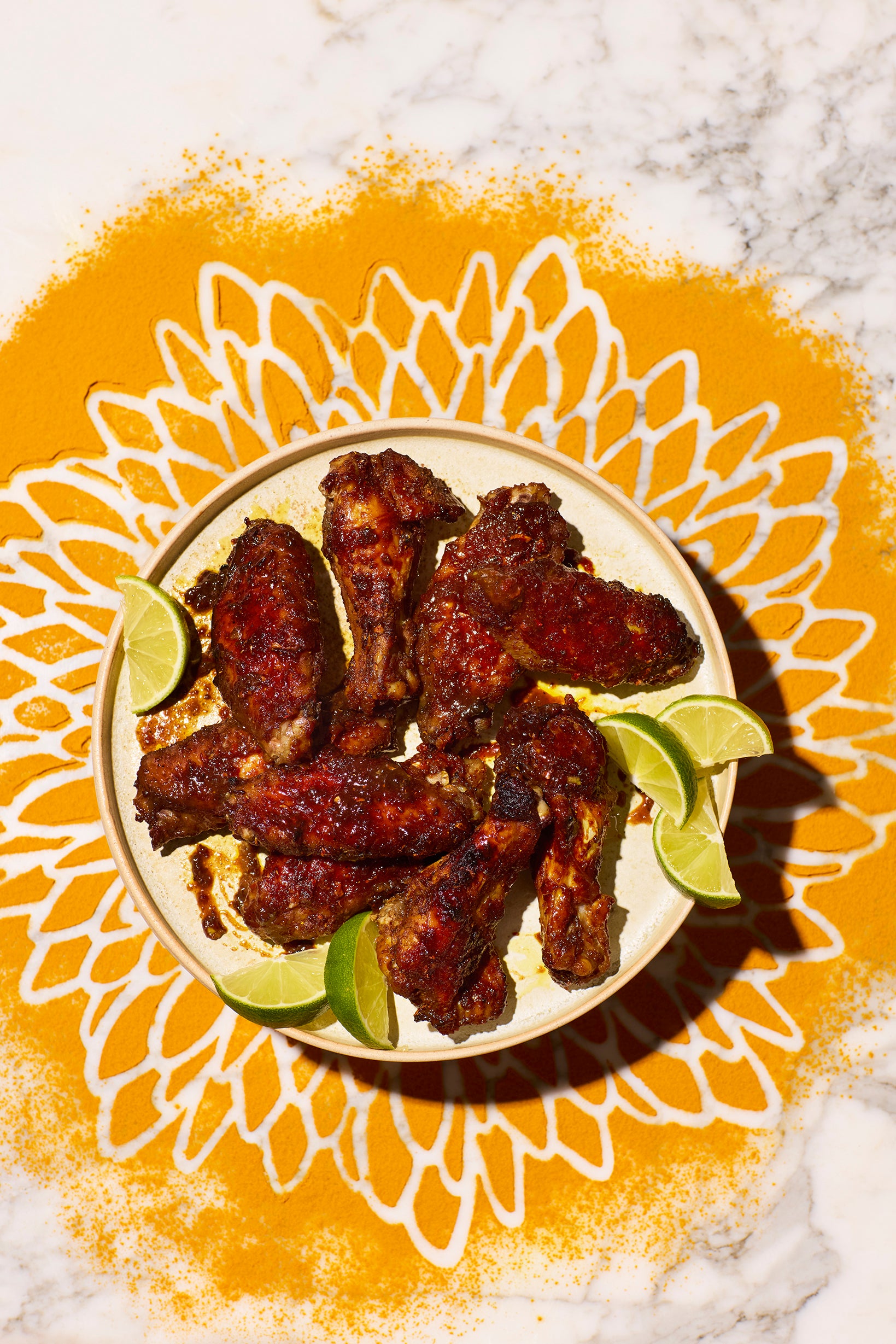
“Anyone who knows me from my teen years knows well enough of my chicken-wing addiction,” says Qureshi. “I am a diehard admirer and a self-proclaimed authority in my household on where to get the best chicken wings. Be it deep-fried, breaded, grilled, baked, crispy or sticky, smothered in a nice buffalo sauce, I love them in all forms.
“I think they are the best bits a chicken has to offer us humans. My love (and craze) for sticky, glazed and grilled wings knows no boundaries, so much so I won many wing-eating street and school competitions in my wild teen years, with a jaw dropping technique of putting the whole wing in my mouth from one side and spitting the squeaky clean bones out from the other side.”
Serves: 4
Ingredients:
1kg skin-on chicken wings
For the Hawaij spice mix (makes a small jar)
30g black peppercorns
25g cumin seeds
15g coriander seeds
A small cinnamon stick
½ tsp whole cloves
15g green cardamom pods
15g ground turmeric
For the rub:
1 tbsp Hawaij spice mix
1 tbsp ground Saudi coffee, or the mildest roasted coffee you can find
¼ tsp ground cardamom
1 tsp brown sugar
For the marinade:
60ml pomegranate molasses
2 fat cloves of garlic, minced
45g ginger, finely grated or minced
1 tsp paprika
½ tsp chilli flakes
2 tbsp ketchup
2 tbsp barbecue sauce
20g brown sugar
½ tsp fine sea salt
1 tsp olive oil
To serve:
Lime wedges
Method:
1. First, make the spice mix: put all the spices except for the turmeric in a frying pan and set on a medium heat. Roast the spices for four to five minutes until fragrant, then tip the roasted spices onto a plate and let them cool down.
2. Once cool, finely grind the spices in a coffee grinder. Sift the ground spices to separate out any big chunks, returning any larger pieces to the grinder to blitz again. Sift the mixture, then mix in the turmeric. Put the spice mix in a jar with a tight lid and store in a cool dry place.
3. Preheat the oven to 180C (350F), gas 4, and line a large baking tray with baking paper.
4. Put the chicken wings in a wide bowl along with all the rub ingredients and rub them well together, massaging every nook and cranny of the wings. Cover with a tea towel and set them aside for 15 minutes at least. This step can be done a day ahead – let the chicken marinate in the fridge.
5. Mix all of the marinade ingredients together in a large mixing bowl. Add the rub-coated chicken wings and turn them around until well-coated in the marinade.
6. Shake off any excess marinade and reserve it for later use. Lay the marinated wings, skin side up, on the lined baking tray and bake for 25 minutes. These can also be cooked on the barbecue or air fried.
7. Remove the tray from the oven and smother the wings generously with the remaining marinade, then roast for another 35-40 minutes until rich brown in colour and cooked through. Serve straight away with lime wedges and with mlawa bread and/or vegetable maftoul, if you like.
Mabshoor – Saudi lamb kebabs over charcoal
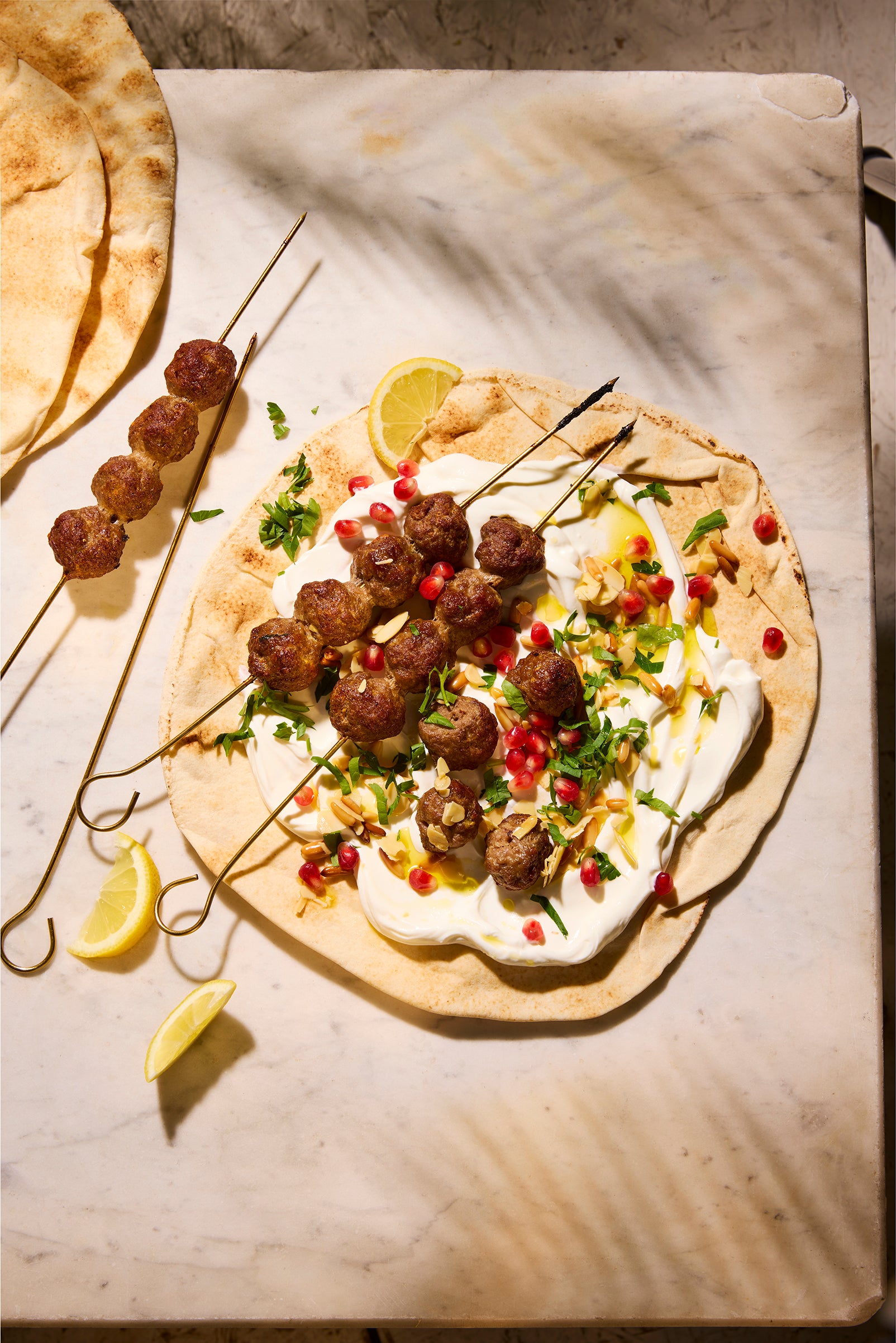
“I don’t think there is a simpler kabab recipe out there than this one,” says Qureshi.
“Simple, quick and juicy kababs, bursting with meaty flavours of lamb and its fat – yes, fat is a flavour, my darlings. There is a copious amount of garlic, so don’t be alarmed. Enjoy at a BBQ party with fresh naans, salad and my famous three sauces – Jajeek, Daqqus and Tahiniya.”
Serves: 4
Ingredients:
500g minced lamb (at least 30% fat)
Cloves from 1 bulb of garlic (about 30g, crushed)
1 tsp salt
1½ tsp freshly ground black pepper
A fat pinch of roasted ground cumin (optional)
For the yogurt:
250g Greek yoghurt
2 cloves of garlic, minced
Sea salt
To serve:
Naan or pitta bread (optional)
Fresh parsley, chopped
Toasted pine nuts or almonds
Method:
1. In a large bowl with a flat base, combine the mince, garlic, salt, black pepper and cumin (if using). Mix well, then rub it with the palm of your hand against the vessel to smooth it out, about two to three minutes.
2. Cover the mince mixture and refrigerate for 30 minutes; this will help the mince and fat to mingle and bind well.
3. Now prepare the yogurt base by mixing together the Greek yogurt and garlic, then seasoning to taste with salt. Set aside.
4. Light the barbecue and wait for the charcoal to go ashy before starting to cook.
5. While the charcoal is getting ready, take the lamb mixture out of the fridge and form it into walnut-sized balls (a measuring tablespoon can be used as a rough guide for size – you should get 16–20 balls). Place four or five of them onto each of four metal skewers.
6. Place the skewers onto the charcoal grill and cook for about seven minutes, turning every two to three minutes, until the Mabshoor is cooked through. Once nicely browned all over and dripping with fatty juices, remove from the barbecue.
Mutabbaq
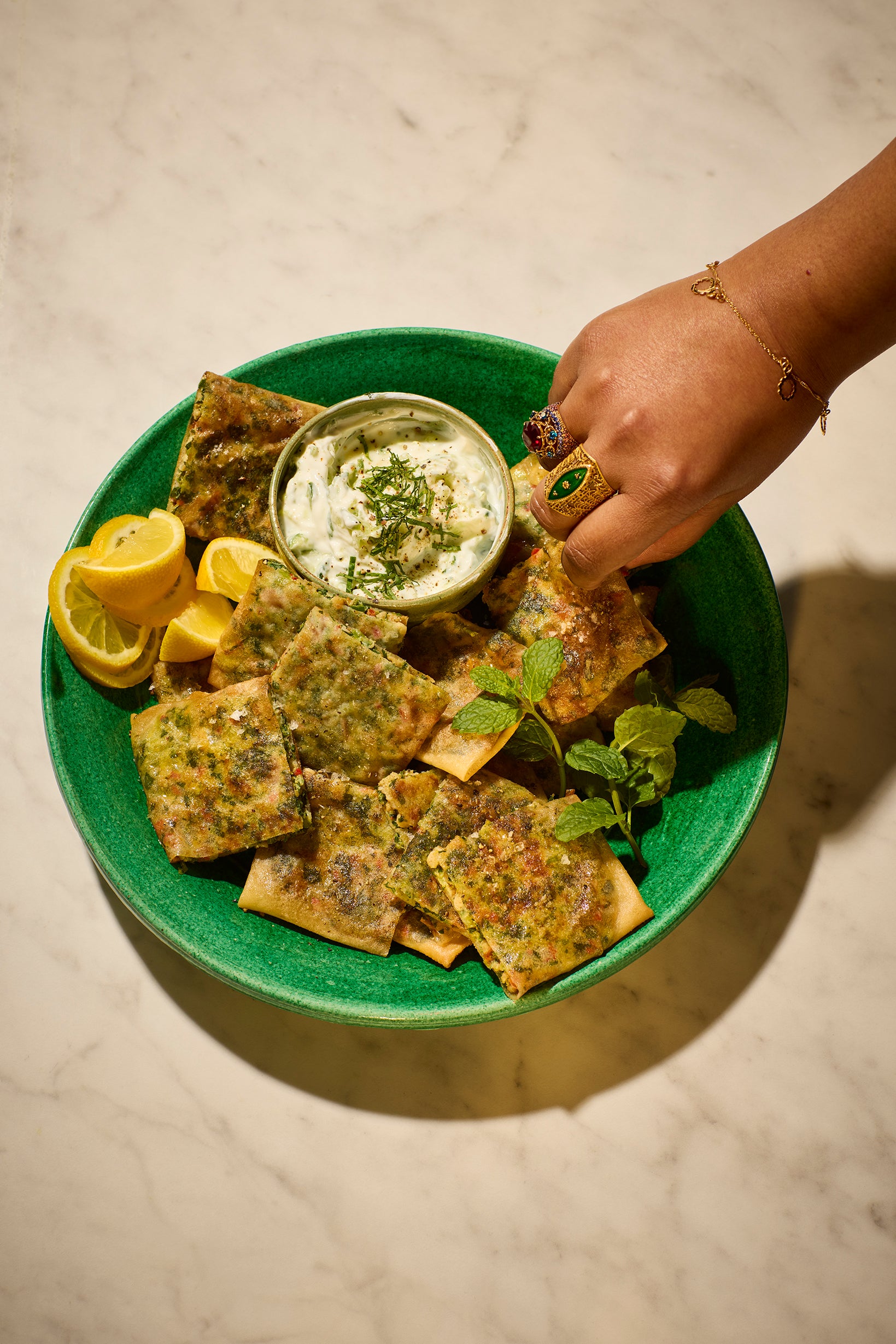
“This street food has won the hearts of millions. This is the iconic mutabbaq: soft and crunchy, mouthwateringly fresh and delicately spiced, it makes a perfect snack at any time of the day.
“For me, street food is the index of a nation’s soul: it gives you a snapshot of that particular country, its food, people, diversity and culture. And mutabbaq ticks all of those boxes. It is a warm hug that comforts your soul, and this is how the Saudis are in general: simple, warm, embracing, hospitable and welcoming.”
“Mutabbaq is something I profoundly associate with my childhood in KSA,” she says. “I had the privilege to make this humble yet very delicious dish as a starter on MasterChef UK 2021. It won the love of judges and past winners because it came from deep within.”
Ingredients:
For the chicken filling:
1 tbsp vegetable oil
125g minced chicken thigh
¼ tsp roasted ground cumin, plus an extra pinch
25g coriander, chopped
25g flat leaf parsley, chopped
Small bunch of spring onions, finely chopped (try to get the onions with longer green parts)
Handful of chives, finely chopped
1 red chilli (or as per your preferred level of spiciness), finely sliced
1 firm tomato, deseeded and diced into small cubes
1 large egg, lightly beaten
Salt and freshly ground black pepper
For the pastry parcels:
Sunflower oil (or any neutral oil), for shallow frying
4 large spring roll pastry sheets
To serve:
A green chilli (optional but traditional)
A wedge of lemon
Method:
1. Heat the oil in a frying pan on a high heat. Add the chicken mince and sauté until it is cooked through. Add the pinch of ground cumin and cook until all the liquid in the pan has gone. This will take about four to five minutes. Season with salt and black pepper and set aside to cool down.
2. Mix the coriander, parsley, spring onions, chives, chilli and tomato in a bowl and add the cooked and cooled chicken mince to it. Add the rest of the ground cumin, season to taste, and mix well.
3. Now add about two-thirds of the beaten egg and give it a mix. If it seems too dry, add the rest of the egg and stir. The filling is now ready for stuffing into the spring roll pastry.
4. Pour enough oil into a frying pan to shallow fry and place it on a low-medium heat.
5. Put a couple of tablespoons of the filling mixture in the centre of a pastry sheet, forming a square shape, then fold the edges of the pastry over the filling to form a parcel or envelope. Seal the parcel by dipping your fingers in some water and wetting the edges.
6. Immediately place the parcel in the frying pan. Fry for one to two minutes on each side. (I usually fry one at a time in a small pan, but if you are using a wider pan you can fry two at a time without overcrowding the pan.) Once you get a nice golden brown colour all over, take it out and place on a piece of paper towel to drain the excess oil. Repeat with all the parcels.
7. Cut each parcel into four pieces with a pizza cutter and serve hot with zhoug, shatta, jajeek, tzatziki or any sauce of your choice, a green chilli, if using, and a wedge of lemon.
Tip: This recipe is so forgiving and versatile that you can go completely vegan by replacing the meat and eggs with soya mince and a small boiled and grated potato.
‘The Red Sea Cookbook’ by Madeeha Qureshi (Nourish Books, £32).