


 Africana55 Radio

This website uses cookies so that we can provide you with the best user experience possible. Cookie information is stored in your browser and performs functions such as recognising you when you return to our website and helping our team to understand which sections of the website you find most interesting and useful.
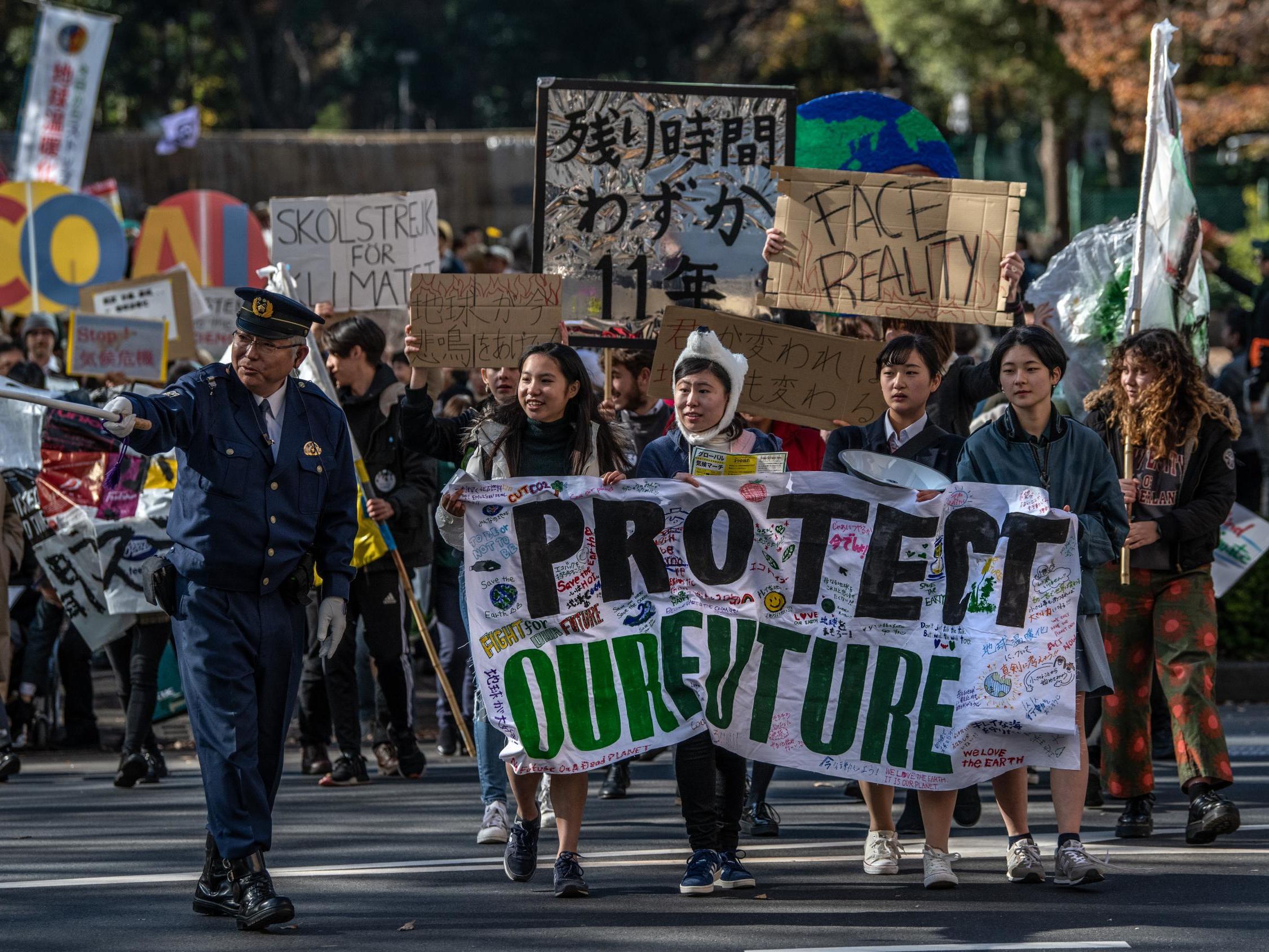
Japan’s new proposals for fighting climate change have been described as “feeble” and “shameful”, after the country revealed it would not be updating its current target for cutting emissions.
In accordance with the Paris Agreement, all countries are expected to submit new or revised plans this year for curbing greenhouse gas emissions and keeping global warming below 2C.
But under current national targets, the global temperature is likely to rise beyond that limit within the next 10 years, according to UN scientists, who have warned that the world is facing an “avoidable human tragedy”.
Despite rising pressure for governments to increase their ambition in tackling climate change, Japan’s carbon targets, announced on Monday and known as its “nationally determined contribution”, remain unchanged from its commitments made five years ago for the Paris accord.
The country is continuing to target a 26 per cent reduction in emissions by 2030 – a figure that is rated as “highly insufficient” by the Climate Action Tracker analysis.
Created with Sketch.
Created with Sketch.
1/20 California
In this decade, humans have become ever more aware of climate change. Calls for leaders to act echo around the globe as the signs of a changing climate become ever more difficult to ignore
Getty
2/20 Athens, Greece
Fierce wildfires have flared up in numerous countries. The damage being caused is unprecedented: 103 people were killed in wildfires last year in California, one of the places best prepared, best equipped to fight such blazes in the world
AFP/Getty
3/20 Redding, California
Entire towns have been razed. The towns of Redding and Paradise in California were all but eliminated in the 2018 season
AP
4/20 Athens, Greece
While wildfires in Greece (pictured), Australia, Indonesia and many other countries have wrought chaos to infrastructure, economies and cost lives
AFP/Getty
5/20 Carlisle, England
In Britain, flooding has become commonplace. Extreme downpours in Carlisle in the winter of 2015 saw the previous record flood level being eclipsed by two feet
AFP/Getty
6/20 Hebden Bridge, England
Hebden Bridge in West Yorkshire has flooded repeatedly in the past decade, with the worst coming on Christmas Day 2015. Toby Smith of Climate Visuals, an organisation focused on improving how climate change is depicted in the media, says: "Extreme weather and flooding, has and will become more frequent due to climate change. An increase in the severity and distribution of press images, reports and media coverage across the nation has localised the issue. It has raised our emotions, perception and personalised the effects and hazards of climate change."
Getty
7/20 Somerset, England
Out west in Somerset, floods in 2013 led to entire villages being cut off and isolated for weeks
Getty
8/20 Dumfries, Scotland
"In summer 2012, intense rain flooded over 8000 properties. In 2013, storms and coastal surges combined catastrophically with elevated sea levels whilst December 2015, was the wettest month ever recorded. Major flooding events continued through the decade with the UK government declaring flooding as one of the nation's major threats in 2017," says Mr Smith of Climate Visuals
Getty
9/20 London, England
Weather has been more extreme in Britain in recent years. The 'Beast from the East' which arrived in February 2018 brought extraordinarily cold temperatures and high snowfall. Central London (pictured), where the city bustle tends to mean that snow doesn't even settle, was covered in inches of snow for day
PA
10/20 London, England
Months after the cold snap, a heatwave struck Britain, rendering the normally plush green of England's parks in Summer a parched brown for weeks
AFP/Getty
11/20 New South Wales, Australia
Worsening droughts in many countries have been disastrous for crop yields and have threatened livestock. In Australia, where a brutal drought persisted for months last year, farmers have suffered from mental health problems because of the threat to their livelihood
Reuters
12/20 Tonle Sap, Cambodia
Even dedicated climate skeptic Jeremy Clarkson has come to recognise the threat of climate change after visiting the Tonle Sap lake system in Cambodia. Over a million people rely on the water of Tonle Sap for work and sustinence but, as Mr Clarkson witnessed, a drought has severley depleted the water level
Carlo Frem/Amazon
13/20 Addis Ababa, Ethiopia
In reaction to these harbingers of climate obliteration, some humans have taken measures to counter the impending disaster. Ethiopia recently planted a reported 350 million trees in a single day
AFP/Getty
14/20 Morocco
Morocco has undertaken the most ambitious solar power scheme in the world, recently completing a solar plant the size of San Francisco
AFP/Getty
15/20 London, England
Electric cars are taking off as a viable alternative to fossil fuel burning vehicles and major cities across the world are adding charging points to accomodate
AFP/Getty
16/20 Purmerend, The Netherlands
Cities around the world are embracing cycling too, as a clean (and healthy) mode of transport. The Netherlands continues to lead the way with bikes far outnumbering people
Jeroen Much/Andras Schuh
17/20 Xiamen, China
Cycling infrastructure is taking over cities the world over, in the hope of reducing society's dependency on polluting vehicles
Ma Weiwei
18/20 Chennai, India
Despite positive steps being taken, humans continue to have a wildly adverse effect on the climate. There have been numerous major oil spills this decade, the most notable being the BP oil spill in the Gulf of Mexico in 2010
AFP/Getty
19/20 Amazon rainforest, Brazil
More recently, large swathes of the Amazon rainforest were set alight by people to clear land for agriculture
AFP/Getty
20/20 California
This decade may have seen horrors but it has led to an understanding that the next decade must see change if human life is to continue
Getty
1/20 California
In this decade, humans have become ever more aware of climate change. Calls for leaders to act echo around the globe as the signs of a changing climate become ever more difficult to ignore
Getty
2/20 Athens, Greece
Fierce wildfires have flared up in numerous countries. The damage being caused is unprecedented: 103 people were killed in wildfires last year in California, one of the places best prepared, best equipped to fight such blazes in the world
AFP/Getty
3/20 Redding, California
Entire towns have been razed. The towns of Redding and Paradise in California were all but eliminated in the 2018 season
AP
4/20 Athens, Greece
While wildfires in Greece (pictured), Australia, Indonesia and many other countries have wrought chaos to infrastructure, economies and cost lives
AFP/Getty
5/20 Carlisle, England
In Britain, flooding has become commonplace. Extreme downpours in Carlisle in the winter of 2015 saw the previous record flood level being eclipsed by two feet
AFP/Getty
6/20 Hebden Bridge, England
Hebden Bridge in West Yorkshire has flooded repeatedly in the past decade, with the worst coming on Christmas Day 2015. Toby Smith of Climate Visuals, an organisation focused on improving how climate change is depicted in the media, says: "Extreme weather and flooding, has and will become more frequent due to climate change. An increase in the severity and distribution of press images, reports and media coverage across the nation has localised the issue. It has raised our emotions, perception and personalised the effects and hazards of climate change."
Getty
7/20 Somerset, England
Out west in Somerset, floods in 2013 led to entire villages being cut off and isolated for weeks
Getty
8/20 Dumfries, Scotland
"In summer 2012, intense rain flooded over 8000 properties. In 2013, storms and coastal surges combined catastrophically with elevated sea levels whilst December 2015, was the wettest month ever recorded. Major flooding events continued through the decade with the UK government declaring flooding as one of the nation's major threats in 2017," says Mr Smith of Climate Visuals
Getty
9/20 London, England
Weather has been more extreme in Britain in recent years. The 'Beast from the East' which arrived in February 2018 brought extraordinarily cold temperatures and high snowfall. Central London (pictured), where the city bustle tends to mean that snow doesn't even settle, was covered in inches of snow for day
PA
10/20 London, England
Months after the cold snap, a heatwave struck Britain, rendering the normally plush green of England's parks in Summer a parched brown for weeks
AFP/Getty
11/20 New South Wales, Australia
Worsening droughts in many countries have been disastrous for crop yields and have threatened livestock. In Australia, where a brutal drought persisted for months last year, farmers have suffered from mental health problems because of the threat to their livelihood
Reuters
12/20 Tonle Sap, Cambodia
Even dedicated climate skeptic Jeremy Clarkson has come to recognise the threat of climate change after visiting the Tonle Sap lake system in Cambodia. Over a million people rely on the water of Tonle Sap for work and sustinence but, as Mr Clarkson witnessed, a drought has severley depleted the water level
Carlo Frem/Amazon
13/20 Addis Ababa, Ethiopia
In reaction to these harbingers of climate obliteration, some humans have taken measures to counter the impending disaster. Ethiopia recently planted a reported 350 million trees in a single day
AFP/Getty
14/20 Morocco
Morocco has undertaken the most ambitious solar power scheme in the world, recently completing a solar plant the size of San Francisco
AFP/Getty
15/20 London, England
Electric cars are taking off as a viable alternative to fossil fuel burning vehicles and major cities across the world are adding charging points to accomodate
AFP/Getty
16/20 Purmerend, The Netherlands
Cities around the world are embracing cycling too, as a clean (and healthy) mode of transport. The Netherlands continues to lead the way with bikes far outnumbering people
Jeroen Much/Andras Schuh
17/20 Xiamen, China
Cycling infrastructure is taking over cities the world over, in the hope of reducing society's dependency on polluting vehicles
Ma Weiwei
18/20 Chennai, India
Despite positive steps being taken, humans continue to have a wildly adverse effect on the climate. There have been numerous major oil spills this decade, the most notable being the BP oil spill in the Gulf of Mexico in 2010
AFP/Getty
19/20 Amazon rainforest, Brazil
More recently, large swathes of the Amazon rainforest were set alight by people to clear land for agriculture
AFP/Getty
20/20 California
This decade may have seen horrors but it has led to an understanding that the next decade must see change if human life is to continue
Getty
Japan says it will pursue further efforts in the medium and long term, and is aiming for a “decarbonised society” as early as possible in the second half of the century.
Laurance Tubiana, chief executive of the European Climate Foundation and one of the key architects of the Paris Agreement, urged the Japanese government to reconsider its ”disappointing” proposals and adopt a more “ambitious” stance.
“The EU, UK, China and South Korea are moving towards a new – low carbon – economy,” she said. “If Japan doesn’t move, it will lose out in the high-tech race of this century.
“At one of the most challenging times of recent memory, we need bolder, mutually reinforcing plans that protect our societies from the global risks we all face.”
Japan is the first major economy from the G7 group to produce updated plans ahead of a vital United Nations climate conference, “Cop26”, which is set to take place in Glasgow in November.
The UK is hoping to drive moves towards ambitious international action in the build-up to the talks, though foreign secretary Dominic Raab has warned the meeting may have to be delayed due to the coronavirus outbreak.
Addressing the Japanese proposals, a spokeswoman for the UK government said: “We are clear on the need for increased ambition from all countries, particularly from G7 partners.
“We hope to see a further submission that includes an increase in Japan’s headline target ahead of Cop26.”
Concerns have also been raised that countries will use the coronavirus pandemic, and the economic fallout it has triggered, to justify a step back from the commitments of the Paris Agreement.
“Japan should not slow down climate actions even amid the Covid-19 global fights, and must revisit and strengthen this plan swiftly in order to be in line with the Paris agreement,” said Kimiko Hirata, international director of the Kiko Network, a climate group in Japan.
Christian Aid’s global climate lead, Dr Kat Kramer, said: “Japan’s feeble and unchanged national climate commitment is an international disgrace.
“The fact they are smuggling it out during a global pandemic when it will avoid the scrutiny it deserves is shameful.”
Japan is a rich country with resources and the historic responsibility to make big strides to decarbonise its economy, she added. “Yet it has utterly failed to enhance its highly insufficient pledge, that will only compound the misery of people on the front line of the climate crisis who need countries like Japan to act with urgency to do its fair share in addressing the climate crisis.”
Emissions throughout 2019 were 4 per cent higher than those recorded in 2015, when the Paris Agreement was first negotiated. Under current levels, the world is not on track to meet the climate deal’s targets.
Additional reporting by PA