


 Africana55 Radio

This website uses cookies so that we can provide you with the best user experience possible. Cookie information is stored in your browser and performs functions such as recognising you when you return to our website and helping our team to understand which sections of the website you find most interesting and useful.
On 25 February 1996, America’s chosen prince, JFK Jr, and his girlfriend Carolyn Bessette, left the house with their dog Friday (so named because it was the only day their pet was allowed into John’s office) – and had the mother of all rows.
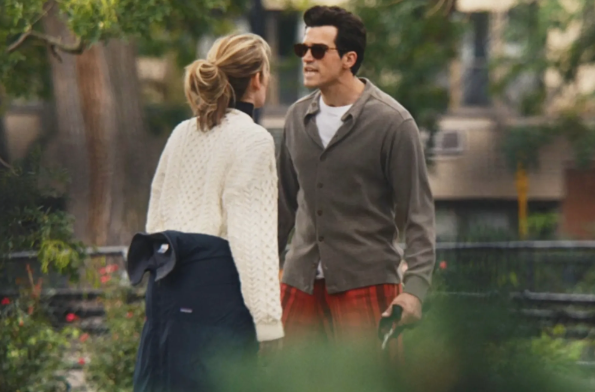
The couple, who were routinely hounded by paparazzi, screamed at each other in New York’s Battery Park as cameras clicked. John appeared to rip an engagement ring off Carolyn’s finger mid-argument before she chased him down and grabbed him by the shoulders as he tried to storm away.
This fiery scene, recreated in Ryan Murphy’s hit FX series Love Story – and played out with such convincing emotion by Paul Kelly and Sarah Pidgeon that modern-day New Yorkers reported the incident on the safety alert app Citizen – is one of the most infamous public rows of all time.
Watching the action play out in the fifth episode of the FX adaptation based on the couple’s lives – and enhanced with artistic licence – I was shocked; not by the violence with which Carolyn and John screamed in each other’s faces, but because I’d had a similar open-air row days earlier.
On the day of our one-year anniversary (unfortunate timing), my boyfriend and I fell into an argument about everything that was irking us while on a walk along the Thames path from Hammersmith to Putney. What was meant to be a fun celebration quickly turned into 20,000 steps of emotional gesticulating, frustrated groaning, and other theatrics that provoked side-eyes from innocent dog walkers caught in the crossfire.
When we finally collapsed, exasperated and exhausted, on a bench looking out over the river to Fulham FC’s Craven Cottage, the surprise and shame had already begun to set in. Why hadn’t we had words inside the house?
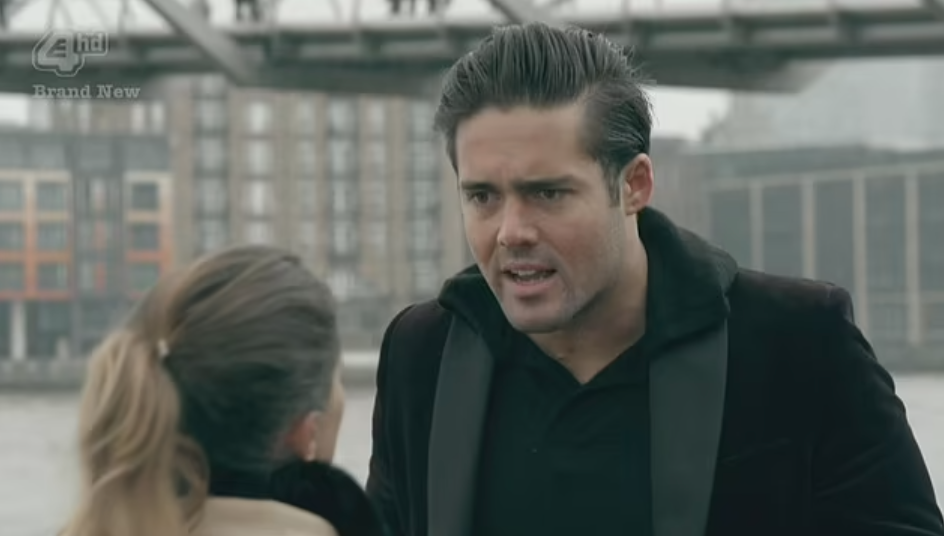
Fighting in public, particularly in the emotionally repressed UK, is deemed deeply uncouth. Our personal lives are expected to stay shut up behind closed doors. As such, the openly aired arguments that are most easily called to mind are almost always the ugliest: Made in Chelsea’s lothario, Spencer Matthews, brazenly telling his then-girlfriend Louise Thompson “It’s hard to respect you when you allow me to cheat on you,” by the Millennium Bridge in 2013, is forever burned into my brain.
But there are surprising upsides of argument walks when conducted in markedly less lecherous ways. In fact, studies have found that walking puts you in a creative mindset, which opens you up to new ideas from your partner that could lead to a smart resolution between you both.
You’re also more likely to come up with new ideas to solve whatever issue you’re facing as a pair. “Getting your body moving helps to get your brain moving,” says Columbia University psychologist Maya Rossignac-Milon. “You make connections that you wouldn’t necessarily if you were still.”
Interestingly, walking can even help couples find common ground simply through our human inclination to fall into step and march along at the same pace. “It’s called step synchrony,” says Rossignac-Milon. “You’re sharing a rhythm together, and that’s incredibly powerful.
“It puts people in this state where they feel closer to each other, they’re more motivated to connect, and they see each other as part of the same being that’s moving together, so you feel that sense of oneness with the other person. It’s also been shown to increase cooperation.”

Walking also encourages “sideways listening”. The practice, which has been around in therapeutic contexts for years, denotes when you speak with someone at an angle, rather than head-on, which can encourage them to relax and share more.
“We typically talk about conflict when we’re face-to-face,” says Rossignac-Milon. “When you’re walking, you naturally assume what’s called a cooperative stance: You’re side by side, together, looking at the world. That literal shared perspective helps you to think the same.”
Conflict resolution coach Davina Clements points out that arguments on the move are especially helpful to resolve recurring fights. “When you fall into predictable disagreements that are over the same thing, criticism and defensiveness come in, and emotions can escalate,” she explains.
“Whereas, if you’re out walking, that changed environment can change your behaviours... People tend to have their conversations in the house, or maybe in the car, but it’s really needed for them to think outside of those options and think ‘where else could be good for this conversation?’”
Although most of us start a fight whenever the mood takes us, both Clements and Rossignac-Milon encourage couples to think of tackling a difficult topic outdoors in advance, rather than just storming out the door.
“You shouldn’t do this when emotions are raised, or when you’re already in the middle of an argument,” says Clements. “That’s not a great time to continue the conversation... If someone’s feeling silenced or publicly shamed, you need to realise it’s not working and stop.”
Rossignac-Milon recommends picking a walking route that’s not too crowded so both parties feel comfortable sharing. Additionally, she notes the importance of picking a familiar area so you aren’t faced with endless route choices that could leave you lost and angry.
“What you don’t want is to get distracted by a bunch of micro-decisions that could take you away from the conversation and become a different conflict,” she says. “Don’t add a layer of confusion or complexity.”
If things do start to get heated, Clements recommends couples momentarily hit pause and embrace silence. “When we’re walking, we don’t feel the need to fill those conversational voids because the surroundings take our attention,” she says. “Walking in silence for a little while can be really grounding and make people feel safer in a conversation. So, if emotions are getting raised in any way, a bit of silence can help regulate them.”
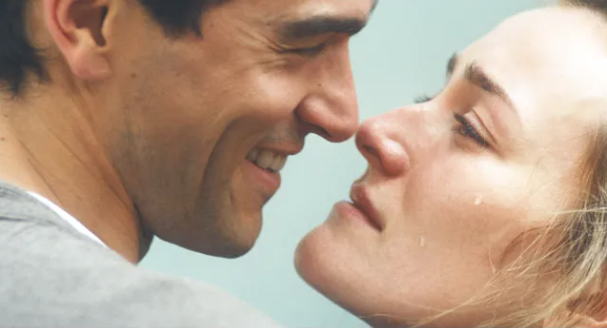
Although me and my boyfriend didn’t do the argument walk perfectly the first time around, I’d still give it another go. Because, even with our melodramatics, we came to a proactive solution to a niggling problem we’d let lurk in the shadows unaddressed for months. Then we hugged.
Notably, after Carolyn and John’s Battery Park bust-up, he told The Howard Stern Show it was just “some silly argument” to be expected of a couple who’d been dating “a long time”. They were married in a private ceremony on Georgia’s Cumberland Island seven months later.
“There’s so much movement in the inherent language we use when we talk about conflict,” says Rossignac-Milon. “We need to ‘get over’, ‘move on,’ ‘put behind us,’ or ‘we’re at a standstill’ and ‘going nowhere’ without ‘meeting halfway’ to ‘find common ground’,” she points out.
“That language is so embedded in how we talk – but we’re not acting it out. There’s a big reason why we talk about conflict this way.”
So, next time you’ve got a bone to pick – perhaps, lace up your trainers.