


 Africana55 Radio

This website uses cookies so that we can provide you with the best user experience possible. Cookie information is stored in your browser and performs functions such as recognising you when you return to our website and helping our team to understand which sections of the website you find most interesting and useful.
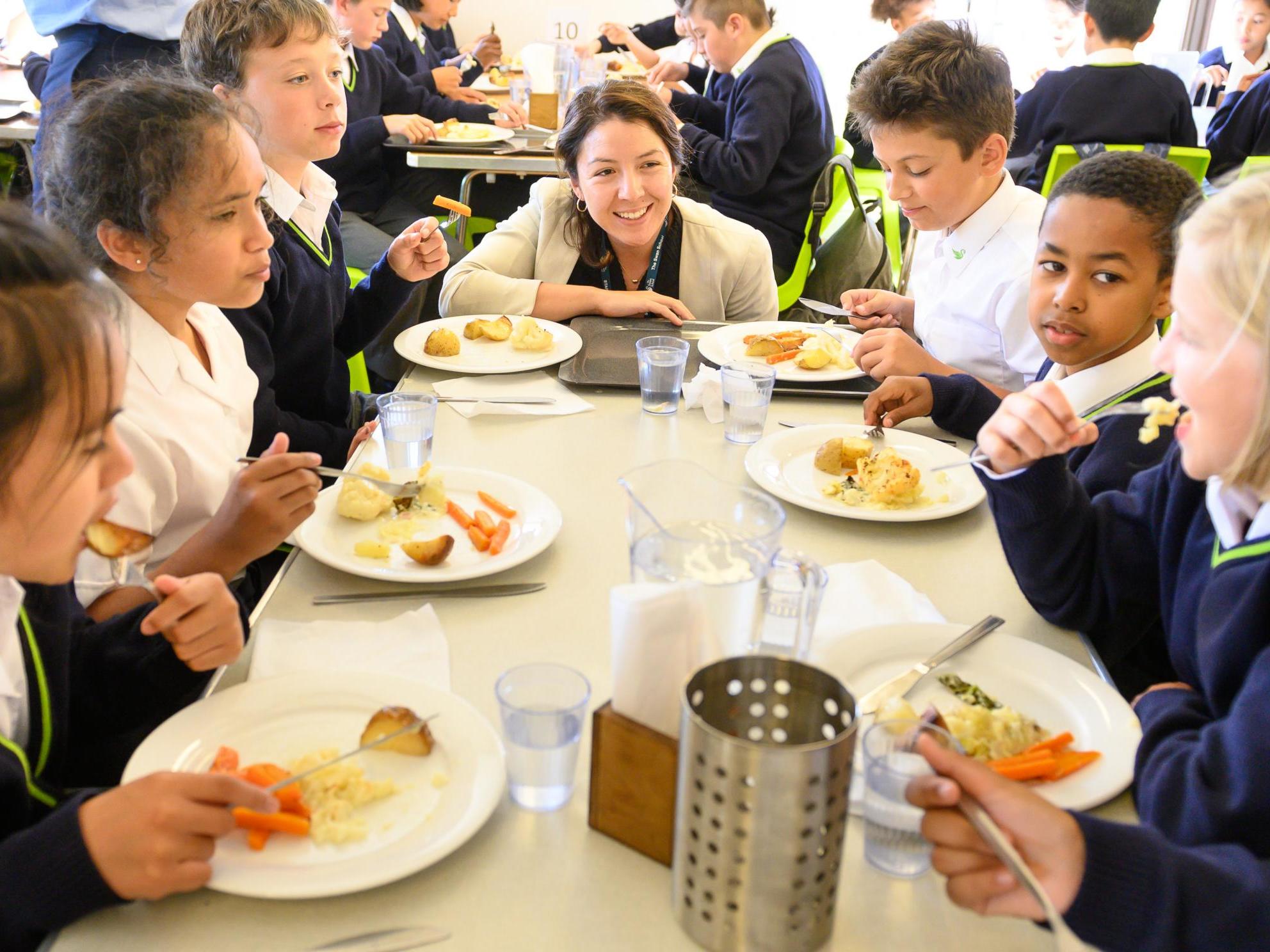
A backlash from parents has forced schools to make changes to their plans to give pupils vegetarian-only lunches.
Families complained about a lack of food choice for students after they said their children were hungry.
One school has even introduced a meat option after some parents claimed their daughters were coming home “starving” and were going to McDonald’s because they did not want to eat their lunch.
Meanwhile, other schools are now introducing more child-friendly vegetarian meals at lunchtime to appeal to pupils and reduce food waste after children were avoiding eating quinoa and courgettes.
Vegetarian schools are still a relatively rare phenomenon, especially in the state sector, but a growing number of new schools are opting for meat-free lunches to reduce their carbon footprint.
Created with Sketch.
Created with Sketch.
1/8 Davos 2019: David Attenborough issues stark warning about future of civilisation as he demands ‘practical solutions’ to combat climate change
Sir David Attenborough has issued a stark warning about climate change to business figures gathered in Davos, telling them that "what we do now...will profoundly affect the next few thousand years". On the eve of this year's World Economic Forum, the renowned naturalist told the audience that the worlds of business and politics should "get on with the practical solutions" needed to prevent environmental damage. "As a species we are expert problem solvers. But we've not yet applied ourselves to this problem with the focus it requires. "We can create a world with clean air and water, unlimited energy, and fish stocks that will sustain us well into the future. But to do that, we need a plan," he said. The broadcaster made his speech after receiving a Crystal Award, which is awarded by the forum to "exceptional cultural leaders".
AFP/Getty
2/8 At least 60% of wild coffee species face extinction triggered by climate change and disease
Two decades of research have revealed that 60 per cent of the world’s coffee species face extinction due to the combined threats of deforestation, disease and climate change. The wild strain of arabica, the most widely consumed coffee on the planet, is among those now recognised as endangered, raising concerns about its long-term survival. These results are worrying for the millions of farmers around the world who depend on the continued survival of coffee for their livelihoods. As conditions for coffee farming become tougher, scientists predict the industry will need to rely on wild varieties to develop more resilient strains
Alan Schaller
3/8 Warming Antarctic waters are speeding the rate at which glaciers are melting
The Antarctic ice sheet is losing six times as much ice each year as it was in the 1980s and the pace is accelerating, one of the most comprehensive studies of climate change effects on the continent has shown. More than half an inch has been added to global sea levels since 1979, but if current trends continue it will be responsible for metres more in future, the Nasa-funded study found. The international effort used aerial photos, satellite data and climate models dating back to the 1970s across18 Antarctic regions to get the most complete picture to date on the impacts of the changing climate. It found that between 1979 and 1990 Antarctica lost an average of 40 gigatonnes (40 billion tonnes) of its mass each year. Between 2009 and 2017 it lost an average 252 gigatonnes a year. This has added 3.6mm per decade to sea levels, or around 14mm since 1979, the study shows
Nasa/Getty
4/8 Greater Manchester to ban fracking, paving way for confrontation with government over controversial industry
Greater Manchester is to effectively ban fracking, raising the prospect of fresh confrontation with the government over the controversial industry. All of the region’s 10 councils are to implement planning policies which create a “presumption” against drilling for shale gas in their areas, Manchester mayor Andy Burnham has announced. Campaigners said the move was the latest sign that the tide was turning against fracking, which has been the subject of multiple legal battles across the country. Critics of fracking say it poses environmental and health risks. Drilling at the UK’s only operational fracking site, run by Cuadrilla in Lancashire, has repeatedly been halted due to earth tremors. But ministers support the industry and last year unveiled plans to accelerate the development of new drilling sites
Ross Wills
5/8 Japan confirms plan to resume commercial whaling in its waters from next year
Japan will resume commercial whaling next year for the first time in more than three decades, in a move that has provoked strong criticism from campaigners and the international community. Chief cabinet secretary Yoshihide Suga said his nation would leave the International Whaling Commission (IWC) to resume hunting the marine mammals in Japanese waters. However, he stated the activity would be limited to Japan’s territory and the 200 mile exclusive economic zone along its coasts. This means controversial “scientific” trips to Antarctica in which Japanese vessels killed hundreds of whales, as well as activity in the northwest Pacific, will stop in 2019
AP
6/8 COP24: Environmental groups criticise ‘morally unacceptable’ climate deal reached after major Poland summit
Diplomats from around the world have agreed a major climate deal after two weeks of United Nations talks in Poland. But climate campaigners warned the deal – effectively a set of rules for how to govern the 2015 Paris climate accord – agreed between almost 200 countries lacked ambition or a clear promise of enhanced climate action. Activists cautiously welcomed elements of the plan, saying “important progress” had been made on ensuring that efforts to tackle climate change by individual nations can be measured and compared. But environmental groups were also highly critical of the agreement, warning it lacked ambition and clarity on key issues, including financing for climate projects for developing countries. The COP24 deal, which is aimed at providing firm guidelines for countries on how to transparently report their greenhouse gas emissions and their efforts to reduce them, was confirmed on 15 December, after talks overran
Reuters
7/8 ‘Unprecedented changes’ needed to stop global warming as UN report reveals islands starting to vanish and coral reefs dying
Greenhouse gas emissions must be cut almost in half by 2030 to avert global environmental catastrophe, including the total loss of every coral reef, the disappearance of Arctic ice and the destruction of island communities, a landmark UN report has concluded. Drawing on more than 6,000 scientific studies and compiled over two years, the Intergovernmental Panel on Climate Change (IPCC) findings, released this morning, warn enormous and rapid changes to the way everyone on Earth eats, travels and produces energy need to be brought in immediately. Though the scientists behind the report said there is cause for optimism, they recognised the grim reality that nations are currently nowhere near on track to avert disaster
AFP/Getty
8/8 Africa’s three biggest elephant poaching cartels exposed using DNA from illegal ivory shipments
DNA taken from massive shipments of ivory has been used to identify the three largest wildlife trafficking gangs operating at the height of Africa’s elephant poaching epidemic. Ivory tends to be shipped around the world from African ports in bulk, and scientists have used genetic evidence gleaned from intercepted batches to reveal their origins. Led by Dr Samuel Wasser from the University of Washington, they traced a number of these shipments to three cartels operating out of Kenya, Uganda and Togo. Evidence collected by Dr Wasser has already helped convict ivory kingpin Feisal Mohamed Ali, and as his team joins the dots between shipments they plan to shore up the cases against more of the continent’s most prolific smugglers
Art Wolfe
1/8 Davos 2019: David Attenborough issues stark warning about future of civilisation as he demands ‘practical solutions’ to combat climate change
Sir David Attenborough has issued a stark warning about climate change to business figures gathered in Davos, telling them that "what we do now...will profoundly affect the next few thousand years". On the eve of this year's World Economic Forum, the renowned naturalist told the audience that the worlds of business and politics should "get on with the practical solutions" needed to prevent environmental damage. "As a species we are expert problem solvers. But we've not yet applied ourselves to this problem with the focus it requires. "We can create a world with clean air and water, unlimited energy, and fish stocks that will sustain us well into the future. But to do that, we need a plan," he said. The broadcaster made his speech after receiving a Crystal Award, which is awarded by the forum to "exceptional cultural leaders".
AFP/Getty
2/8 At least 60% of wild coffee species face extinction triggered by climate change and disease
Two decades of research have revealed that 60 per cent of the world’s coffee species face extinction due to the combined threats of deforestation, disease and climate change. The wild strain of arabica, the most widely consumed coffee on the planet, is among those now recognised as endangered, raising concerns about its long-term survival. These results are worrying for the millions of farmers around the world who depend on the continued survival of coffee for their livelihoods. As conditions for coffee farming become tougher, scientists predict the industry will need to rely on wild varieties to develop more resilient strains
Alan Schaller
3/8 Warming Antarctic waters are speeding the rate at which glaciers are melting
The Antarctic ice sheet is losing six times as much ice each year as it was in the 1980s and the pace is accelerating, one of the most comprehensive studies of climate change effects on the continent has shown. More than half an inch has been added to global sea levels since 1979, but if current trends continue it will be responsible for metres more in future, the Nasa-funded study found. The international effort used aerial photos, satellite data and climate models dating back to the 1970s across18 Antarctic regions to get the most complete picture to date on the impacts of the changing climate. It found that between 1979 and 1990 Antarctica lost an average of 40 gigatonnes (40 billion tonnes) of its mass each year. Between 2009 and 2017 it lost an average 252 gigatonnes a year. This has added 3.6mm per decade to sea levels, or around 14mm since 1979, the study shows
Nasa/Getty
4/8 Greater Manchester to ban fracking, paving way for confrontation with government over controversial industry
Greater Manchester is to effectively ban fracking, raising the prospect of fresh confrontation with the government over the controversial industry. All of the region’s 10 councils are to implement planning policies which create a “presumption” against drilling for shale gas in their areas, Manchester mayor Andy Burnham has announced. Campaigners said the move was the latest sign that the tide was turning against fracking, which has been the subject of multiple legal battles across the country. Critics of fracking say it poses environmental and health risks. Drilling at the UK’s only operational fracking site, run by Cuadrilla in Lancashire, has repeatedly been halted due to earth tremors. But ministers support the industry and last year unveiled plans to accelerate the development of new drilling sites
Ross Wills
5/8 Japan confirms plan to resume commercial whaling in its waters from next year
Japan will resume commercial whaling next year for the first time in more than three decades, in a move that has provoked strong criticism from campaigners and the international community. Chief cabinet secretary Yoshihide Suga said his nation would leave the International Whaling Commission (IWC) to resume hunting the marine mammals in Japanese waters. However, he stated the activity would be limited to Japan’s territory and the 200 mile exclusive economic zone along its coasts. This means controversial “scientific” trips to Antarctica in which Japanese vessels killed hundreds of whales, as well as activity in the northwest Pacific, will stop in 2019
AP
6/8 COP24: Environmental groups criticise ‘morally unacceptable’ climate deal reached after major Poland summit
Diplomats from around the world have agreed a major climate deal after two weeks of United Nations talks in Poland. But climate campaigners warned the deal – effectively a set of rules for how to govern the 2015 Paris climate accord – agreed between almost 200 countries lacked ambition or a clear promise of enhanced climate action. Activists cautiously welcomed elements of the plan, saying “important progress” had been made on ensuring that efforts to tackle climate change by individual nations can be measured and compared. But environmental groups were also highly critical of the agreement, warning it lacked ambition and clarity on key issues, including financing for climate projects for developing countries. The COP24 deal, which is aimed at providing firm guidelines for countries on how to transparently report their greenhouse gas emissions and their efforts to reduce them, was confirmed on 15 December, after talks overran
Reuters
7/8 ‘Unprecedented changes’ needed to stop global warming as UN report reveals islands starting to vanish and coral reefs dying
Greenhouse gas emissions must be cut almost in half by 2030 to avert global environmental catastrophe, including the total loss of every coral reef, the disappearance of Arctic ice and the destruction of island communities, a landmark UN report has concluded. Drawing on more than 6,000 scientific studies and compiled over two years, the Intergovernmental Panel on Climate Change (IPCC) findings, released this morning, warn enormous and rapid changes to the way everyone on Earth eats, travels and produces energy need to be brought in immediately. Though the scientists behind the report said there is cause for optimism, they recognised the grim reality that nations are currently nowhere near on track to avert disaster
AFP/Getty
8/8 Africa’s three biggest elephant poaching cartels exposed using DNA from illegal ivory shipments
DNA taken from massive shipments of ivory has been used to identify the three largest wildlife trafficking gangs operating at the height of Africa’s elephant poaching epidemic. Ivory tends to be shipped around the world from African ports in bulk, and scientists have used genetic evidence gleaned from intercepted batches to reveal their origins. Led by Dr Samuel Wasser from the University of Washington, they traced a number of these shipments to three cartels operating out of Kenya, Uganda and Togo. Evidence collected by Dr Wasser has already helped convict ivory kingpin Feisal Mohamed Ali, and as his team joins the dots between shipments they plan to shore up the cases against more of the continent’s most prolific smugglers
Art Wolfe
The Swan School in Oxford, which opened in September, hit the headlines last year for serving only vegetarian meals at lunchtime after parents claimed their children had come home hungry.
Kay Wood, head of the school, introduced the policy to allow students and teachers with different dietary requirements to eat the same meal together, as well as reduce the impact on the environment.
“We knew from speaking to a lot of people in the local area and lots of the children that they were very environmentally aware. Young people in general are increasingly interested in sustainability and doing their bit,” she told The Independent.
But the school will now introduce a different selection of vegetarian meals next term after children and parents raised concerns about the food options available.
Child-friendly options, such as macaroni and cheese, will be rolled out to encourage more pupils to eat meals after the school found that children were avoiding vegetables like courgettes.
Ms Wood said: “We are recognising that there are some meals that children don’t eat. That is not just bad because they then might be a bit hungry and might not have the nutrition they need, but the knock-on effect is that the food is then being thrown away which is not desirable for the environment.”
King’s Leadership Academy Bolton, which also opened in September, is also serving up meat-free lunches to be more eco-conscious, encourage healthy eating and ensure students can all eat one meal together.
But the reaction from families has been mixed. “There are some picky eaters out there. But we continue to work hard with our parents and students to provide meals they are really happy with and they want to eat,” David Crosby, head of King’s Leadership Academy Bolton, told The Independent.
The school is now introducing a soup option, alongside the main vegetarian lunch meal, following feedback.
Mr Crosby added: “We had couscous and quinoa on the menu at first and the students were not particularly pleased with that. We are now trialling a vegetarian cottage pie and lasagne.
“We are trying to do everything we can to make sure that the students are eating the food and we are also listening to parents at all times.”
Reports suggest that Woolwich Polytechnic School for Girls will no longer only serve vegetarian meals at lunchtime after parents complained that their daughters regularly came home hungry.
In a statement given to News Shopper, headteacher Subreena Kazmi said the London school is “consistently working very hard to make sure the food is delicious and nutritious” and after working with families it will now be able to offer a meat option at the same price.
Geoff Barton, general secretary of the Association of School and College Leaders (ASCL), said: “It is perfectly reasonable for schools to offer vegetarian-only lunches. Any menu needs to be tasty, healthy and nutritious, and this can easily be achieved with vegetarian meals. It is one meal in a day, and there are plenty of other opportunities to eat meat for those who wish to do so.
“We are likely to see more schools offering vegetarian-only menus on at least some days given rising concern about the environmental impact of eating meat, and demand from children and their families. In fact, the school food standards suggest that schools should encourage all children to have a meat-free day each week.”
Rob Percival, head of food and health policy at Soil Association: said: “All schools should be serving less and better meat. There is overwhelming agreement that we need to change our diets to tackle the climate and nature crises, and this includes eating more healthy plant proteins.
“Schools should be reducing the amount of meat they serve, introducing more plant proteins onto the menu, and using the cost savings to trade up to better quality meat during the rest of the week.”