


 Africana55 Radio

This website uses cookies so that we can provide you with the best user experience possible. Cookie information is stored in your browser and performs functions such as recognising you when you return to our website and helping our team to understand which sections of the website you find most interesting and useful.
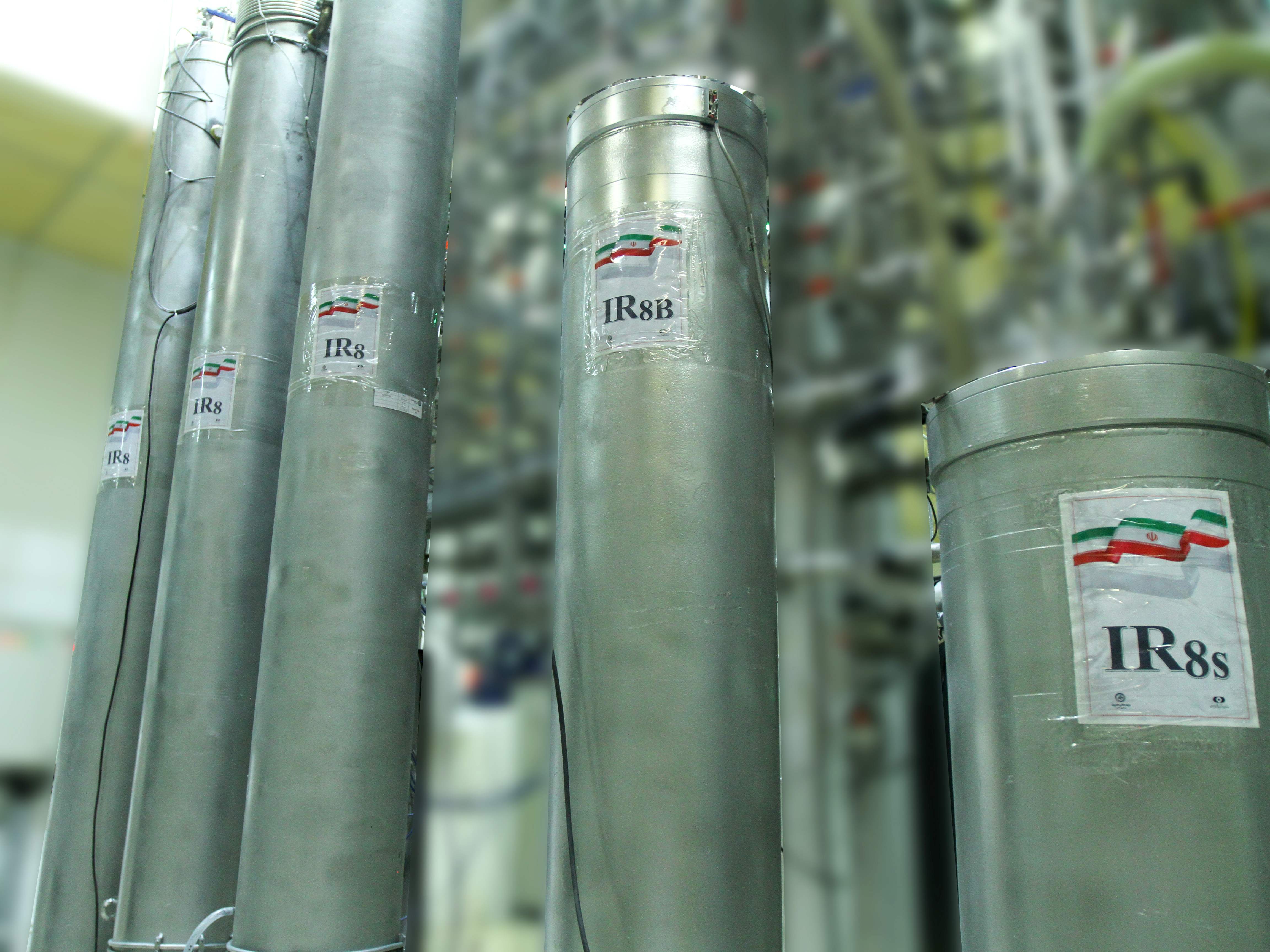
Iran has begun enriching uranium to 20 per cent purity, its most significant breach yet of the 2015 accord that placed limits on its nuclear technology programme.
Iran’s hardline Revolutionary Guard on Monday also seized control of a South Korean oil tanker in the Persian Gulf that it claimed had repeatedly violated “environmental protocols,” according to the semi-official Tasnim news agency.
The moves coincide with escalating tensions between Iran and the United States on the one-year anniversary of the 3 January American assassination of former Revolutionary Guard commander Qassem Suleimani.
Taken together, Iran’s latest measures suggest it is responding to US pressure on the country during the final weeks of the administration of departing President Donald Trump with its own counter manoeuvres, part of a long-standing doctrine of matching American escalations with its own that has been repeatedly described by senior Iranian officials.
But analysts say Iran is also attempting to strengthen its position ahead of possible talks with the administration of President-elect Joseph Biden.
“Iran wants to deter a potential strike by the US,” said Thomas Juneau, a Middle East specialist at the University of Ottawa and a former Canadian defence department analyst. “It needs to signal that it’s able to act. At the same time, Iran is putting its pieces in place to maximise its position with the Biden administration when it comes into office. It is under massive pressure from the US and its needs to build up assets that it trades away.”
Government spokesman Ali Rabiei said that Iran had begun increasing enrichment to levels beyond the five per cent threshold necessary for fueling power reactors early in the morning at its underground mountain facility in Fordow, which itself was a site that was supposed to be mothballed under the terms of the Joint Comprehensive Plan of Action (JCPOA), the nuclear deal that was abandoned by Mr Trump in 2018.
Iran has been steadily expanding its nuclear programme beyond the limits set by the JCPOA in response to an aggressive campaign of US sanctions that have damaged its economy.
“We resumed 20 per cent enrichment, as legislated by our Parliament,” Iran’s foreign minister Mohammad Javad Zarif wrote on Twitter. “Our remedial action conforms fully with [the] JCPOA, after years of non-compliance by several other JCPOA participants. Our measures are fully reversible upon FULL compliance by ALL.”
Uranium enriched to 20 per cent is not enough to fuel a bomb, which requires purity levels of 80 percent or higher. While enriching uranium is a technically complicated and difficult process, enriching to higher levels is much easier once the initial stages have been mastered, according to physicists.
“This is a significant escalation,” said Kelsey Davenport, director of nuclear non-proliferation at the Arms Control Association, a Washington think tank and advocacy group. “ Enriching to 20 per cent constitutes about 90 per cent of the necessary work to produce weapons-grade uranium. Twenty per cent poses a more serious proliferation risk, and stockpiling material at this level will begin to reduce Iran’s breakout time more quickly.”
Mr Rabiei said the International Atomic Energy Agency has been notified of Iran’s decision. If verified by inspectors, Iran’s move would complicate any efforts by the administration of President-elect Joseph Biden to re-enter the deal once he takes office on 20 January, as well as an ongoing attempt to keep the JCPOA alive by its other signatories, including the United Kingdom, Germany and France.
Iran hasn’t produced 20 per cent enriched uranium since 2013, when it halted under the terms of an interim nuclear deal that preceded the JCPOA. It eventually agreed to trade away its 300-kilogram stockpile of enriched uranium to Russia, which along with China, was also a signatory to the deal that Mr Trump abandoned and his allies have tried to sabotage.
The decision to restart production of 20 per cent enriched nuclear fuel comes just weeks after the assassination of military scientist Mohsen Fakhrizadeh, deemed the father of Iran’s nuclear programme, in a hit pinned on Israel.
Iran has vowed to retaliate in a number of ways for the killing, including ramping up dormant sections of its nuclear programme. While Iran’s nuclear moves amount to exercises in signalling that can be quickly reversed once Mr Biden takes office and potentially removes sanctions, there is the danger that its actions could be misinterpreted by others, said Mr Juneau.
“As much as it wants to avoid confrontation, the signals it sends might be misperceived as provocation by the Trump administration,” he said.
On Tuesday, Iran’s armed forces are scheduled to begin a massive two-day combat drone exercise over the deserts of the central province of Semnan.
Iran Nuclear
Tensions between the US and Iran have escalated in recent weeks. On Sunday, the US military announced it was reversing a decision to remove an battleship group led by the USS Nimitz from the Persian Gulf, citing “threats” against US officials, which may have included comments by Iran’s President Hassan Rouhani that Mr Trump would end up like Saddam Hussein, who was hanged from the gallows in 2006.
“Due to the recent threats issued by Iranian leaders against President Trump and other US government officials, I have ordered the USS Nimitz to halt its routine redeployment,” acting US Defence Secretary Chris Miller said in a statement late Sunday. “No one should doubt the resolve of the United States of America.”
The Hankuk Chemi, the giant tanker ship seized by the Revolutionary Guard, was loaded with 7,200 tonnes of ethanol and had left al-Jubeil Port in Saudi Arabia for South Korea, and was docked at Iran’s Bandar Abbas port, pending judicial proceedings, Iranian news agencies reported.
Mr Biden and members of his incoming team have said they are eager to reenter the JCPOA while also negotiating other aspects of what they describe as Iran’s disruptive behaviour in the region, including its support for armed groups and its missile programme. But a bill introduced by Iranian lawmakers in recent days would bar any talks with the US on any topic other than its nuclear programme.
While Iran has been transparent about its intent to up its enrichment levels and allowed inspectors to observe the process, the move risks undermining a restoration of the JCPOA.
“I think this is part of Iran’s campaign to pressure the US back into the JCPOA and deliver on sanctions relief,” said Ms Davenport. “What I’m concerned about is that Iran is mis-calibrating its leverage. Europeans warned against Iran taking this step, and their patience is wearing thin.”