


 Africana55 Radio

This website uses cookies so that we can provide you with the best user experience possible. Cookie information is stored in your browser and performs functions such as recognising you when you return to our website and helping our team to understand which sections of the website you find most interesting and useful.
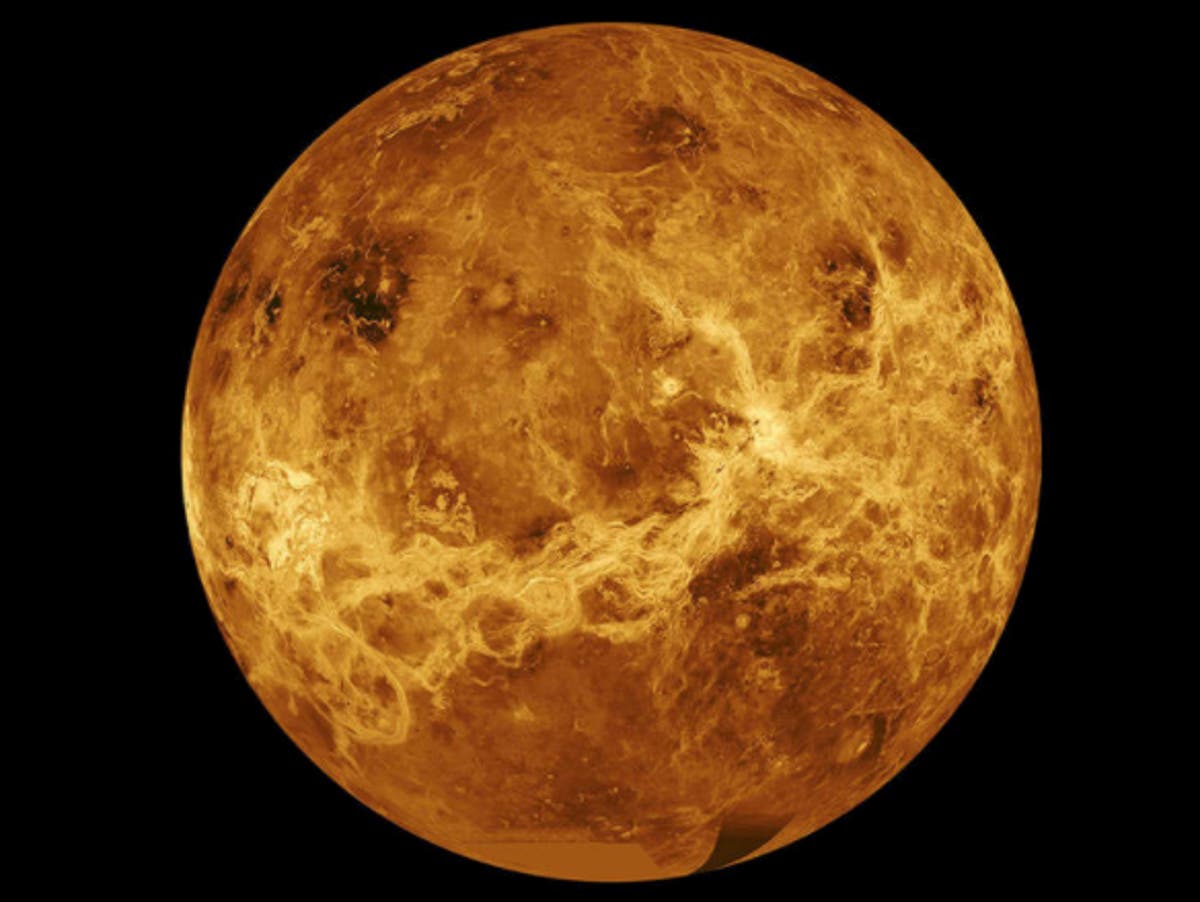
Venus is more “Earth-like” than scientists previously thought, after new research suggests the planet is still geologically active.
A surprising analysis of Earth’s closest neighbour, which has a similar size and density to our own planet, has found evidence of tectonic motion.
Crustal blocks, which researchers from North Carolina State University compare to “broken chunks of pack ice”, suggest that Venus has a previously unrecognised pattern of tectonic deformation, driven by interior forces much like Earth. “Although different from the tectonics we currently see on Earth, it is still evidence of interior motion being expressed at the planet’s surface,” said Paul Byrne, associate professor of planetary science.
Scientists previously believed that Venus had an immobile lithosphere (a solid outer shell) similar to Mars or the Moon, rather than the moving one Earth has. However, using radar images from Nasa’s Magellan mission to map the surface of Venus, they saw areas where the lithosphere moved and rotated past each other.
“These observations tell us that interior motion is driving surface deformation on Venus, in a similar way to what happens on Earth,” Byrne said. “Plate tectonics on Earth are driven by convection in the mantle. The mantle is hot or cold in different places, it moves, and some of that motion transfers to Earth’s surface in the form of plate movement.
“A variation on that theme seems to be playing out on Venus as well. It’s not plate tectonics like on Earth – there aren’t huge mountain ranges being created here, or giant subduction systems – but it is evidence of deformation due to interior mantle flow, which hasn’t been demonstrated on a global scale before.”
(Paul Byrne)
These deformations suggest that Venus is still geologically changing – with possible recent activity. This could give scientists not only more information about the geology of other planets in the solar system, and in the universe, but also about Earth’s past.
“Heat flow from the young Earth’s interior was up to three times greater than it is now, so its lithosphere may have been similar to what we see on Venus today: not thick enough to form plates that subduct, but thick enough to have fragmented into blocks that pushed, pulled, and jostled,” Byrne says.
The research appears in Proceedings of the National Academy of Sciences, but more data about Venus will be gathered when Nasa and the European Space Agency launch two missions to the strange planet between 2028 and 2030.
Davinci+ will measure the atmosphere on Venus, to understand how it evolved and examine the possibility of a Venerian ocean.
Veritas, meanwhile, will gather information about the planet itself to understand how it developed to differently from Earth despite being our ‘sister planet’.
“It is astounding how little we know about Venus, but the combined results of these missions will tell us about the planet from the clouds in its sky through the volcanoes on its surface all the way down to its very core,” said Tom Wagner, Nasa’s Discovery Program scientist, said. “It will be as if we have rediscovered the planet.”