
 Africana55 Radio
 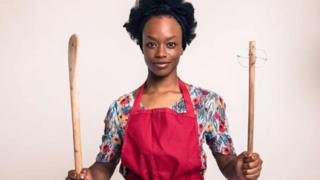 Image copyright Cook Off
Zimbabwe's first film to feature on streaming service Netflix is a romantic comedy about a struggling single mother who finds love and good fortune in a TV cooking show contest.
It is a tale of hope that mirrors the production of Cook Off, made in 2017 on a budget of $8,000 (£6,400), amid power cuts and cash shortages.
This month's Netflix launch comes as the nation continues to contend with spiralling inflation, sharp political differences - and now a coronavirus lockdown that is making life even more difficult for Zimbabweans.
Cook Off
The industry's journey from the 1980s until now is very much like Zimbabwe's own journey as a nation. It was very promising at the beginning
Only a handful of full-length films have been produced in the country since the turn of the millennium, despite a wealth of talent in the industry.
But with an all-Zimbabwean cast of young actors, veterans of the industry, and distinguished figures in music, comedy and poetry, Cook Off has battled the odds, winning awards at film festivals before attracting the attention of Netflix.
Cook Off stars Tendaiishe Chitima as Anesu, and leading hip-hop artist Tendai Ryan Nguni aka Tehn Diamond, as Prince, who meet on the set of a television cookery competition.
Jesesi Mungoshi plays Anesu's grandmother, encouraging her to follow her dreams.
Mungoshi starred in the 1993 film Neria, the first Zimbabwean film to receive international acclaim, and has experienced the ups and downs through 40 years of independence.
Zimbabwe in five numbers:
- 2 = tally of leaders in the last 40 years: Robert Mugabe and Emmerson Mnangagwa
- 5 = number of World Heritage sites, including Great Zimbabwe and Victoria Falls
- 63% = those living below the poverty line
- 89% = adult literacy rate
- 785% = annual inflation rate in May (this was 231m% in July 2008)
(Source: UN, World Bank)
"The industry's journey from the 1980s until now is very much like Zimbabwe's own journey as a nation," she says.
"It was very promising at the beginning. We had the likes of Denzel Washington coming here, and King Solomon's Mines was shot here in 1985. Most of us learned on the job back then, we had no film school."
The industry "thrived" in the 1990s , but it was mostly donor-funded and became "crippled" in the early 2000s as aid dried up because of the political and economic crisis that had hit Zimbabwe at the time, Mungoshi said.
'New chapter'
Cook Off was only possible because of a large collaboration, financial goodwill from many parties, and the sharing of resources, including the main set, which had been used for a show on national television.
Bonga Nikumbula/Cook Off
The road wasn't easy. Like everything in Zimbabwe, it's a big fight - especially with the minimal resources that we had"
Co-producer Joe Njagu feels making it on to Netflix is a huge breakthrough.
"It's a big foot in the door, a chance for the world to see what Zimbabwe is capable of, an opportunity for us to introduce our craft, our stories to the rest of the world," said Njagu.
"The road wasn't easy, like everything in Zimbabwe, it's a big fight, especially with the minimal resources that we had. Cook Off is a classic example of what collaboration can bring," he said.