


 Africana55 Radio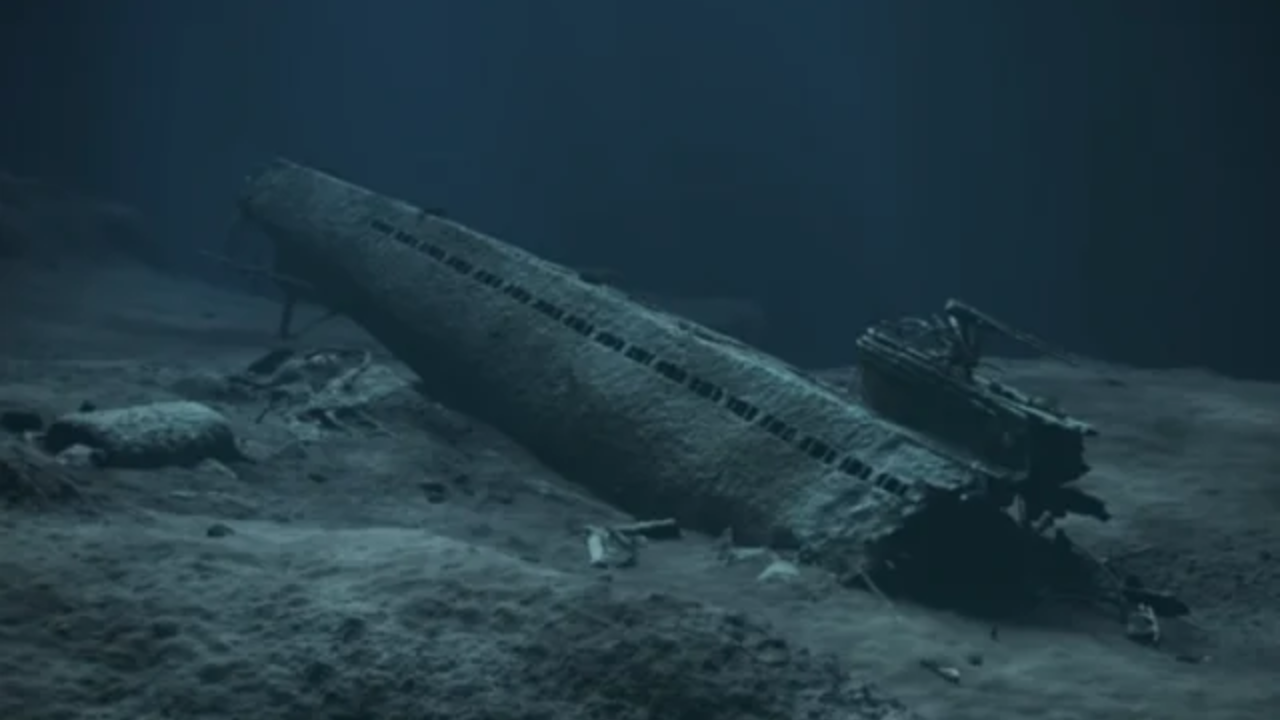


This website uses cookies so that we can provide you with the best user experience possible. Cookie information is stored in your browser and performs functions such as recognising you when you return to our website and helping our team to understand which sections of the website you find most interesting and useful.
In February 1945, the British submarine HMS Venturer sank the German U-boat U-864 off Norway’s Fedje island, killing all 73 people aboard. More than eight decades later, the wreck has become the centre of a very different problem: a potentially massive mercury cargo that remains on the seabed. In June 2026, Norwegian authorities recovered 22 mercury containers from the wreck during an underwater investigation, as per a report by Diario AS.According to Norway’s Coastal Administration, Kystverket, a wartime Japanese order found in British archives referred to 1,867 mercury containers intended for U-864. If the entire shipment was loaded, it would have amounted to between 65 and 67 tonnes of metallic mercury. However, there are no surviving loading documents that confirm exactly how much mercury was actually aboard when the submarine sank.
The submarine’s final mission
U-864 was a German Type IXD2 submarine that was travelling from Germany via Norway towards Japan during the final months of World War II. Its mission, known as Operation Caesar, involved transporting specialists, military equipment and materials intended to support Japan’s wartime industry. Among the cargo was mercury, a strategically important material at the time. The submarine never reached Japan. On February 9, 1945, HMS Venturer located U-864 off the Norwegian coast. The British submarine fired torpedoes while both submarines were submerged, striking U-864 and breaking it apart. Norwegian authorities describe the encounter as a unique event in naval history: the first known instance of one submerged submarine sinking another submerged submarine. All 73 people aboard U-864 died, including two Japanese engineers. The wreck came to rest at approximately 150 metres below the surface, around 4 kilometres west of Fedje. It remained undiscovered for decades.
Wreck found nearly 60 years later
U-864 was located by the Norwegian Navy’s vessel KNM Tyr in 2003. Investigations subsequently established that the submarine had broken into two major sections, with additional debris scattered around the site. The potential mercury cargo quickly became the central concern.Norwegian authorities say the Japanese wartime order discovered in British archives called for 1,867 containers. If all had been loaded, the mercury cargo would have weighed approximately 65-67 tonnes. But because the original loading documents have not been found, the figure remains an estimate rather than a confirmed inventory.That distinction is important. The wreck is believed to have carried up to 67 tonnes, rather than authorities having established that precisely 67 tonnes went down with it. What is certain is that mercury remains in and around the wreck.Norwegian government records say an area of approximately 47,000 square metres around U-864 is contaminated with mercury. Analyses and calculations have indicated that about 4 kilograms of mercury per year are leaking from the contaminated area.
Why mercury is such a concern
Mercury is a persistent environmental contaminant. Unlike many substances that degrade naturally, mercury can remain in the environment and move between water, sediments and living organisms. Of particular concern is methylmercury, a form that can be produced by microorganisms under certain environmental conditions. It can accumulate in aquatic organisms and become increasingly concentrated higher up the food chain.That is why mercury contamination around a marine wreck can become an issue extending beyond the immediate site. Norway has monitored fish and shellfish around U-864 for years. Authorities have also imposed precautionary dietary advice relating to seafood caught close to the wreck site. The Norwegian government's historical overview records that such advice was introduced in 2005 for pregnant and breastfeeding women and young children.
Robots reach the mercury cargo
The latest chapter began after Norway commissioned a new investigation of U-864. In August 2024, the Norwegian Ministry of Trade, Industry and Fisheries instructed Kystverket to conduct further surveys of the wreck and surrounding seabed. The objective was to reduce uncertainty around the condition of the submarine, its mercury containers, the surrounding sediment and the feasibility of recovering some of the cargo.A seabed survey was carried out in May 2025. Kystverket used remotely operated underwater equipment to examine the wreck and its surroundings, including the keel structures where the mercury containers were believed to be stored. The next stage brought investigators directly to the cargo.In June 2026, workers focused on the bow section and exposed six keel boxes. In two of the forward boxes, they found mercury containers. Twenty-two containers were brought to the surface for examination. Investigators also found free-flowing mercury inside some of the keel boxes and in the seabed around the wreck. Kystverket initially estimated that roughly half a tonne of mercury had been recovered from the keel boxes. The operation also revealed how badly the containers had deteriorated after more than 80 years underwater.About 80% of the recovered containers showed damage and leakage, according to Kystverket. Several were marked “Almaden”, referring to Spain’s historic mercury-producing region and providing clues about the origin of at least part of the cargo.
The cleanup itself created a problem
Recovering mercury might appear to be the straightforward solution, but the 2026 operation demonstrated why authorities are cautious. Working around the wreck can disturb contaminated sediment and potentially release mercury into the surrounding environment. Kystverket's assessment found that free mercury was present both inside the keel boxes and in the seabed.Its September 2026 report concluded that it is technically possible to reach the mercury containers using remotely operated underwater vehicles. But it also found that work around the wreck could cause mercury and contaminated sediment to spread. This has created a difficult engineering calculation: removing mercury could reduce a long-term pollution source, but the process of reaching damaged containers could temporarily increase contamination.
Norway now considers sealing the wreck
After its 2025-26 investigation, Kystverket assessed two broad options: attempting to recover mercury containers before covering the site, or moving directly to covering the wreck and contaminated seabed.The agency concluded that both approaches could reduce environmental risk over the long term. However, it said recovering the cargo carried greater risk of mercury spreading during the operation and would be significantly more expensive than covering the site. Kystverket therefore recommended that the wreck and contaminated sediments be covered as a permanent environmental measure.The agency said a cover would provide a more predictable solution and lower environmental risk during implementation. It also noted that even if some mercury were successfully removed, the site would still need to be covered afterwards. That recommendation is not yet the final decision. Kystverket submitted its assessment to Norway’s Ministry of Trade, Industry and Fisheries, which will decide what action should be taken. The decision will determine how Norway manages one of its most challenging underwater pollution sites in the years ahead. Read More