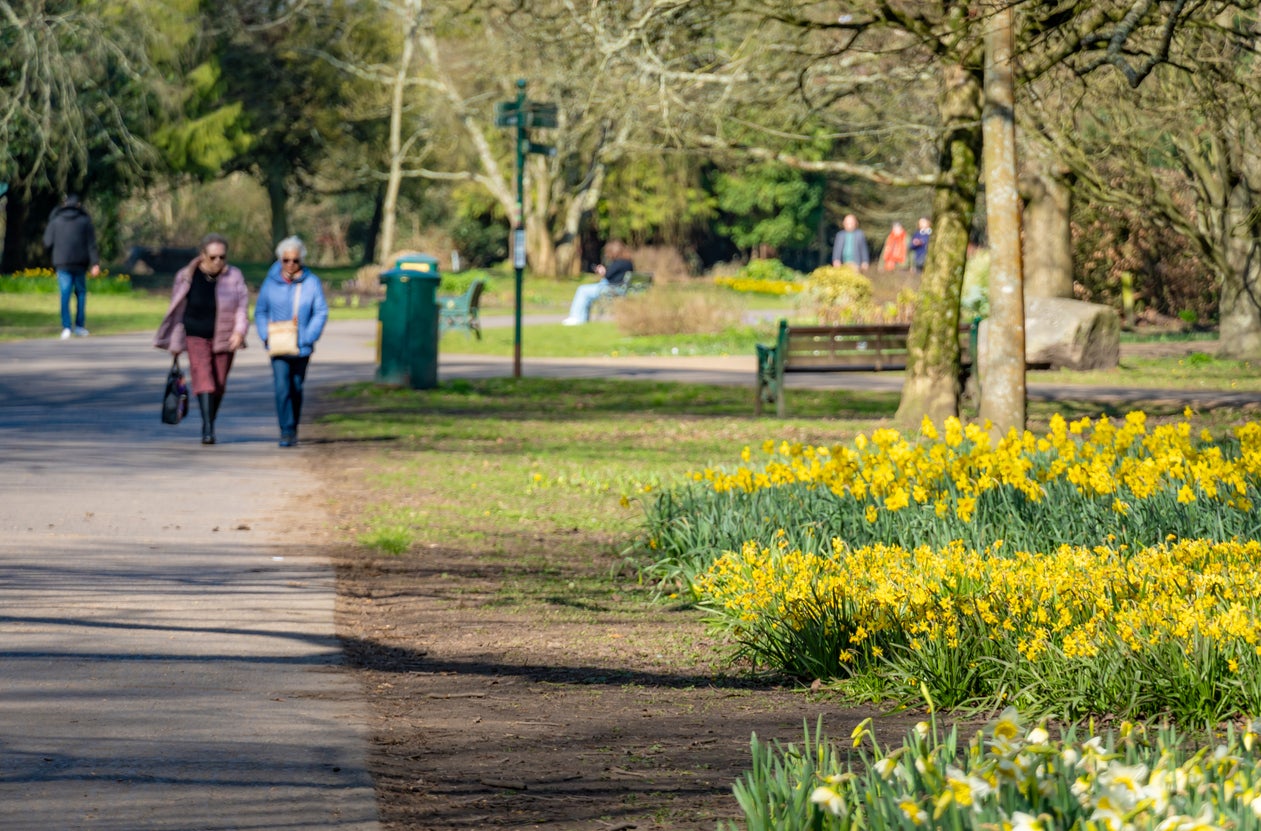
The modern workday unfolds largely indoors. Long hours spent commuting, sitting in meetings and staring at screens can make time outdoors feel like a luxury. Finding time for nature in an already packed workday can feel impossible, especially if you think nature only “counts” when it involves hiking boots and camping gear.
But a growing body of research suggests that nature’s benefits don’t require an exotic vacation getaway or weekend adventure. Even brief, routine interactions with green space can reduce stress, improve mood and promote overall well-being.
(Getty Images)
I spent the spring of 2026 teaching and studying urban landscapes in Denmark, a country consistently ranked among the happiest in the world. I expected to find thoughtfully designed parks, courtyards and bicycle paths. I did see those things. But what surprised me was how seamlessly people moved through those spaces as part of their ordinary lives.
These green spaces weren’t aspirational destinations, reserved for special occasions. They were places to eat lunch, meet friends, walk through on the way home from work, or just pause for a few quiet moments. Getting outside seemed a part of the natural rhythm of the day.
Denmark‘s outdoor culture stemmed not only from the creation of a meticulously planned network of parks, but also from the way green spaces were fundamentally woven into the routines of everyday life.
Everyday parks, everyday benefits
Evidence linking time spent in nature with health benefits has increasingly shaped public policy. In the U.S., for example, the National Park Service’s Healthy Parks Healthy People and ParkRx initiatives reflect a growing recognition that access to parks contributes to well-being.
For many Americans, however, the word “park” brings to mind iconic national parks such as Yellowstone, Yosemite or the Grand Canyon. Yet visiting parks of all kinds can improve your overall health. The greatest public health value may come not from the parks people visit once in a lifetime but from those close enough to visit again and again.
My own research on Civil War battlefield parks illustrates this point. These are parks that were established to commemorate historic conflicts that were frequently fought on the fringes of major metropolitan areas. Consequently, many of these landscapes preserve forests, grasslands and trails within easy reach of millions of Americans.
Because they’re accessible without extensive travel or planning, they can become places people return to repeatedly – such as during a lunch break or after work. Reframing the notion of “park” opens up millions of acres of land for everyday uses.
Yet visiting parks of all kinds can improve your overall health (Getty Images)
Designing for everyday nature
At the University of Richmond, where I work, a stream restoration projects became an opportunity to rethink how nature fits into campus life. Landscape architects designed an Eco-Corridor, as the project became known. It has walking paths, gathering spaces and seating areas for quiet reflection alongside flowing streams and native vegetation.
The result was a landscape that supports biodiversity and improves water quality while also creating places for students, faculty and staff to walk between meetings, eat lunch alfresco or spend a few quiet moments outside during the workday. Its ongoing care depends on an army of volunteers who spread mulch, remove invasive plants and tend the community garden. For these volunteers, stewardship between classes and meetings meant another opportunity to interact with nature.
What we learned was that nature doesn’t have to compete with work, studying or everyday responsibilities. Thoughtful landscape design can make spending time outdoors, even if only for a few short minutes, feel like a normal part of the day.
No one’s 20s and 30s look the same. You might be saving for a mortgage or just struggling to pay rent. You could be swiping dating apps or trying to understand childcare. No matter your current challenges, our Quarter Life series has articles to share in the group chat, or just to remind you that you’re not alone.
An everyday mindset
The design of natural spaces matters, but it is only part of the story. You might be familiar with the Danish concept of “hygge,” which means coziness. Less well known is the Scandinavian concept of “friluftsliv,” which refers to living life in the outdoors. It describes a love of nature and emphasizes that the more time spent in fresh air, the better.
The data supports the benefits of this way of living. A COVID-era study of international students in their 20s and 30s living in Berlin found that frequent visits to nearby parks supported participants’ social connections and significantly improved their emotional and social well-being.
In Copenhagen, educators and therapists use specially designed forests and therapy gardens as places for reflection and stress recovery. Visitors to these landscapes are encouraged to slow down, engage their senses and temporarily step away from the constant demands of work and technology. This kind of attentive engagement can amplify nature’s restorative benefits. It can transform familiar green spaces into places that provide psychological relief from stress-related illness.
Of course, daily contact with nature may look different in American cities designed around car use than in Berlin or Copenhagen, where compact neighborhoods and extensive walking and cycling infrastructure result in near-perfect walkability scores. Even in less walkable communities, however, a short walk before work or a visit to a local park at the end of the day can provide many of the same benefits. A 2026 study in Raleigh, North Carolina, found that sitting on a bench for just 10 minutes listening to birdsong left college students feeling less stressed and emotionally refreshed.
About the author
Todd Lookingbill is a Professor of Geography, Environment, and Sustainability, University of Richmond. This article was first published by The Conversation and is republished under a Creative Commons licence. Read the original article.
5 simple ways to make nature routine
The encouraging news is that bringing more nature into daily life doesn’t require a dramatic lifestyle change or even a visit to a therapy garden. Small, repeatable habits can make a meaningful difference.
Eat lunch outside. Find a park bench or shady tree and enjoy a meal outdoors for a mental reset.
Choose a greener commute. Walk through a park, along a river trail or down a tree-lined street whenever possible.
Take a 10-minute nature break. Put away your phone, slow your pace and pay attention to the sights, sounds and textures around you.
Walk and talk. Hold walking meetings or catch up with friends outside rather than sitting in another conference room.
Find a reason to keep coming back. Join a bird walk, nature program, volunteer day or other event to make spending time outdoors a regular habit.
Walk through a park, along a river trail or down a tree-lined street whenever possible (Getty Images)
Beyond the weekend warrior
My time in Copenhagen changed how I think about nature. The parks were beautiful, but what stayed with me was the people and their mindset about getting outdoors. I left convinced that spending time in nature isn’t always about planning the next weekend getaway. Sometimes it’s about taking advantage of the opportunities in your own backyard.
Eleftherios Saftis, a health psychologist and DIS Copenhagen faculty member whose teaching and research explore ecopsychology and the role of nature in psychological well-being, contributed to writing this article.
This website uses cookies so that we can provide you with the best user experience possible. Cookie information is stored in your browser and performs functions such as recognising you when you return to our website and helping our team to understand which sections of the website you find most interesting and useful.
Strictly Necessary Cookies
Strictly Necessary Cookie should be enabled at all times so that we can save your preferences for cookie settings.
If you disable this cookie, we will not be able to save your preferences. This means that every time you visit this website you will need to enable or disable cookies again.



 Africana55 Radio