


 Africana55 Radio

This website uses cookies so that we can provide you with the best user experience possible. Cookie information is stored in your browser and performs functions such as recognising you when you return to our website and helping our team to understand which sections of the website you find most interesting and useful.
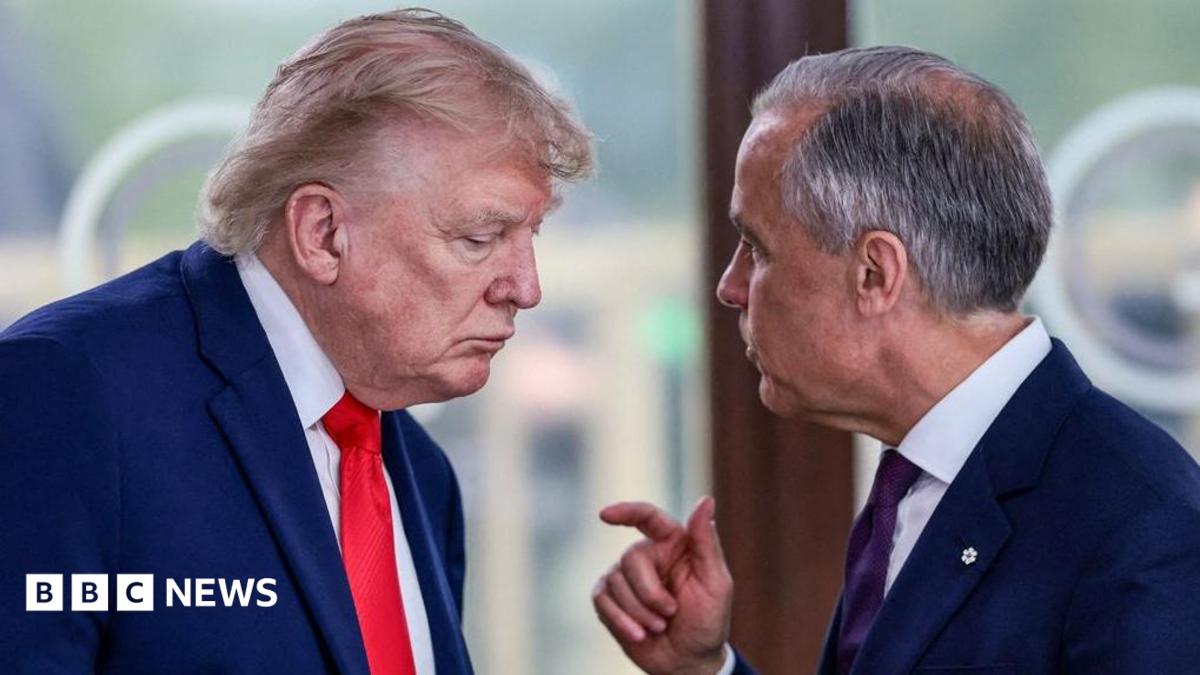
For a week, it seemed that a deal between Washington and Ottawa was in reach.
It's still unclear exactly how the talks fell apart in the final hours, but by all accounts it came down to the wire.
Carney said that late US proposed terms "were unfair, uneconomic, and called into question the reliability of any deal".
He added on Saturday those terms included demands on the automobile sector and "unacceptable" restrictions on trade deals with other countries.
In one biting line, he said of the Trump administration: "We recognise sometimes its signature is written in pencil."
US trade representative Jamieson Greer, meanwhile, pointed to "new demands and walk backs of other commitments by Canada".
In a statement on Friday, the Distilled Spirits Council of the United States suggested "Canadian provinces' continued refusal to return US spirits products to store shelves has led to this outcome".
There were also reports by Canadian media, external that US Commerce Secretary Howard Lutnick was unhappy with the deal. The BBC has contacted his office for comment.
And as details on an interim trade agreement with the US trickled out over last week, some provincial leaders, industry groups and political opponents raised concerns that the prime minister had not delivered on the fight he promised - though Carney denied that swayed his thinking.
Ford, usually one of the most vocal Canadian politicians on US tariffs, had been silent on the tentative deal all week. But in a letter sent to Carney, he raised concerns that an agreement under pressure would “embolden the United States to seek concession after concession".
The province, which has a large manufacturing and vehicle sector, has been among the hardest hit regions in this trade dispute.
Conservative opposition leader Pierre Poilievre said that any agreement that included "one-sided" tariffs on Canadian industry would be "a bad deal".
On Saturday, he backed Carney's decision to walk away for now, saying: "Canada cannot accept one-sided tariffs that will de-industrialise our country."
The collapse of this agreement calls into question the future of such talks, including an ongoing review of the US-Mexico-Canada free trade pact.
Now Carney - and Canada - must wait to see how Trump responds.