


 Africana55 Radio

This website uses cookies so that we can provide you with the best user experience possible. Cookie information is stored in your browser and performs functions such as recognising you when you return to our website and helping our team to understand which sections of the website you find most interesting and useful.
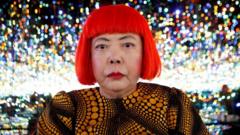

In 1965, her work "Infinity Mirror Rooms", in which mirrors and lights create seemingly endless spaces, attracted millions of visitors. Later, her polka dot and pumpkin works became highly sought-after.
However, she became distressed when her ideas were copied by or "inspired" her male contemporaries – including Andy Warhol, Claes Oldenburg and Lucas Samaras – whose works would be displayed at more prestigious galleries.
After spending years watching male artists gain recognition for her work, she returned home to Japan – feeling dejected and distraught.
She entered a psychiatric facility receiving treatment for mental illnesses, where she would live and work for the remainder of her life.
Miraculously, she managed to find a hospital where the doctors were interested in art therapy and checked herself in. Such a secure environment allowed her to focus on creating art.
Through the 1970s and early 80s, her work depicted uncharacteristically dark series' of collages in which she embraced the imagery of natural life cycles.