
 Africana55 Radio


This website uses cookies so that we can provide you with the best user experience possible. Cookie information is stored in your browser and performs functions such as recognising you when you return to our website and helping our team to understand which sections of the website you find most interesting and useful.

Want to bookmark your favourite articles and stories to read or reference later? Start your Independent Membership today.
Already a member? Log in
Olympic drama takes centre stage this week, from the dramatic downfall of Ben Johnson as he is stripped of his gold in Seoul to Sydney narrowly snatching the 2000 Games from Peking. Ongoing instability in Afghanistan spans two eras of American foreign policy as early retaliation against the Taliban gives way to prolonged conflict. Meanwhile, grassroots movements are on the rise as monks and nuns spearhead the Saffron Revolution in Burma, and students lead the world in climate action. Explore these stories and more in this week’s archive gallery.
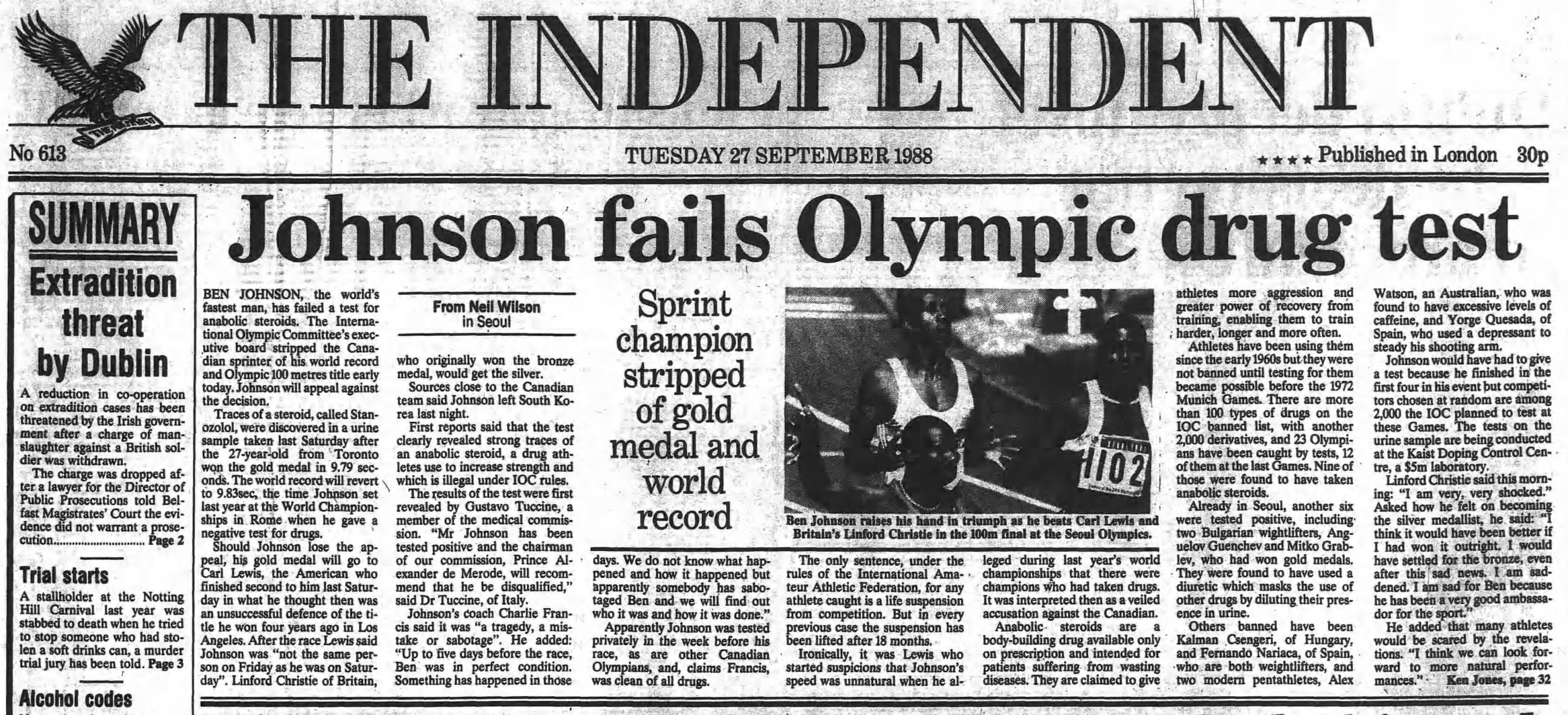
27 September 1988 – Ben Johnson stripped of Olympic gold after failing drug test
Canadian sprinter Ben Johnson shocks the sporting world after testing positive for anabolic steroids at the Seoul Olympics. The International Olympic Committee swiftly strips the athlete of his 100 metres title and erases his astonishing world record. The gold medal was subsequently awarded to American rival Carl Lewis, while Johnson was ultimately banned from athletics for life following a second doping violation years later.
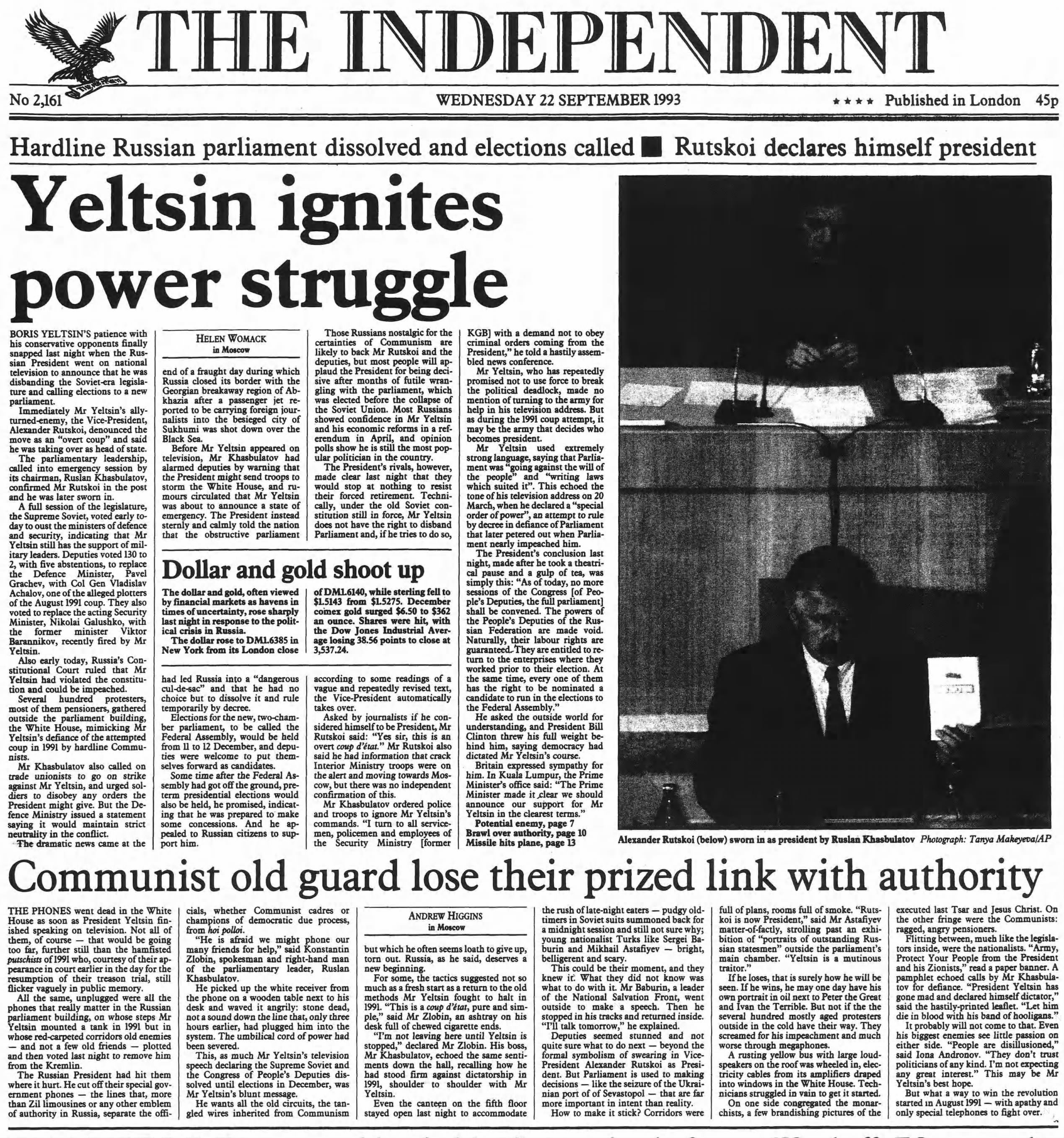
22 September 1993 – Yeltsin ‘ignites power struggle’
Russian president Boris Yeltsin sparks a constitutional crisis by abruptly disbanding the Soviet-era legislature during a national television address. Vice-president Alexander Rutskoi immediately declares himself acting president as the communist old guard resists losing their authority. This standoff ultimately escalated into open armed conflict just weeks later.
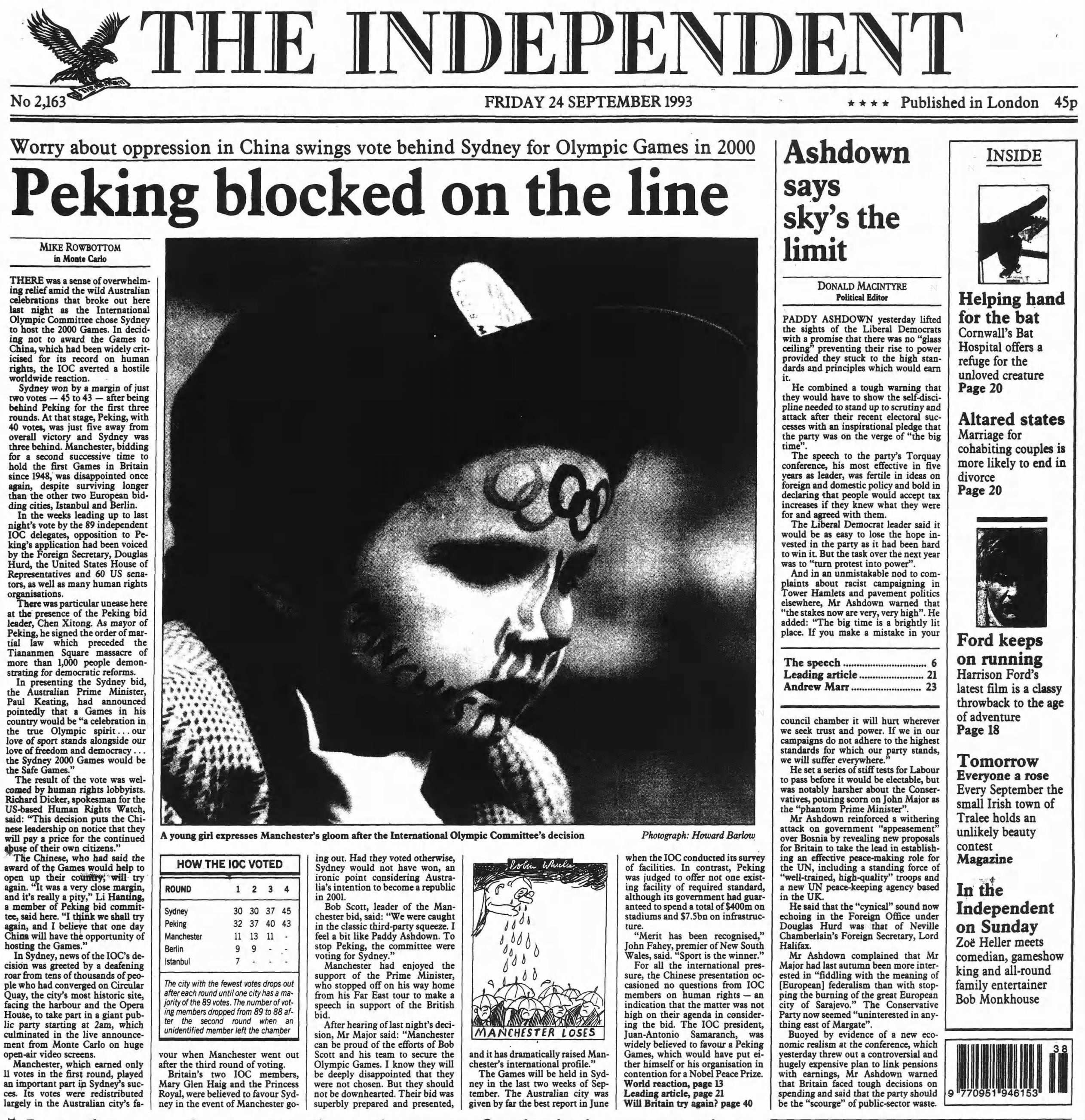
24 September 1993 – Peking loses Olympic bid to Sydney over oppression fears
Sydney narrowly secures the 2000 Olympic Games after international anxiety over Chinese state oppression derails the highly competitive bid from Peking. The controversial Chinese delegation was notably led by Chen Xitong, the official who authorised martial law during the Tiananmen Square massacre. The city would, however, go on to host the Olympic Games in 2008, under its modern name of Beijing.
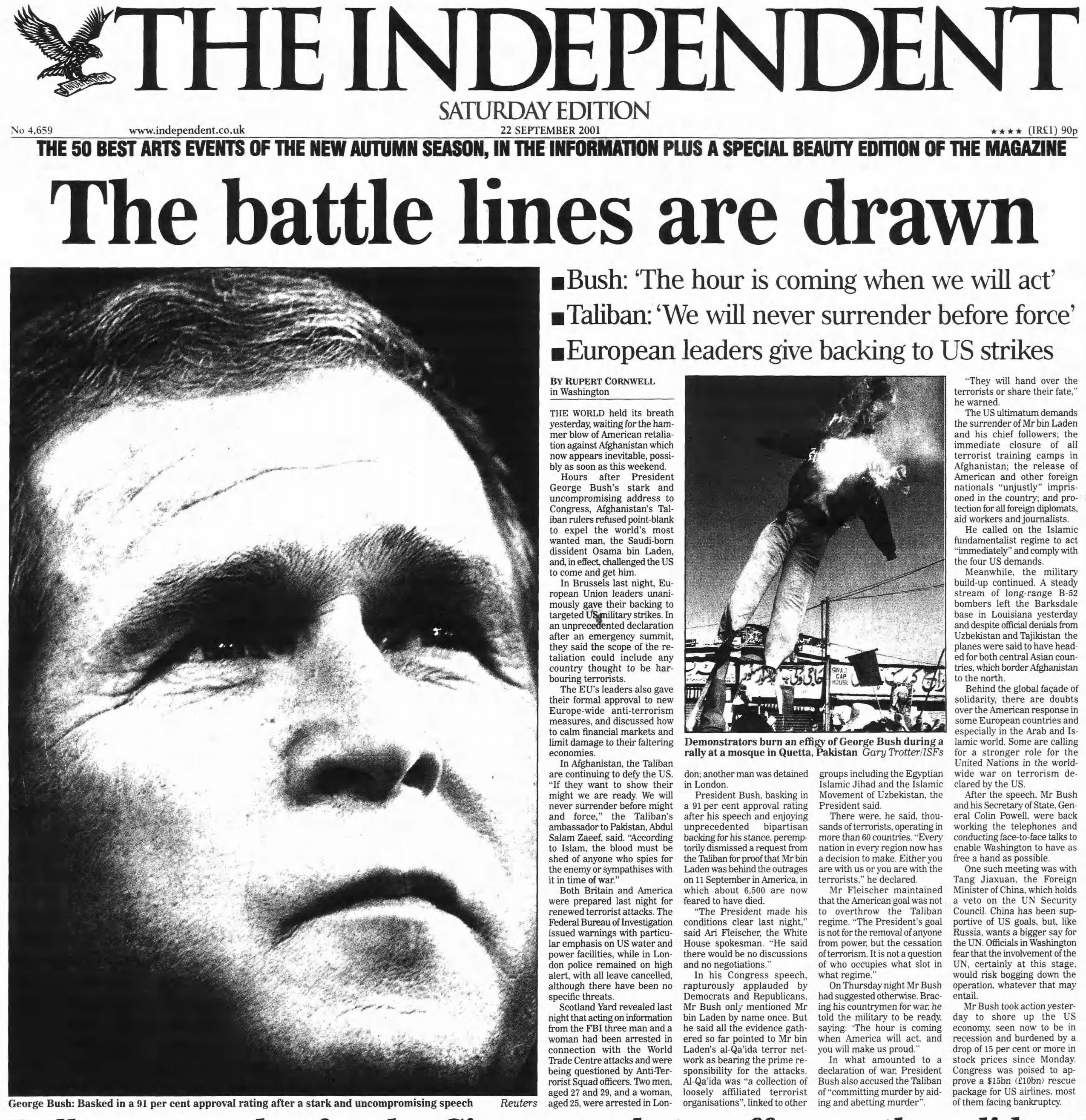
26 September 1994 – Operation Uphold Democracy in Haiti
The United States military deploys forces to the Caribbean nation as part of Operation Uphold Democracy to remove the ruling military regime. Front page reports capture the volatile reality on the ground after American Marines storm an armed compound in Cap-Haitien. Correspondent Phil Davison describes a chaotic atmosphere following a firefight that left 10 Haitian soldiers dead.
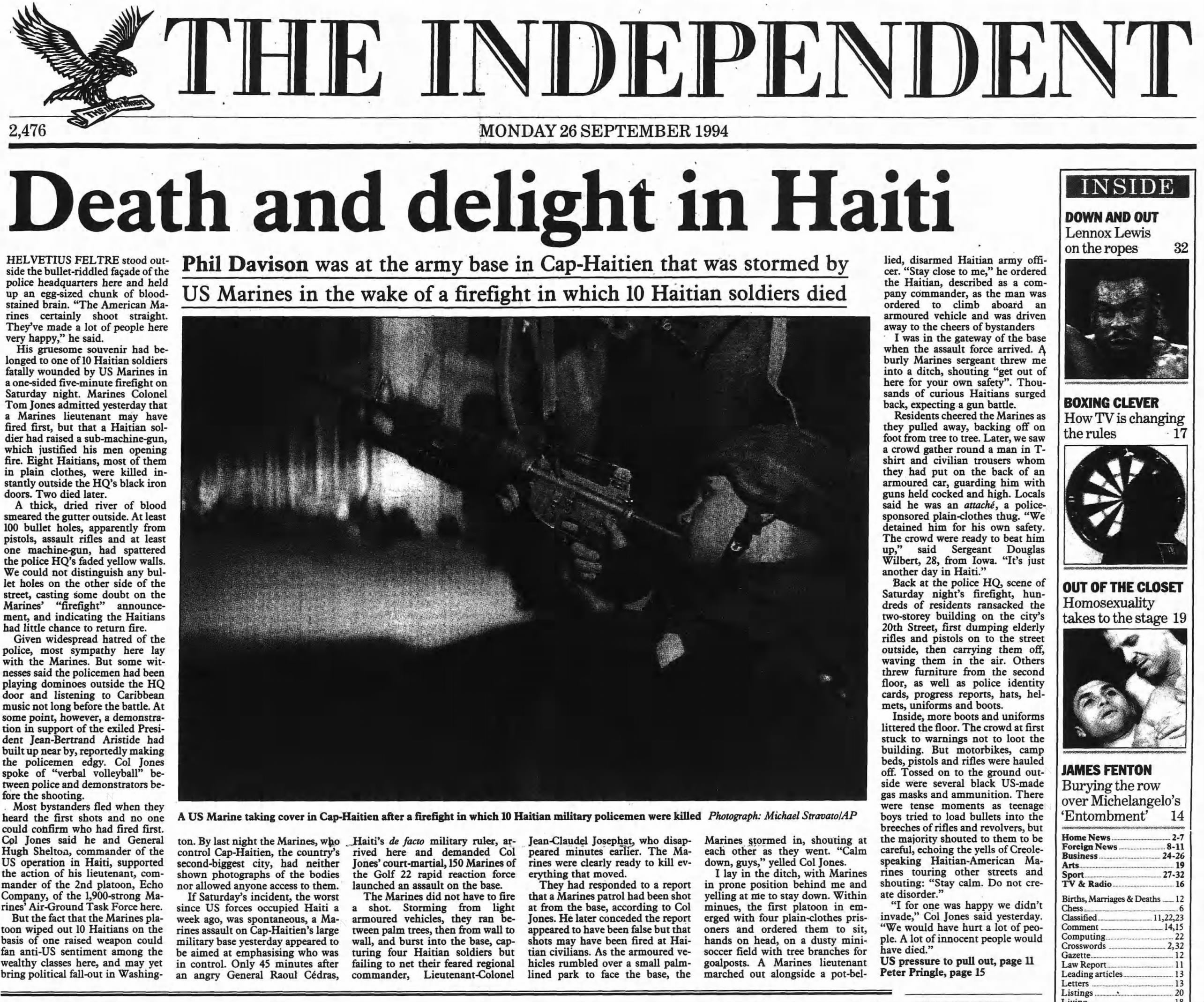
22 September 1998 – Americans watch Clinton grand jury testimony
After eight months of mounting scandal, the American public finally views the videotaped grand jury testimony of President Bill Clinton. Broadcast across the nation, the recording shows the American leader acting noticeably evasive when directly pressed by prosecutors to define his exact understanding of sexual relations.
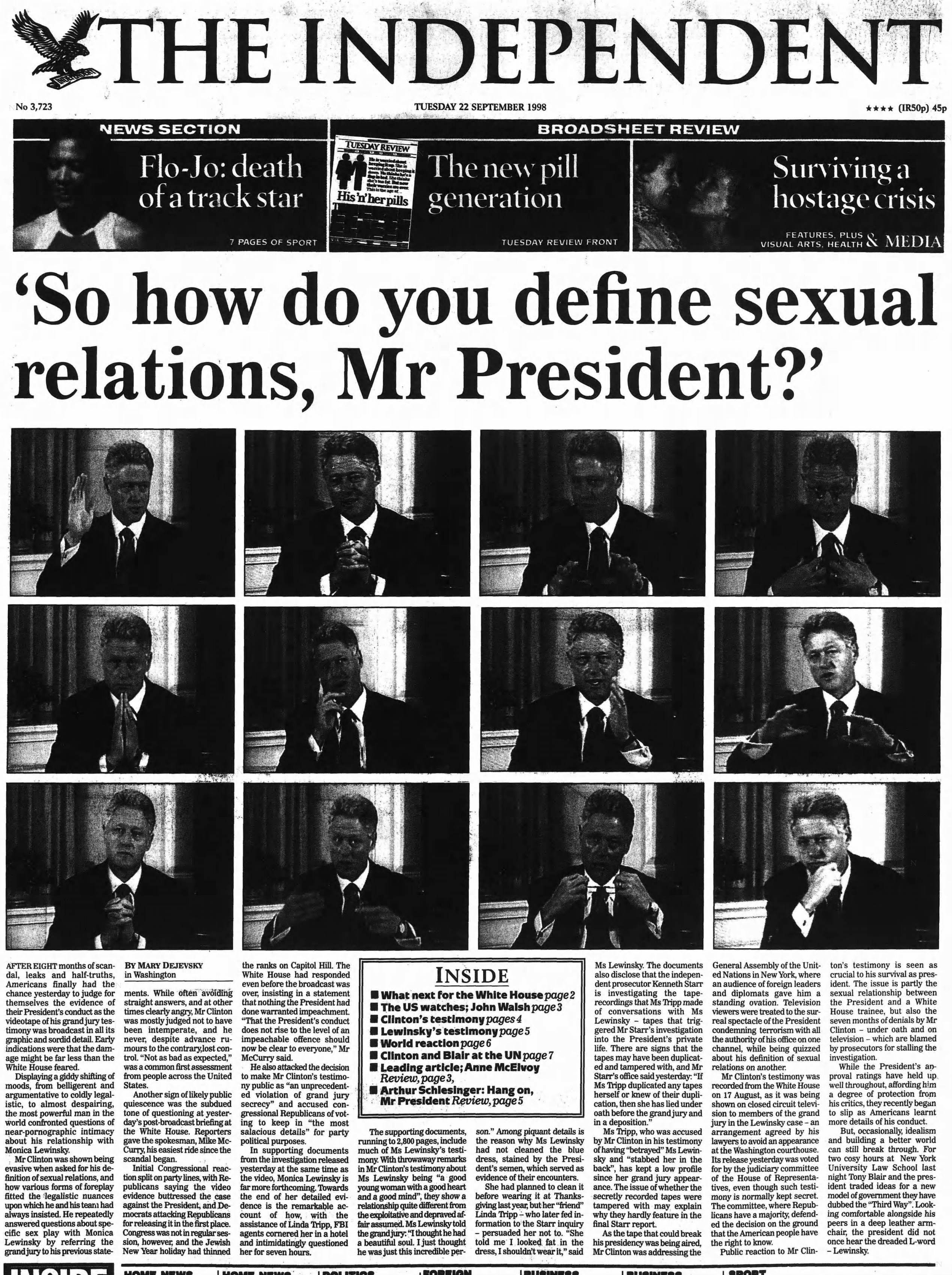
21 September 2000 – Explosive device strikes MI6 headquarters
A powerful explosive device strikes the eighth floor of the MI6 intelligence headquarters in London. Authorities immediately suspected Irish Republican dissidents of executing the strike and the paramilitary group known as the Real IRA was ultimately found responsible for the bombing.
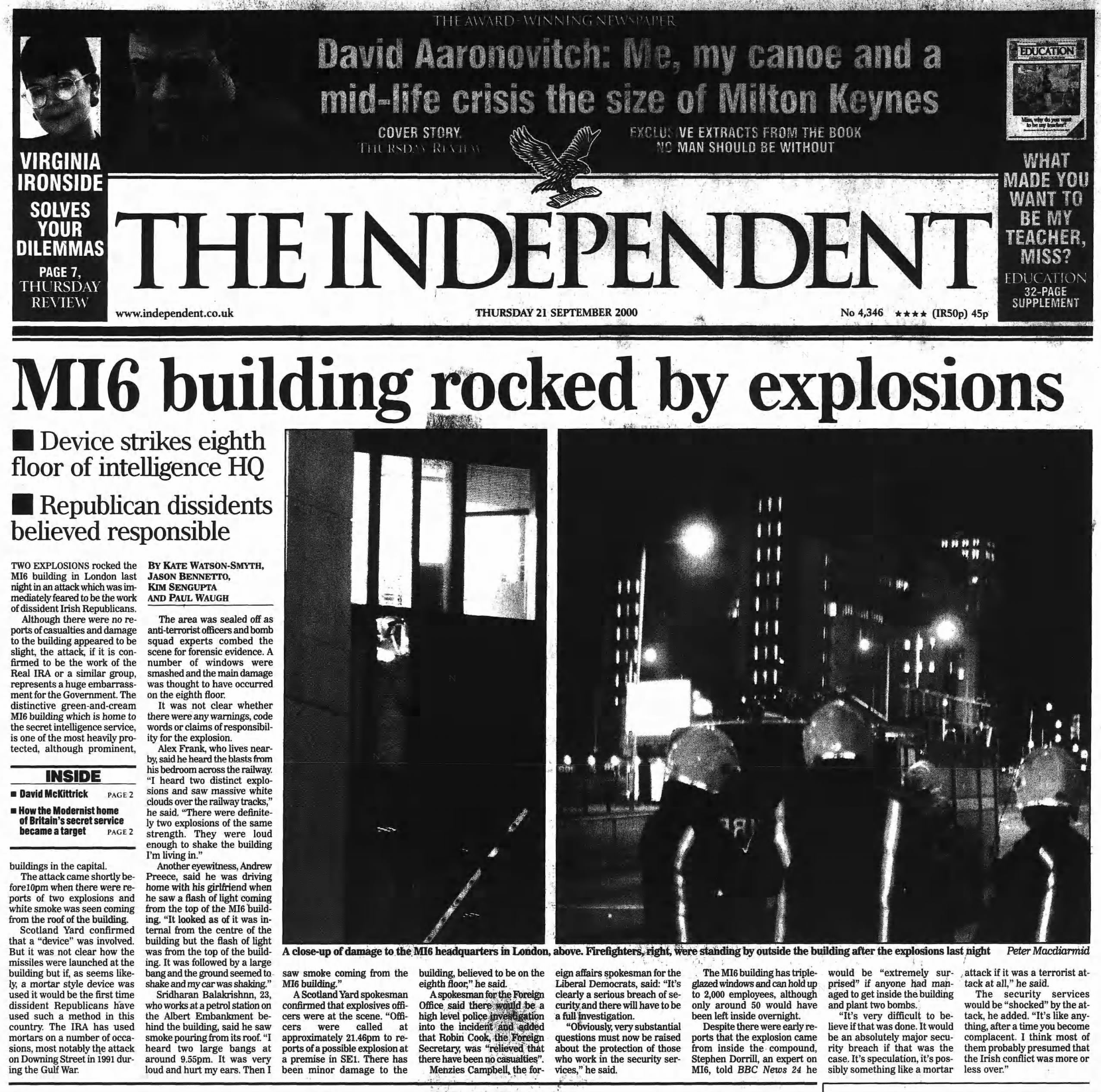
22 September 2001 – Bush warns the hour of action is coming
Global battle lines are firmly established in the aftermath of 9/11 as President George W Bush prepares the American military for an imminent retaliatory campaign in Afghanistan. European leaders offer their complete diplomatic and military backing to the United States ahead of the impending coalition strikes. However, the Taliban remain defiant and publicly vow that they will never surrender to force.
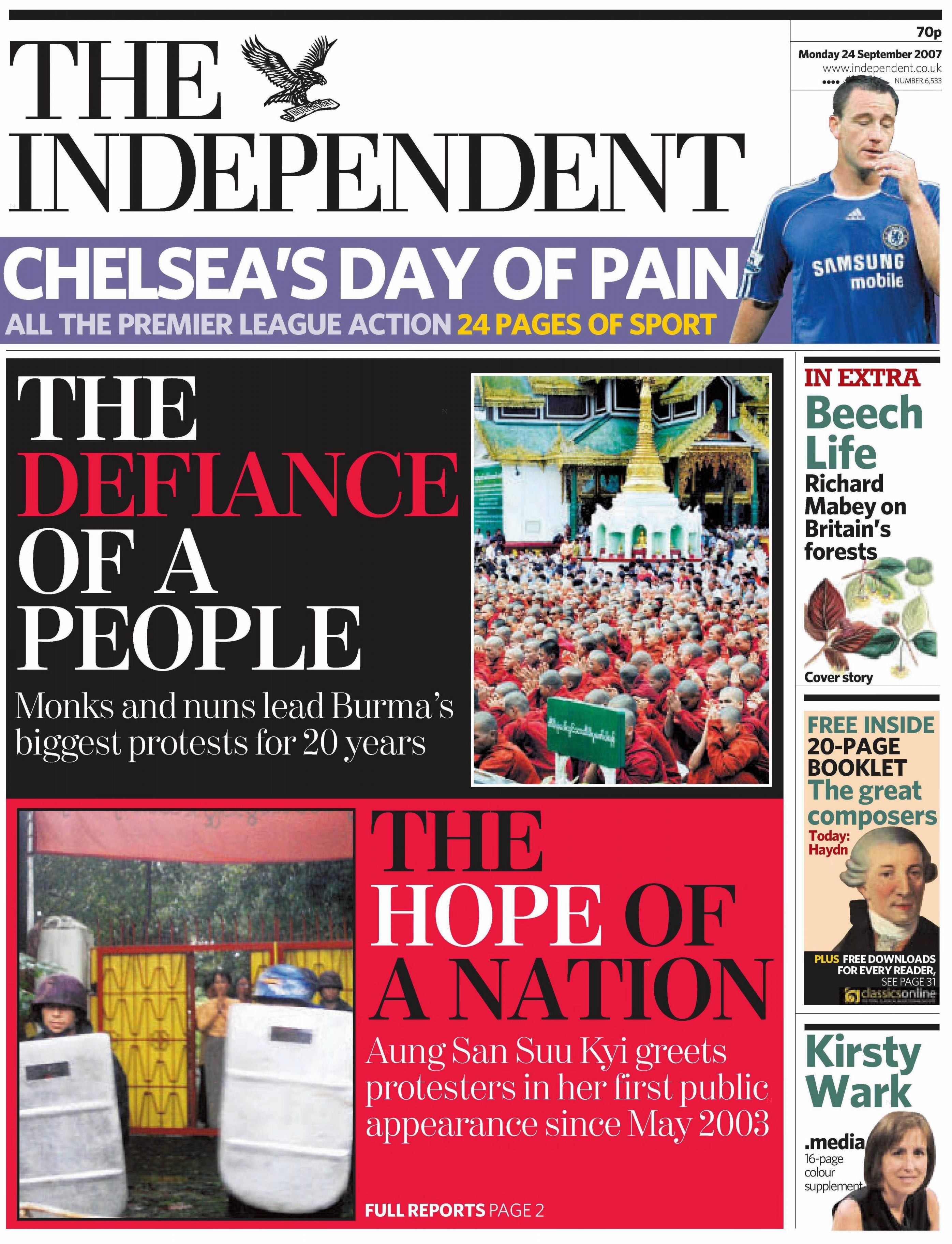
24 September 2007 – The Saffron Revolution
Buddhist monks and nuns lead the citizens of Burma in massive demonstrations that mark the largest public uprising in two decades. In a symbolic moment for the nation, democratic leader Aung San Suu Kyi steps out from house arrest to greet the demonstrators in her first public sighting in over four years.
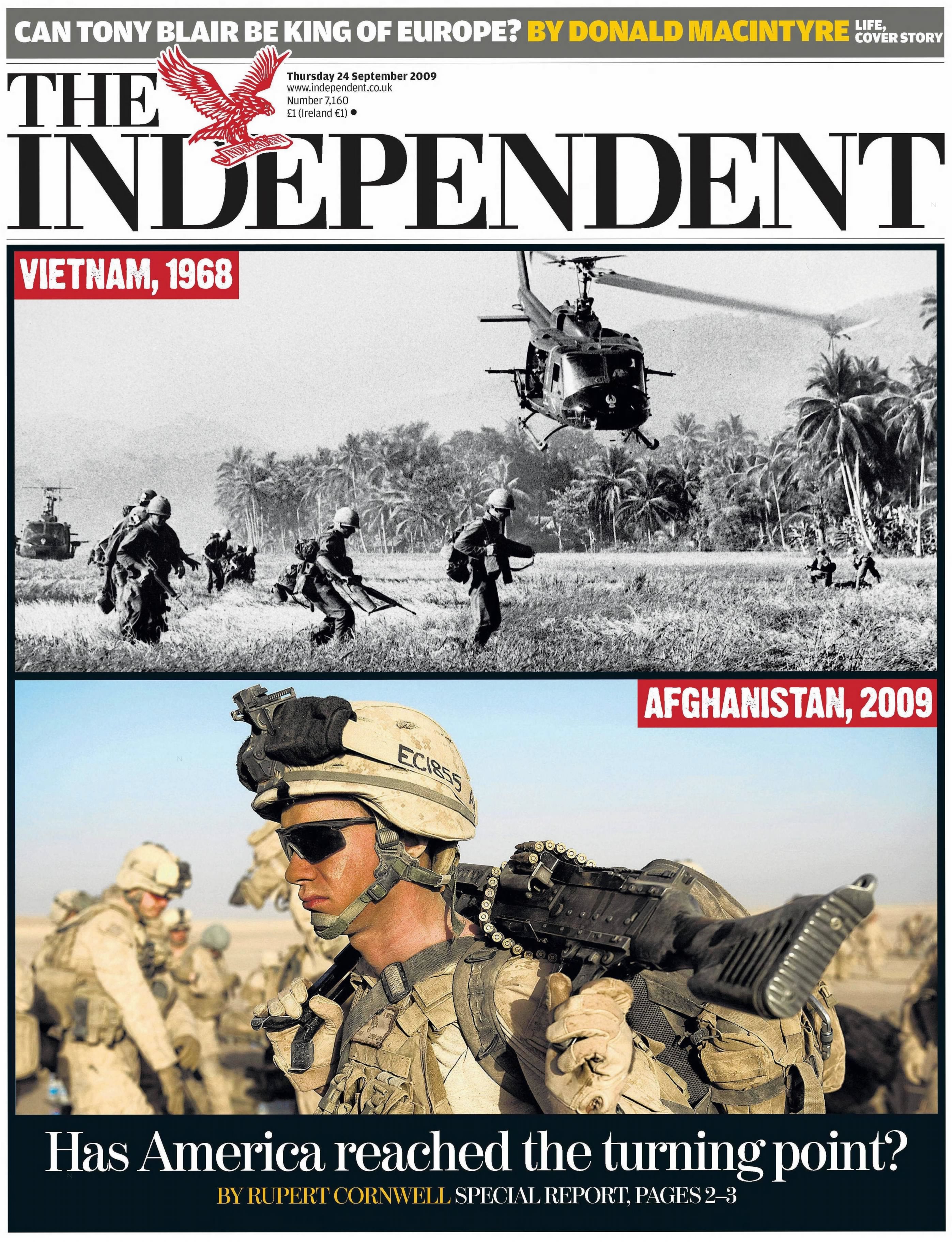
24 September 2009 – Afghan war draws Vietnam comparisons
The Independent draws visual parallels between American forces operating in Vietnam in 1968 and the ongoing conflict in Afghanistan in 2009. Despite initially committing to the long haul, President Barack Obama faces heavy military losses and growing public dissent that forces him to reconsider his approach. The war would ultimately persist for another 12 years before American troops executed a complete military withdrawal from the country in 2021.
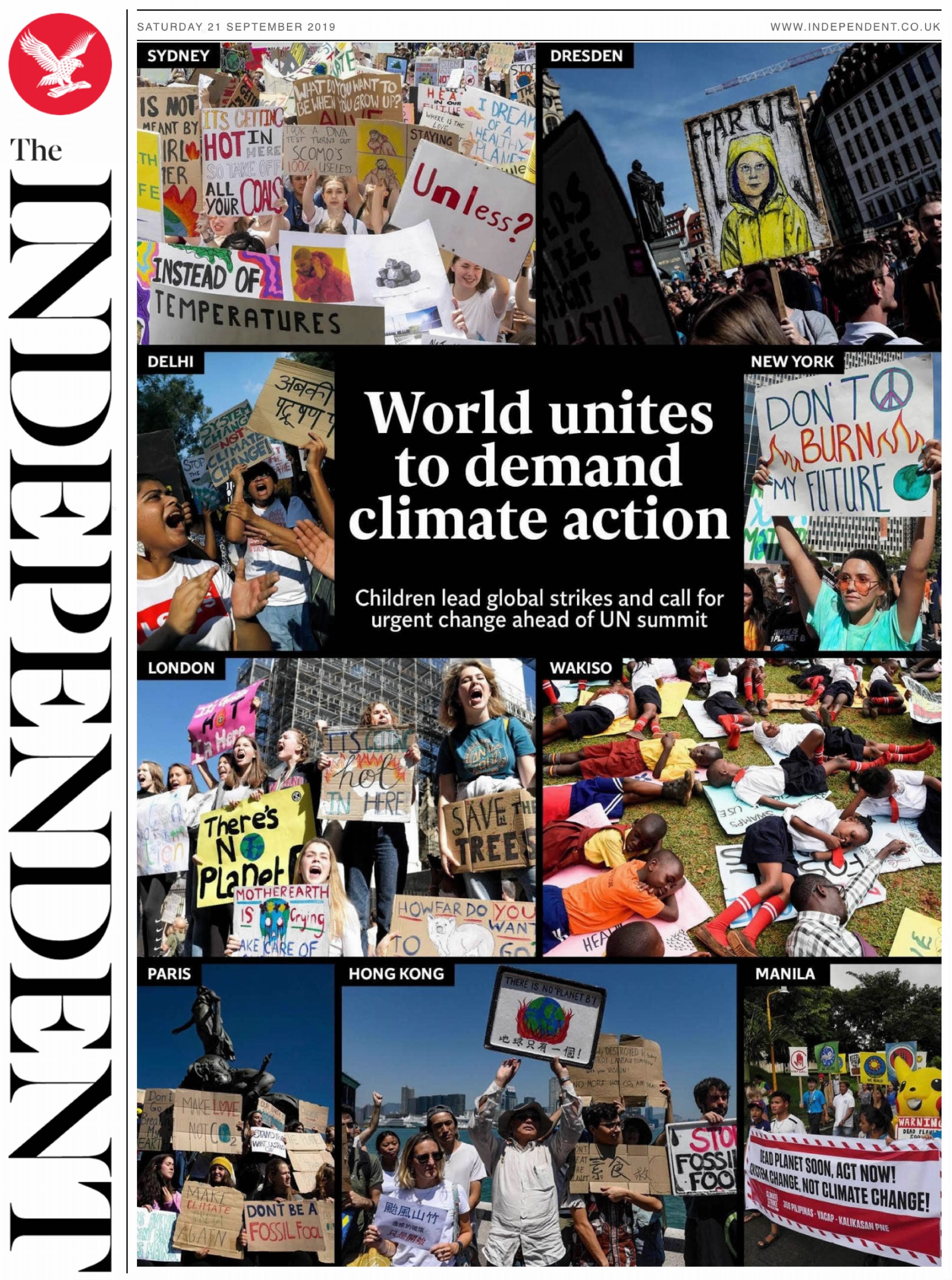
21 September 2019 – Youth lead largest climate protest in history
Driven by a powerful youth movement, children and students lead historic demonstrations taking place just days before a major United Nations summit. Millions worldwide walk out of their classrooms and workplaces to participate in coordinated strikes, hoping to pressure political leaders into adopting stricter environmental policies to address global warming.