


 Africana55 Radio

This website uses cookies so that we can provide you with the best user experience possible. Cookie information is stored in your browser and performs functions such as recognising you when you return to our website and helping our team to understand which sections of the website you find most interesting and useful.

Want to bookmark your favourite articles and stories to read or reference later? Start your Independent Membership today.
Already a member? Log in
Bleary-eyed, clutching a black coffee and cardamom bun as if they were a life raft, I stood on the platform at Malmo Central Station, in Sweden’s third city, at 6.30am. Having spent two days hopping between saunas and the icy depths of the Øresund, I was ready to head north on rail operator Snalltaget’s newest route, travelling to Oslo, Norway’s capital.
While the journey in its entirety takes a little over six and a half hours, I’d opted to hop on and off for the next couple of days to explore two key cities along the way: the trendy hub of Gothenburg and the much less-visited Trollhättan. Even settling in for the straight-through route, the short duration is a great introduction to slow travel.
European Sleeper will launch a train next year between Amsterdam to Malmo, which means that, combined with this route, it will soon be feasible to travel from London to Oslo with just two changes.
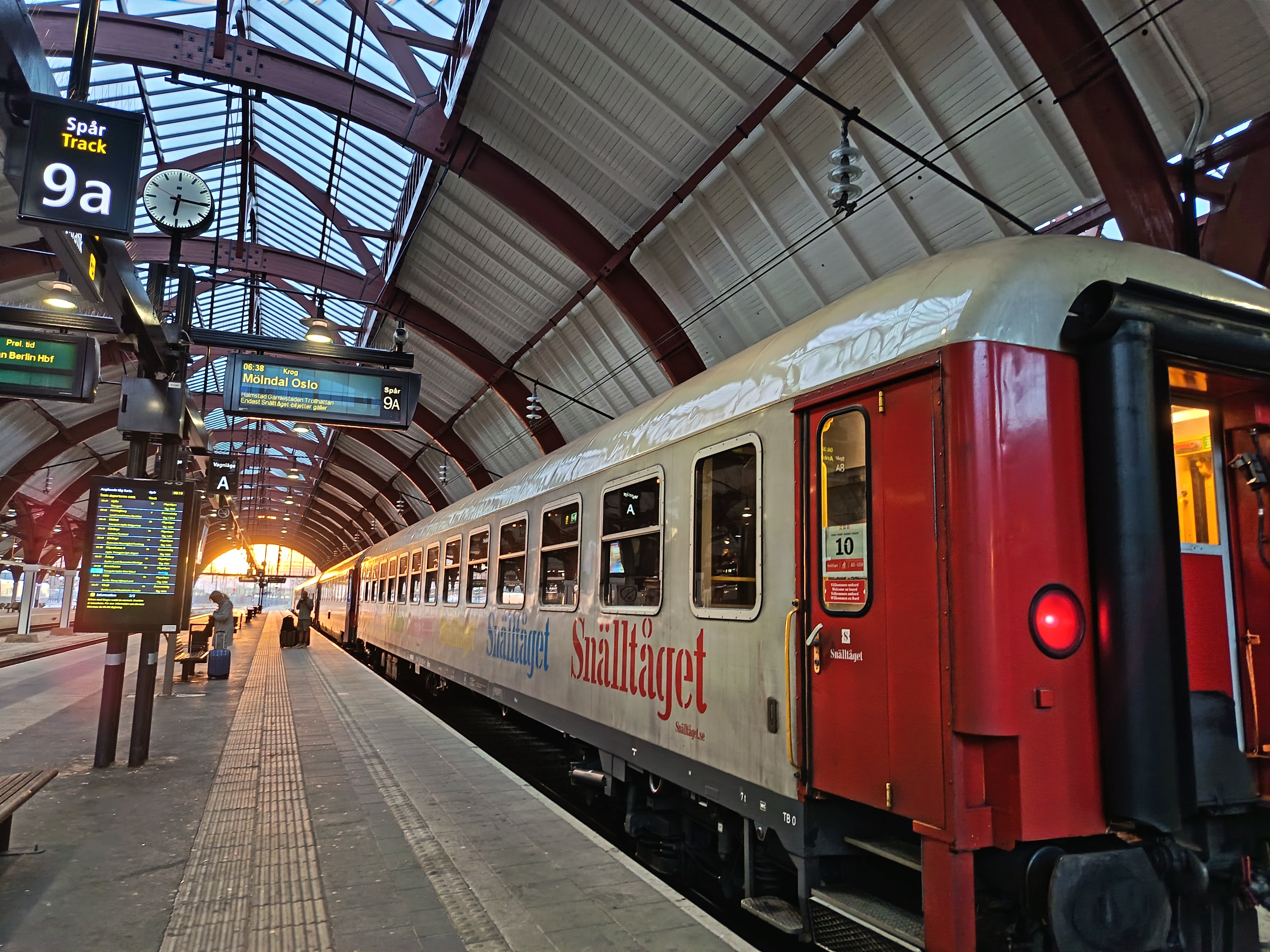
Standing on the platform, a Swedish-American man explained that these used to be the exact trains that would embark on the 22-hour journey to Swedish Lapland for the meagre price of 330 SEK (£23.10). In those days, there was a full sit-down dining car and even a cinema on board. “It’s good that they’re being repurposed, but the 22-hour route was an incredible experience,” he mused before clambering aboard.
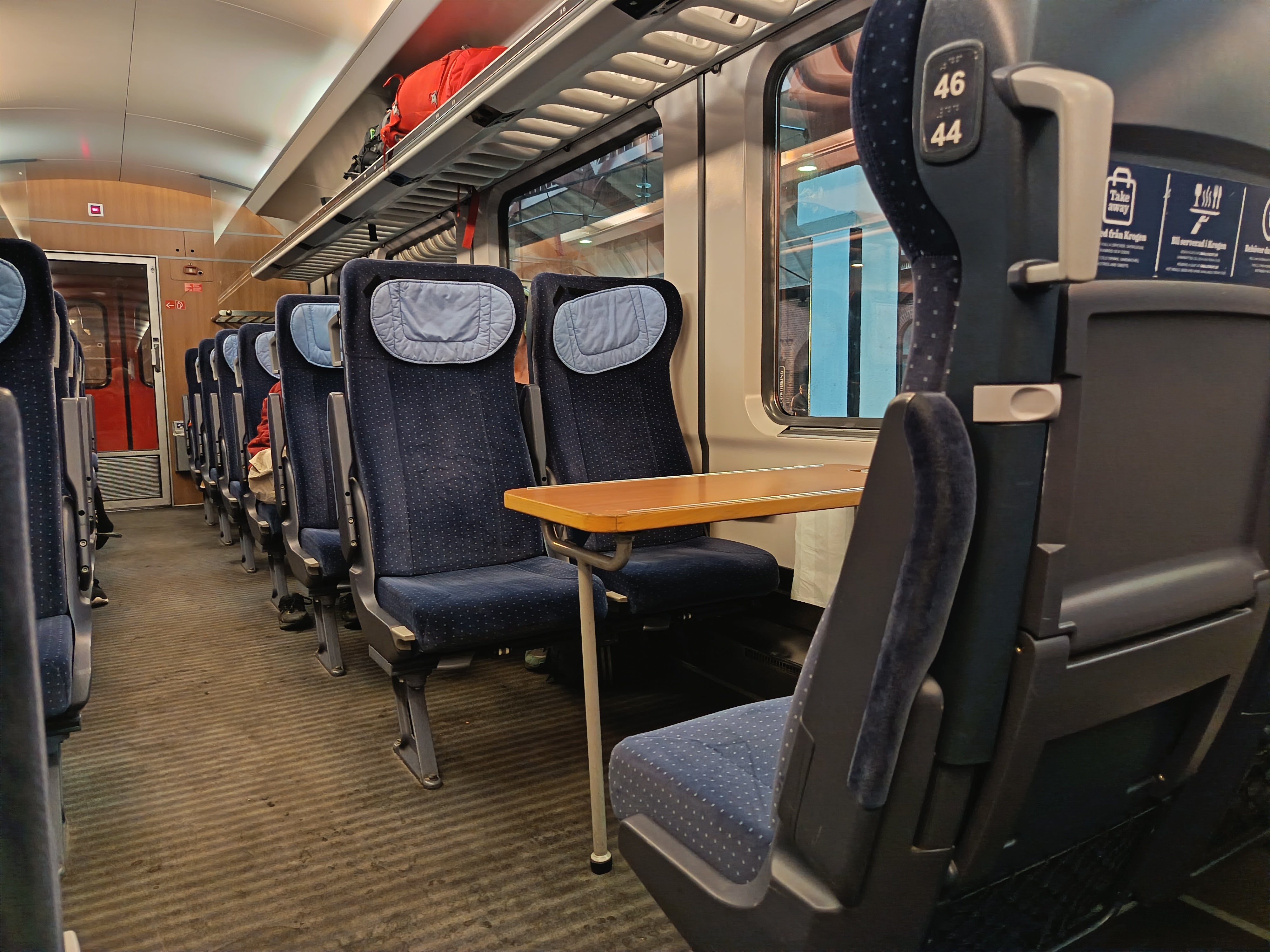
Climbing up the steep steps to the carriage, it was clear the trains were dated, as the man on the platform had intimated. The blue spotted seats have a small amount of padding, but as I felt a nap coming on, I was appreciative of the curved headrest. On the plus side, these seats recline – the problem is trying to get them upright again, as the mechanism on my seat certainly felt a little loose. Luckily, legroom is not an issue, with plenty of space. Underneath the seat, there’s a plug socket and the tray table is a decent size.
For luggage space, I found no issues. With a larger rucksack, I easily chucked it on the overhead shelf, and there are luggage racks at each end of the carriage. Given that I was traveling in the summer, I was surprised at how quiet the carriage was.
Soon after, the driver explained that the Snalltaget Sleeper from Berlin was running 10 minutes late, and we needed to wait for it. Given my experience of the British rail network, I assumed the German arrival was blocking the track. In fact, we were waiting for it so the passengers could make the connection – a feat of generosity I’m not used to.
As soon as the Sleeper rolled into the neighbouring platform, scores of backpackers and business people boarded our train, filling it up to around three-quarters full. Not bad for a Tuesday morning at the end of August.
Read more: Doctors are now ‘prescribing’ Sweden – and I agree
Then we rumbled away: quickly traversing inland Lund before following the morning sparkle of the Western Swedish coast. As far as scenic journeys go, this section along the coast was mesmerising.
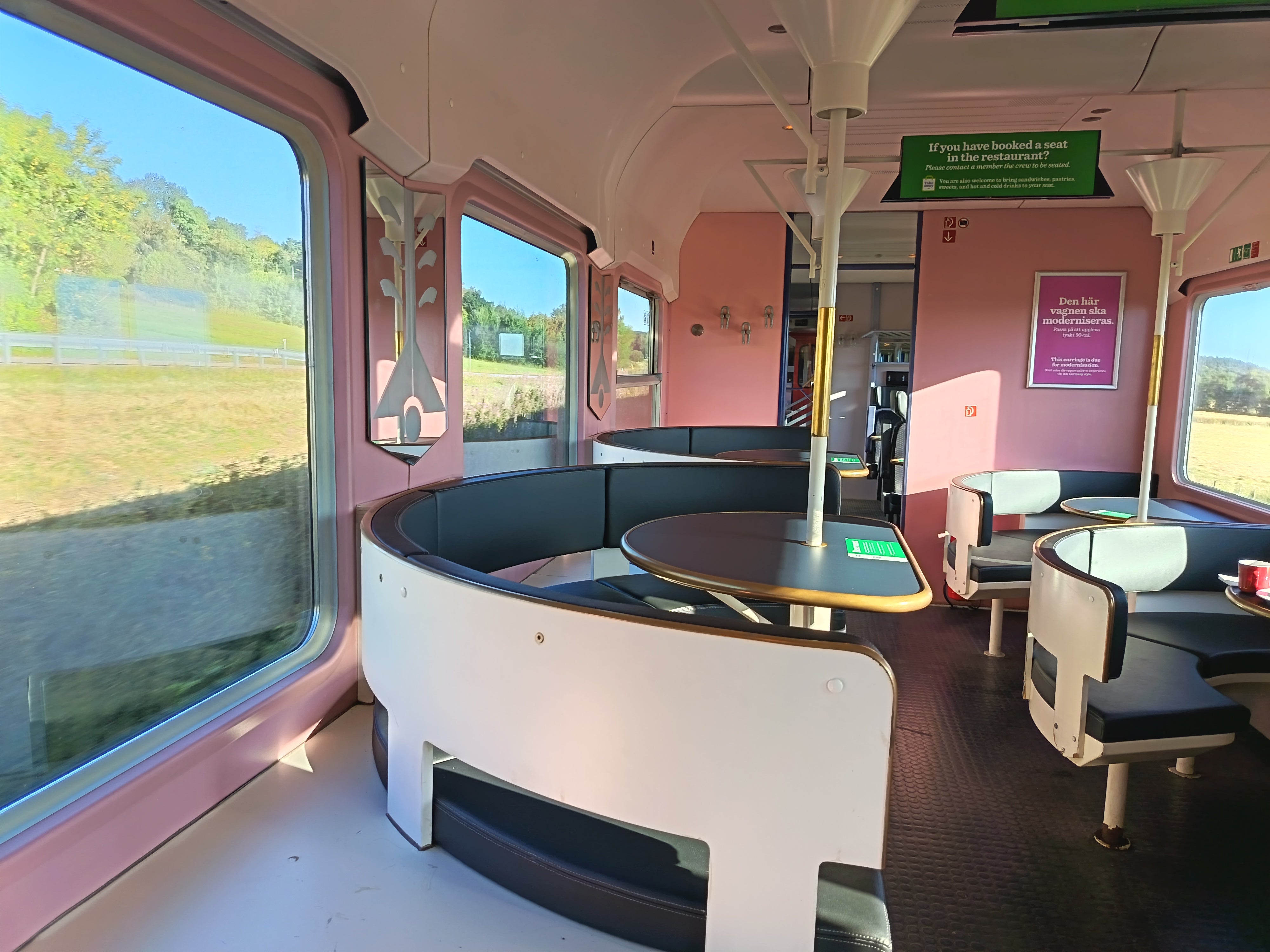
After an hour or so of daydreaming out of the window, I took a quick wander through the train to have a look at the dining car, or Krogen. The carriage is all mid-century design: think curved booth seating and pale pink walls that evoke a diner. It was lucky I had a look when I did. The next two journeys were missing a dining car for operational reasons.
Journeying onward, I located the private compartments (a seat here costs an additional £78 – standard tickets are just £12). These no-frills bunk-bed sleeper compartments seemed fit for purpose but nothing fancy, and given that this route runs exclusively in the daylight hours, it’s an odd inclusion.
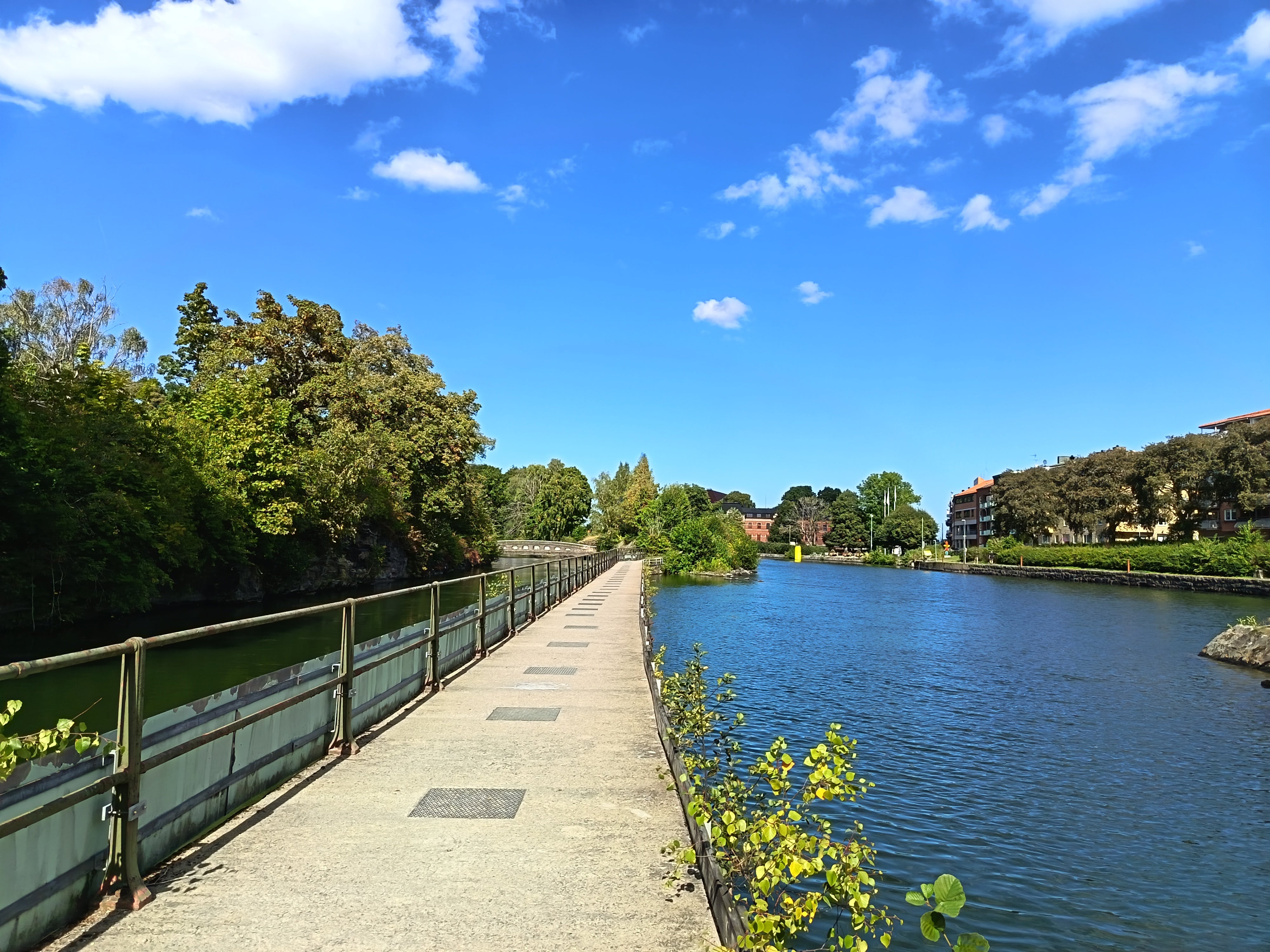
Soon we were rolling into Gothenburg Gamlestaden, on the northern side of the city. This train doesn’t stop at the central station, something that the local vendors of Gamlestaden, the former industrial hub of Gothenburg, are excited by. Forum, an incredible vintage, antiques, art and design marketplace, is just steps from the station, and the owners are happy to see more international visitors heading to this end of the city. Nearby, you can find indie coffee roasters, breweries, wine shops, French bistros, next to start-up incubators, and the Gothenburg Textile School. For those heading into the city centre, the tram lies next to the station and takes 10 minutes.
After a whistlestop day and overnight in the vintage-filled second metropolis, it was time to board the Snalltaget once more for a short 40-minute hop to Trollhättan. While few have heard of Trollhättan, it’s the gateway to the lakes of Western Sweden. Before this route, there were no direct routes from Malmo, so this provides an excellent connection.
Trollhättan has two sides to it. One is as an engineering hub; the other is its nature. From Trollhattan Falls, fed by the local dam and reservoir, to the tree-lined trails of the Älvrummet Nature Reserve, it is an ideal place to get outdoorsy if you don’t want to hire a car.
My final stint on the Snalltaget was my longest, clocking in at three hours and 30 minutes. Immediately, this was a much busier train and already running 30 minutes late. It was packed with groups of interns heading up to Oslo and Norwegian shoppers who cross the Swedish border for cheaper goods.
Heading through Western Sweden to the Norwegian border, I saw golden pastoral scenes, filled with roaming horses, and quintessential red wooden barns. The train route itself felt remote, tracing hiking and cycle paths rather than roads. Through gaps in trees and tunnels, I spied spectacular lakes and fjords.
As we crossed the Norwegian border (no passport checks necessary here), the landscape is a lot more forested, with a patchwork of different nature reserves paving the way.
Rolling into Oslo only 20 minutes late, I was sad to leave the rural scenes of this excellent value train behind. While it’s not the most luxurious or high-spec European train I’ve ever been on, it’s hard to baulk at a six-and-a-half hour train journey for £12.
I disembarked in Oslo, dropped my bags off at the excellently refurbished Savoy 1918 and headed out in search of pastries. I was astounded to find that a filter coffee and a cinnamon bun cost almost the same as my train ticket. In a region notorious for high prices, having train connections with this level of value is worth its weight in gold.
How to do it
One-way tickets from Malmo to Oslo start at 149 SEK (£12). Book directly via the Snalltaget website. The entire route takes six hours and 38 minutes.
Where to stay
In Malmo, stay at the Clarion Hotel Malmo Live, where standard double rooms start at £63. This sky-high hotel is steps from the railway station – ideal for the early departure time.
In Oslo, stay at the Savoy 1918, with a classic room from £232, including breakfast. Located near the Royal Palace, this opulent hotel is a historic oasis.
Rebecca was a guest of Visit Sweden and Visit Oslo