


 Africana55 Radio

This website uses cookies so that we can provide you with the best user experience possible. Cookie information is stored in your browser and performs functions such as recognising you when you return to our website and helping our team to understand which sections of the website you find most interesting and useful.

Want to bookmark your favourite articles and stories to read or reference later? Start your Independent Membership today.
Already a member? Log in
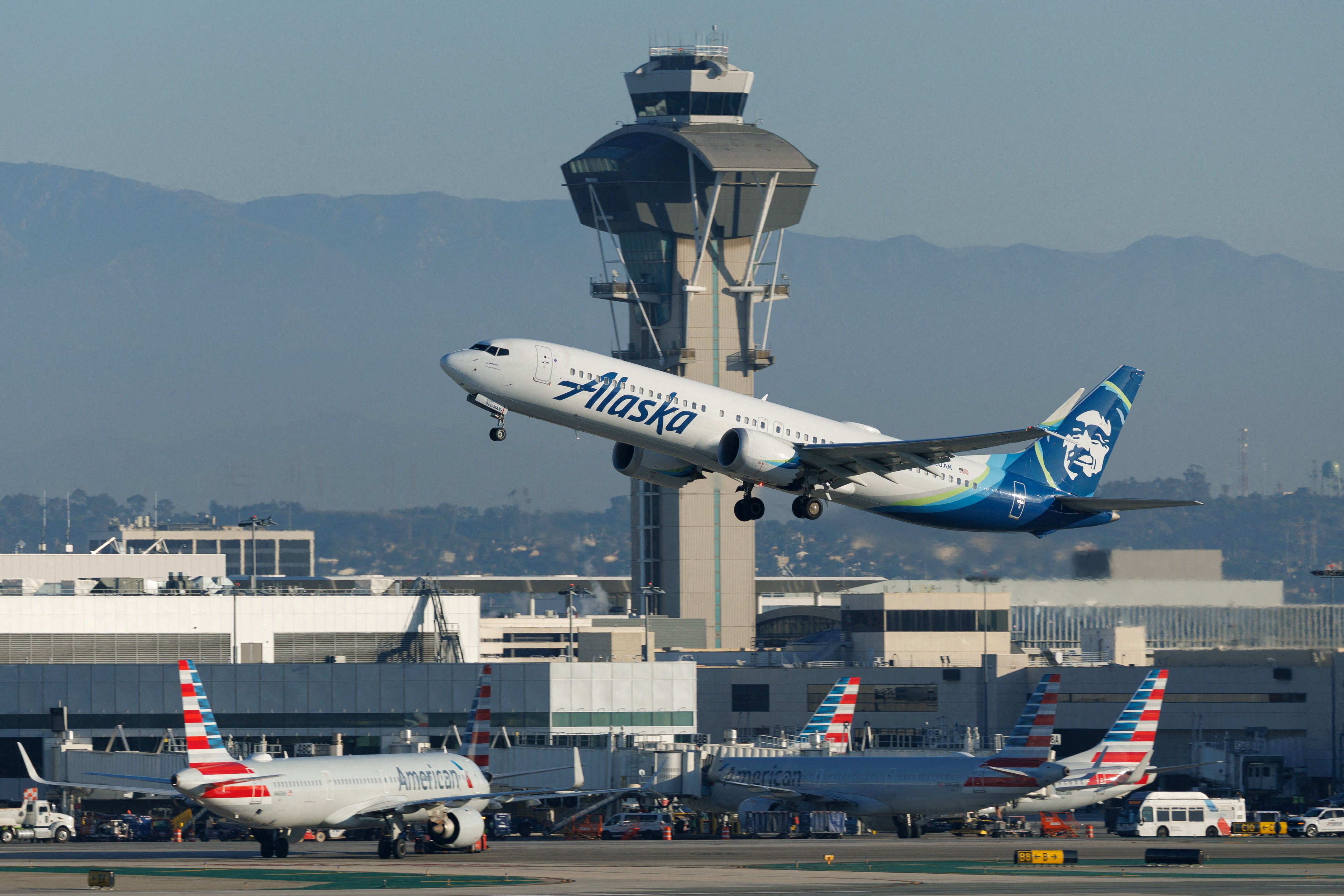
Alaska Air Group is making its biggest push into premium travel yet, adding lie-flat seating, premium-economy cabins, and new airport lounges to boost revenue from passengers seeking comfort as high jet fuel prices weigh on earnings.
In an interview ahead of the company's investor day on Tuesday, President and Chief Financial Officer Shane Tackett said these investments could ultimately contribute $3 to $4 to Alaska's earnings per share while increasing margins by 2 to 3 percentage points over the next few years.
The move comes as U.S. carriers increasingly target higher-end travelers. Domestic premium seat capacity in June stood 27 percent above 2019 levels, expanding at nearly three times the pace of economy seating, according to Visual Approach Analytics. This shift creates a risk that an oversupply of premium seats could undermine fares if capacity outpaces demand.
Tackett said Alaska's forecasts are based on "a pretty steady rate of demand" for premium travel and expected fare levels.
The initiative forms part of a broader expansion following Alaska’s 2024 acquisition of Hawaiian Airlines, which provided widebody aircraft and a larger Pacific network to support international growth.
Starting in 2028, Alaska plans to install 12 lie-flat Aurora Suites on at least 25 Boeing 737 MAX 10 aircraft scheduled for select transcontinental routes. It will also introduce Premium Reserve, a premium-economy cabin, across Boeing 787s, Hawaiian’s Airbus A330S, and select MAX 10s. New airport lounges are also slated for Seattle, Honolulu, and San Diego.
Tackett did not reaffirm the 2027 timeline for Alaska's $10-a-share earnings goal. Since establishing the plan in late 2024, the carrier faced tariff-driven demand weakness, flight cuts linked to a U.S. government shutdown in 2025, and elevated fuel costs resulting from the war in Iran this year.
"Whether that happens in 2027, or a bit later, it will be highly dependent" on fuel prices and broader economic conditions, Tackett said.
In January, Alaska anticipated earnings per share between $3.50 and $6.50, but withdrew the target in April following surging fuel prices. A small survey by Raymond James showed nearly seven out of 10 investors expect earnings below $6 per share in 2027.
Tackett noted Alaska’s business model is designed to perform well at fuel costs of roughly $3.25 a gallon or below. Data from Airlines for America showed a keyU.S. benchmark at $4.40 a gallon on Monday.
Alaska is also aiming for up to $4 billion in annual cash payments from loyalty program partners by 2030 and intends to introduce an Atmos debit card in early 2027. The airline now plans to serve 15 long-haul international destinations from Seattle by 2030, up from its previous goal of 12, with Tackett stating that international connections and premium options from Seattle are essential to retain customer loyalty.
"This is a must-do for us," he said.