


 Africana55 Radio

This website uses cookies so that we can provide you with the best user experience possible. Cookie information is stored in your browser and performs functions such as recognising you when you return to our website and helping our team to understand which sections of the website you find most interesting and useful.
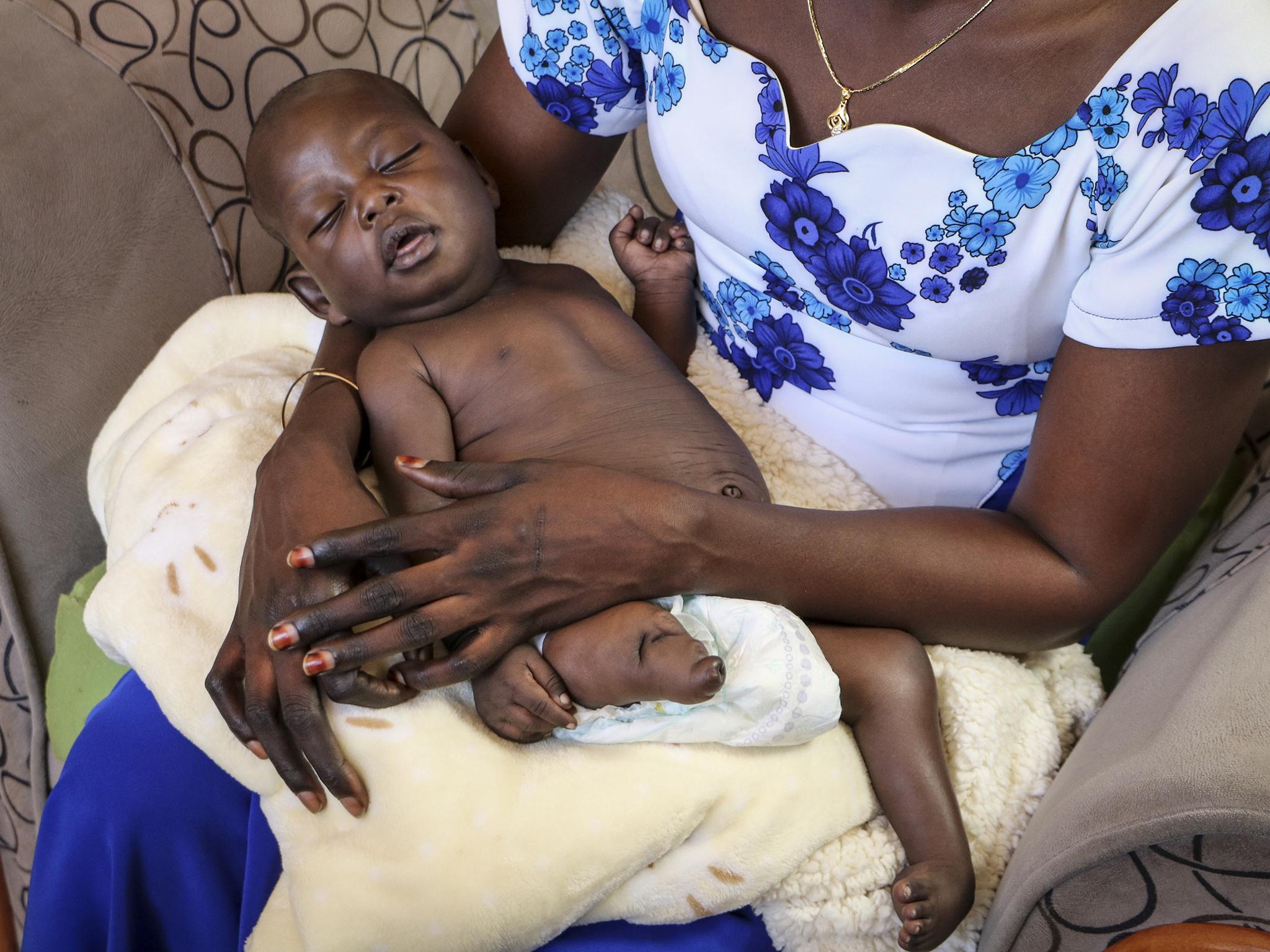
Environmental reports that suggested there may be a link between oil drilling in South Sudan and severe health problems for the local population were buried by the government, according to people with close knowledge of the oil industry in the East African nation.
Reports dating back to 2013 show that the government and oil companies have been aware for years that contamination from drilling could be damaging the health of local residents. But little has been done to clean up the mess, say locals. Promises by the government and the oil companies to tackle the pollution have repeatedly been broken, they say.
The reports, obtained by the Associated Press from people with close knowledge of the oil operations, one of whom works in the industry, also contain accounts of “alarming” birth defects, miscarriages and other health problems among people living near oil fields and soldiers who have been stationed there. Residents also describe women being unable to get pregnant.
“South Sudan is running one of the dirtiest and poorest managed oil operations on the planet,” said Egbert Wesselink, the former head of a European coalition of more than 50 non-profit organisations focused on the impacts of the country's oil sector. He worked on the oil fields in South Sudan before the country gained independence in 2011, and now works with PAX, a Dutch-based human rights organisation.
There has been no clear link established between the pollution and the health problems. But community leaders and politicians in the oil-rich areas in Upper Nile and Unity state accuse South Sudan's government and the two main oil consortiums, the Chinese-led Dar Petroleum Operating Co and the Greater Pioneer Operating Co, of neglecting the issue and trying to silence those who have tried to expose the problem.
Created with Sketch.
Created with Sketch.
1/20 California
In this decade, humans have become ever more aware of climate change. Calls for leaders to act echo around the globe as the signs of a changing climate become ever more difficult to ignore
Getty
2/20 Athens, Greece
Fierce wildfires have flared up in numerous countries. The damage being caused is unprecedented: 103 people were killed in wildfires last year in California, one of the places best prepared, best equipped to fight such blazes in the world
AFP/Getty
3/20 Redding, California
Entire towns have been razed. The towns of Redding and Paradise in California were all but eliminated in the 2018 season
AP
4/20 Athens, Greece
While wildfires in Greece (pictured), Australia, Indonesia and many other countries have wrought chaos to infrastructure, economies and cost lives
AFP/Getty
5/20 Carlisle, England
In Britain, flooding has become commonplace. Extreme downpours in Carlisle in the winter of 2015 saw the previous record flood level being eclipsed by two feet
AFP/Getty
6/20 Hebden Bridge, England
Hebden Bridge in West Yorkshire has flooded repeatedly in the past decade, with the worst coming on Christmas Day 2015. Toby Smith of Climate Visuals, an organisation focused on improving how climate change is depicted in the media, says: "Extreme weather and flooding, has and will become more frequent due to climate change. An increase in the severity and distribution of press images, reports and media coverage across the nation has localised the issue. It has raised our emotions, perception and personalised the effects and hazards of climate change."
Getty
7/20 Somerset, England
Out west in Somerset, floods in 2013 led to entire villages being cut off and isolated for weeks
Getty
8/20 Dumfries, Scotland
"In summer 2012, intense rain flooded over 8000 properties. In 2013, storms and coastal surges combined catastrophically with elevated sea levels whilst December 2015, was the wettest month ever recorded. Major flooding events continued through the decade with the UK government declaring flooding as one of the nation's major threats in 2017," says Mr Smith of Climate Visuals
Getty
9/20 London, England
Weather has been more extreme in Britain in recent years. The 'Beast from the East' which arrived in February 2018 brought extraordinarily cold temperatures and high snowfall. Central London (pictured), where the city bustle tends to mean that snow doesn't even settle, was covered in inches of snow for day
PA
10/20 London, England
Months after the cold snap, a heatwave struck Britain, rendering the normally plush green of England's parks in Summer a parched brown for weeks
AFP/Getty
11/20 New South Wales, Australia
Worsening droughts in many countries have been disastrous for crop yields and have threatened livestock. In Australia, where a brutal drought persisted for months last year, farmers have suffered from mental health problems because of the threat to their livelihood
Reuters
12/20 Tonle Sap, Cambodia
Even dedicated climate skeptic Jeremy Clarkson has come to recognise the threat of climate change after visiting the Tonle Sap lake system in Cambodia. Over a million people rely on the water of Tonle Sap for work and sustinence but, as Mr Clarkson witnessed, a drought has severley depleted the water level
Carlo Frem/Amazon
13/20 Addis Ababa, Ethiopia
In reaction to these harbingers of climate obliteration, some humans have taken measures to counter the impending disaster. Ethiopia recently planted a reported 350 million trees in a single day
AFP/Getty
14/20 Morocco
Morocco has undertaken the most ambitious solar power scheme in the world, recently completing a solar plant the size of San Francisco
AFP/Getty
15/20 London, England
Electric cars are taking off as a viable alternative to fossil fuel burning vehicles and major cities across the world are adding charging points to accomodate
AFP/Getty
16/20 Purmerend, The Netherlands
Cities around the world are embracing cycling too, as a clean (and healthy) mode of transport. The Netherlands continues to lead the way with bikes far outnumbering people
Jeroen Much/Andras Schuh
17/20 Xiamen, China
Cycling infrastructure is taking over cities the world over, in the hope of reducing society's dependency on polluting vehicles
Ma Weiwei
18/20 Chennai, India
Despite positive steps being taken, humans continue to have a wildly adverse effect on the climate. There have been numerous major oil spills this decade, the most notable being the BP oil spill in the Gulf of Mexico in 2010
AFP/Getty
19/20 Amazon rainforest, Brazil
More recently, large swathes of the Amazon rainforest were set alight by people to clear land for agriculture
AFP/Getty
20/20 California
This decade may have seen horrors but it has led to an understanding that the next decade must see change if human life is to continue
Getty
1/20 California
In this decade, humans have become ever more aware of climate change. Calls for leaders to act echo around the globe as the signs of a changing climate become ever more difficult to ignore
Getty
2/20 Athens, Greece
Fierce wildfires have flared up in numerous countries. The damage being caused is unprecedented: 103 people were killed in wildfires last year in California, one of the places best prepared, best equipped to fight such blazes in the world
AFP/Getty
3/20 Redding, California
Entire towns have been razed. The towns of Redding and Paradise in California were all but eliminated in the 2018 season
AP
4/20 Athens, Greece
While wildfires in Greece (pictured), Australia, Indonesia and many other countries have wrought chaos to infrastructure, economies and cost lives
AFP/Getty
5/20 Carlisle, England
In Britain, flooding has become commonplace. Extreme downpours in Carlisle in the winter of 2015 saw the previous record flood level being eclipsed by two feet
AFP/Getty
6/20 Hebden Bridge, England
Hebden Bridge in West Yorkshire has flooded repeatedly in the past decade, with the worst coming on Christmas Day 2015. Toby Smith of Climate Visuals, an organisation focused on improving how climate change is depicted in the media, says: "Extreme weather and flooding, has and will become more frequent due to climate change. An increase in the severity and distribution of press images, reports and media coverage across the nation has localised the issue. It has raised our emotions, perception and personalised the effects and hazards of climate change."
Getty
7/20 Somerset, England
Out west in Somerset, floods in 2013 led to entire villages being cut off and isolated for weeks
Getty
8/20 Dumfries, Scotland
"In summer 2012, intense rain flooded over 8000 properties. In 2013, storms and coastal surges combined catastrophically with elevated sea levels whilst December 2015, was the wettest month ever recorded. Major flooding events continued through the decade with the UK government declaring flooding as one of the nation's major threats in 2017," says Mr Smith of Climate Visuals
Getty
9/20 London, England
Weather has been more extreme in Britain in recent years. The 'Beast from the East' which arrived in February 2018 brought extraordinarily cold temperatures and high snowfall. Central London (pictured), where the city bustle tends to mean that snow doesn't even settle, was covered in inches of snow for day
PA
10/20 London, England
Months after the cold snap, a heatwave struck Britain, rendering the normally plush green of England's parks in Summer a parched brown for weeks
AFP/Getty
11/20 New South Wales, Australia
Worsening droughts in many countries have been disastrous for crop yields and have threatened livestock. In Australia, where a brutal drought persisted for months last year, farmers have suffered from mental health problems because of the threat to their livelihood
Reuters
12/20 Tonle Sap, Cambodia
Even dedicated climate skeptic Jeremy Clarkson has come to recognise the threat of climate change after visiting the Tonle Sap lake system in Cambodia. Over a million people rely on the water of Tonle Sap for work and sustinence but, as Mr Clarkson witnessed, a drought has severley depleted the water level
Carlo Frem/Amazon
13/20 Addis Ababa, Ethiopia
In reaction to these harbingers of climate obliteration, some humans have taken measures to counter the impending disaster. Ethiopia recently planted a reported 350 million trees in a single day
AFP/Getty
14/20 Morocco
Morocco has undertaken the most ambitious solar power scheme in the world, recently completing a solar plant the size of San Francisco
AFP/Getty
15/20 London, England
Electric cars are taking off as a viable alternative to fossil fuel burning vehicles and major cities across the world are adding charging points to accomodate
AFP/Getty
16/20 Purmerend, The Netherlands
Cities around the world are embracing cycling too, as a clean (and healthy) mode of transport. The Netherlands continues to lead the way with bikes far outnumbering people
Jeroen Much/Andras Schuh
17/20 Xiamen, China
Cycling infrastructure is taking over cities the world over, in the hope of reducing society's dependency on polluting vehicles
Ma Weiwei
18/20 Chennai, India
Despite positive steps being taken, humans continue to have a wildly adverse effect on the climate. There have been numerous major oil spills this decade, the most notable being the BP oil spill in the Gulf of Mexico in 2010
AFP/Getty
19/20 Amazon rainforest, Brazil
More recently, large swathes of the Amazon rainforest were set alight by people to clear land for agriculture
AFP/Getty
20/20 California
This decade may have seen horrors but it has led to an understanding that the next decade must see change if human life is to continue
Getty
Neither company responded to multiple requests for comment on the reports from the Associated Press.
Local residents have reported births of stillborn babies with severe deformities. One child had a "gaping hole" in its stomach, another was born without eyes or a nose.
The landscape of South Sudan has been scarred by oil drilling, which has left hundreds of open waste pits, and contaminated the water and soil with toxic chemicals and heavy metals including mercury, manganese, and arsenic.
Exposure to such substances can lead to a variety of health problems including cancer, respiratory problems, impotence and stillbirths, according to the World Health Organisation.
South Sudan has the seventh highest rate of pollution-related deaths in the world, according to the Global Alliance on Health and Pollution, an organisation of national environment ministries, international development organisations and NGOs.
“We're losing children,” said Nyaweir Ayik Monyuak, chair of the Women's Association in Melut, Upper Nile state, who lost two children of her own between 2008 and 2011.
Many women can't even get pregnant, Ms Monyuak said.
Many of the residents said the health problems got worse after people started drinking water from white containers that had earlier been used by Dar Petroleum during drilling to separate crude oil from water.
The containers, which were also mentioned in the 2013 report, had hazardous substance warning labels. The chemicals are supposed to be “taken to a suitable and authorised waste disposal site”, according to a spokesperson for Clariant, one of the world's leading speciality chemical companies.
“Under no circumstances should these empty containers be used by people for any reason, in particular for holding drinking water,” said Rick Steiner, an oil pollution adviser in Alaska who consults for governments, aid groups and the United Nations on oil spills.
Soil and water samples from the area, and biological samples from soldiers who had been stationed there were analysed at the National Health Laboratory Service in South Africa. They found mercury levels in the water were seven times what is permissible under US Environmental Protection Agency (EPA) standards, and manganese concentrations were 10 times higher than the EPA allows, according to a summary of the study obtained by the Associated Press. The chemicals were also found in the soil and in urine samples from some of the soldiers.
“These results are clearly indicating that heavy metals and petrochemicals have contaminated the area,” the summary stated, and it recommended more studies to see if the pollution is connected with the health problems.
The most recent study, from November 2018, was commissioned by Dar Petroleum to assess the chemical contamination in its oil fields and the surrounding areas.
Researchers documented hundreds of waste pits filled with water contaminated with arsenic and lead. They also found "extremely high" levels of hydrocarbons such as benzene in the soil.
The report recommended a five-year clean-up that would cost about $58m (£44m). South Sudan expects its oil industry to generate $99m (£76m) in revenue each month from July 2019 to June 2020, according to the national budget.
No clean-up has yet been undertaken, residents say.
South Sudan's president Salva Kiir acknowledged in a statement in January that there is a pollution problem in the oilfields and surrounding areas, and said he wants to bring proper environmental standards to the country's oil exploration operations.
The government in January asked for proposals from companies to perform an “environmental audit” that will evaluate how to clean up the existing pollution and put in place best practices for future oil exploration.
Residents, however, are sceptical, saying the government and oil companies have talked about cleaning up the pollution before.
In February, Phillips Anyang Ngong, a human rights lawyer, sued South Sudan's Ministry of Petroleum, Greater Pioneer Operating Company and Nile Petroleum - the country's state owned oil company, claiming the oil pollution caused health problems and loss of life and demanding $500m (£380m) for victims. It's the first human rights lawsuit due to oil pollution filed in the country, he said.
“Companies are violating the law and the government is not intervening,” he said. “It's a crisis that needs immediate attention now.”
But the government doesn't appear to be in a hurry.
South Sudan's petroleum minister, Awow Daniel Chuang, said until there's scientific evidence tying health problems to oil pollution, no conclusions should be drawn.
“Only speculations are being made until scientific evidences are out to see the level of damages created by oil operations. Obviously there shouldn't be conclusions with evidences connected to deformation,” he said.
Health experts with experience tackling oil pollution say companies often try to hide any connection between pollution and health problems.
“Polluters try as much as possible not to let connections be drawn from pollution to health issues, they try to connect it to something else, like genetics. This is a known tactic,” said Nnimmo Bassey, executive director for health at the Health of Mother Earth Foundation, a not-for-profit environmental group based in Nigeria.
Environmental experts say there is little incentive for multinational companies to do anything because it is easy to get away with things in impoverished countries like South Sudan.
That's in part because the country is so dependent upon its oil sector to survive.
Oil accounts for almost all the country's exports and more than 40 per cent of its GDP, according to the World Bank. As South Sudan emerges after years of civil war, it is trying to revive its economy by expanding the industry. Last October, the ministry of petroleum announced plans to open 14 oil blocks this year for exploration.
“No one's really watching. The government is neither willing nor able to monitor and enforce its own environmental laws,” said Luke Patey, senior researcher studying China's oil investments in Africa at the Danish Institute for International Studies.
He said the result is “a vicious cycle of negligence”.
Additional reporting by the Associated Press